Showing posts with label structure. Show all posts

Monday, August 15, 2016

Charles Dickens and the Siegfried Tavern

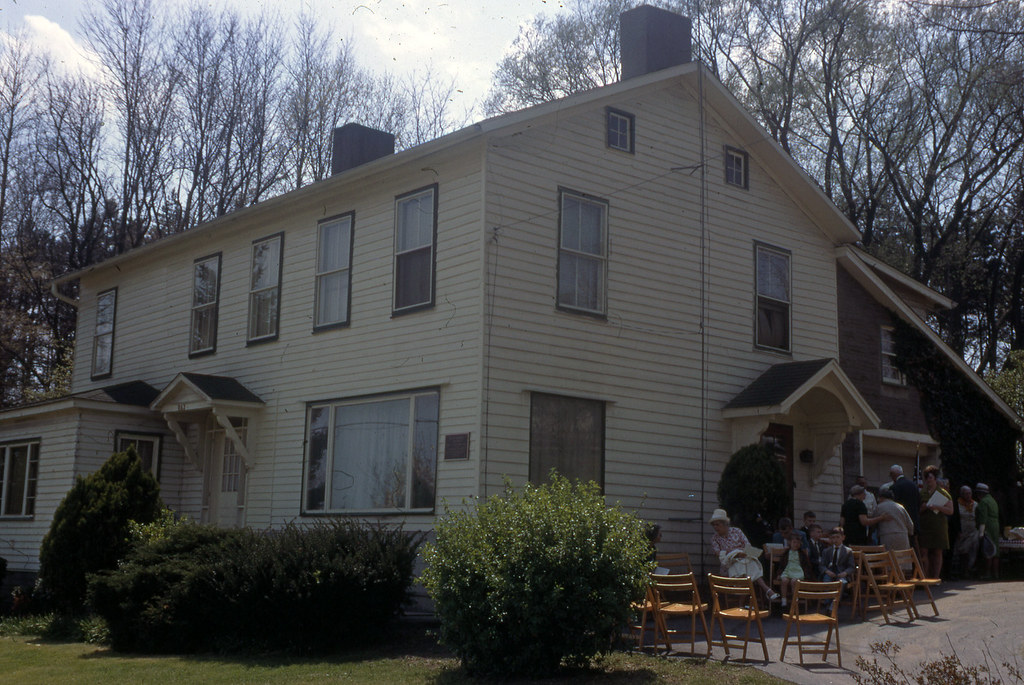
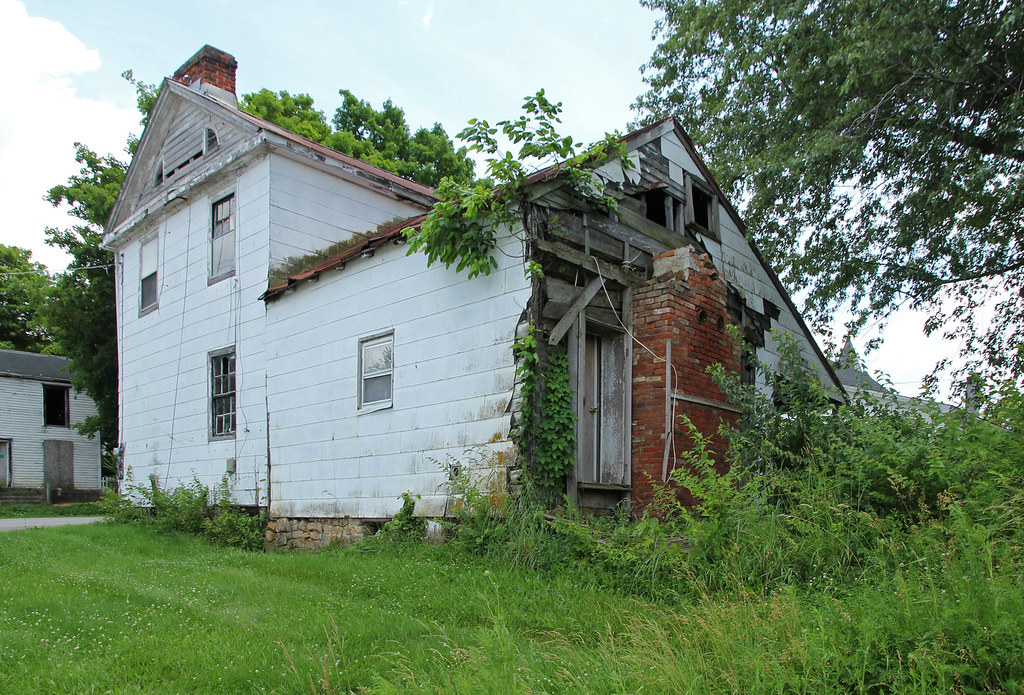
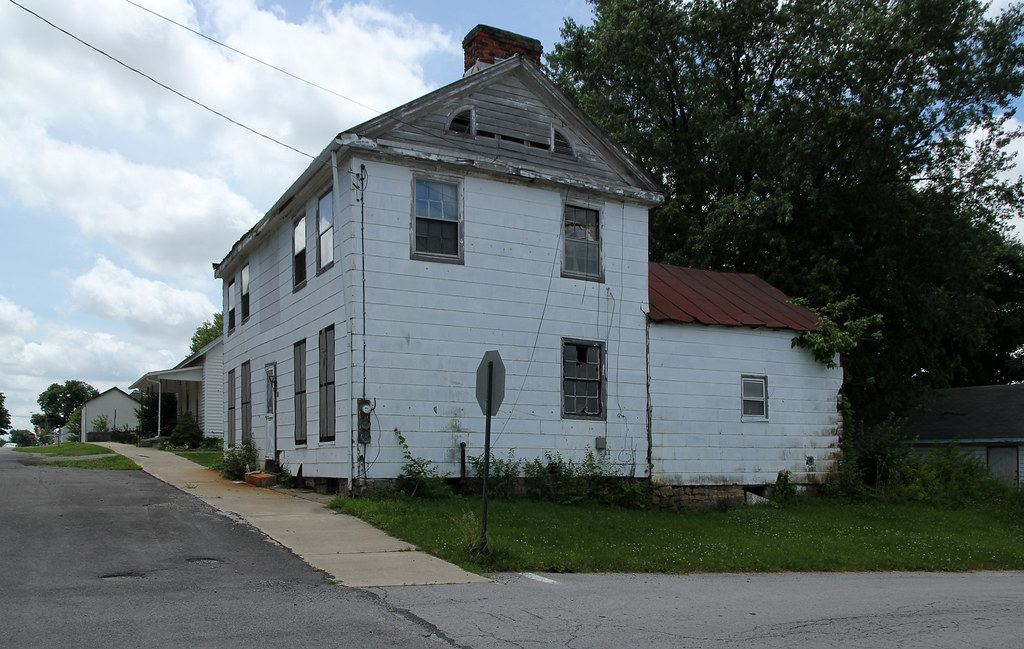
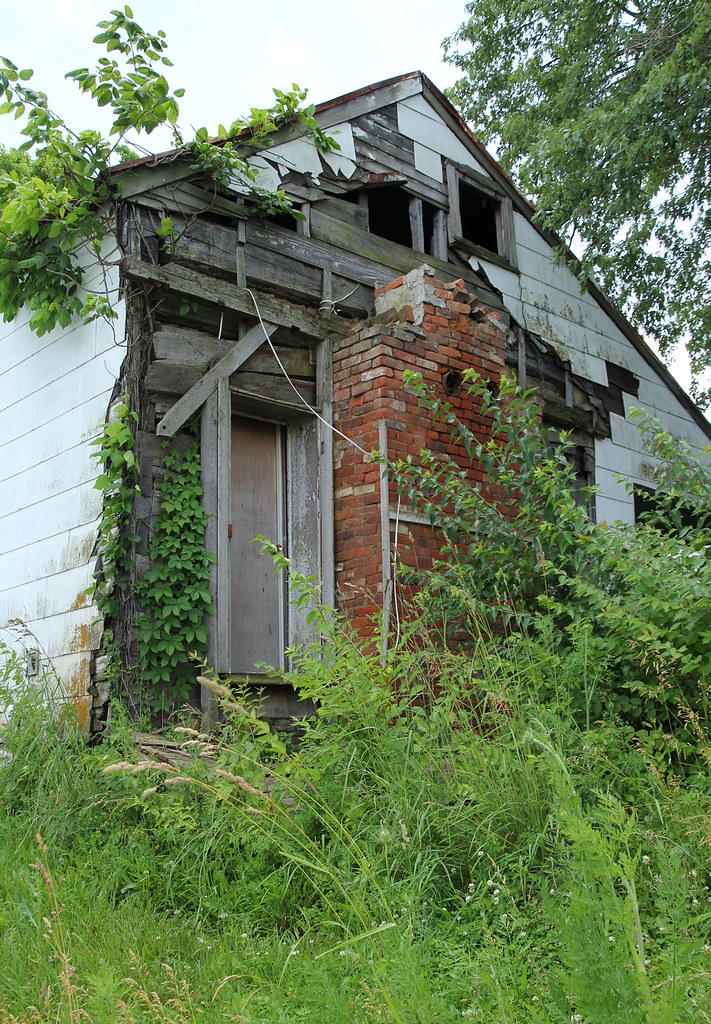
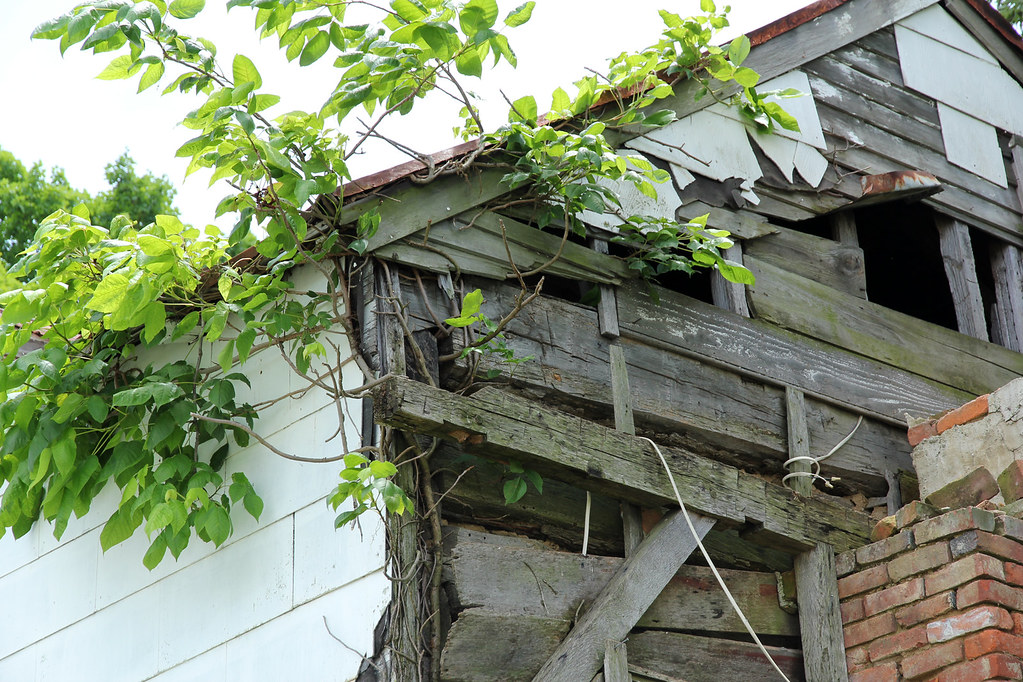
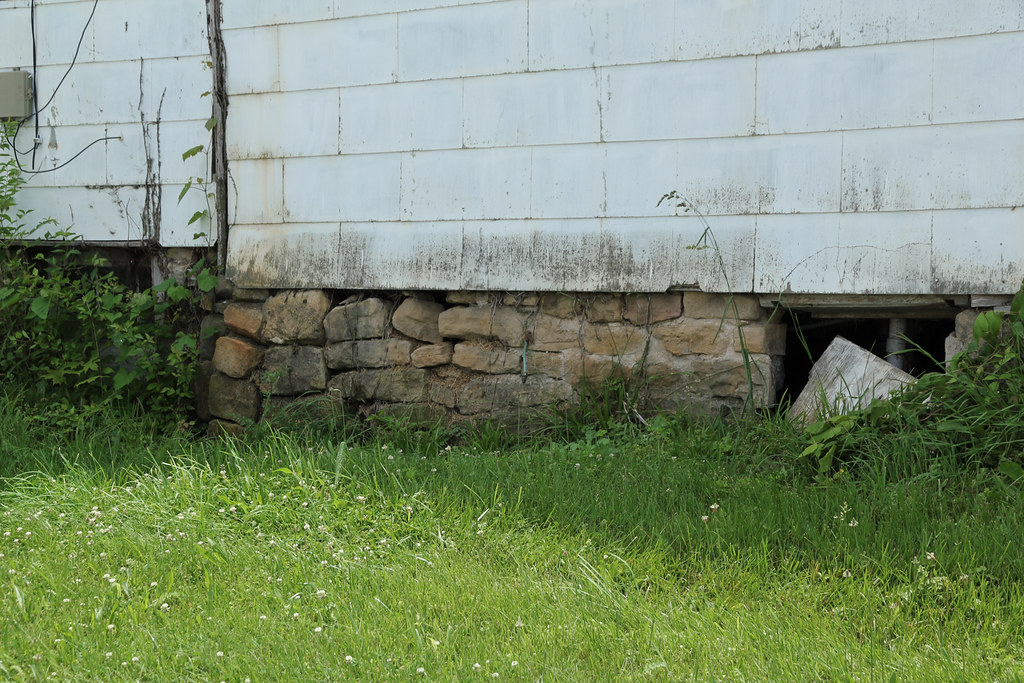
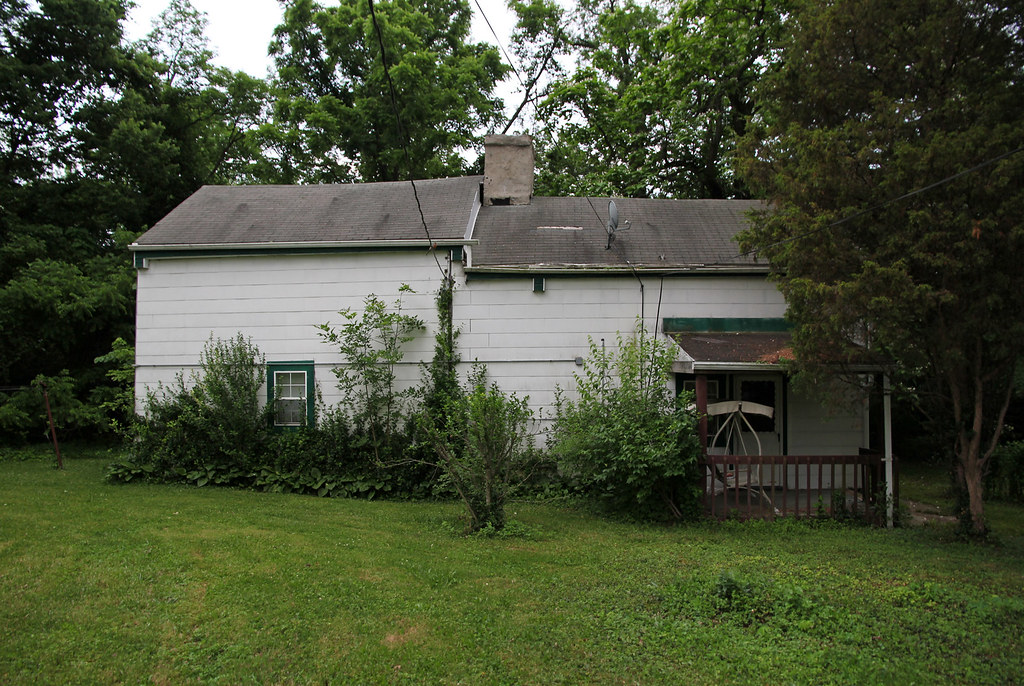
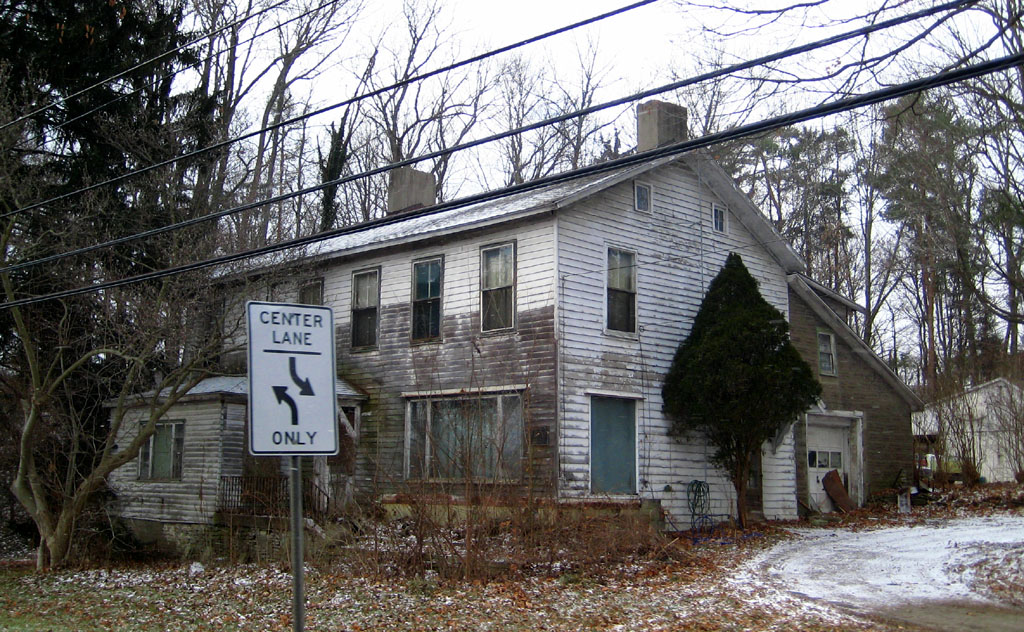
A mile or two north of Delaware, Ohio, stands a weatherbeaten frame building, vacant since 1985, and bearing the usual marks of protracted habitation — additions, alterations, and augmented apertures. It faces busy US Highway 23, which approximates the route of an early road connecting Columbus and Sandusky. The structure's situation betrays its purpose; it served as a tavern (or inn), operated by Jacob Siegfried (1788–1846), a Pennsylvanian, between 1835 and — I presume — 1846.

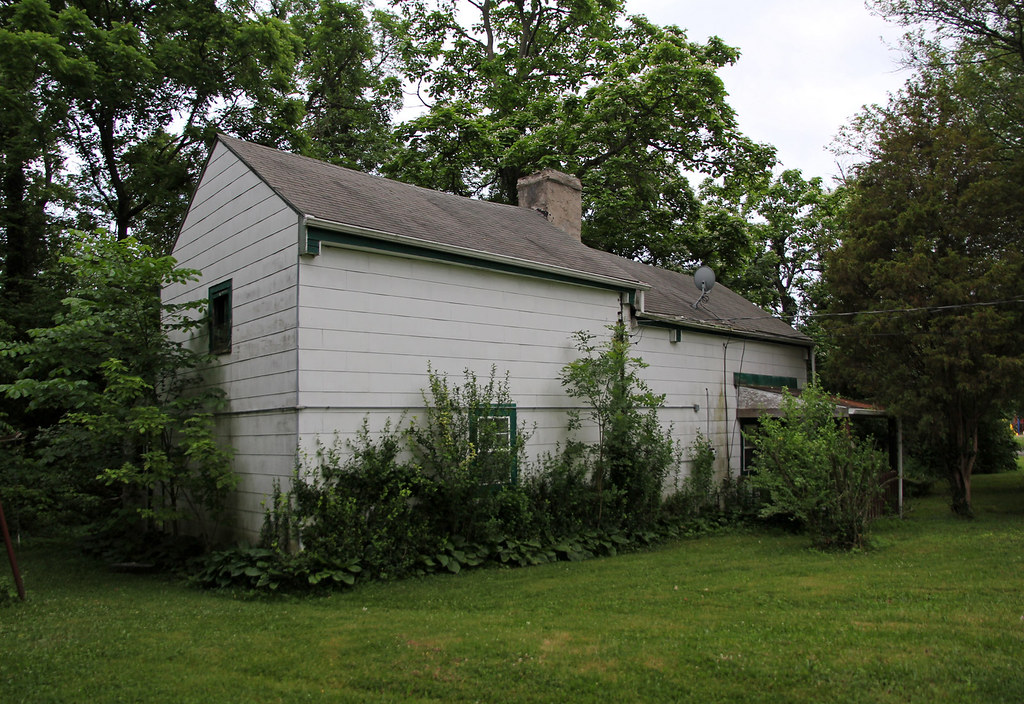
Siegfried's tavern in 2008. (Yes, this photo is terrible; but then, a person trapped in a moving vehicle cannot expect compositional brilliance!)

And, Siegfried's tavern before its abandonment. Photo by George Cryder (?), 1969, from the Delaware County Historical Society collection.

Affixed to the building is a metal plaque, rendered unreadable (during summer months, at least) by unkempt bushes. In my many years of passing the tavern, I could decipher only one word — "tavern" itself. Imagine my surprise, then, when I browsed the Delaware County Historical Society's slide collection and found this:
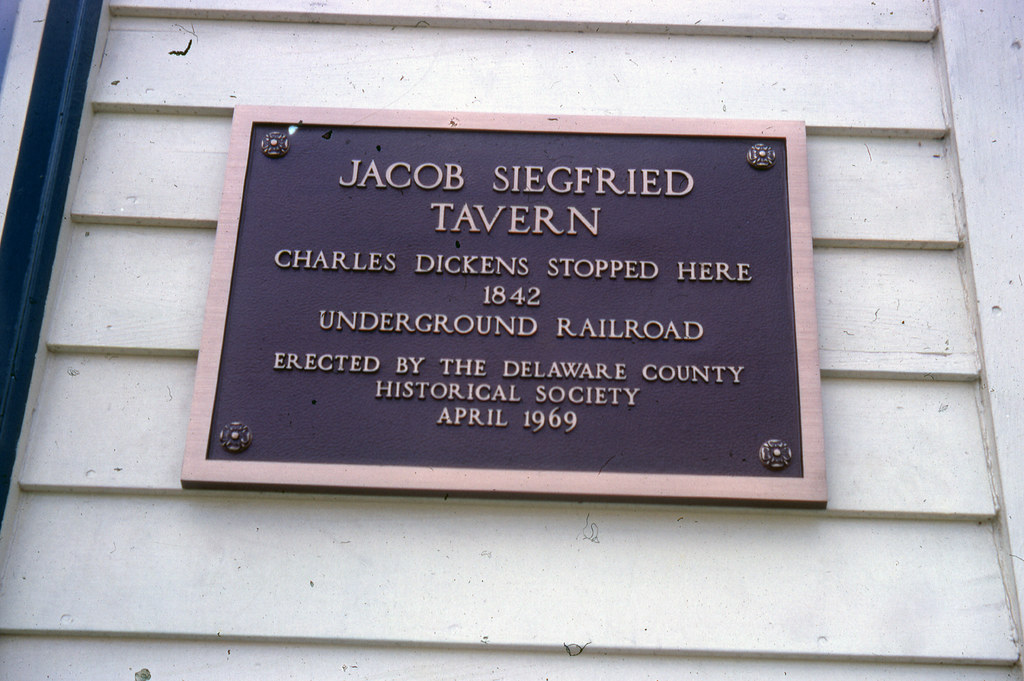
The plaque. Image by George Cryder (?), 1969, from the Delaware County Historical Society collection.

At first, I accepted the claim with delight. I'd long known about Dickens's 1842 excursion to America, recounted, with invaluable cynicism (1), in American Notes for General Circulation. But, after a moment's thought, I felt a twinge of uncertainty. Though I'd read (and reread) the portion of American Notes covering the Ohio leg of Dickens's journey, I could recall no mention of Delaware.

In the fourteenth chapter, Dickens describes his sole jaunt through Ohio's interior (2):
There being no stage-coach next day, upon the road we wished to take, I hired 'an extra,' at a reasonable charge to carry us [from Columbus] to Tiffin; a small town from whence there is a railroad to Sandusky. This extra was an ordinary four-horse stage-coach, such as I have described, changing horses and drivers, as the stage-coach would, but was exclusively our own for the journey. To ensure our having horses at the proper stations, and being incommoded by no strangers, the proprietors sent an agent on the box, who was to accompany us the whole way through; and thus attended, and bearing with us, besides, a hamper full of savoury cold meats, and fruit, and wine, we started off again in high spirits, at half-past six o’clock next morning, very much delighted to be by ourselves, and disposed to enjoy even the roughest journey. 
We alighted in a pleasant wood towards the middle of the day, dined on a fallen tree, and leaving our best fragments with a cottager, and our worst with the pigs . . . we went forward again, gaily. (3)
As I feared, not so much as a mention of inns, taverns, or Delaware. (I doubt even Dickens, contemptuous of America though he was, would dare to call Siegfried a "cottager.") In the following pages, Dickens describes only one stop between Columbus and Tiffin — Upper Sandusky, which lies well north of Delaware. If Dickens hired an "extra" for the sake of "being incommoded by no strangers," and dined (while sitting on a fallen tree) from his coach's supply of "savoury cold meats, and fruit, and wine," why would he stop at Siegfried's tavern? Why inconvenience himself with the company of strangers? And why avoid writing about the sojourn?

Dickens's diary provides few answers (though, unlike American Notes, it does mention that his coach changed horses several times). A folder labeled "Siegfried Tavern" — held by the Delaware County Historical Society — contains property research and biographical information about the Siegfried family, but barely mentions Dickens's supposed stay. The 1842 copies of Delaware newspapers seem to be lost.

The plaque's claim, then, is neither provable nor falsifiable. The weight of evidence may lie on the side of doubt, but mere weight is scarcely proof. I've no choice but to speculate.

Perhaps the story is merely hearsay — a local legend repeated by innumerable Herodotuses, and having no more credibility than the 6.2 x 10^14 similar tales about George Washington, Andrew Jackson, and Abraham Lincoln. Perhaps "Dickens passed this tavern" mutated, as verbal accounts are wont to do, into "Dickens stopped here." Or, perhaps, Dickens gave a hearty wave from his coach; Siegfried noticed and passed the impression to his descendants, in whom it transformed into today's story. Or Dickens indeed paused at Siegfried's tavern, albeit briefly, and simply for a change of horses or a bit of leg-stretching.

1) The best nineteenth-century descriptions of America tend to be those given by foreigners.
2) Though Dickens twice visited Cincinnati, he ventured into the state proper only once.
3) American Notes for General Circulation, Volume II (1842), 133–134.

Saturday, October 24, 2015

An Unnamed House-Type

Contemporary architectural historians tend to classify buildings by type, much as a biologist groups plant leaves by size and shape. Thus, we see, in books and survey reports, such colorful terms as "I-house," "Foursquare," "gable-front," and "shotgun." Though useful, these terms are often ill-defined, and, in my opinion, little better than the stylistic labels they supplanted. (Most early historians of American architecture, like I.T. Frary and Rexford Newcomb, saw buildings as works of art, and described them accordingly.) For the sake of this post, though, I'll abandon my skepticism and invent a house-type of my own.

Scattered throughout Ohio are homes of strikingly similar design (as similar as, say, the state's many "I-houses" or "upright-and-wings"), but which, so far as I'm aware, remain unmentioned in architectural literature. Buildings of this type are invariably one-and-a-half stories in height (the upper half-story being wholly tucked beneath the roof) and quite "deep," with long side walls. In form, they vaguely resemble the braced frame "Cape Cod" residences of coastal New England. Where they stand, they predominate. These buildings have long intrigued me, but, until recently, I knew little about their origin.

Before continuing, I should give a few examples:

House, Miami Township, Greene County, Ohio. Owned by William R. Corry (1826–1885) in 1874; Corry was born in Chester County, Pennsylvania. Photo, 2012, from the Greene County Auditor's website.
House, Bethel Township, Clermont County, Ohio. Inhabited by Joshua Smart, a native of Pennsylvania, in 1870. Image, undated, from the Clermont County Auditor's website.
House, Brush Creek Township, Highland County, Ohio. Occupied by S.C. Seaman in 1880. Photo, October 2008, from Google Maps.
House, Nottingham Township, Harrison County, Ohio. Owned by one S. Ramsey in 1875. The Ramsey family emigrated from Ireland to York County, Pennsylvania, in the 18th century. Photo, June 2012, from Google Maps.
Homes of the form I've described, it seems, are unique to regions of Scotch-Irish settlement. In The Architecture of Migration, Donald Hutslar briefly describes the group's history:
These people were the Scotch-Irish — Protestant Lowland Scots who had largely resided in stone cottages in northern Ireland a few generations before emigrating to the [American] colonies in several waves[,] beginning early in the eighteenth century.
Between 1800 and 1830, many families of Scotch-Irish descent moved from Pennsylvania to eastern Ohio, settling, primarily, in the Seven Ranges and U.S. Military District. The counties of Guernsey, Harrison, and Jefferson, especially, contained concentrated Scotch-Irish populations. Scotch-Irish, from both Pennsylvania and the Upper South, also settled in the Virginia Military District, and elsewhere in Ohio (though in lesser numbers).

Interestingly, the house-type I've described seems confined to the Midwest. Most extant Scotch-Irish dwellings in southwestern Pennsylvania bear little resemblance to the Ohio house-type; neither do buildings in Virginia and the Carolinas. Precisely where, and when, the "Scotch-Irish box" (inelegant, yes, but so is "upright-and-wing") arose is unclear. Its origin may lie in Pennsylvania, or in Ireland or Scotland.

Sunday, March 29, 2015

Harris Dental Museum

Bainbridge, Ross County, Ohio

A circa 1815 residence; between 1825 and 1830, the building housed the country's first dental school, operated by John Harris. Platted by the redoubtable Nathaniel Massie in 1805, Bainbridge retains a number of early structures.

Currently, this house functions as a museum operated by the Bainbridge Historical Society. It's a fascinating slice of American history, well worth a visit for individuals traveling US Highway 50.

The interior.
My favorite element of early 19th century vernacular architecture is perhaps the enclosed corner staircase; once commonplace, such staircases are, for obvious reasons, becoming quite scarce "in the wild."
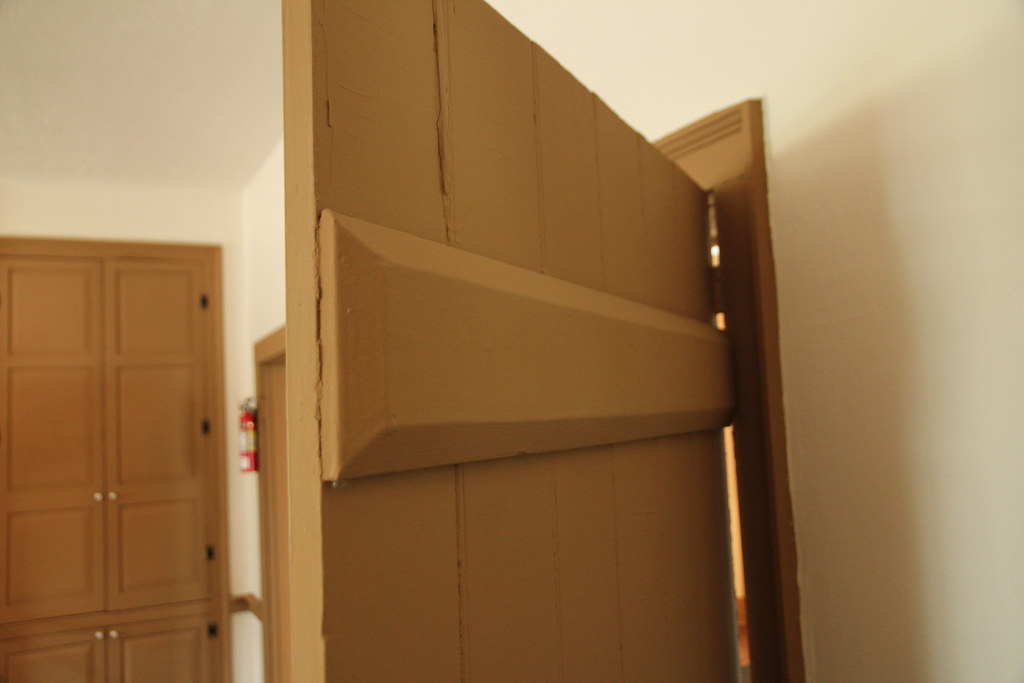
In The Architecture of Migration, Donald Hutslar discusses a similar Clear Creek Township, Warren County door: "The doors in this house were made of boards interlocked by tapered and dovetailed battens. This joinery technique was used for table tops in the 18th century and before. Similar doors exist in a log house near Austintown in Mahoning County."

Saturday, February 21, 2015

Overland Inn

McCutchenville, Tymochtee Township, Wyandot County, Ohio


Joseph McCutchen, the community's namesake, constructed this building in 1829 as "a stagecoach stop on the Overland Trail," which ran between Columbus and Lake Erie. The Wyandot County Historical Society purchased the home, then neglected, in 1964; renovation occurred twice, by 1967 and between 2004 and 2007.

The braced frame portion certainly postdates 1829.


Saturday, January 31, 2015

New Vienna Log House

New Vienna, Clinton County, Ohio

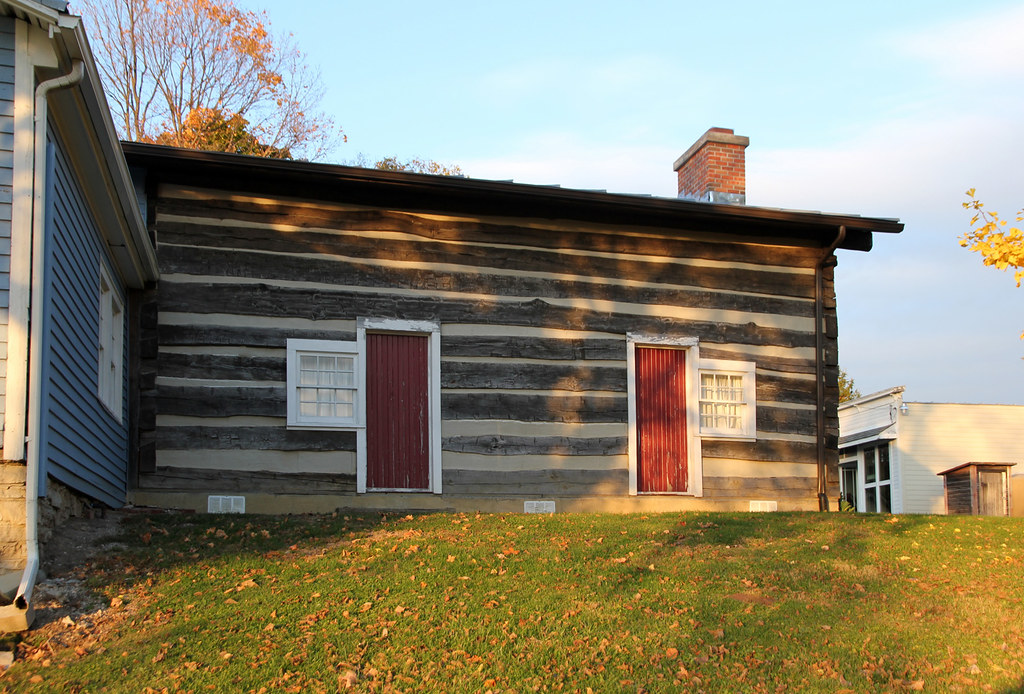
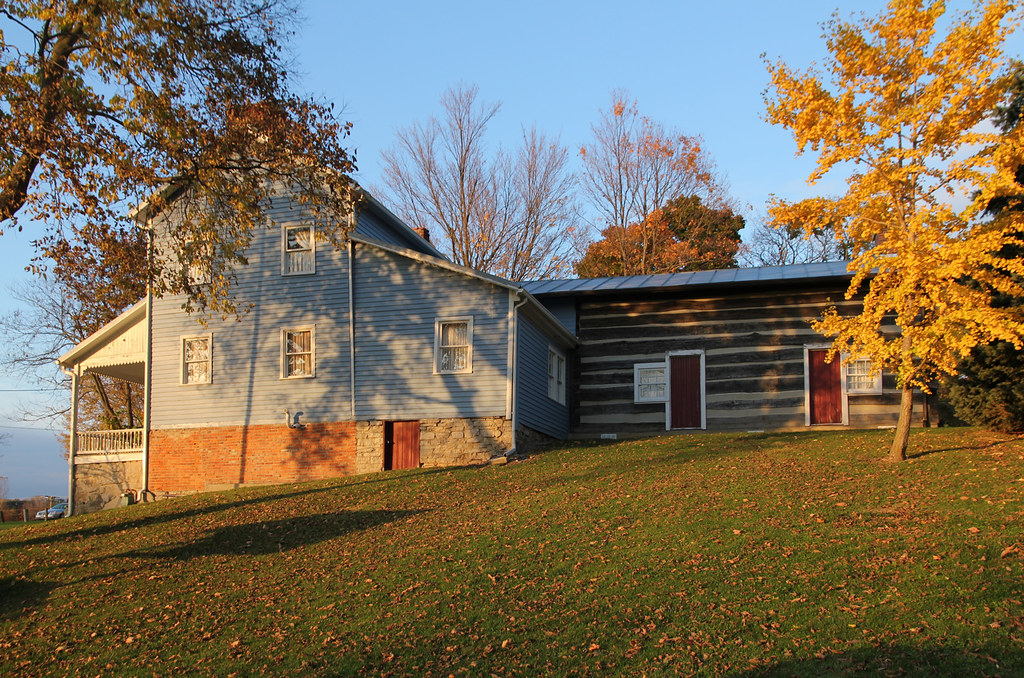
This building's history is a bit mysterious. Whether it predates New Vienna's founding, was constructed after 1835, or was relocated to its current site, I'm not certain. The interior is a mess of faux wood paneling, ceiling tiles, and shag carpet.


Though New Vienna was platted in 1835, its settlement began slightly earlier, in the 1820s. Before incorporation, the community received the moniker "Buzzard's Glory," from a tannery operated as early as 1812 by one Mr. Mortimer. (The tanning hides attracted vultures, evidently.)

The cornice, spanning the side elevation's width, is somewhat unusual, as are the half-lunette attic vents.
The logs are half-dovetailed.
Framing, for a now-demolished addition, is visible at lower center. Note the mortises.

Wednesday, September 3, 2014

A "Saddlebag" Log House!

Hazelwood (formerly Sycamore Township), Hamilton County, Ohio

The house.
At the suburban fringe of Cincinnati, in the midst of railroad tracks and 1970s-era infill, stands this proper "saddlebag" log house. I'm aware of merely four extant "saddlebag" log structures in Ohio, this home included; the others stand at Caesar's Creek Pioneer Village, near Waynesville, and in Tiffin Township, Adams County. Of those, only two are complete, for half the Hawkins house was lost in the mid-20th century.

When I began my survey of log architecture, more than three years ago, I hoped to encounter some great, undocumented example of a rare building type, but, alas, I did not. Until March of 2014.

The Miami Purchase Association's survey of Hamilton County overlooked the house, and, to the best of my knowledge, I was the first individual to recognize its significance. Currently, it is both vacant and listed for sale.

The northern pen (nearest the camera) is a bit taller than the southern pen; the two may not be contemporaneous. Note the prominent overhanging plates.
The home's oldest remaining door  historic, but not original.
The shorter (south) pen's plates extend past the walls to support the roof; evidently, the space between the pens and chimney was always sheltered.
Odd. The plate appears to be pinned to its supporting log (unless, of course, the protruding object is related to electrical wiring; a vestige of WPA-era rural electrification, perhaps).
The missing asbestos siding reveals wood clapboards and a side wall log (or joist).
The 1847 and 1856 maps list A. Miller as the 160-acre property's owner. By 1869, ownership had passed to Thomas H. Smith, who sold his farm in 1888; at this time, the property was subdivided and christened "Hazelwood."

The house's precise construction date is unclear. It is, no doubt, a very early building, likely dating to the first decades of the 19th century, or possibly earlier ("ca. 1800" is not an unreasonable conjecture).