Showing posts with label vacant. Show all posts

Saturday, October 13, 2018

Woodland: Would Latrobe Approve?

Kentucky's Bluegrass is an exceptional place. Truly, it is. Whereas the state, as a whole, tends to suffer from both poverty and architectural impoverishment (like much of the South), the triangle of fertile farmland lying between Louisville, Maysville, and Stanford shelters what may be the finest concentration of antebellum buildings west of the Appalachians. Like quasi-Jeffersonian villas? You'll find them here. Multi-pen log structures? Ditto. Greek Revival temples? Likewise. Sprawling Italianate mansions? Yep. The region's incredible agricultural prosperity produced an incredible building stock — and one (seemingly) little-blunted by the Civil War and Reconstruction.

Jessamine County sits at the southern edge of the so-called Inner Bluegrass, the central and most wealthy portion of the broader Bluegrass area. (Here lies Lexington, the "Athens of the West.") Not terribly far from the Lexington city boundary exists the Golf Club of the Bluegrass, which occupies a rural estate once known as Woodland. Woodland, along with many other Jessamine County farms, is listed on the National Register — but it's not well-publicized, in spite of its excellence. The centerpiece of Woodland is an 1889 mansion, commissioned by John Steele (1845–1918) and built in a transitional Italianate–Romanesque style. The round-arched portal, entrance tower, rusticated voussoirs, and semicircular balcony are all features more befitting public buildings than private ones — but then, this is the Bluegrass, where such a thing was possible.

John Steele's residence (1889), now a golf-course clubhouse.

Who built Woodland? I haven't a clue. The National Register nomination is disappointingly terse, giving only the most rudimentary information about the property's history. (One quirk: a child's handprint pressed into a brick sandwiched between two tower windows.) But there are two homes at Woodland — and this fact is what tips the property from the great to the exceptional.

Tucked behind Steele's residence is a low brick structure (quite a contrast to its neighbor's buoyant upward thrust) no less interesting. Like the main house, it seems both to embrace and to smash the architectural norms of its era. It's clearly a Federal-period building, perhaps constructed about the time the British and the Americans fought their last battle, or even shortly before. It diverges from almost all other Jessamine County Federal homes, though, in its studiedness. It doesn't make use of the panoply of traditional floor plans available to early Kentuckians (i.e., central- and side-passage arrangements, or the telescopic configuration pioneered in the Chesapeake). Rather, its five main rooms form an H-shaped footprint, with a service ell jutting to the side. Chimneys are placed between the front and back rooms. The partly enclosed areas formed by the H's hyphen function as porches.


The house's finish is equally unusual. The facade features tripartite windows (very common in the Bluegrass) set within segmental-arched recesses (not common in the Bluegrass). The entry consists of two four-panel doors flanked by sidelights and a fanlight (typical enough), but the porch area is plastered as if an interior room. (This treatment reminds me of the Latrobe-designed Pope Villa's entrance.) The cornice has a usual Federal profile.

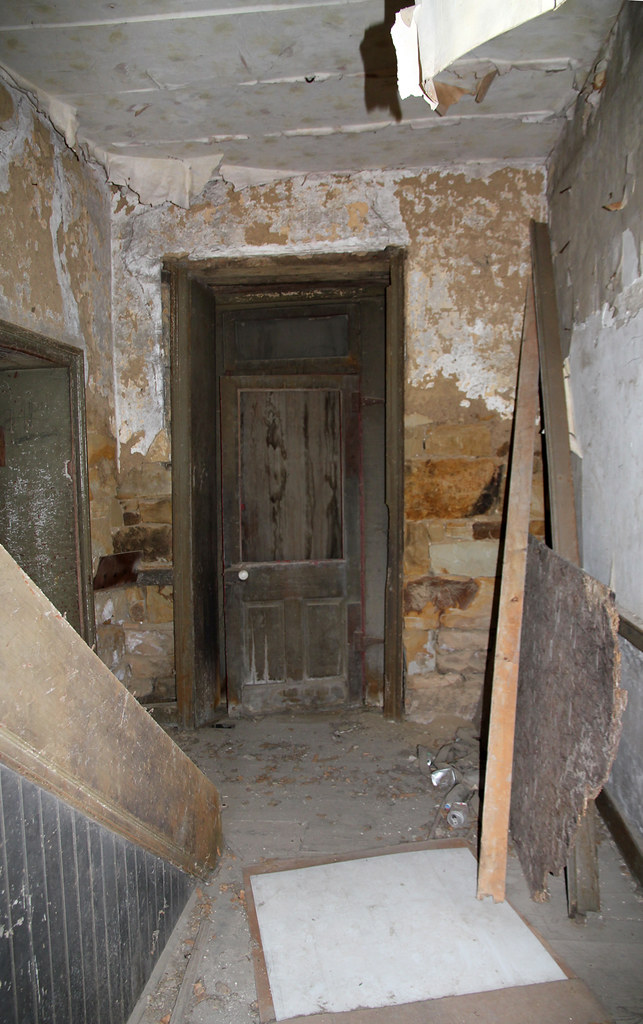
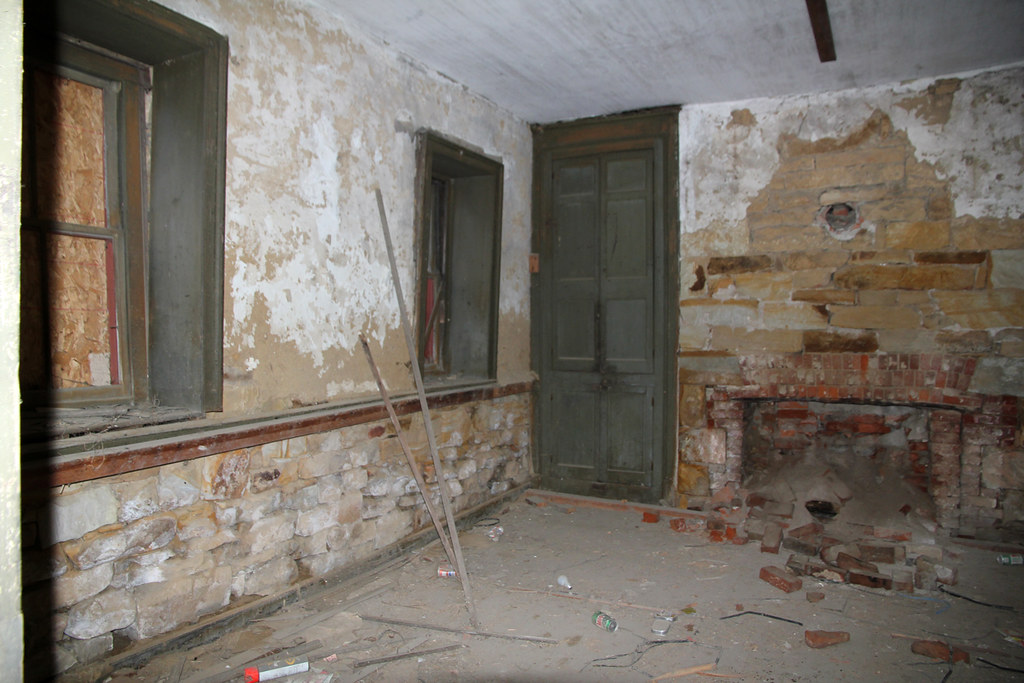
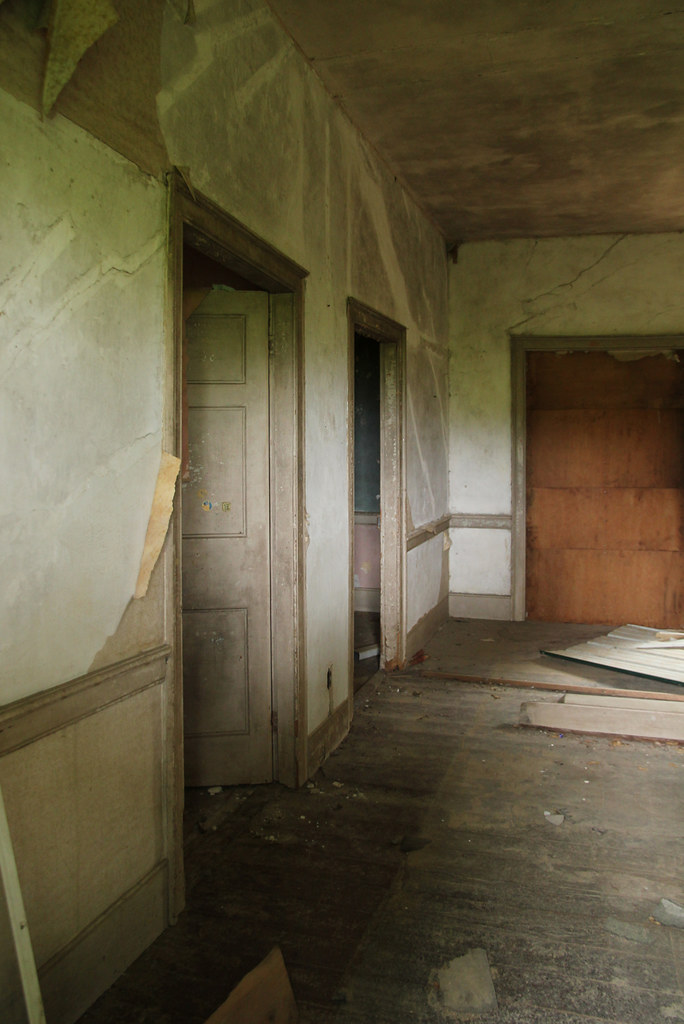
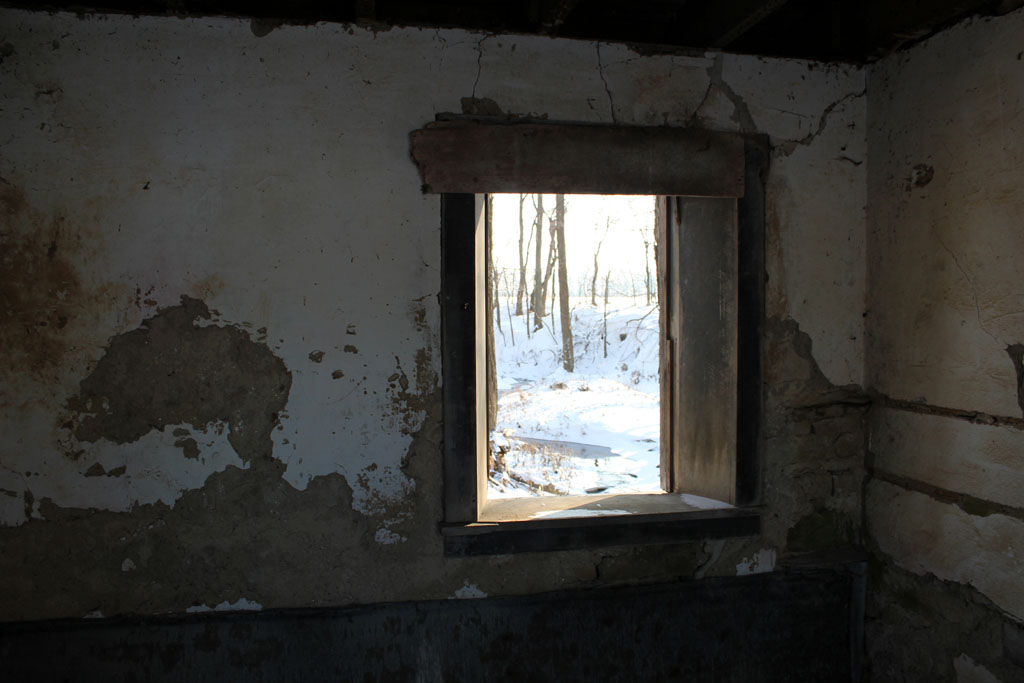
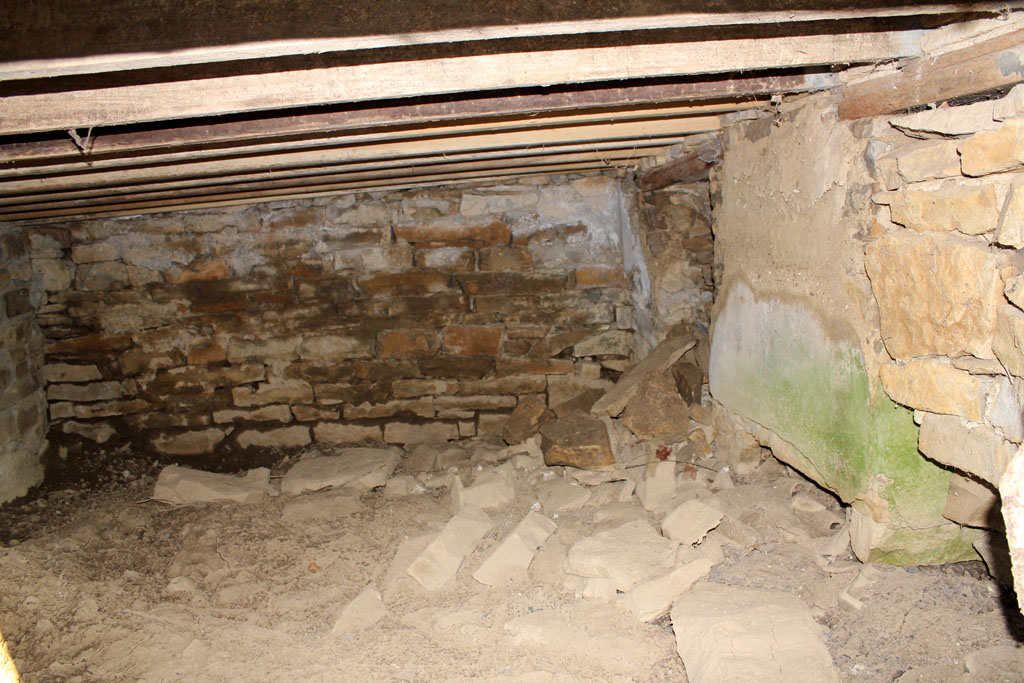
Unfortunately, the building has fallen into terrible disrepair. ('Twas long thus — as early as 1977, it served as a storage space.) Both porch's roofs and floors are failing spectacularly, interior plaster is falling from the ceilings and walls, several windows are entirely nonexistent, the foundation appears to be sinking, and much woodwork is missing. (No trim remains in the northeastern room.) A glance through the windows reveals jumbled heaps of furniture, planks, plaster dust, and golf balls.


Who designed it? And for whom? Again, mostly silence. The nomination form attributes its initial ownership to a Mason Singleton. My quick perusal of genealogical sites yielded a bit of information. A Mason Singleton (1804–1894) almost certainly owned the property, but he seems too young to have commissioned the home. His father, Manoah Mason Singleton, Jr. (1773–1833), was more likely the first owner. The Singleton family hailed from Spotsylvania County, Virginia — no doubt a source of many Bluegrass settlers. For a time, Manoah resided with his parents at Bryan Station, a fortified encampment which stood north of Lexington (and predated the city's founding).


So, a quasi-Palladian cottage — the sort of thing a Jefferson or Latrobe might design for a less-prominent client, and a building associated with one of Jessamine County's founding families — lies moldering behind the lovingly maintained mansion which replaced it. Such is the Bluegrass. Alas, I'm not optimistic about the building's long-term survival. Restoring it would require a six-figure (or more) investment — not merely a bit of repainting and refinishing, but a complete reconstruction. Bricks would need to be relaid, woodwork replaned, and walls replastered. Is it worth the money? I hope so. But only the Golf Club of the Bluegrass can make such a judgment.


Monday, August 15, 2016

Charles Dickens and the Siegfried Tavern

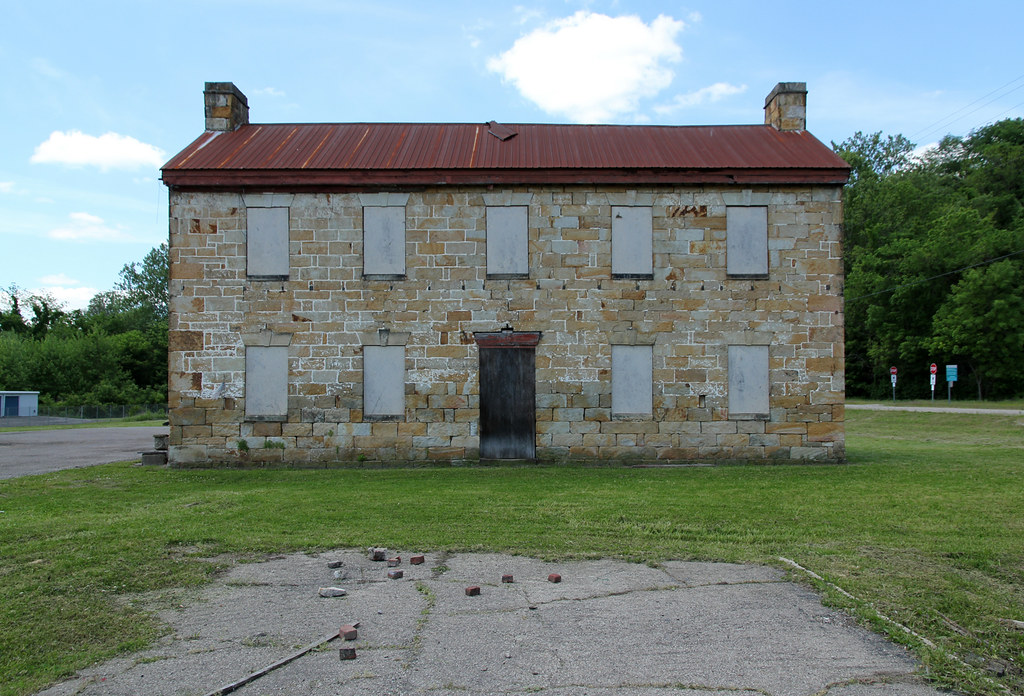
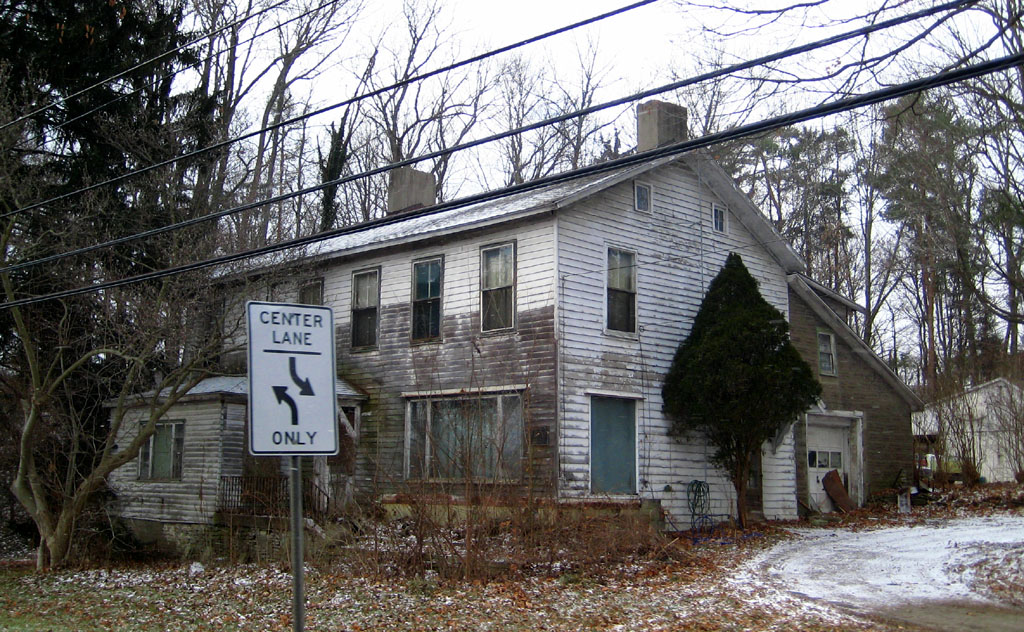
A mile or two north of Delaware, Ohio, stands a weatherbeaten frame building, vacant since 1985, and bearing the usual marks of protracted habitation — additions, alterations, and augmented apertures. It faces busy US Highway 23, which approximates the route of an early road connecting Columbus and Sandusky. The structure's situation betrays its purpose; it served as a tavern (or inn), operated by Jacob Siegfried (1788–1846), a Pennsylvanian, between 1835 and — I presume — 1846.

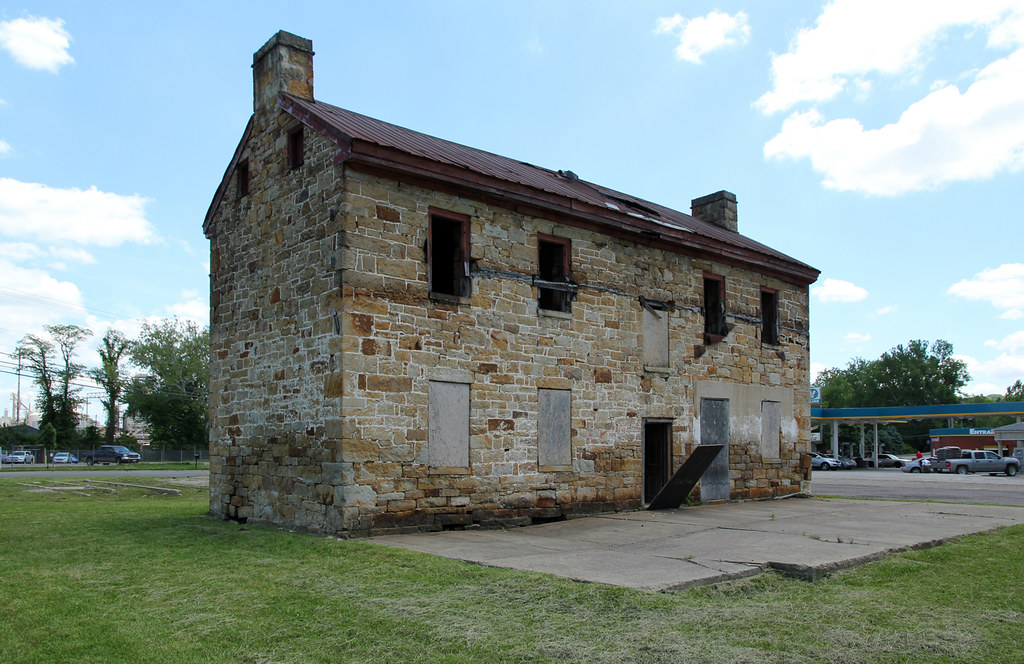
Siegfried's tavern in 2008. (Yes, this photo is terrible; but then, a person trapped in a moving vehicle cannot expect compositional brilliance!)

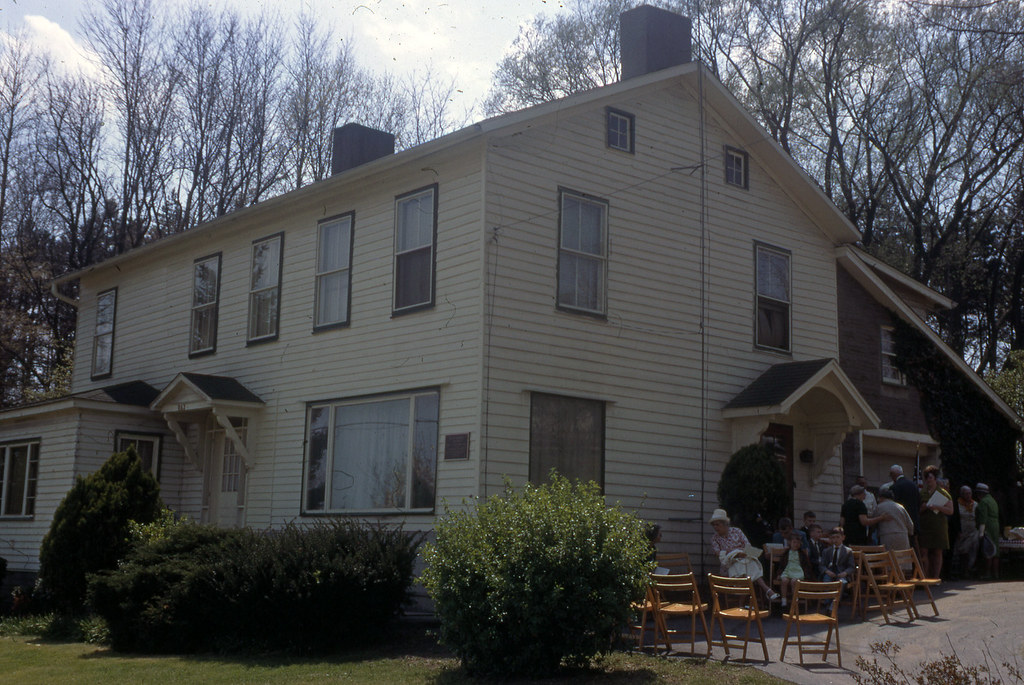
And, Siegfried's tavern before its abandonment. Photo by George Cryder (?), 1969, from the Delaware County Historical Society collection.
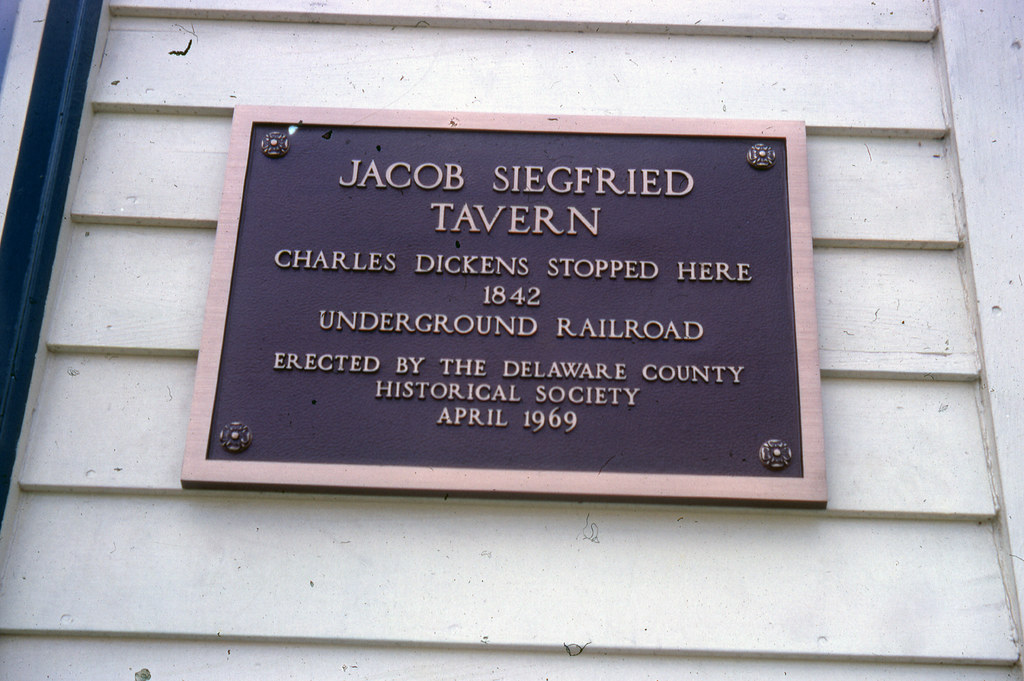
Affixed to the building is a metal plaque, rendered unreadable (during summer months, at least) by unkempt bushes. In my many years of passing the tavern, I could decipher only one word — "tavern" itself. Imagine my surprise, then, when I browsed the Delaware County Historical Society's slide collection and found this:

The plaque. Image by George Cryder (?), 1969, from the Delaware County Historical Society collection.

At first, I accepted the claim with delight. I'd long known about Dickens's 1842 excursion to America, recounted, with invaluable cynicism (1), in American Notes for General Circulation. But, after a moment's thought, I felt a twinge of uncertainty. Though I'd read (and reread) the portion of American Notes covering the Ohio leg of Dickens's journey, I could recall no mention of Delaware.

In the fourteenth chapter, Dickens describes his sole jaunt through Ohio's interior (2):
There being no stage-coach next day, upon the road we wished to take, I hired 'an extra,' at a reasonable charge to carry us [from Columbus] to Tiffin; a small town from whence there is a railroad to Sandusky. This extra was an ordinary four-horse stage-coach, such as I have described, changing horses and drivers, as the stage-coach would, but was exclusively our own for the journey. To ensure our having horses at the proper stations, and being incommoded by no strangers, the proprietors sent an agent on the box, who was to accompany us the whole way through; and thus attended, and bearing with us, besides, a hamper full of savoury cold meats, and fruit, and wine, we started off again in high spirits, at half-past six o’clock next morning, very much delighted to be by ourselves, and disposed to enjoy even the roughest journey. 
We alighted in a pleasant wood towards the middle of the day, dined on a fallen tree, and leaving our best fragments with a cottager, and our worst with the pigs . . . we went forward again, gaily. (3)
As I feared, not so much as a mention of inns, taverns, or Delaware. (I doubt even Dickens, contemptuous of America though he was, would dare to call Siegfried a "cottager.") In the following pages, Dickens describes only one stop between Columbus and Tiffin — Upper Sandusky, which lies well north of Delaware. If Dickens hired an "extra" for the sake of "being incommoded by no strangers," and dined (while sitting on a fallen tree) from his coach's supply of "savoury cold meats, and fruit, and wine," why would he stop at Siegfried's tavern? Why inconvenience himself with the company of strangers? And why avoid writing about the sojourn?

Dickens's diary provides few answers (though, unlike American Notes, it does mention that his coach changed horses several times). A folder labeled "Siegfried Tavern" — held by the Delaware County Historical Society — contains property research and biographical information about the Siegfried family, but barely mentions Dickens's supposed stay. The 1842 copies of Delaware newspapers seem to be lost.

The plaque's claim, then, is neither provable nor falsifiable. The weight of evidence may lie on the side of doubt, but mere weight is scarcely proof. I've no choice but to speculate.

Perhaps the story is merely hearsay — a local legend repeated by innumerable Herodotuses, and having no more credibility than the 6.2 x 10^14 similar tales about George Washington, Andrew Jackson, and Abraham Lincoln. Perhaps "Dickens passed this tavern" mutated, as verbal accounts are wont to do, into "Dickens stopped here." Or, perhaps, Dickens gave a hearty wave from his coach; Siegfried noticed and passed the impression to his descendants, in whom it transformed into today's story. Or Dickens indeed paused at Siegfried's tavern, albeit briefly, and simply for a change of horses or a bit of leg-stretching.

1) The best nineteenth-century descriptions of America tend to be those given by foreigners.
2) Though Dickens twice visited Cincinnati, he ventured into the state proper only once.
3) American Notes for General Circulation, Volume II (1842), 133–134.

Wednesday, April 22, 2015

Mary Worthington-Macomb House

Chillicothe, Ross County, Ohio


Thomas Worthington, Ohio's sixth governor and owner of the outstanding Latrobe-designed Adena mansion, purchased this building shortly after its 1815 construction. Worthington's daughter, Mary, occupied the home for several years before relocating to Florida. Until recently, a complex of industrial buildings surrounded the structure.

The rear elevation. Note the stairwell window, sitting between the first and second floors; this configuration is typical of well-finished Federal-era homes.
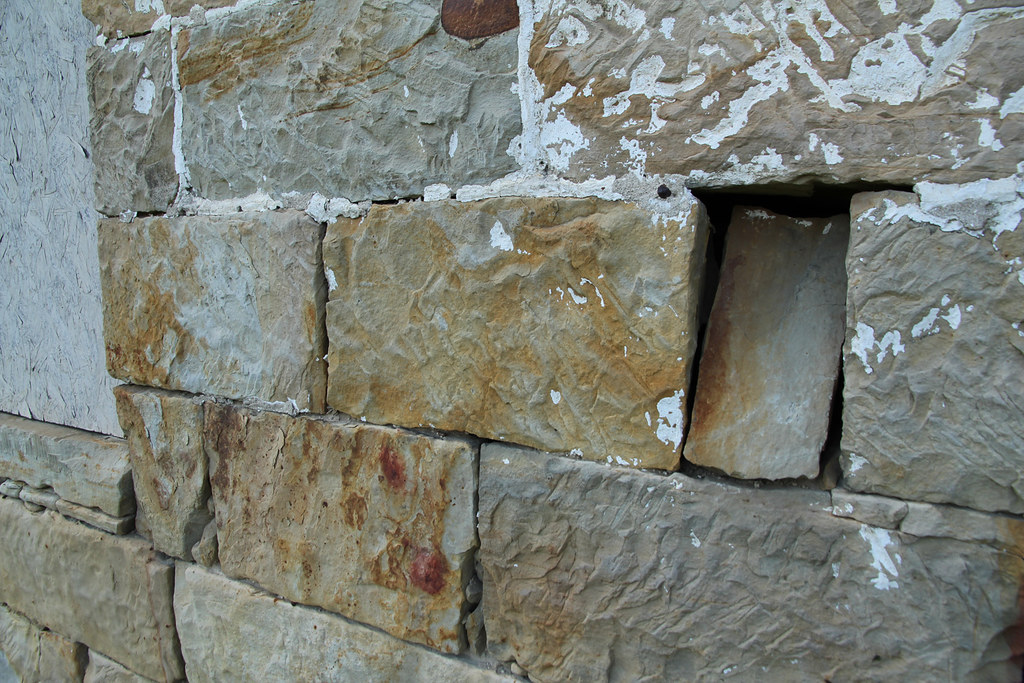
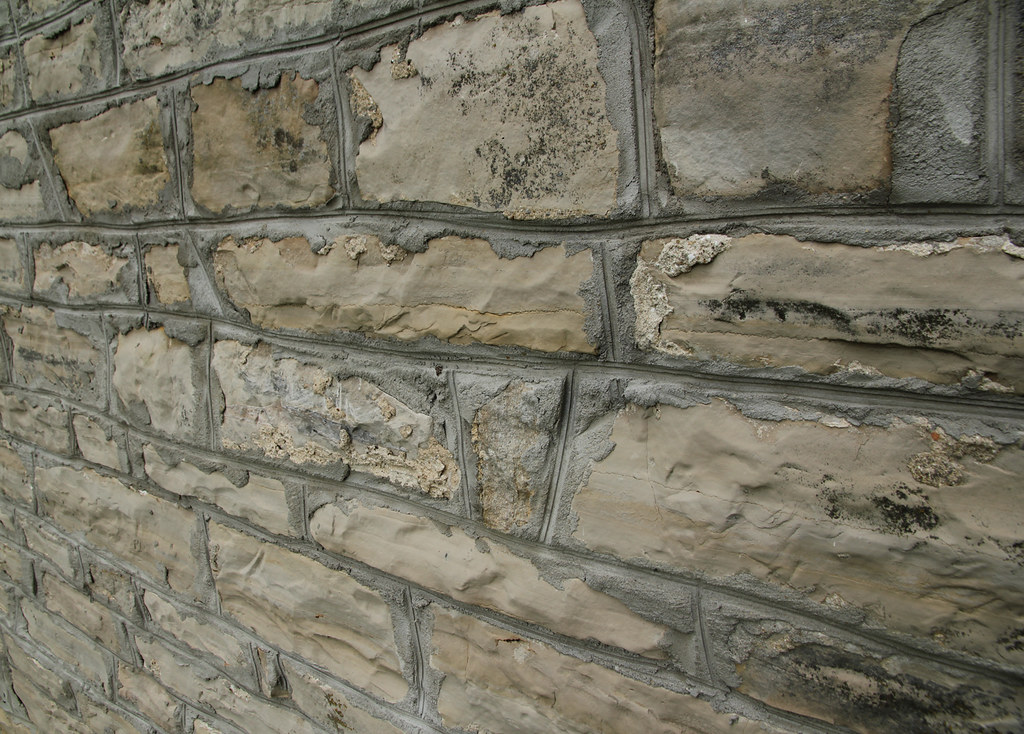
The tool marks are quite visible.
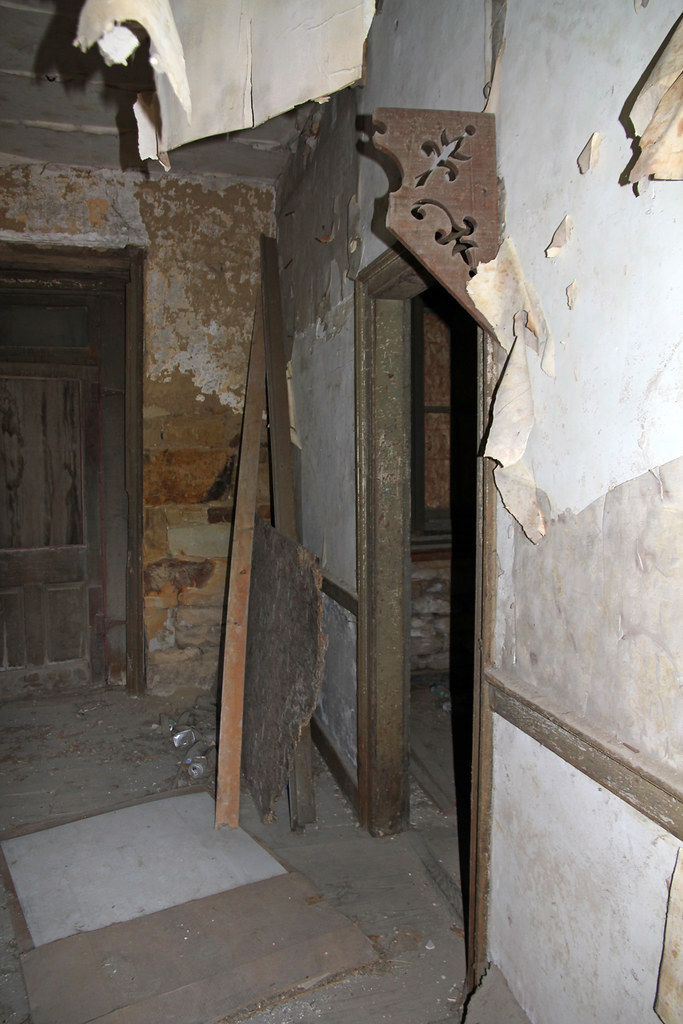
Note the interior stone wall and altered, presumably six-panel front door.
Typical Federal-era woodwork. The mantel's removal is unfortunate.

Friday, April 3, 2015

Joseph Maltby House

Springfield Township, Williams County, Ohio

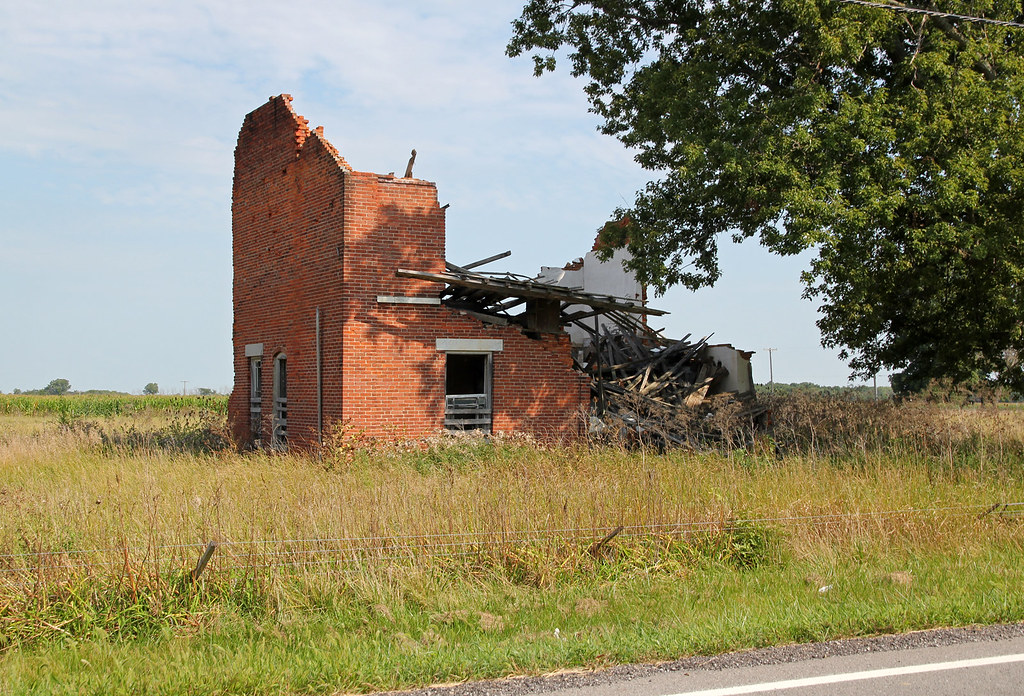
This residence is, so far as I'm aware, Ohio's only extant building with explicitly English antecedents (Muskingum County's Smith House, erected in 1833, is one possible exception); the stone trim, round-arched doorway, window configuration, and slate roof are elements infrequently seen in northern Ohio.

The home before its collapse. Photo by Jon Cutrell, 1996.
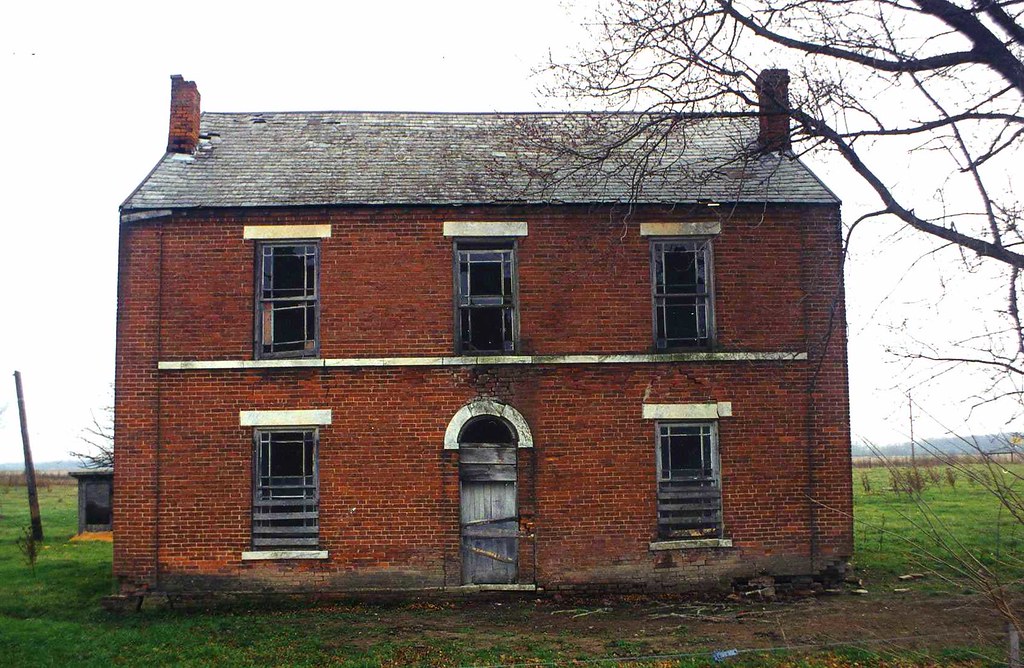
Joseph Maltby (18171879), a native of Derbyshire, England, immigrated to Williams County after his 1846 marriage, purchasing 120 acres in Springfield Township. Maltby's residence, now ruined, likely dates from the 1860s.

The house in 2014; its current condition is a travesty.

Saturday, January 24, 2015

Timberlake House

Penn Township, Highland County, Ohio


One of several early stone residences in Penn Township, a locality settled, as its name suggests, by Quakers. (A similar home, constructed by a non-Quaker, stands only a few miles northeast.)

A 1981 Ohio Historic Inventory form, completed by Stephen Gordon, provides the home's history:
Richard Timberlake (17861860), a native of Campbell County, Virginia, came to Highland County with his father John Timberlake (17611827). John Timberlake had purchased 330 acres in Survey #2327 on October 10, 1807; by 1825 Richard Timberlake had acquired 106 1/4 acres of the original tract. Richard, a member of the Clear Creek Meeting, married Mary Wright of Springboro in 1810. Alfred Timberlake, Richard's son, subsequently lived with his wife Phoebe Doan on this farm. They were married at Centre Meeting on May 22, 1839. In May, 1845, the Timberlakes sold the 106 acre farm to Jonathan and Susana Ellis. The house is reported to have been built c. 1812 by Richard Timberlake. However, the 1825 Tax Duplicate neglects to mention a house. It does appear on the 1833 tax rolls and was valued at $300.00.
The 1812 construction date "feels" more accurate.

Note the small gable windows, which cut into the frieze board. This building lacks the flush chimneys typical of early 19th century masonry construction.
The house's walls are quite thick.
Beautiful. Built into a slope, the house likely featured a basement kitchen.

The accompanying barn.

David Wright House

Penn Township, Highland County, Ohio


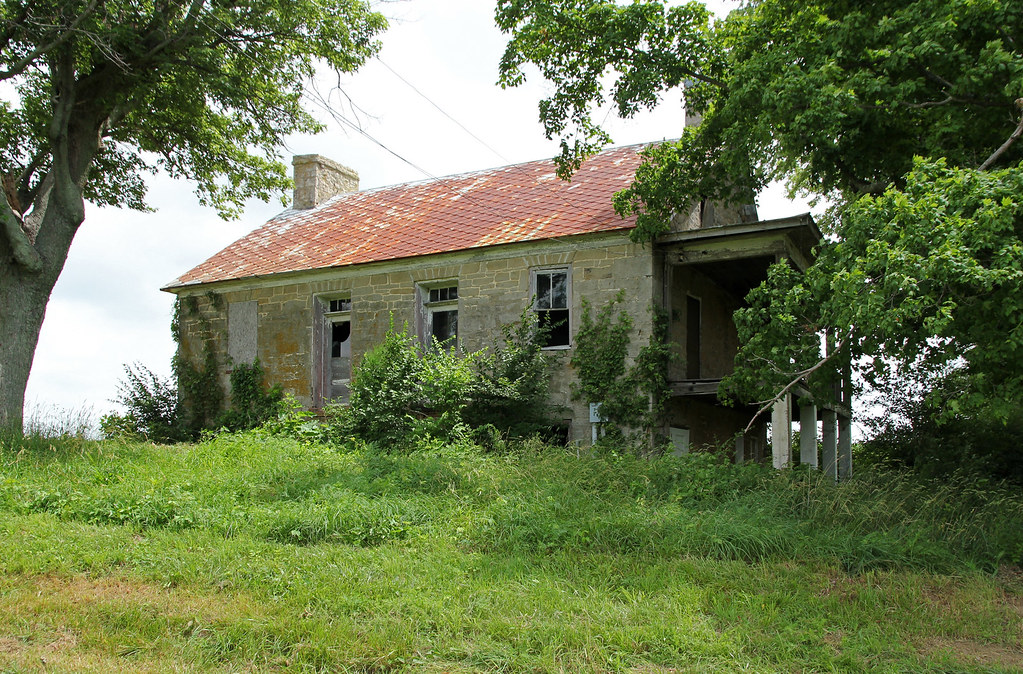
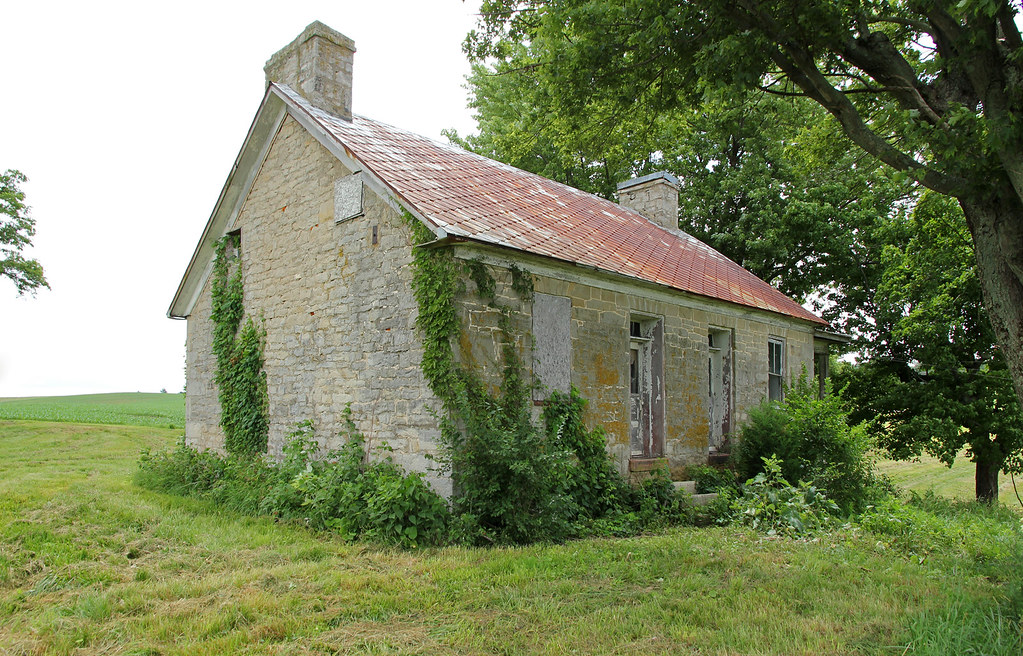
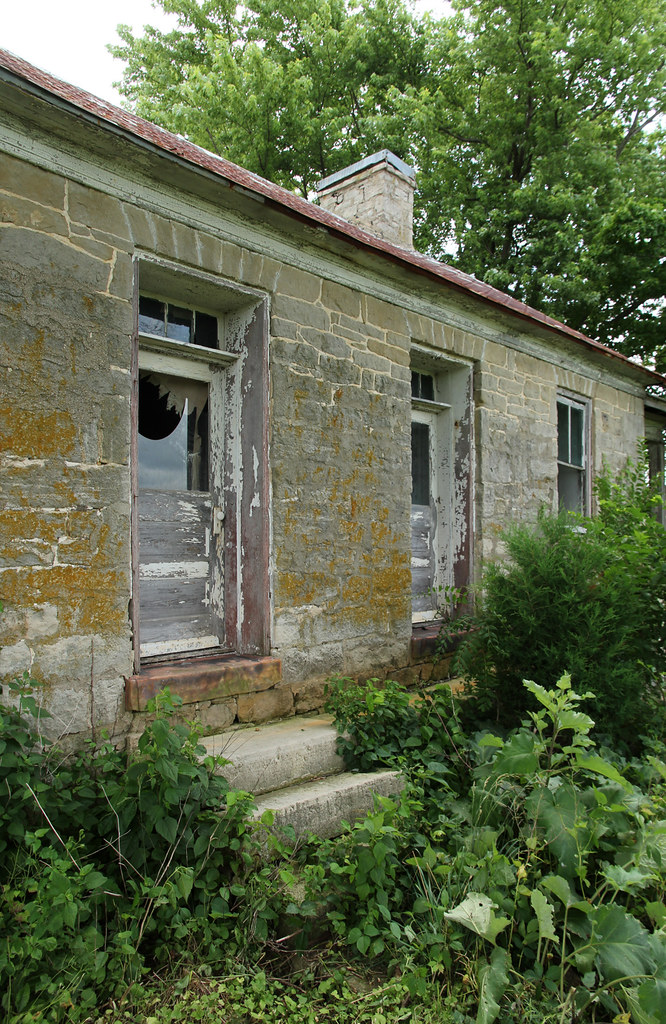
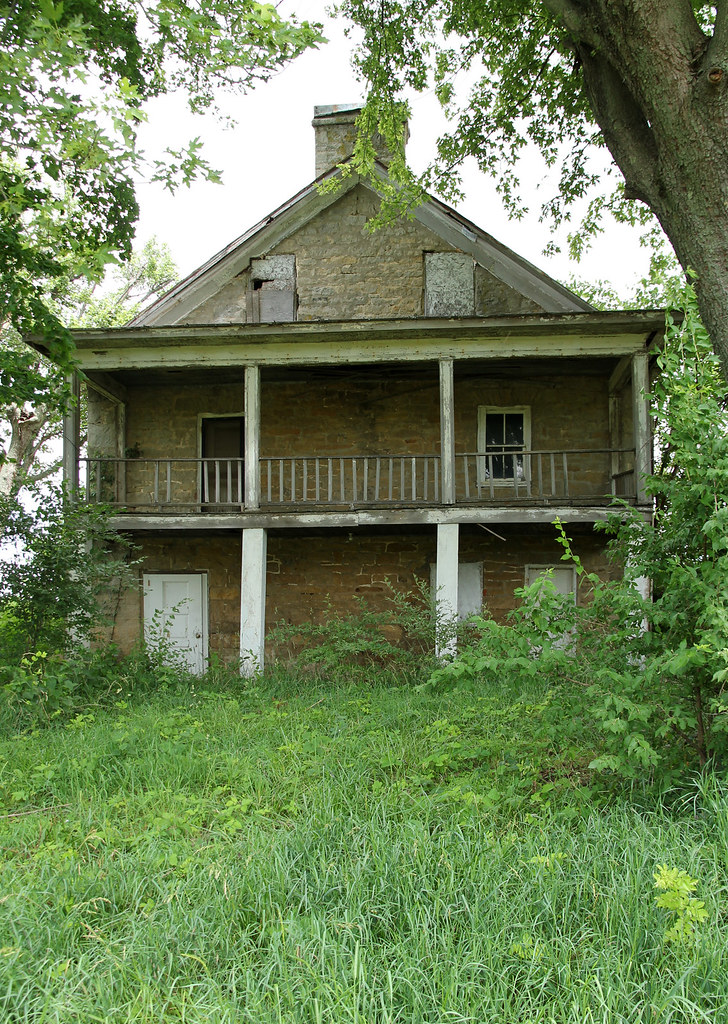
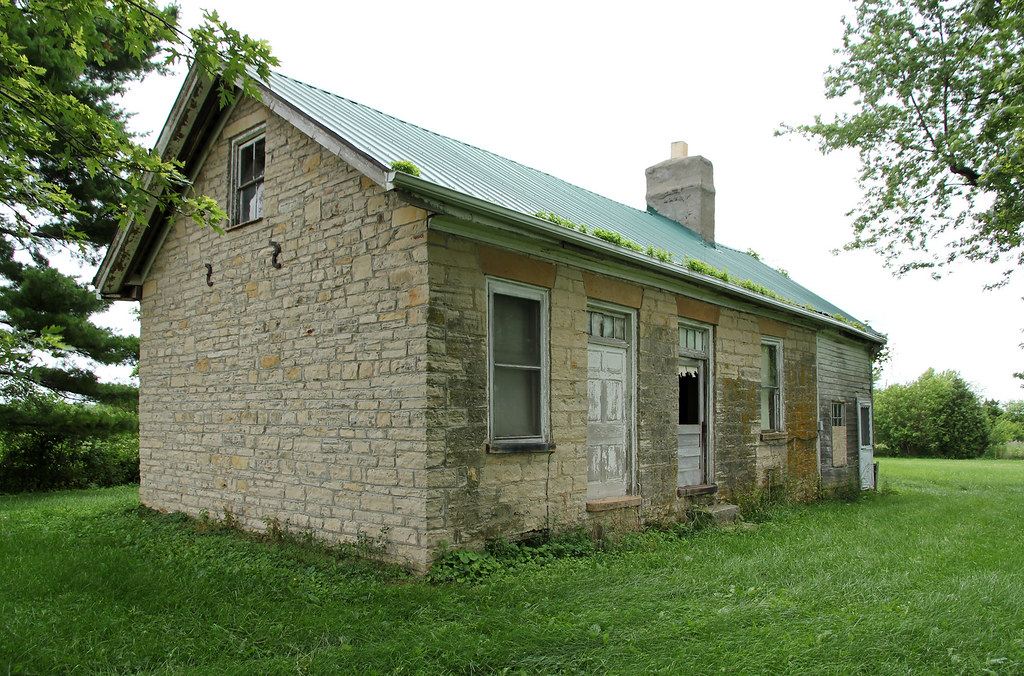
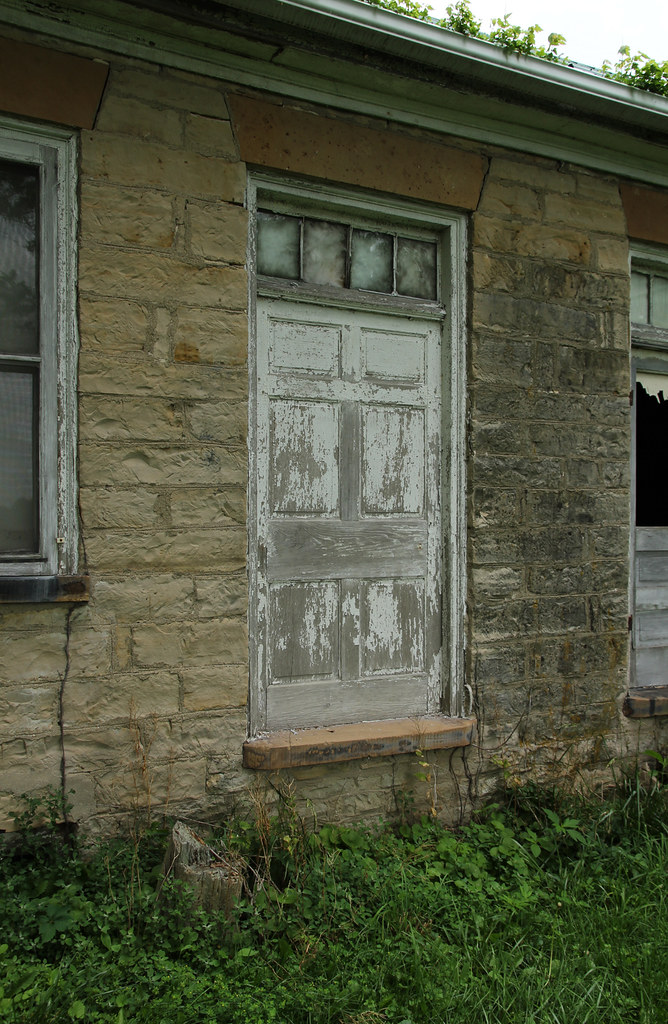
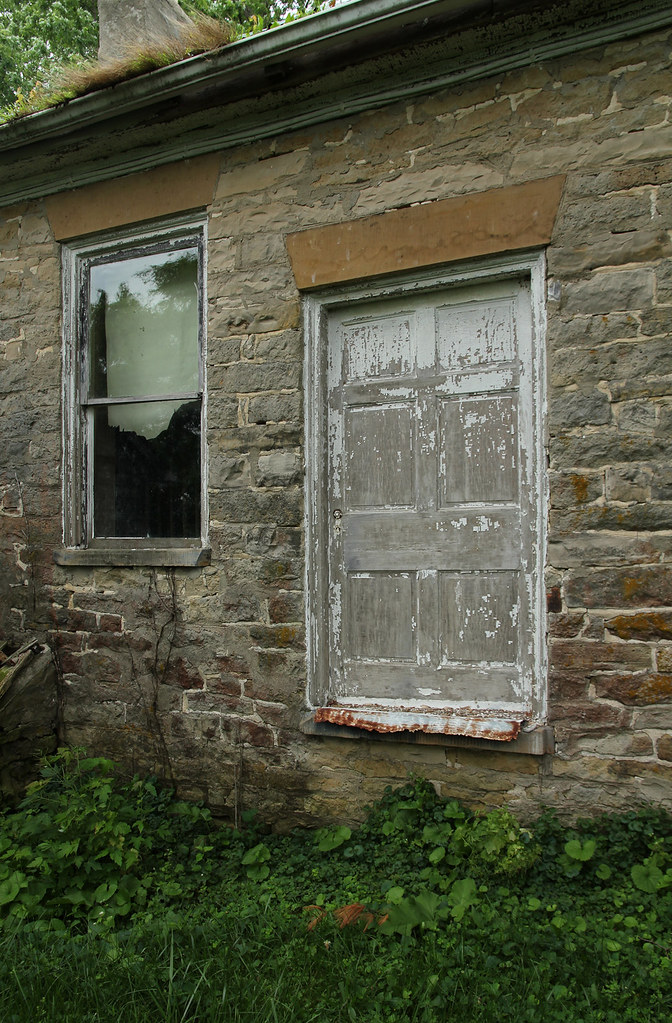
A stupendous example of early stone architecture, likely erected in the 1820s (or, possibly, earlier). Save for window replacements and removal of its mantel (drat!), the house remains nearly unaltered.

Unfortunately, my research uncovered little information about the building. The 1871 and 1887 atlases list David M. Wright (18321892) as the farm's owner. David's father, Samuel (17951873), moved from Kentucky to Highland County, settling in Penn Township or Liberty Township at an unknown date; his burial site, Fall Creek Cemetery, exists in the latter township, about three miles southeast of the stone dwelling.

Steve Gordon's 1981 survey of northern Highland County overlooked this home, perhaps because its builder, unlike most residents of the region, was not a Quaker.

Facade.
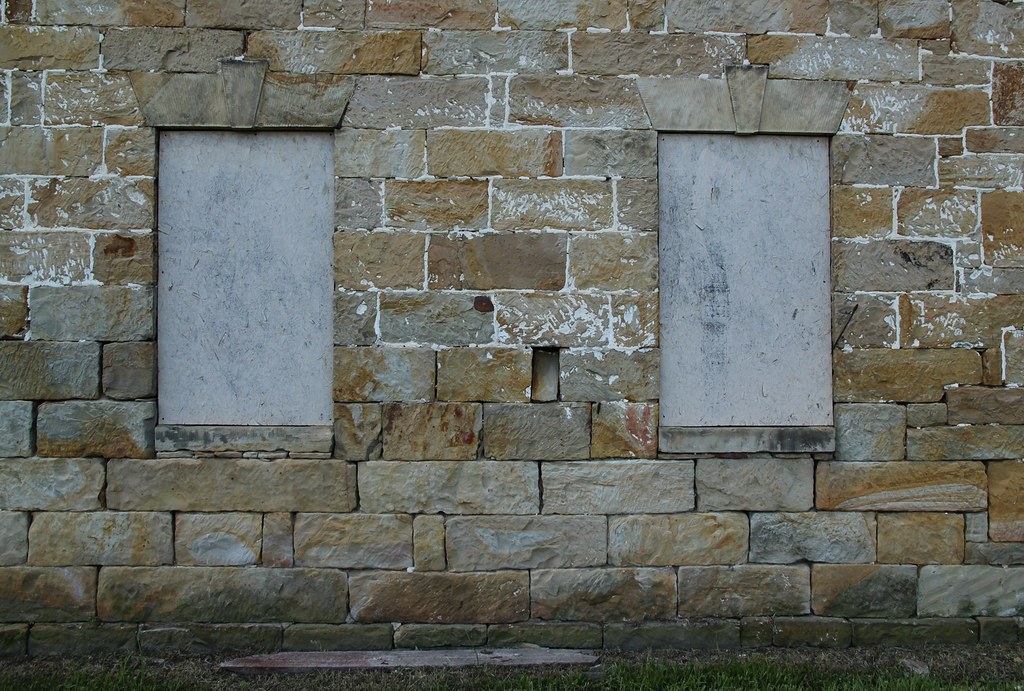
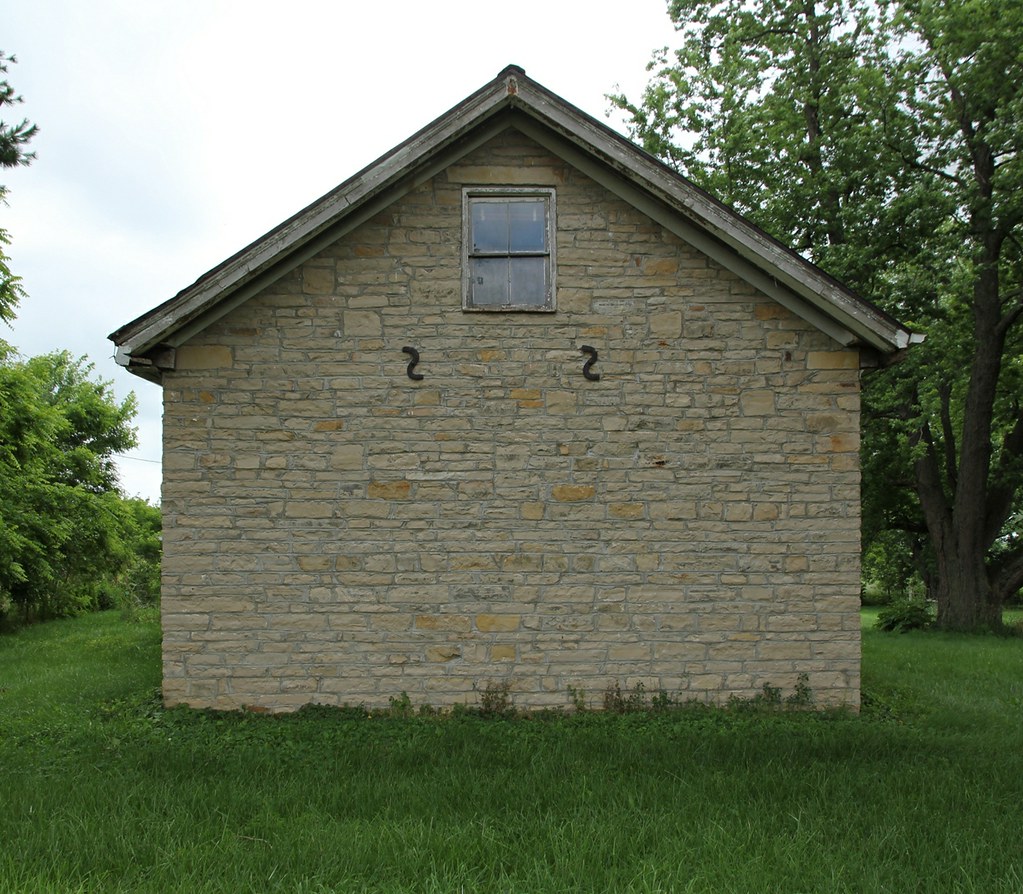
The S-shaped metal plates anchor tie rods, which support the second story joists. This technique is common to masonry construction; often, the plates resemble stars.
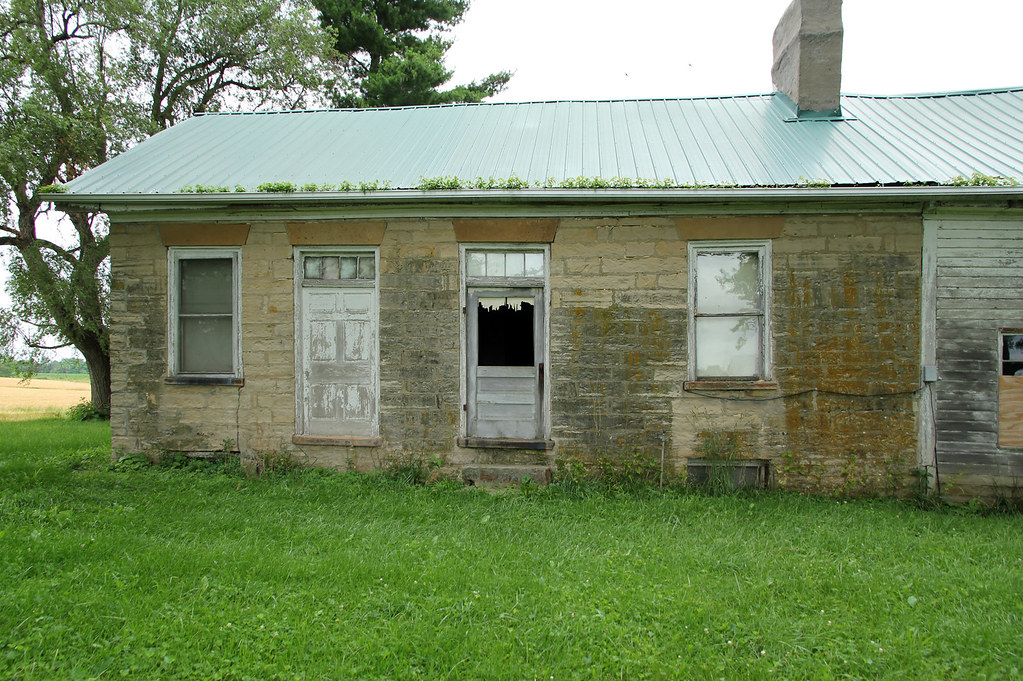
A textbook example of vernacular Federal entry treatment; note the four-light transom, six-panel door, and splayed lintels. This doorway is no doubt unaltered.
Federal-era doors are typically shorter and wider than those produced today. This entrance, though, possesses exceptionally odd proportions.

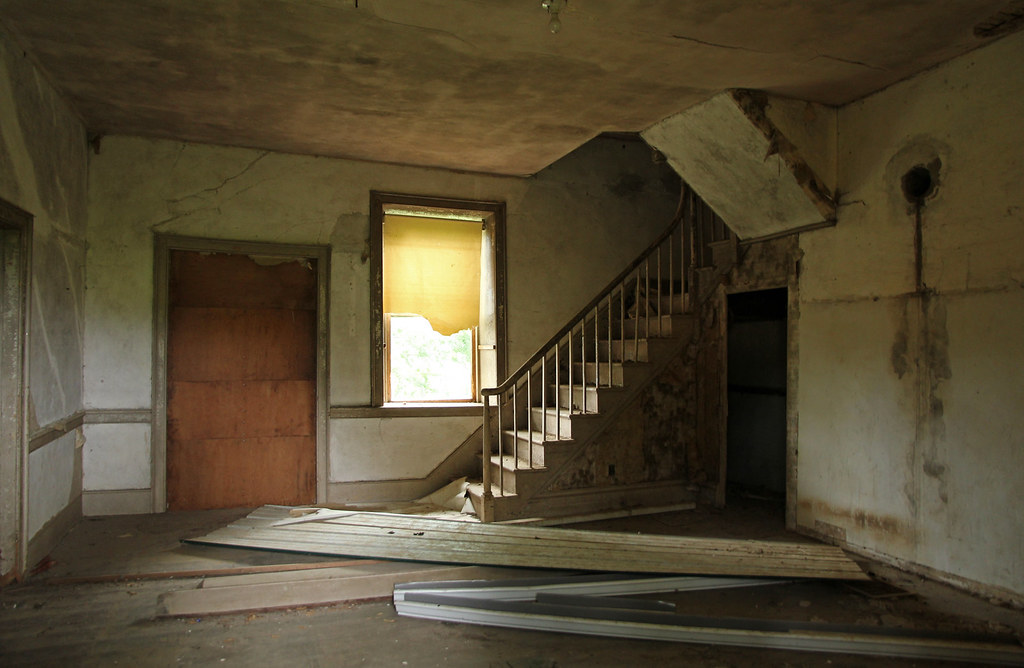
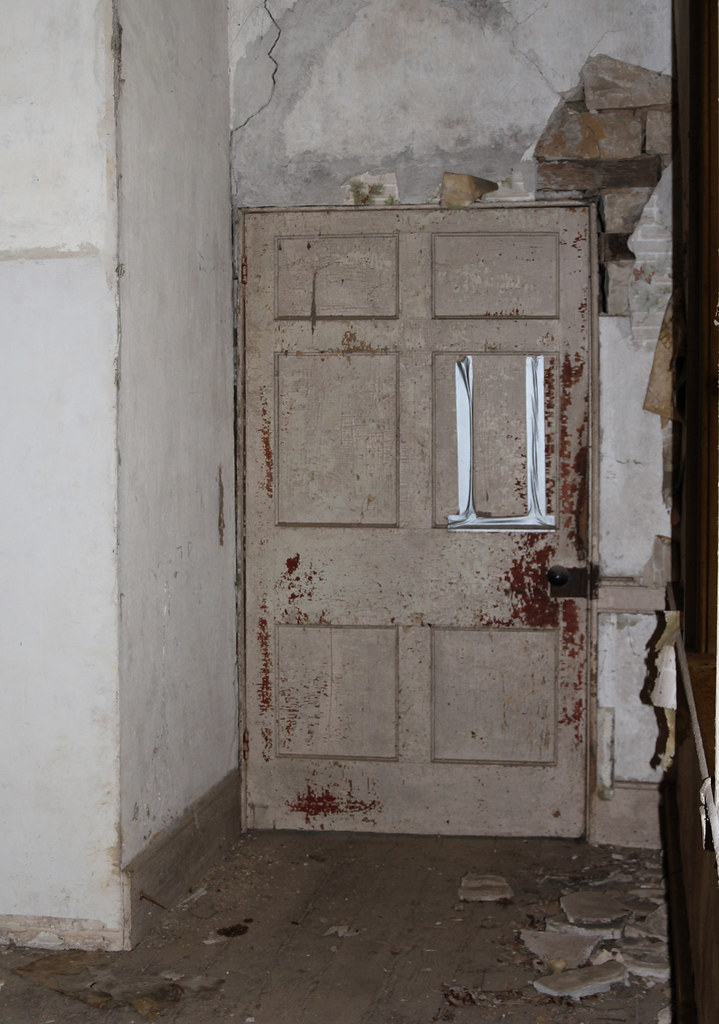
The staircase is excellent, given the building's one-and-a-half-story height. Unfortunately, at some point (the late 19th century, perhaps), a stove replaced the house's fireplace; its firebox was sealed, and its mantel removed.

Another oddly proportioned (formerly exterior) door. Plaster decay has exposed a portion of the stone wall, visible to the door's upper right.
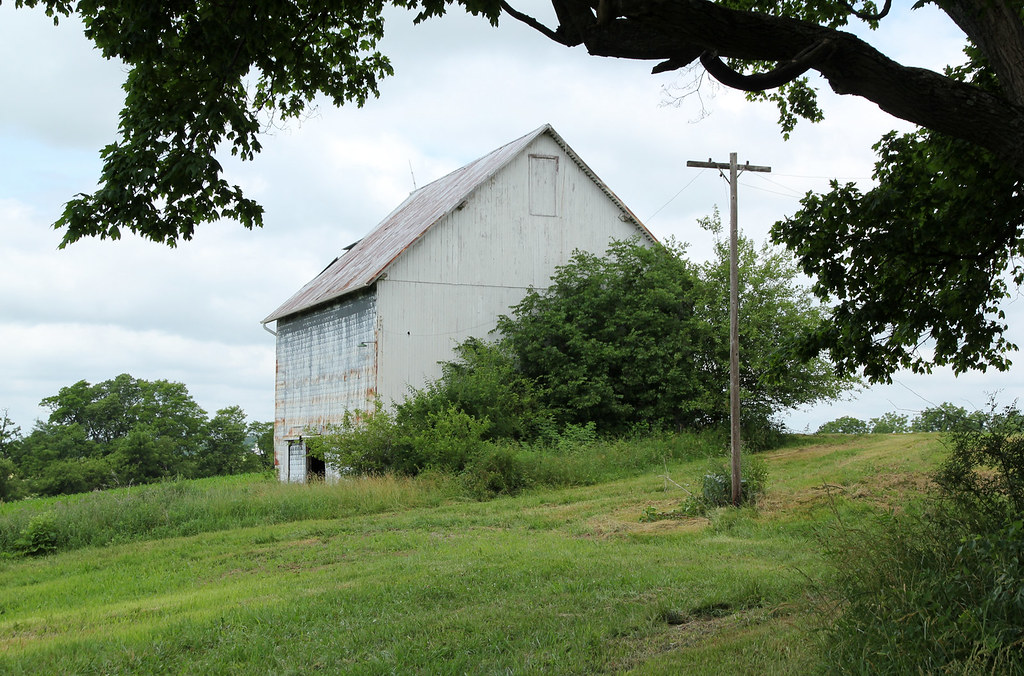
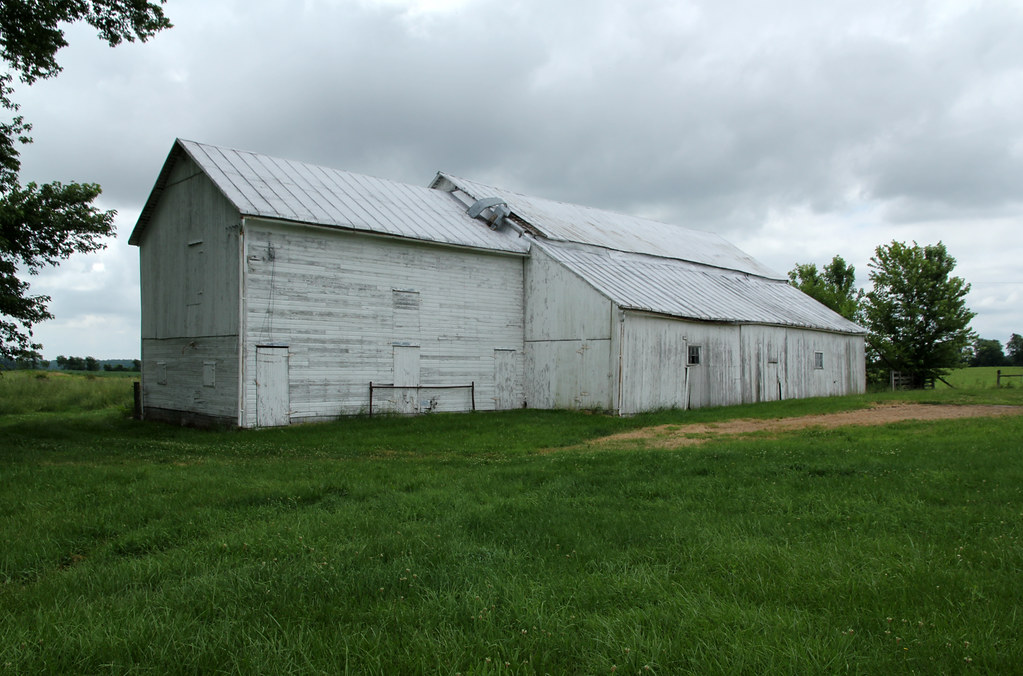
The adjacent barn, likely a 20th century structure.

Saturday, March 30, 2013

A Stone Springhouse

Bloom Township, Seneca County, Ohio

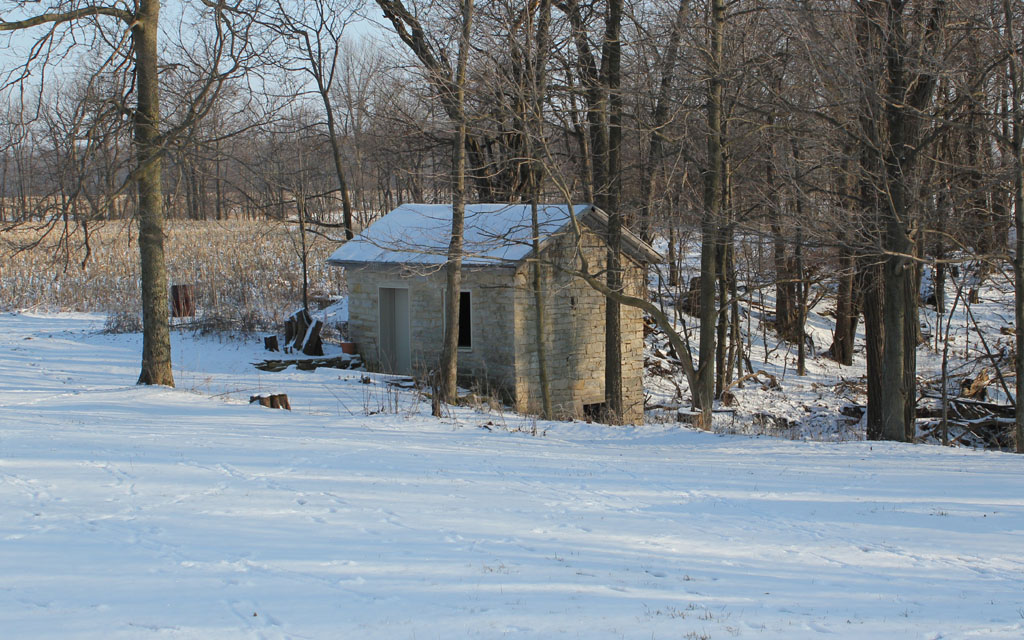
The springhouse was a common building type in rural 19th century Ohio. This structure, built over a water source, was used to store perishable goods before the refrigerator gained widespread use.


Note the tapering of the window trim, presumably to admit extra sunlight into the somewhat dark interior. Even auxiliary structures had at least some architectural detailing in the 19th century.
The creek, just visible in the top photo, was once diverted through the basement of the springhouse. Water flowed through an opening where the concrete is now.
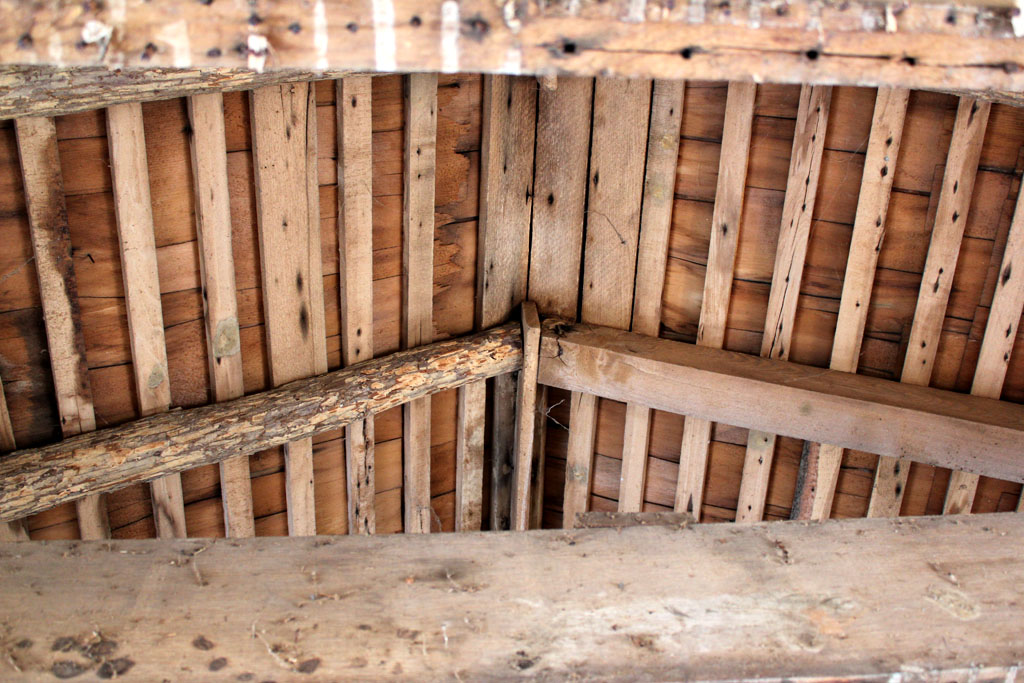
The springhouse's roof is supported primarily by tree trunks with intact bark. Like that of a nearby log house, the roof retains its wood shingles. These shingles are attached without sheathing.