 |
| Taken from Wikipedia. |
Of Ohio's 88 counties, Ross may be my favorite (with Warren vying for a close second place). No Ohio county is quite so well-studied, yet simultaneously so mysterious. Though I've scoured its valleys and searched its hills, there remain buildings which, while I know exist, I've yet to locate. It's a well-stocked candy store, and I'm but a child. Why is Ross County so delightful? For two reasons, I believe.
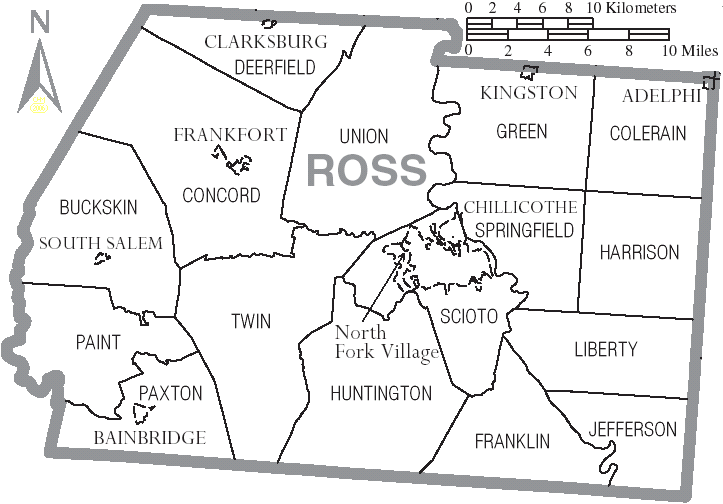
First, its settlement commenced late in the 18th century. In 1795, William Kent, contracted by one Nathaniel Reeves, cleared a forty-acre plot in the Paint Creek valley in present Paxton Township. (The 1805 Reeves-Seymour House, constructed of stone, now occupies this land.) One year later, Nathaniel Massie and his party founded Chillicothe; Massie eventually platted Bainbridge (in 1805), and, in 1800, built a frame farmhouse in Paxton Township (this structure remains standing). All of Ross County's townships, bar one (Deerfield, which remained uninhabited until 1801), were populated before 1800. (1) As a rule, the oldest (and wealthiest) settlements tend to contain the greatest assortment of buildings.
Second, its myriad landscapes and diverse population demand variety in architecture. Geologists tend to love those localities which exist at the collision of physiographic regions; likewise, architectural historians flock to boundaries between ethnic settlements. Ross County is bisected by the Scioto River. West of the river exists the Virginia Military District, with its irregular tracts (a legacy of the "metes-and-bounds" survey system) and distinctively "southern" architecture. East of the river are Congress Lands, settled, primarily, by Pennsylvanians of German descent. In Ross County, and elsewhere along the Scioto River, the two populations mingled. (2)
What did 19th century Americans think of this veritable Eden? John Kilbourn, in the 1819 edition of his Ohio Gazetteer, describes Ross County thus:
Ross [is] a populous and wealthy interior county[.] . . . It includes a population exceeding 16,000 inhabitants, and valuation of 3,681,639 dollars. . . . The land is generally fertile and suitably diversified with meadow and upland; the latter of which is peculiarly well adapted to the production of grain. . . . In many parts the farms are beginning to have the appearance of an old settled country.Half a decade later, Prince Carl Bernhard, during a tour of the United States, visited Chillicothe, among other Ohio cities:
The 10th of May we rode nineteen miles, from Circleville to Chillicothe, formerly the capital of Ohio, situated on the right shore of the Sciota [sic]. Our way led us through a handsome and very well cultivated country; we saw fine fields, good dwelling-houses, orchards, and gardens; also several mills, turned by the water of the Sciota [sic], and several other little creeks; some of these mills are at the same time fulling, flour, and saw-mills.The city of Chillicothe deserves its own post (or ten), but I'll confine my ramblings to Ross County's rural portions. (For a good description of early Chillicothe, see Christopher Busta-Peck's piece "Earthworks and Cows and Hills, Oh My!")
Stone Houses
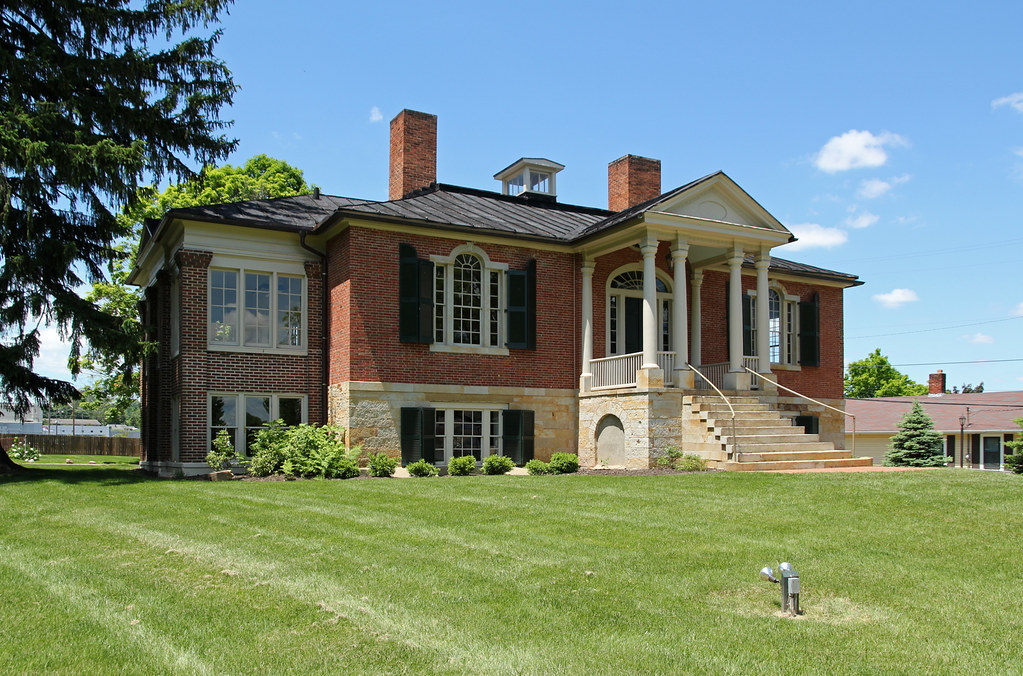
Between Chillicothe and Bainbridge lies a range of flat-topped plateaus, interspersed with narrow valleys and hummocky benches. Split into two sections by the fertile Paint Valley, these hills are, according to the 2003 Soil Survey of Ross County, Ohio, composed largely of Berea sandstone. The section north of the Paint Valley — encompassing portions of Buckskin, Concord, Paint, Paxton, and Twin townships — contains a plethora of stone houses.
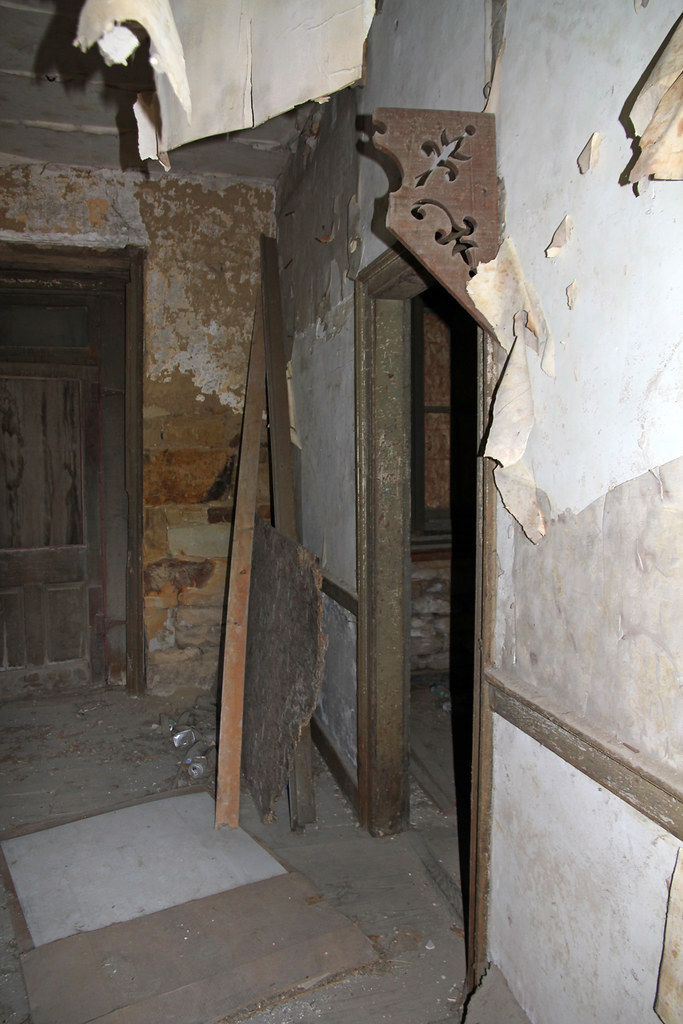
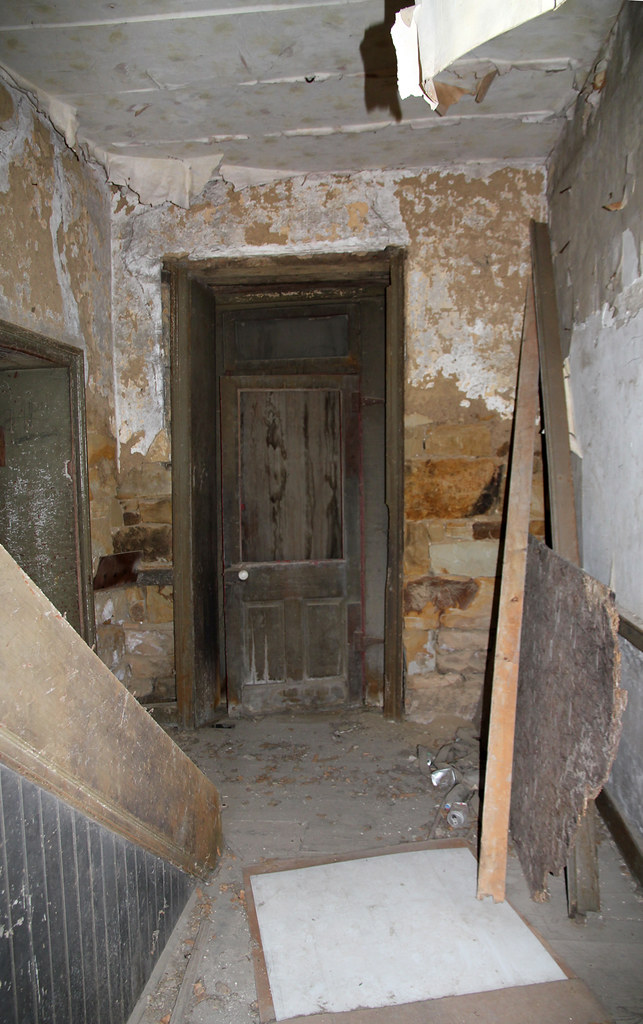
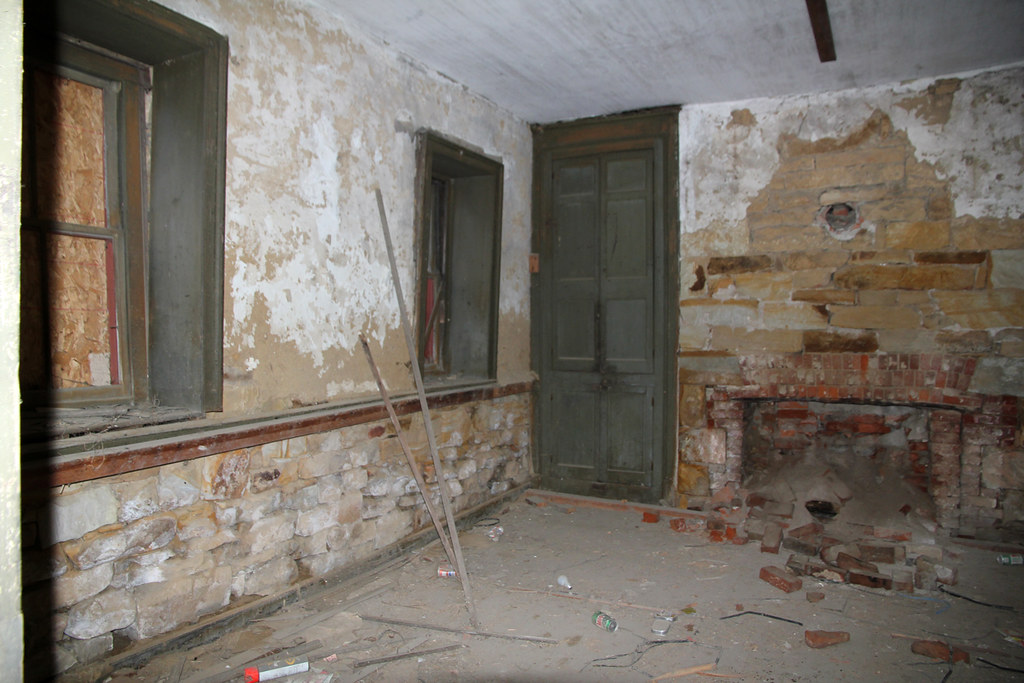
This cluster of homes is the subject of Ralph Cokonougher's 1978 book, Vernacular Stone Structures in Southwestern Ross County, Ohio. (Because the book's text is freely available, I won't belabor its findings here.) Cokonougher mentions twenty stone buildings. Of these, six (including the Hays and Gray residences) have been razed. One is now abandoned. Interestingly, Cokonougher omits the aforementioned Reeves-Seymour House, perhaps the grandest of western Ross County's stone homes.
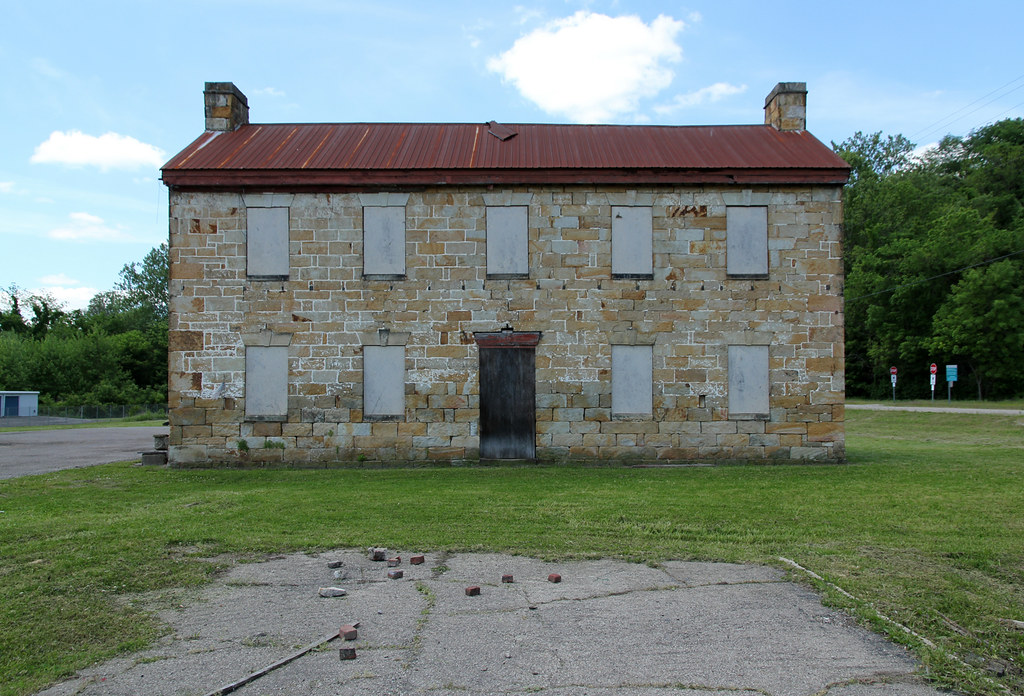
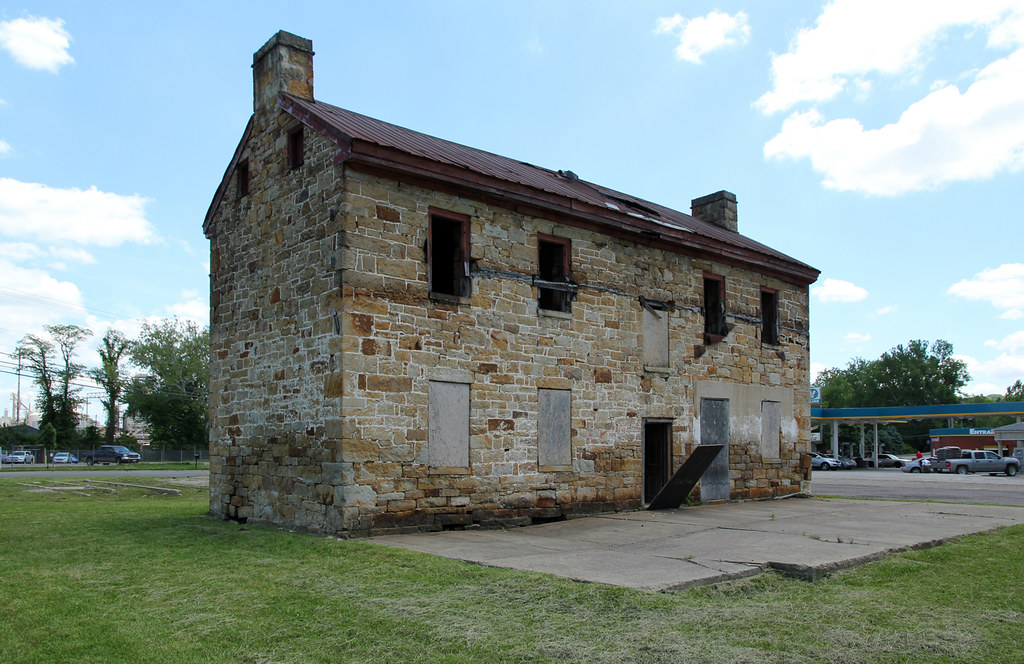
The house built by Daniel Pricer, a Pennsylvanian, in 1816 (in Paint Township) collapsed about 1960, long before Cokonougher published his book. The stone cottage on Tong Hollow Road — truly an anomaly in Ohio — remains standing, as does Buckskin Township's Dolphin dwelling. Most of this region's stone houses, it seems, were erected in the first quarter of the 19th century by natives of Pennsylvania. (3)
 |
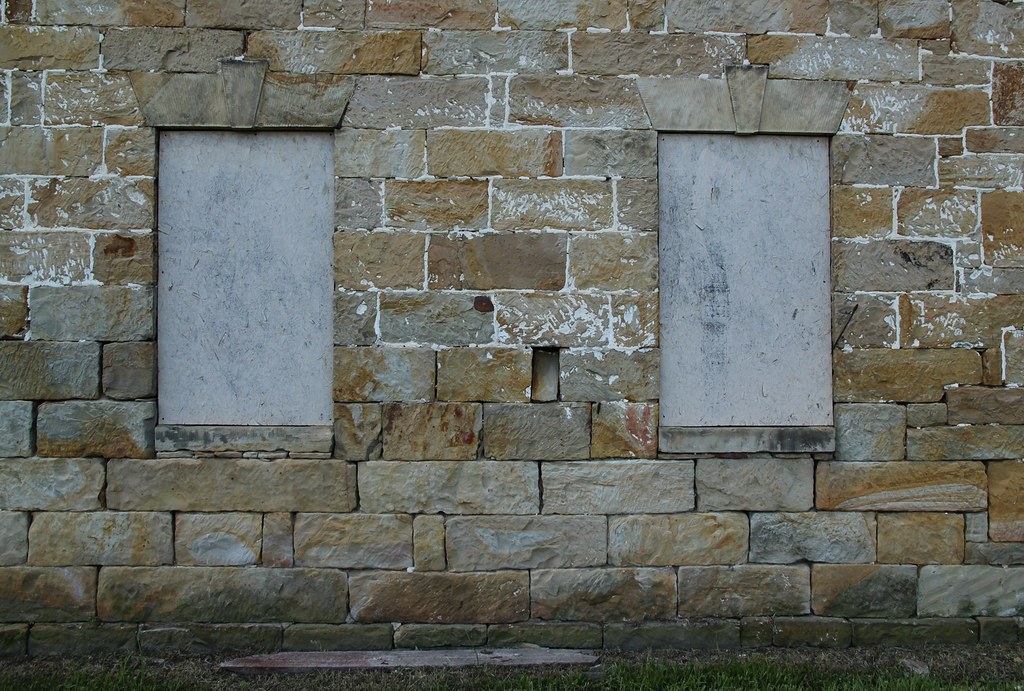
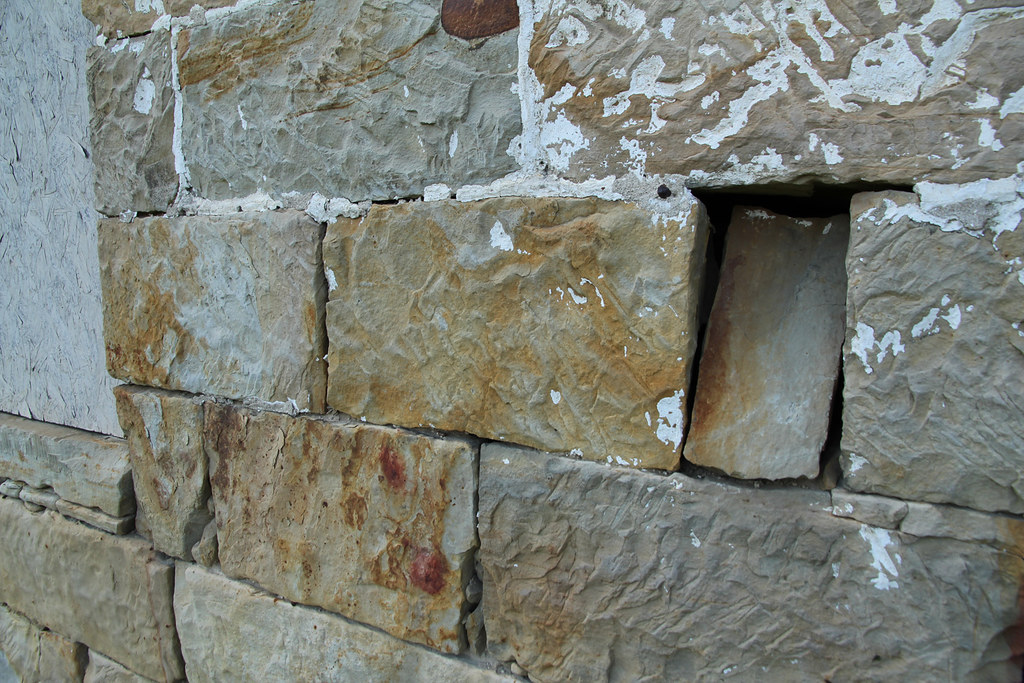
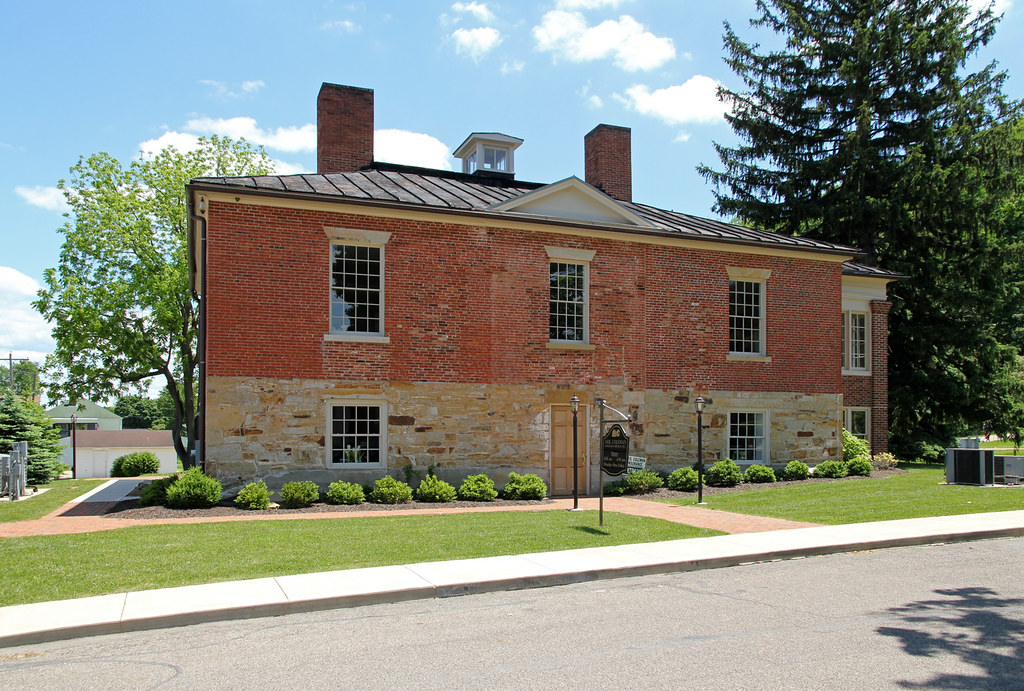
| Rear, Christian Benner House (1805), Paxton Township. Benner's home is constructed of a colorful sandstone unique to the region. |
 |
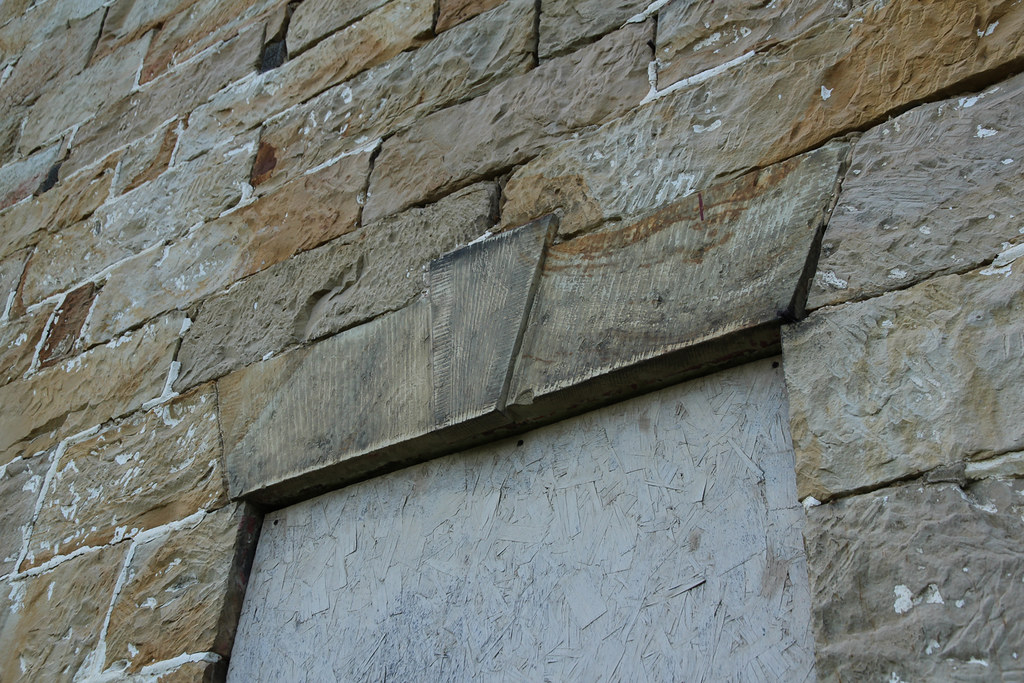
| John Benner House (circa 1833), Bainbridge. |
1) A list of Ross County's townships, with years of first settlement: Paxton, 1795; Concord, 1796; Scioto, 1796; Springfield, 1796; Union, circa 1796; Colerain, 1797; Twin, 1797; Franklin, 1798; Green, 1798; Harrison, 1798; Jefferson, 1798; Liberty, 1798; Paint, circa 1798; Buckskin, 1799; Huntington, before 1800; Deerfield, 1801. Sourced from The County of Ross (1902).
2) The differences between Pennsylvanian- and Virginian-settled communities are not so noticeable as books tend to suggest. In most Virginia Military District townships, there lived a significant minority of Pennsylvanians, and vice versa.
3) The construction dates Cokonougher provides in Vernacular Stone Structures are, in a few cases, simply inaccurate. Carved into one house's woodwork, apparently, is "1795." This must be a misreading, or else some carpenter's joke. If not — and landowners were building (relatively) grand homes in the unsettled wilds of Ohio before the Treaty of Greenville — our history books need a bit of revision.