Showing posts with label farmhouse. Show all posts

Saturday, October 13, 2018

Woodland: Would Latrobe Approve?

Kentucky's Bluegrass is an exceptional place. Truly, it is. Whereas the state, as a whole, tends to suffer from both poverty and architectural impoverishment (like much of the South), the triangle of fertile farmland lying between Louisville, Maysville, and Stanford shelters what may be the finest concentration of antebellum buildings west of the Appalachians. Like quasi-Jeffersonian villas? You'll find them here. Multi-pen log structures? Ditto. Greek Revival temples? Likewise. Sprawling Italianate mansions? Yep. The region's incredible agricultural prosperity produced an incredible building stock — and one (seemingly) little-blunted by the Civil War and Reconstruction.

Jessamine County sits at the southern edge of the so-called Inner Bluegrass, the central and most wealthy portion of the broader Bluegrass area. (Here lies Lexington, the "Athens of the West.") Not terribly far from the Lexington city boundary exists the Golf Club of the Bluegrass, which occupies a rural estate once known as Woodland. Woodland, along with many other Jessamine County farms, is listed on the National Register — but it's not well-publicized, in spite of its excellence. The centerpiece of Woodland is an 1889 mansion, commissioned by John Steele (1845–1918) and built in a transitional Italianate–Romanesque style. The round-arched portal, entrance tower, rusticated voussoirs, and semicircular balcony are all features more befitting public buildings than private ones — but then, this is the Bluegrass, where such a thing was possible.

John Steele's residence (1889), now a golf-course clubhouse.

Who built Woodland? I haven't a clue. The National Register nomination is disappointingly terse, giving only the most rudimentary information about the property's history. (One quirk: a child's handprint pressed into a brick sandwiched between two tower windows.) But there are two homes at Woodland — and this fact is what tips the property from the great to the exceptional.

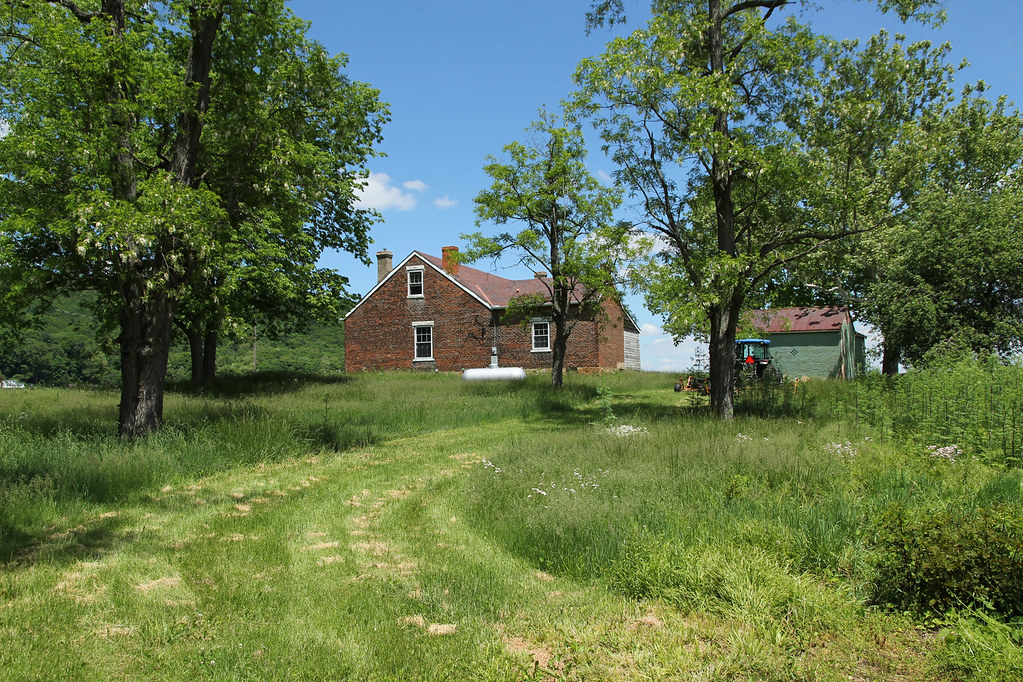
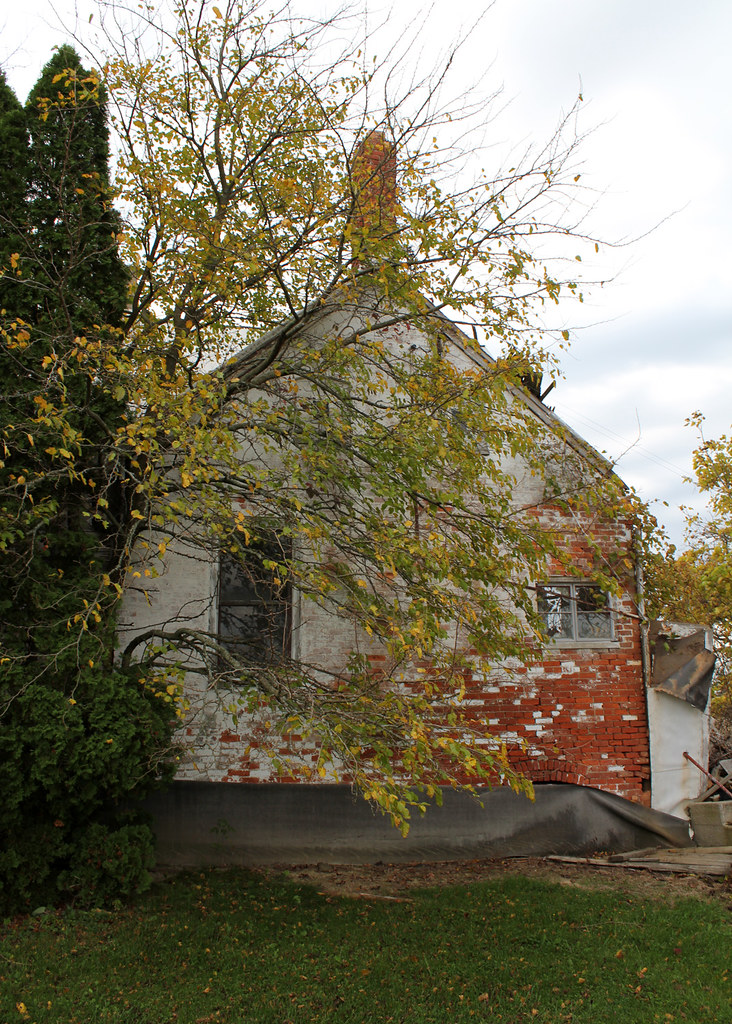
Tucked behind Steele's residence is a low brick structure (quite a contrast to its neighbor's buoyant upward thrust) no less interesting. Like the main house, it seems both to embrace and to smash the architectural norms of its era. It's clearly a Federal-period building, perhaps constructed about the time the British and the Americans fought their last battle, or even shortly before. It diverges from almost all other Jessamine County Federal homes, though, in its studiedness. It doesn't make use of the panoply of traditional floor plans available to early Kentuckians (i.e., central- and side-passage arrangements, or the telescopic configuration pioneered in the Chesapeake). Rather, its five main rooms form an H-shaped footprint, with a service ell jutting to the side. Chimneys are placed between the front and back rooms. The partly enclosed areas formed by the H's hyphen function as porches.


The house's finish is equally unusual. The facade features tripartite windows (very common in the Bluegrass) set within segmental-arched recesses (not common in the Bluegrass). The entry consists of two four-panel doors flanked by sidelights and a fanlight (typical enough), but the porch area is plastered as if an interior room. (This treatment reminds me of the Latrobe-designed Pope Villa's entrance.) The cornice has a usual Federal profile.

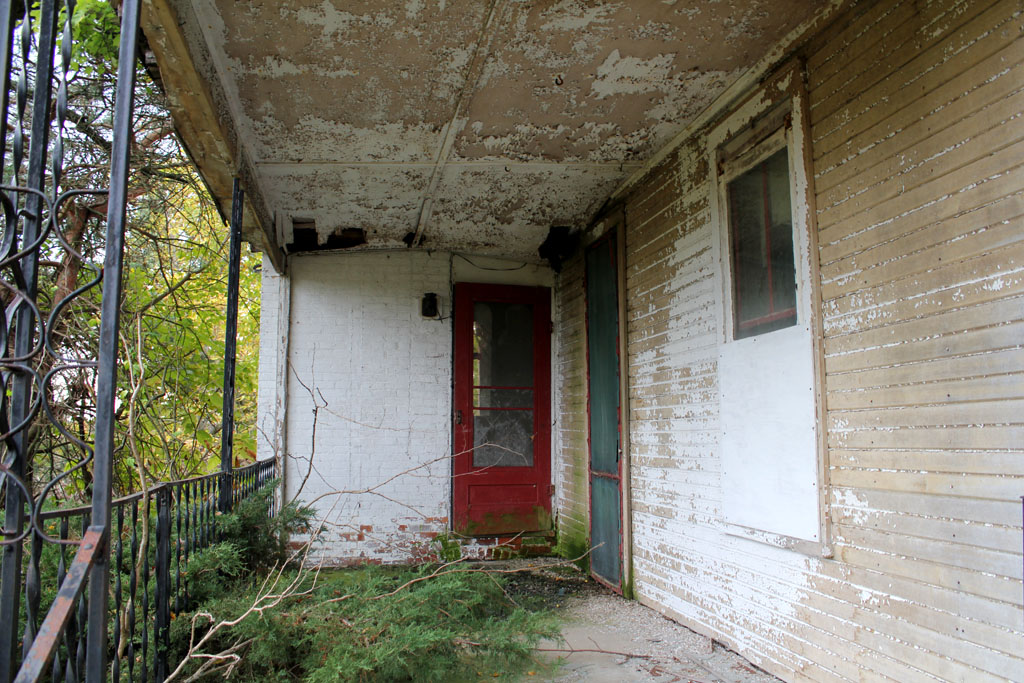
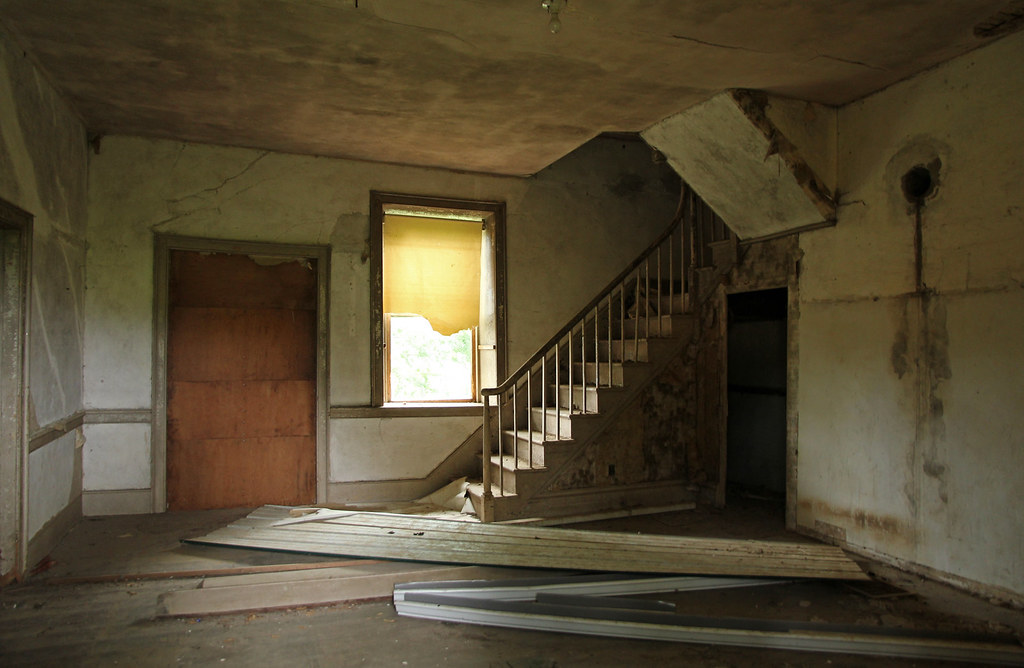
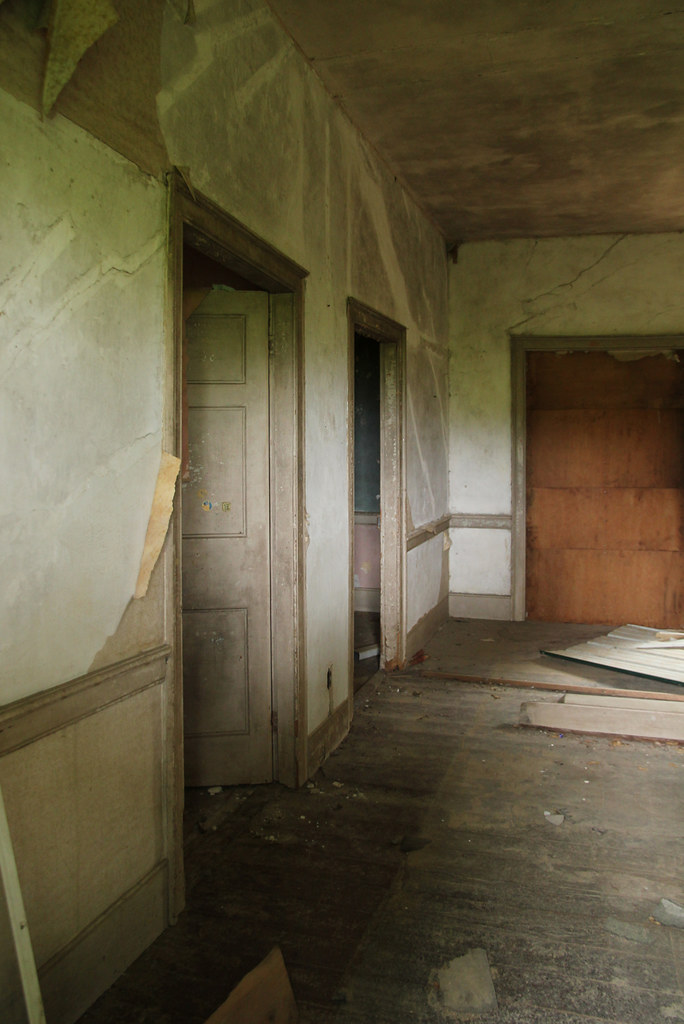
Unfortunately, the building has fallen into terrible disrepair. ('Twas long thus — as early as 1977, it served as a storage space.) Both porch's roofs and floors are failing spectacularly, interior plaster is falling from the ceilings and walls, several windows are entirely nonexistent, the foundation appears to be sinking, and much woodwork is missing. (No trim remains in the northeastern room.) A glance through the windows reveals jumbled heaps of furniture, planks, plaster dust, and golf balls.


Who designed it? And for whom? Again, mostly silence. The nomination form attributes its initial ownership to a Mason Singleton. My quick perusal of genealogical sites yielded a bit of information. A Mason Singleton (1804–1894) almost certainly owned the property, but he seems too young to have commissioned the home. His father, Manoah Mason Singleton, Jr. (1773–1833), was more likely the first owner. The Singleton family hailed from Spotsylvania County, Virginia — no doubt a source of many Bluegrass settlers. For a time, Manoah resided with his parents at Bryan Station, a fortified encampment which stood north of Lexington (and predated the city's founding).


So, a quasi-Palladian cottage — the sort of thing a Jefferson or Latrobe might design for a less-prominent client, and a building associated with one of Jessamine County's founding families — lies moldering behind the lovingly maintained mansion which replaced it. Such is the Bluegrass. Alas, I'm not optimistic about the building's long-term survival. Restoring it would require a six-figure (or more) investment — not merely a bit of repainting and refinishing, but a complete reconstruction. Bricks would need to be relaid, woodwork replaned, and walls replastered. Is it worth the money? I hope so. But only the Golf Club of the Bluegrass can make such a judgment.


Friday, January 12, 2018

The Cluxton Log House

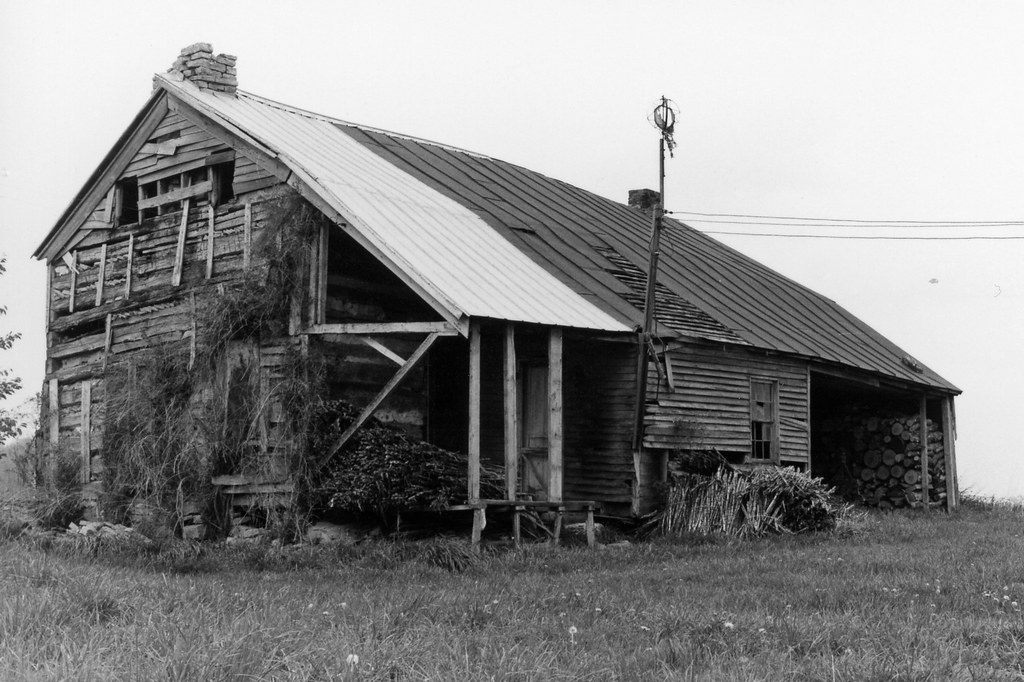
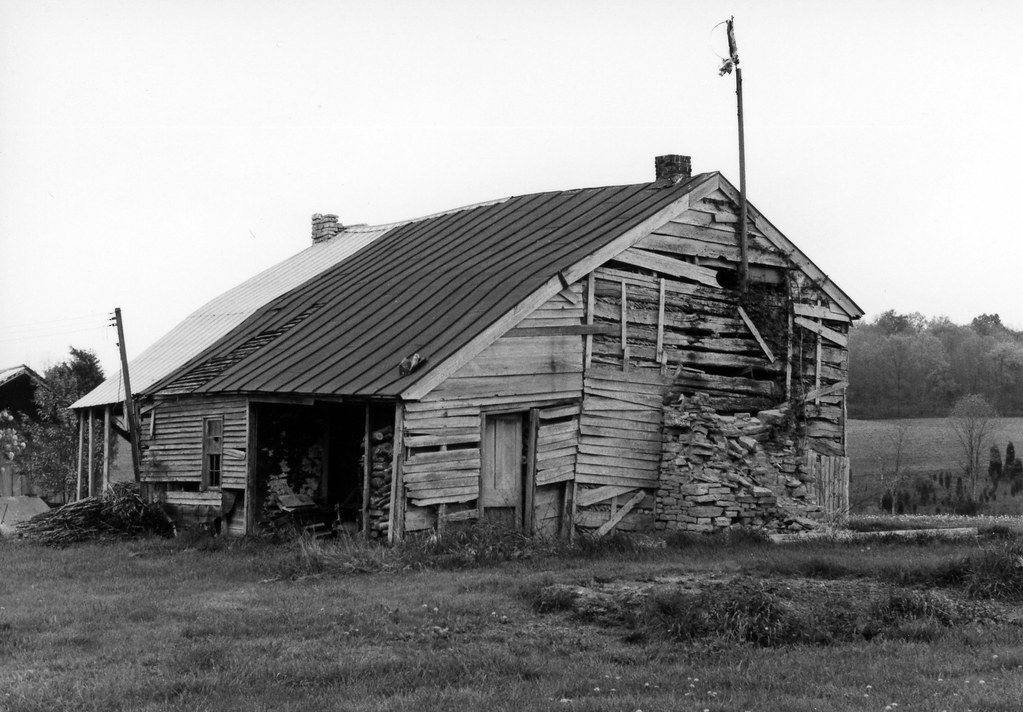
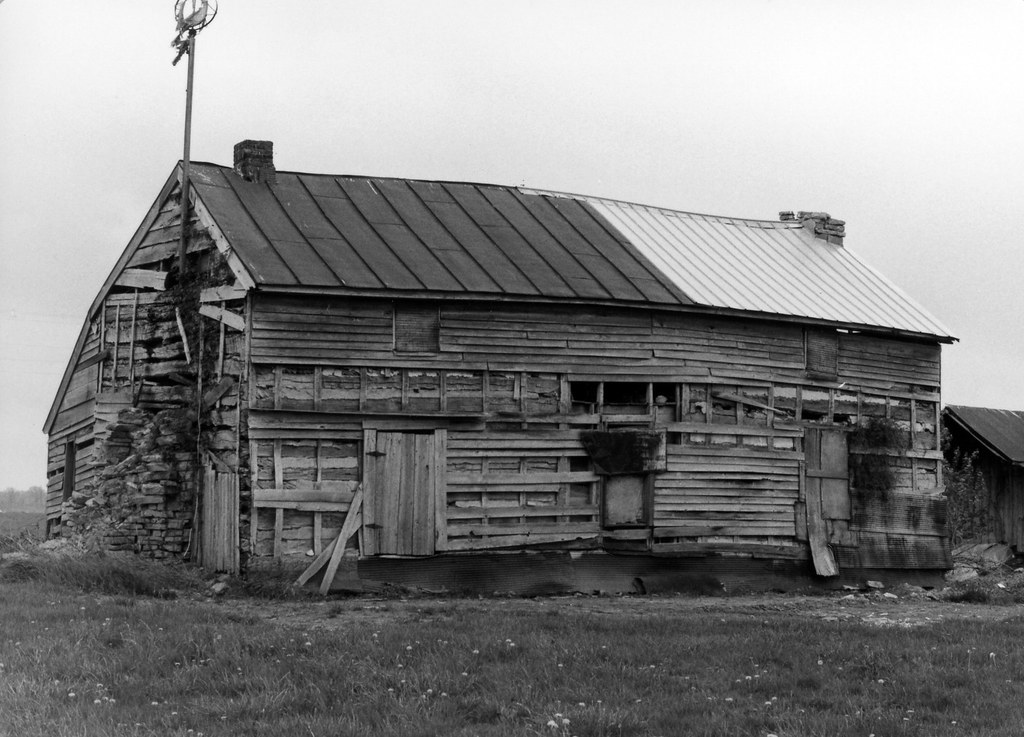
Unlike Kentucky, Tennessee, and other states south of the Ohio River and west of the Appalachians, Ohio boasts relatively few double-pen log buildings. (For those unversed in the arcane art of log-divining, a double-pen building is one which contains two structurally independent units, or pens.*) One of the Buckeye State's finest double-pen dwellings stood, appropriately enough, in one of its most "Southern" counties (geographically and culturally) — Adams — just north of West Union, the county seat. Nestled among billowing pastureland within an agriculturally deficient region known, historically, as the "white oak barrens," the house languished in obscurity and decrepitude until Stephen Kelley, president of the Adams County Historical Society, photographed it in 1977. Kelley's images found their way into Donald Hutslar's hands, and thence into two books (this and this). It's scarcely surprising, then, that state and national surveys of historic buildings neglected to include it — and shall always neglect to include it, since the house disappeared in the 1990s.

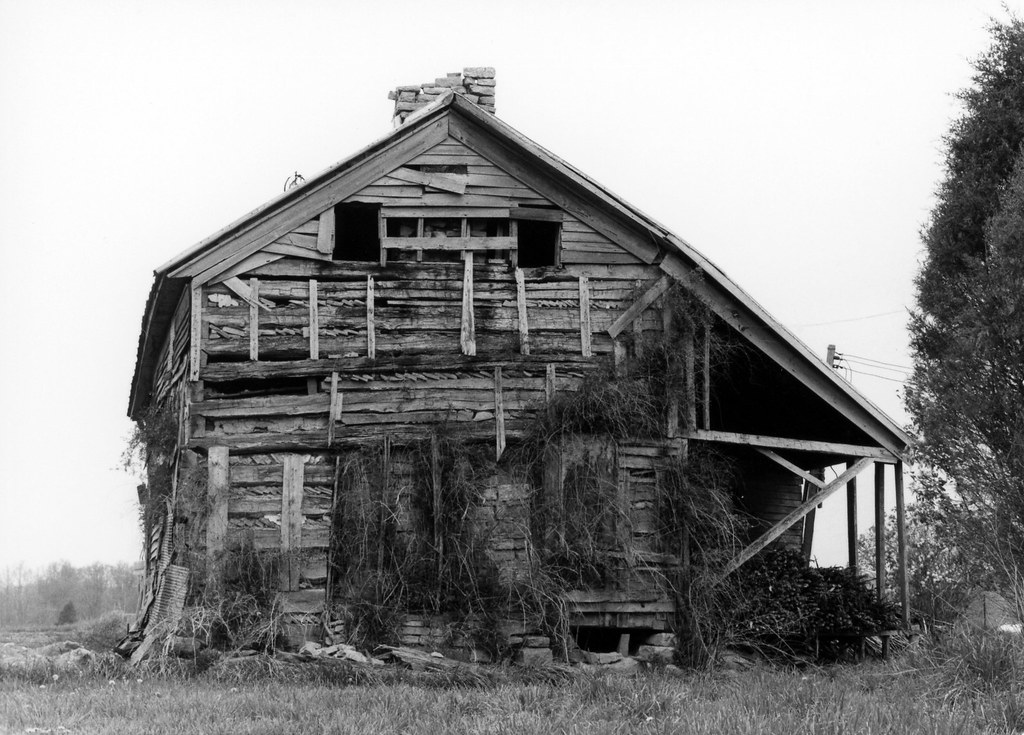
The house's front (northwest) elevation. Image by Stephen Kelley, 1977, from the collection of Donald and Jean Hutslar.

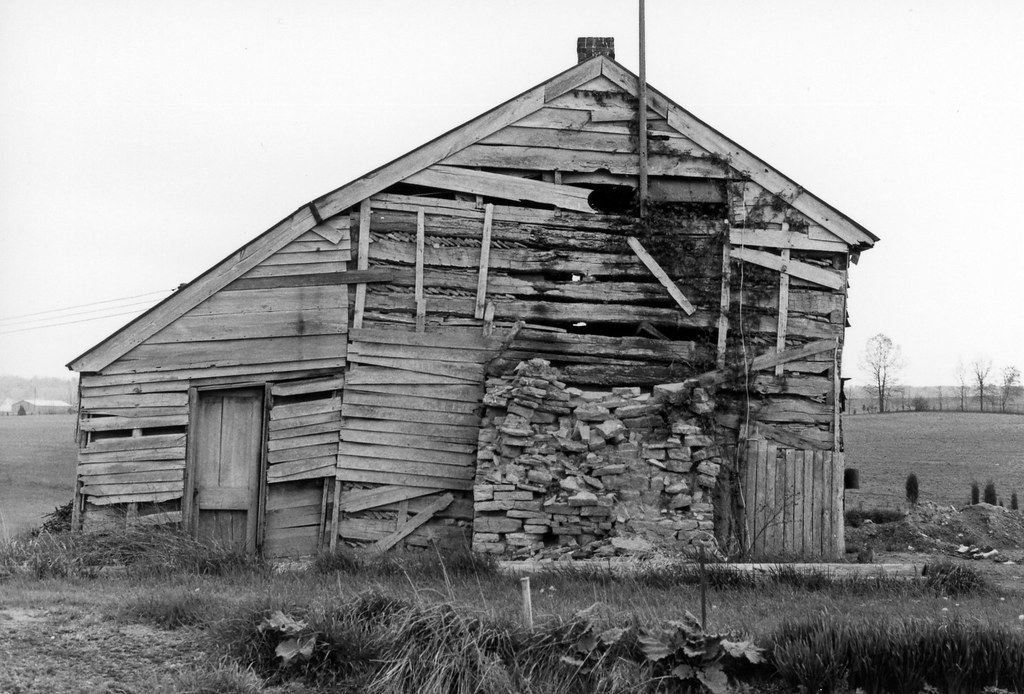
The home was an utterly classic double-pen structure — precisely the sort of building I'd expect to find within the earlier-settled portions of the Upland South. It made use of two one-and-a-half-story pens, each constructed of steeple-notched logs and adorned with a single window opening. It featured two massive rubble-stone chimneys — one exterior, and one interior (with an exposed firebox). In all likelihood, the passage between the pens was always enclosed (unlike in the case of the archetypal "dogtrot" house), and the braced-frame rear rooms, which lent the structure a "saltbox" roofline, might have been planned at the time of construction.

The rear (southeast) and side elevations. Note the square attic windows, rake boards, and cantilevered porch framing. I must say, I'm a bit baffled by the pole-mounted hoop. Was it a DIY television antenna? A massive dream-catcher? A homing device for extraterrestrial spacecraft?

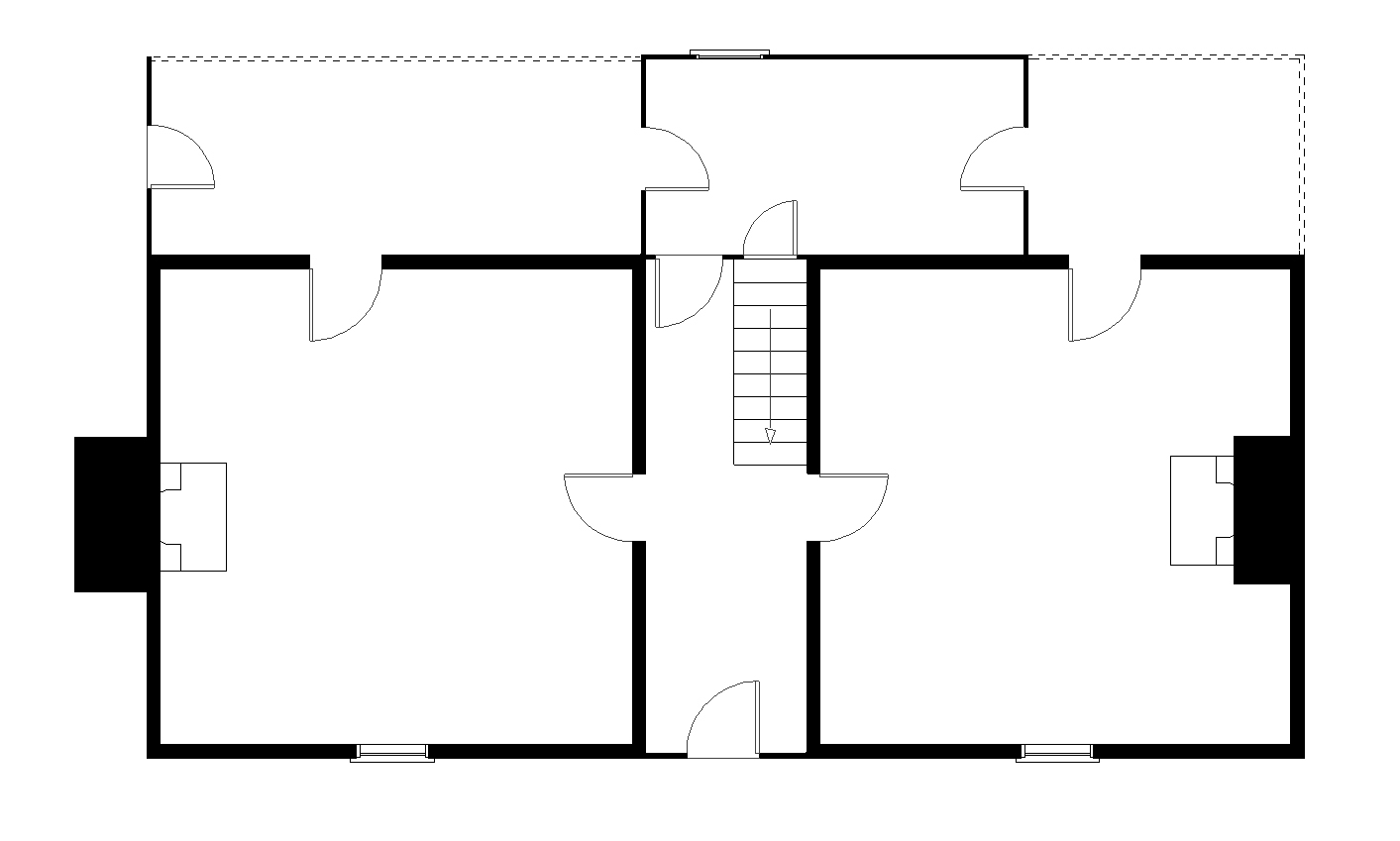
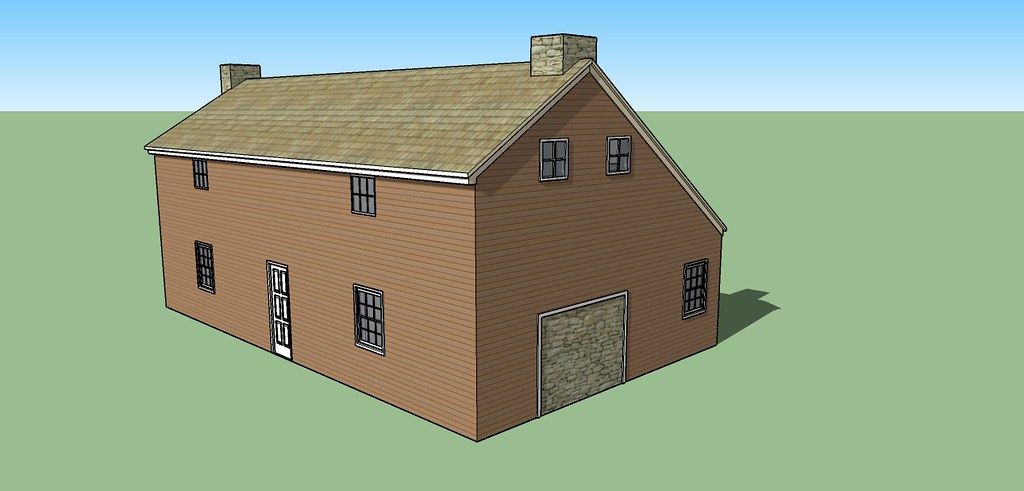
Kelley, it seems, failed to photograph the interior, but he did have the foresight to sketch a floor plan, which I've adapted into a proper CAD rendering.


In some ways, the house's oddest feature was its staircase. More often than not, early inhabitants of Ohio's southern half jammed their stairways into the space between the fireplace and exterior wall. This house's builder, by contrast, placed the staircase within the "breezeway," but left it accessible only from the home's rear room. This suggests two possibilities — that (a) the building underwent a massive interior remodeling sometime in the nineteenth century, or that (b) the frame rear portion and the log pens were contemporaneous. Either possibility seems perfectly likely.


Dating the house is a tricky affair. Given its existence in Adams County, site of some of Ohio's earliest permanent settlements, it could have been a statehood-era structure. Then again, its placement on less-than-desirable land may mark it as a late survival of archaic building techniques. Tracing its ownership, alas, provides few answers. In 1880, it belonged to one S.P. Cluxton — perhaps Samuel Page Cluxton (b. 1838), a middle-aged farmer of Scots-Irish descent. It's unlikely that Samuel built or inherited the house; if mid-century census data is any indication, members of the Cluxton family lived exclusively in nearby Liberty Township, and their first place of settlement was the Brush Creek valley, several miles distant. (ApparentlyCluxton is a variant of Clugston, a "habitational name from the barony of Clugston in Wigtownshire," Scotland.)

So, the house's origin will remain a mystery — at least, until someone pays a visit to Adams County's courthouse and slogs through nineteenth-century tax records. I'll end my post with a rendering of how the house may have appeared in better days.

The house reconstructed in SketchUp, from the floor plan pictured above.

* Like all definitions, this one is subject to exception. Some of Ohio's seeming double-pen buildings — Brown County's Erastus Atkins House, for instance — are, in reality, unified structures whose rooms are divided by interlocked log walls.

Thursday, December 21, 2017

A Warren County Puzzle

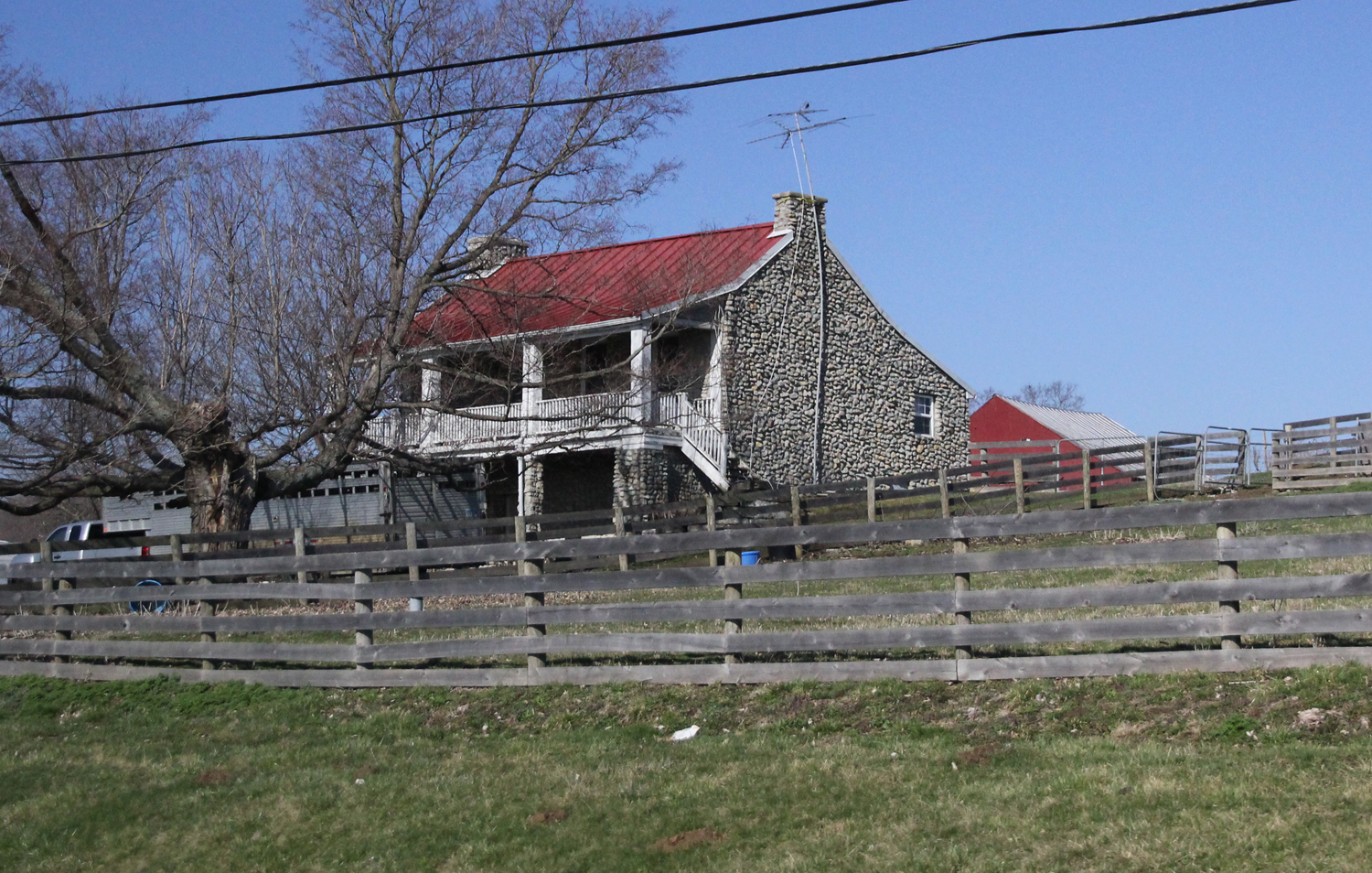
Perched on a hillside northeast of Waynesville, in Warren County, is a curious brick farmhouse. It's obviously an ancient structure (by Ohio's standards), with its flush chimneys and rake boards, and it fronts an early thoroughfare connecting Waynesville and cities farther north. Like a few other homes in the vicinity, it makes stupendous use of its sloping site; the basement is at once a first floor, a quirk which allowed the builder to attach a two-story gallery to what seems, from one angle, a single-story structure.

My lone, woefully inadequate photo of the building.

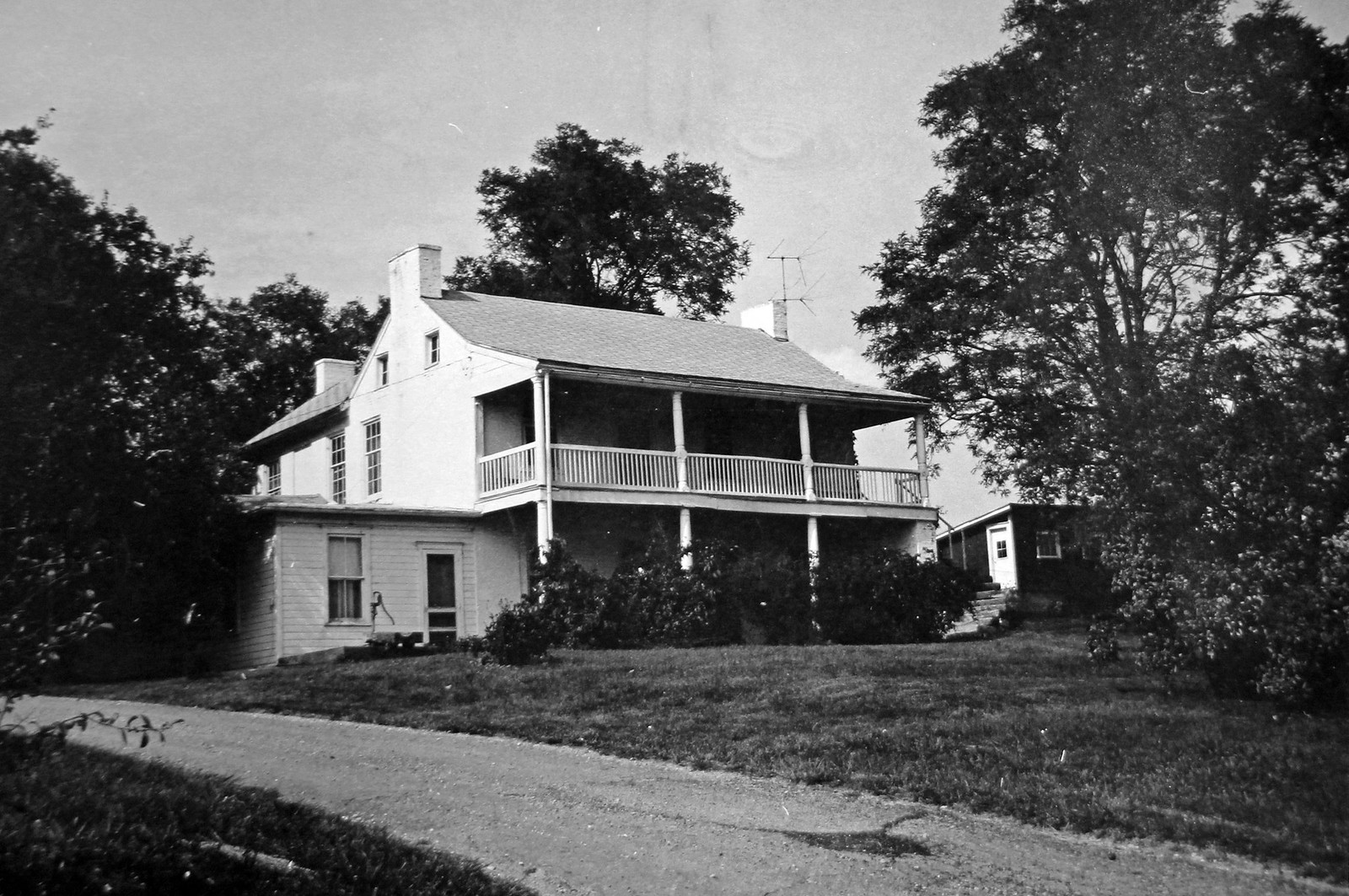
Alas, someone, at some time (perhaps in the finest decade for tasteful design — the 1970s), thought it wise to seal half the window and door openings, then reface the entire building, including its porch's columns (!), with stones of varied size and shape. The result looks, to my jaundiced eye, like the architectural equivalent of type-I neurofibromatosis (or some other tumor-inducing disease). Thankfully, staff from the Ohio Historical Society photographed the house in 1969 or 1970, well before the remodeling. At the time, the building retained its original six-over-nine windows.

Image, 1969 or 1970, from the "Southwest Ohio Survey" collection; held by the Ohio Historical Society.

Obviously, the house is early and noteworthy, but researching its history proved more difficult than I anticipated. The earliest digitized map of Warren County land ownership, published in 1856, lists "J. Parkhill" as owner of the 204-acre tract where this home stands. As is so often the case, Parkhill seemingly left no literary footprint — he receives no mention in county histories, and grave records are equally scanty. (The closest match in Find A Grave's database is James Parkhill (d. 1896), interred in Deerfield Township's Rose Hill Cemetery.) The 1850 census, though, records a Joseph Parkhill, born about 1815 in Ohio, as a resident of Wayne Township. Parkhill had a large family, and he provided room and board for at least three non-family-members — evidence, perhaps, that local tradition has correctly identified the building as an inn or tavern.

Some time between 1856 and 1874, Parkhill's property passed to Israel Hopkins Harris (1823–1897), a Waynesville banker and member of a locally prominent family. If the postcard pictured below is any indication, Harris's name — and not Parkhill's — became attached to the house, no doubt because of the Harris family's considerable cachet.

Postcard, undated, from the collection of Donald and Jean Hutslar.

Assuming the building did function as a "wayside inn," it did so during Parkhill's occupancy (or earlier), and not Harris's. But Parkhill was reasonably young in 1850, and it's unlikely that he commissioned or built the structure. (Given that Waynesville itself was platted in 1796, and that Warren County comprises one of Ohio's wealthiest, earliest-settled regions, a construction date in the 1810s or 1820s seems perfectly believable.) But, alack, tracing Warren County property ownership beyond Franklin Pierce's presidency requires (a) good literary sources or (b) a trip to the county courthouse, so, for now, the Parkhill–Harris residence's ultimate identity will remain a mystery.

A slightly later (?) photo gives an even finer glimpse of the house's two-story porch, its twin entrances, and its most distinctive feature — a semicircular stone staircase, which partly provides ground-level access to the gallery's upper story.

Image, undated, from the collection of Donald and Jean Hutslar.

Monday, June 27, 2016

The John Moomaw House

I've devoted a few posts to Ross County buildings, and I could pen a thousand more. Among the most charming (though scarcely the grandest) of these structures was a Paint Township farmhouse, reportedly erected by one John Moomaw.

John Moomaw's residence (with requisite leaning chimney). Photo by Mrs. A.W. Geissinger or Mrs. D.N. McBride (?), from Historic Landmarks in Ohio: Volume II, compiled by several chapters of the United States Daughters of 1812 in 1953. Scanned by Columbus Memory.

Moomaw's abode stood on sloping land in the valley of Upper Twin Creek, due west of the Paint Township-Twin Township border. To the south, beyond Farrell Hill (home to a delightful sandstone cottage), lies the verdant Paint Valley, site of Ross County's earliest settlement. Though Moomaw's farm — which, in 1860, occupied 210 acres — contained plenty of arable land, little remains cultivated; the tract has, by and large, reverted to scrubby grassland and second-growth forest.
The Moomaw family appeared in America between 1731 and 1732, with the arrival of Jacob and Leonhard Mumma. (Many descendants anglicized their names; this page mentions "at least 18 different ways to spell the surname.") Whether the Ross County branch could trace their descent from Jacob or Leonhard, alas, is difficult to determine. A 1937 Scioto Gazette article describes John Moomaw as an "enterprizing [sic] German settler" and member of a German Baptist congregation.

Moomaw, apparently, relocated from Virginia (1) about 1812 and held several offices in Paint Township's fledgling government — in 1813, he worked as an overseer of the poor; and, in 1816, he served as fence-viewer. According to local legend, Moomaw's bank barn — a double-pen log structure — hosted German Baptist ("Dunkard") meetings.

The precise history of the Moomaw residence is difficult to determine. Geissinger and McBride, in Historic Landmarks of Ohio: Volume II, place its construction within the second decade of the nineteenth century:
The date of the house has not been determined, but certain architectural features lead us to believe that it is within the 1812 period.
Rex Hagerling, by contrast, gives the date 1838, presumably gleaned from Ross County tax records. (2) Kevin Coleman writes that "[the Moomaw home] was built about 1820" and classifies the structure as "[having] genetic similarities with the Grenier form." (The "grenier" house, as Coleman defines it, is marked by "[a] symmetrical gabled roof around the loft [which] projects forward, creating an incised or cut-in porch which appears to be carved out of the body of the house instead of being added on." Apparently, the geographer Allen Noble identified this building-type in 1984.)

Indeed, the two-story inset porch — a distinctly Germanic trait — is (or was) the Moomaw home's outstanding feature. This porch; along with the massive sandstone (?) chimney, basement kitchen, exterior staircase, and bizarre window configuration; placed the John Moomaw House among Ross County's finest rural buildings. Its demolition (circa 2000), then, can best be described as "calamitous."

The Moomaw residence after its abandonment. Image by Rex Hagerling, May 1978, from an Ohio Historic Inventory form.
The Ross County Historical Society's collection contains other photos of the Moomaw home.

1) County histories also mention a Henry Moomaw (1791–1871), born in Virginia, who, like John, moved to Paint Township during the War of 1812. Henry's farm existed a few miles west of John's, near the Upper Twin Road-Fordyce Road intersection. No doubt, Henry and John were related.

2) In 1978, Hagerling finished an Ohio Historic Inventory form (ROS-262-11) describing Moomaw's house. In the "Sources of Information" section, he cites "Auditor's Tax Duplicates: 1836, 1837, 1838," and "Ross County Deed Records."

Monday, April 6, 2015

Blackstone House

Paxton Township, Ross County, Ohio


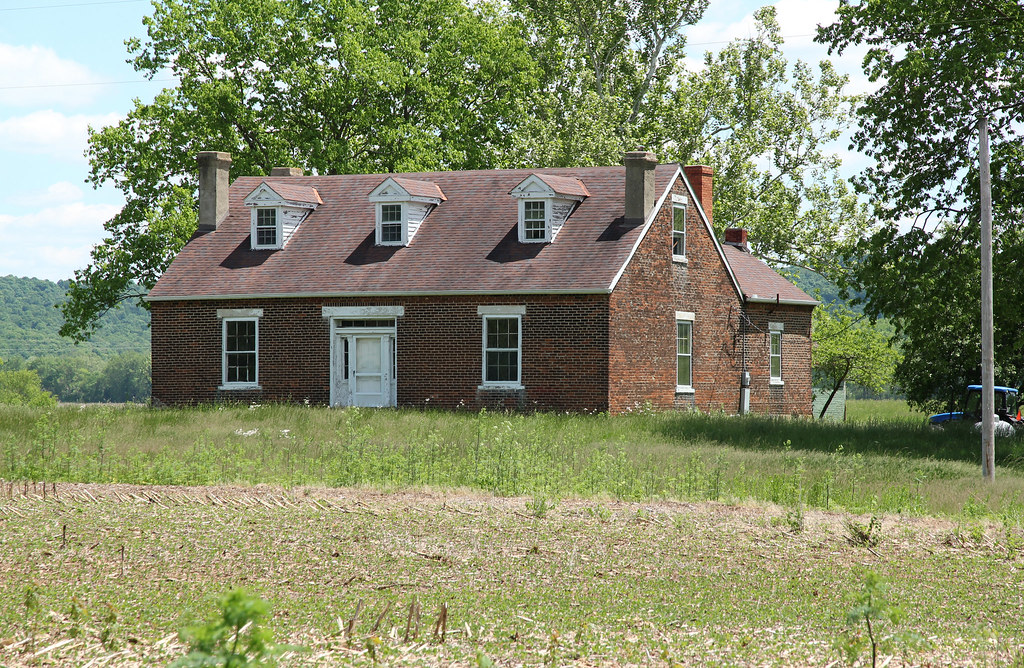
One of few mid-19th century Ohio homes with original dormers. Though common in the Tidewater South (and other regions settled during the colonial period), dormers never gained popularity in the Midwestern states.

The OHPO's GIS lists the structure as the "Dr. William Blackstone House," built about 1840. The Blackstone family moved to Paxton Township from Botetourt County, Virginia, in 1802.

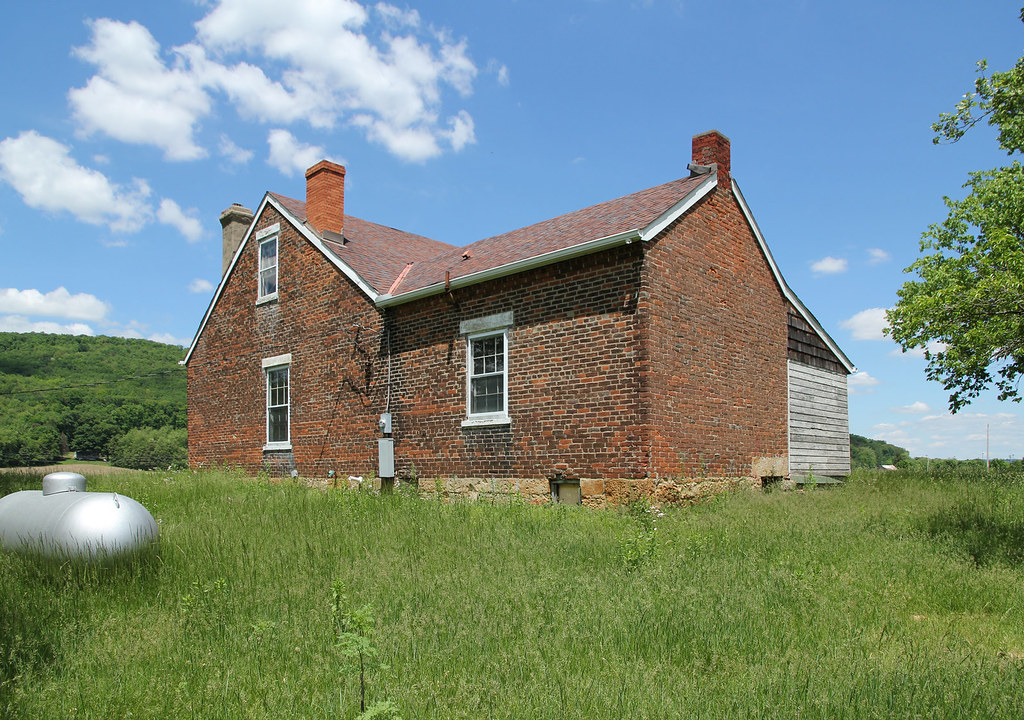
The house's rear. Note the rake boards and flush chimney.

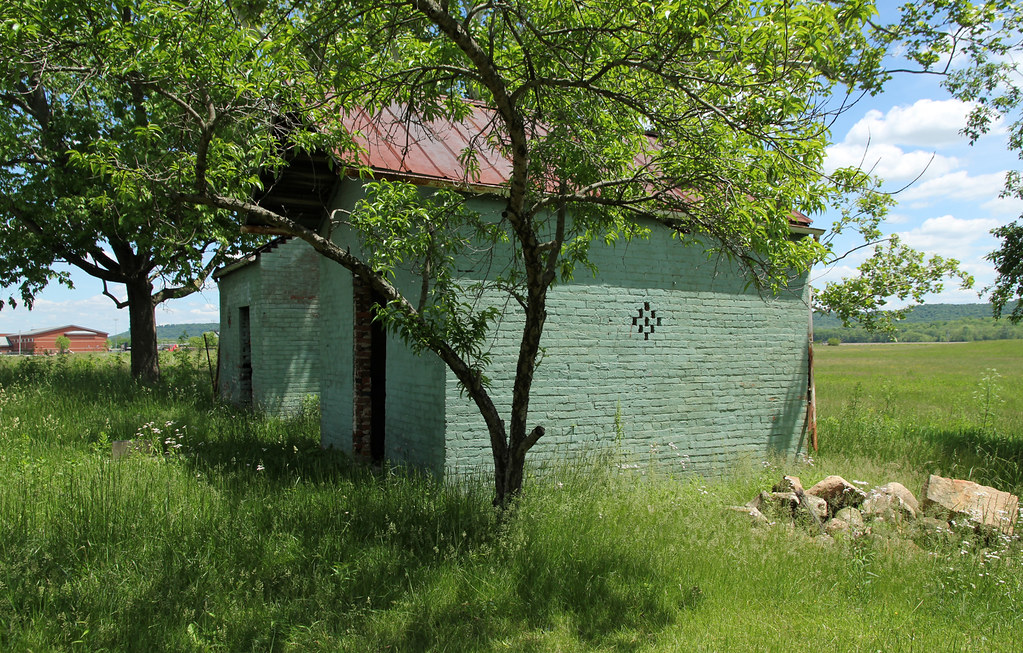
The accompanying smokehouse is particularly interesting.


The clustered holes provided ventilation. A smokehouse adjoining Mount Oval, in Pickaway County, features similar ventilation slits; Frary included a photograph of this structure in Early Homes of Ohio (page 134), with the following description:
The smokehouse . . . may be traced directly to Virginia, as it should be, for the Renicks came from the Old Dominion. Just what were the antecedents of this attractive little building may not be known, but certain it is that the open diamond pattern in the brickwork is to be found on various buildings in Virginia, including Bremo on the James and Barboursville in Orange County, both of which, by the way, were designed by Thomas Jefferson.


Friday, April 3, 2015

Joseph Maltby House

Springfield Township, Williams County, Ohio

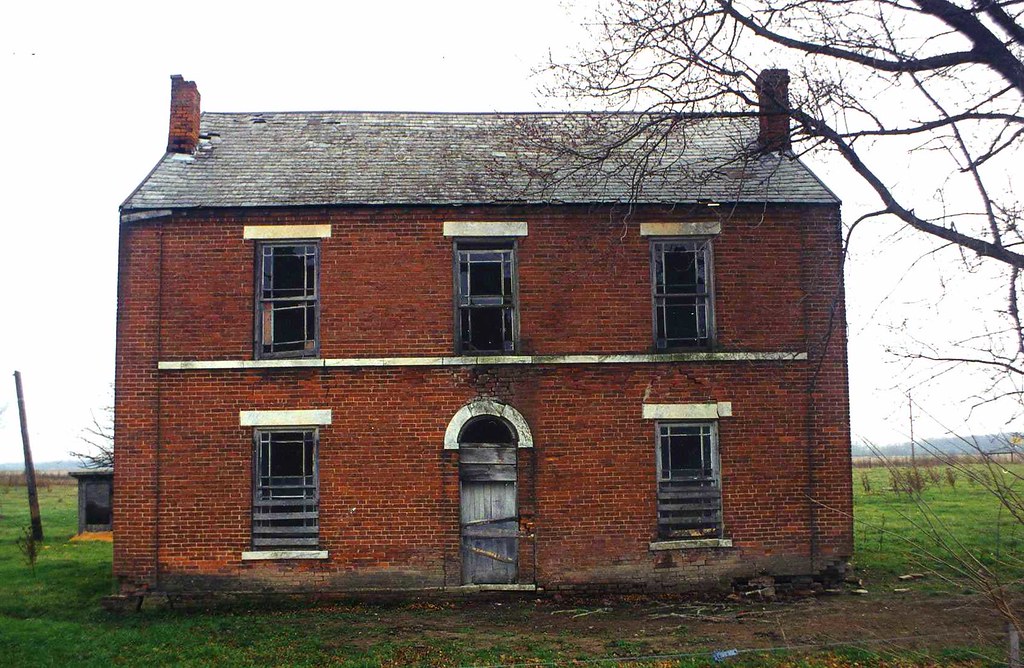
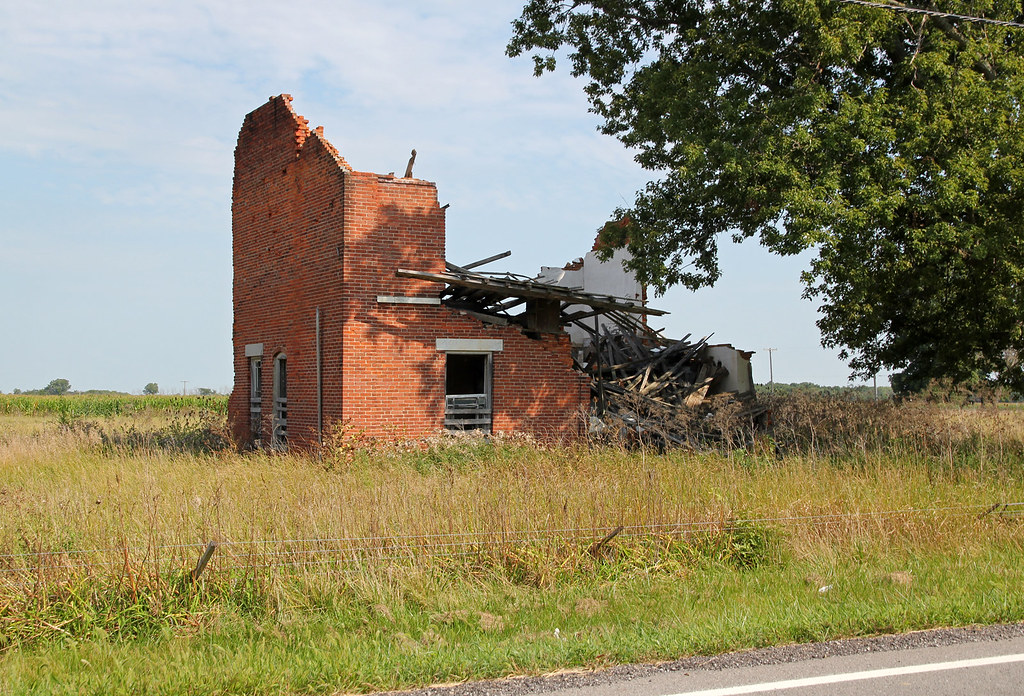
This residence is, so far as I'm aware, Ohio's only extant building with explicitly English antecedents (Muskingum County's Smith House, erected in 1833, is one possible exception); the stone trim, round-arched doorway, window configuration, and slate roof are elements infrequently seen in northern Ohio.

The home before its collapse. Photo by Jon Cutrell, 1996.
Joseph Maltby (18171879), a native of Derbyshire, England, immigrated to Williams County after his 1846 marriage, purchasing 120 acres in Springfield Township. Maltby's residence, now ruined, likely dates from the 1860s.

The house in 2014; its current condition is a travesty.

Saturday, January 24, 2015

Timberlake House

Penn Township, Highland County, Ohio


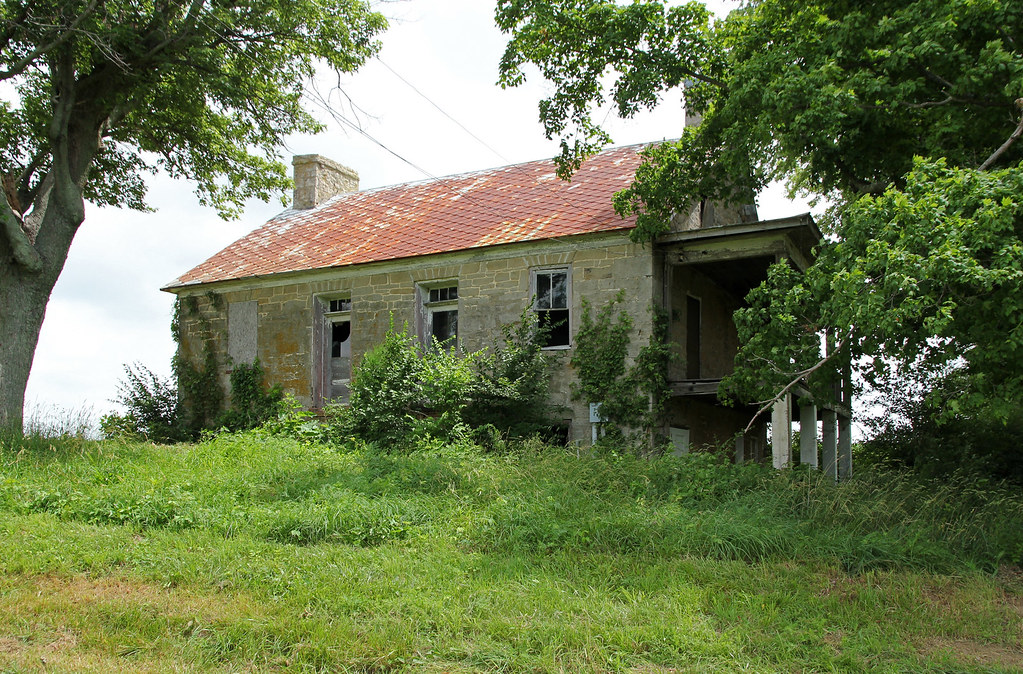
One of several early stone residences in Penn Township, a locality settled, as its name suggests, by Quakers. (A similar home, constructed by a non-Quaker, stands only a few miles northeast.)

A 1981 Ohio Historic Inventory form, completed by Stephen Gordon, provides the home's history:
Richard Timberlake (17861860), a native of Campbell County, Virginia, came to Highland County with his father John Timberlake (17611827). John Timberlake had purchased 330 acres in Survey #2327 on October 10, 1807; by 1825 Richard Timberlake had acquired 106 1/4 acres of the original tract. Richard, a member of the Clear Creek Meeting, married Mary Wright of Springboro in 1810. Alfred Timberlake, Richard's son, subsequently lived with his wife Phoebe Doan on this farm. They were married at Centre Meeting on May 22, 1839. In May, 1845, the Timberlakes sold the 106 acre farm to Jonathan and Susana Ellis. The house is reported to have been built c. 1812 by Richard Timberlake. However, the 1825 Tax Duplicate neglects to mention a house. It does appear on the 1833 tax rolls and was valued at $300.00.
The 1812 construction date "feels" more accurate.

Note the small gable windows, which cut into the frieze board. This building lacks the flush chimneys typical of early 19th century masonry construction.
The house's walls are quite thick.
Beautiful. Built into a slope, the house likely featured a basement kitchen.

The accompanying barn.

David Wright House

Penn Township, Highland County, Ohio


A stupendous example of early stone architecture, likely erected in the 1820s (or, possibly, earlier). Save for window replacements and removal of its mantel (drat!), the house remains nearly unaltered.

Unfortunately, my research uncovered little information about the building. The 1871 and 1887 atlases list David M. Wright (18321892) as the farm's owner. David's father, Samuel (17951873), moved from Kentucky to Highland County, settling in Penn Township or Liberty Township at an unknown date; his burial site, Fall Creek Cemetery, exists in the latter township, about three miles southeast of the stone dwelling.

Steve Gordon's 1981 survey of northern Highland County overlooked this home, perhaps because its builder, unlike most residents of the region, was not a Quaker.

Facade.
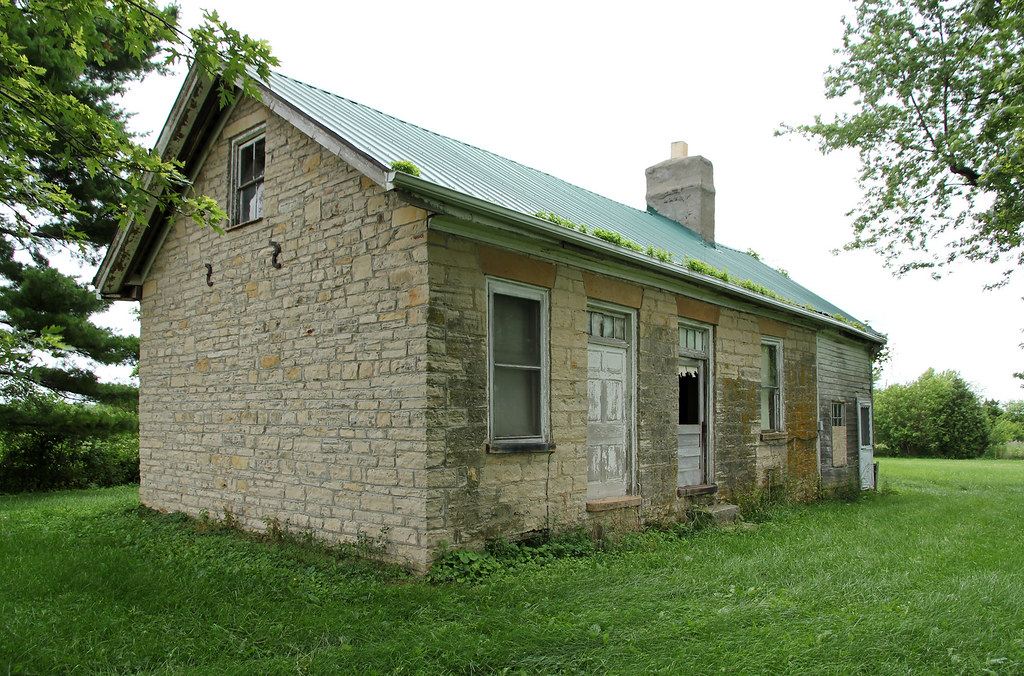
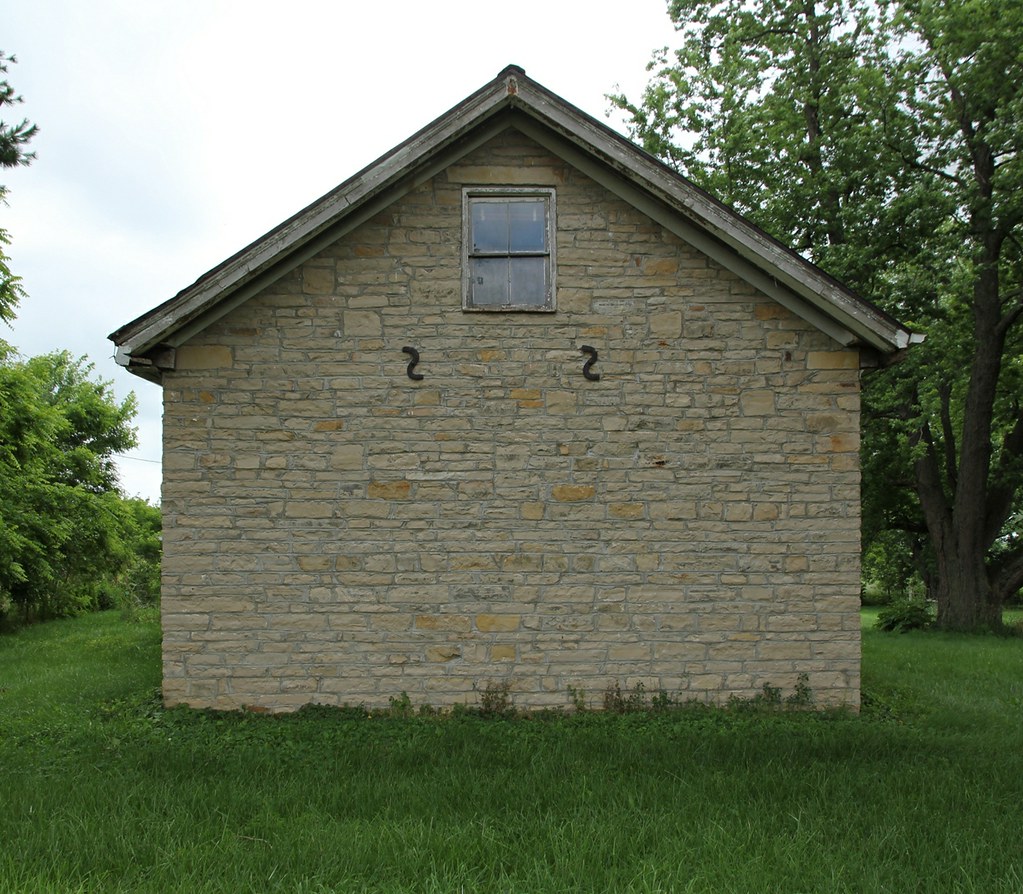
The S-shaped metal plates anchor tie rods, which support the second story joists. This technique is common to masonry construction; often, the plates resemble stars.
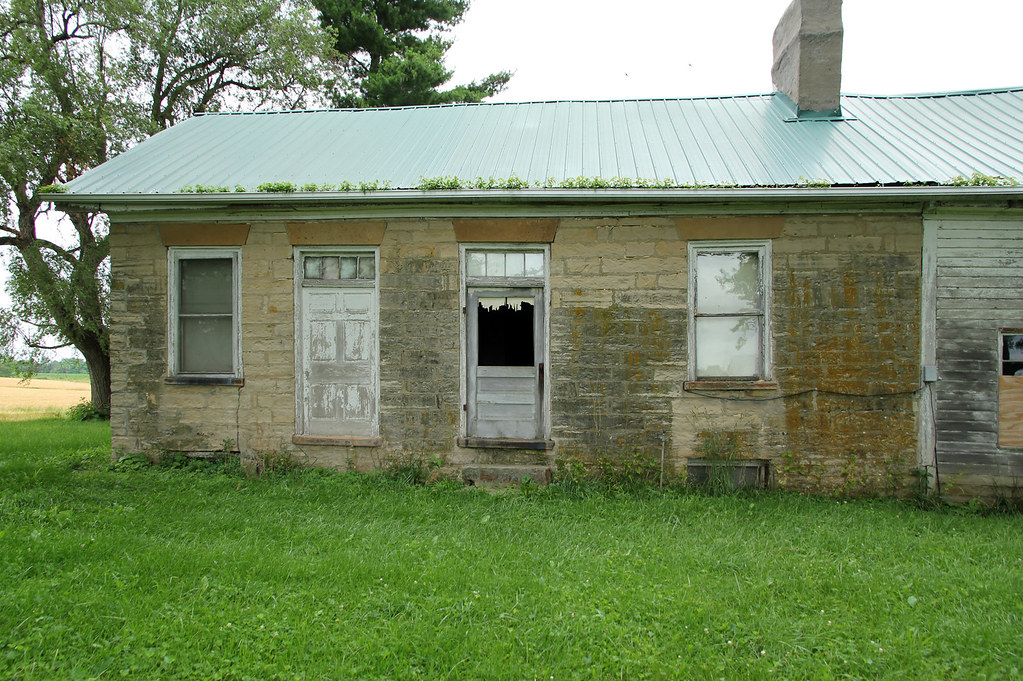
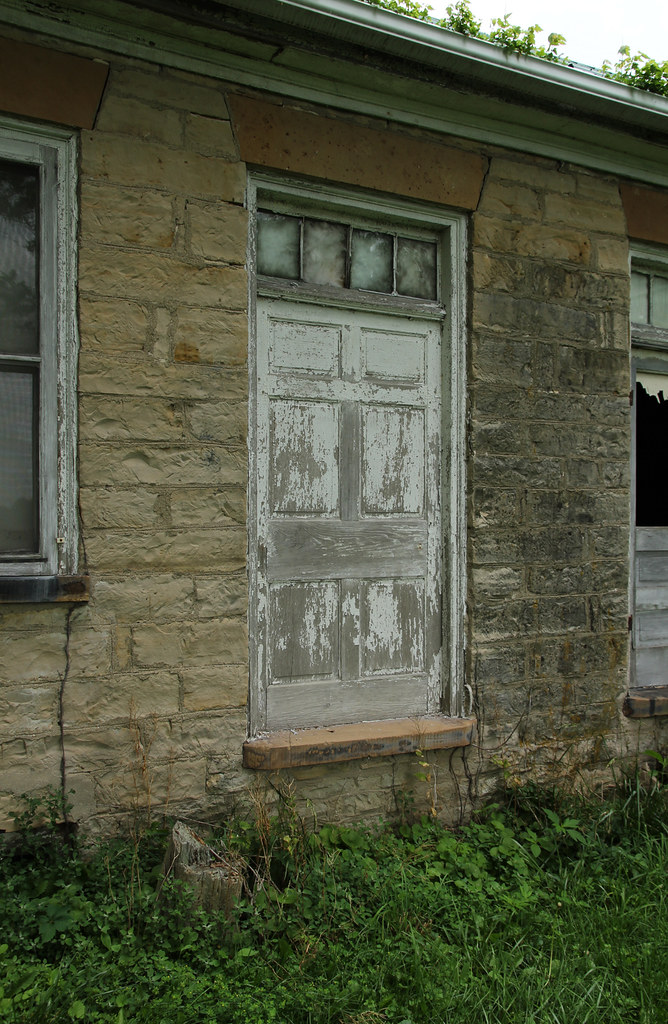
A textbook example of vernacular Federal entry treatment; note the four-light transom, six-panel door, and splayed lintels. This doorway is no doubt unaltered.
Federal-era doors are typically shorter and wider than those produced today. This entrance, though, possesses exceptionally odd proportions.

The staircase is excellent, given the building's one-and-a-half-story height. Unfortunately, at some point (the late 19th century, perhaps), a stove replaced the house's fireplace; its firebox was sealed, and its mantel removed.

Another oddly proportioned (formerly exterior) door. Plaster decay has exposed a portion of the stone wall, visible to the door's upper right.
The adjacent barn, likely a 20th century structure.

Saturday, June 22, 2013

Twin Houses

Darby Township, Union County, Ohio

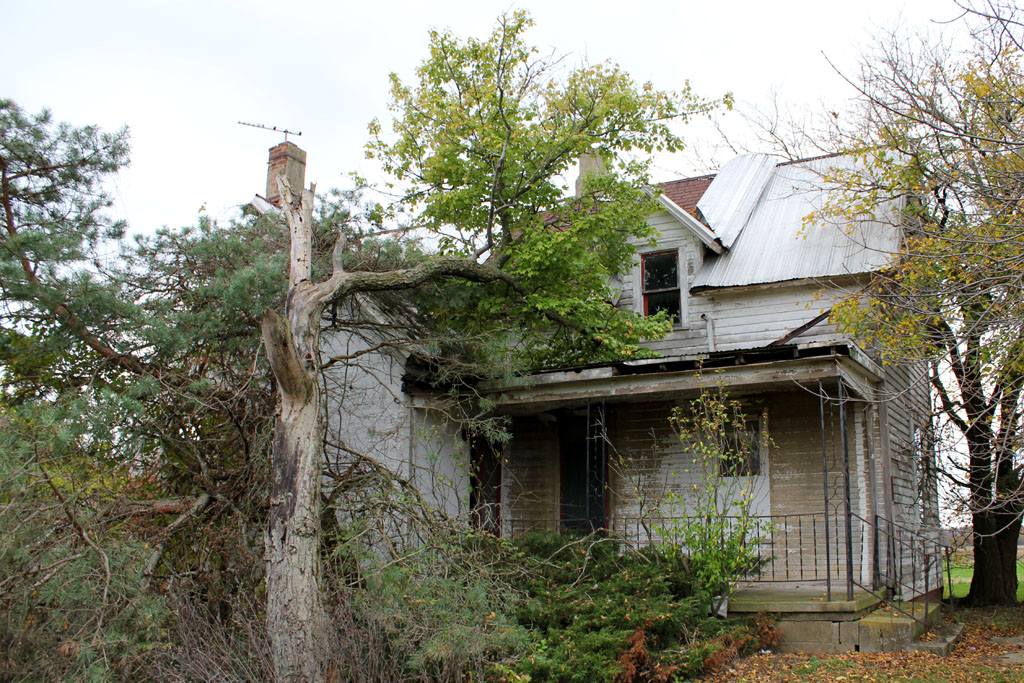
This farmhouse doesn't seem particularly noteworthy at first glance. I encountered the property owner (?), who seemed neither hostile nor thrilled about my trespass. Not wanting to overstay my welcome, I captured only a few photographs.


While the one-and-a-half-story front ell is quite featureless, the rear section is constructed of brick, with segmental arched windows at the basement level. I first assumed that the brick portion was built prior to the frame section; an incorrect assumption, as it turns out.

West facade. The tarp covers an arched basement-level window.
Porch area. Note the row of vertical bricks, barely visible between the porch floor and door.

 A few months ago, I discovered an identical house merely a half-mile away.

The twin house, thankfully inhabited.  Photo (circa 2001?) is from the Union County Auditor's website.
Both buildings feature the same odd brick section and, obviously, were designed by the same individual. The 1877 county atlas lists A.M. Vollrath as the owner of both parcels, though neither house existed at that time. Vollrath immigrated to Union County from Germany at an unknown date, and likely constructed both homes in the late 19th century.

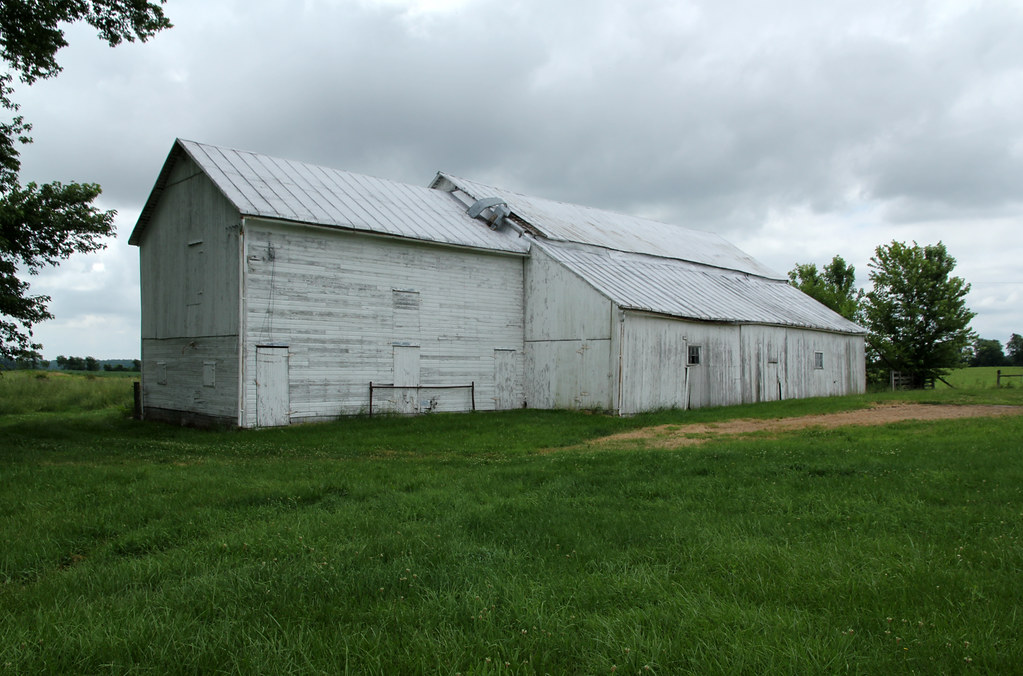
The northern section of Darby Township contains a number of brick farmhouses, part of a German settlement area centered around nearby St. John's Lutheran Church.