Showing posts with label greek. Show all posts

Thursday, November 17, 2016

Strabo: Lost in Translation

A few months ago, I sought an answer to the perennial question, "Who built the first log buildings?" I managed to overlook an equally interesting (and no less answerable) inquiry: "What's the earliest mention of log buildings?" Most literature about the subject cites Vitruvius's De Architectura, written during the Augustan age (27 BC – AD 14), as antiquity's first description of log construction. And indeed, as a description — an intricate verbal account — De Architectura dominates. But there exist earlier, shorter texts which also mention log buildings, albeit in veiled verbiage. Foremost among these, and nearly contemporary with De Architectura, is Strabo's Geographica, first published in 7 BC.

When, in March, I combed Geographica for references to log buildings, I used the H.L. Jones translation accessible via LacusCurtius. One passage struck me:
Now all these peoples who live in the mountains are utterly savage, but the Heptacometae are worse than the rest. Some also live in trees or turrets; and it was on this account that the ancients called them 'Mosynoeci,' the turrets being called 'mosyni.' (1)
Interesting though treehouses may be, I dismissed the extract as merely tangential. After all, living atop a tree is quite different from living in a dwelling cobbled together from the trunks of trees. At the time, I scarcely noticed the word "turrets."

Last week, I found myself browsing a different translation of Geographica:
All the inhabitants of these mountains are quite savage, but the Heptacometae are more so than all the others. Some of them live among trees, or in small towers, whence the ancients called them Mosynoeci, because the towers were called mosynes. (2)
Compare this version with the pertinent passage from Vitruvius's De Architectura:
Among the Colchians in Pontus, where there are forests in plenty, they lay down entire trees flat on the ground to the right and the left, leaving between them a space to suit the length of the trees, and then place above these another pair of trees, resting on the ends of the former and at right angles with them. These four trees enclose the space for the dwelling. Then upon these they place sticks of timber, one after the other on the four sides, crossing each other at the angles, and so, proceeding with their walls of trees laid perpendicularly above the lowest, they build up high towers. (3)
Eureka! Strabo's Heptacometae dwell in "small towers"; Vitruvius's Colchians inhabit "high towers." High or low, towers are towers, and I've no doubt that Strabo and Vitruvius describe the same ethnic group, and thus the same building tradition. (Indeed, Perseus translates mossunōn as "wooden houses.")

The Mosynoeci lived along the rugged, forested Black Sea coast, in modern Turkey and Georgia. An 1890 issue of The Athenæum identifies "the people to the south of Kerason [now Giresun]" as "the representatives of Xenophon's Mosynœci," who, at the time, "still [lived] in lofty wooden towers as in the days of the Greek historian." These "lofty towers," it seems, have all but disappeared from Giresun Province; modern masonry buildings (and the odd half-timbered home) now dominate the region. Still, I managed to locate this image. (Perhaps, if I spoke Turkish, I could discover more.)

In Georgia, timber construction is rarer, but distinctively towering dwellings continue to exist in the country's Caucasian foothills, particularly in Svan-speaking Svaneti. Defensive towers dotted the regional capital of Mestia until the late 19th century, and similar structures stand in Ushguli and elsewhere. The Laz, who live in Georgia and Turkey, may, in fact, be related to the Heptacometae — the two communities' boundaries are almost identical.

Buildings in Ushguli, Georgia. Image by Florian Pinel, 2010, from Wikimedia Commons.

Obviously, the tradition described by Strabo, Vitruvius, and Xenophon developed independently of the Scandinavian and Eastern European conventions to which we Americans owe our log buildings. But who knows? Had a globetrotting Greek wandered into the forests of Finland, perhaps he, too, would have returned with reports of "houses made from trees."

- - - - - - - - - - - - - - - - - - - - - - - - - - - - - - - - - - - - - - - - - - - - - - - - - - - - - - - - - - - -

For thoroughness's sake, I thought I'd attempt to "translate" the passage from Geographica. Here's the Greek (transliterated, of course):
Eisi d' hapantes men hoi oreioi toutōn agrioi teleōs, huperbeblēntai de tous allous hoi Heptakōmētai: tines de kai epi dendresin ē purgiois oikousi, dio kai Mosunoikous ekaloun hoi palaioi, tōn purgōn mossunōn legomenōn. (4)
And, a crude and literal translation:
They are but all indeed the Oreioi of these savages perfectly, they throw over but the following another Heptakometai. [?] but and on trees or towers they inhabit, wherefore and Mosunoikous called the old (people), because towers wooden houses were called.
Perseus gives no proper definition for "Oreioi," but the term seems to describe a long-defunct Cretan city (between modern Anidri and Prodromi). A few resources link the name with "people of the mountains"; perhaps Strabo used the word equivocally or metaphorically, to describe non-Cretan mountain-dwellers. Another phrase — "epi dendresin" — is a more perplexing matter. Assuming Perseus's dictionary is accurate, the preposition "epi" can mean both "on" and "among," and an accurate translation requires knowledge of the context.

I'll end with a more polished interpretation of the above translation:
Indeed, the mountain people are all perfectly savage, but the Heptakometai surpass ["throw over"] the others. They live on trees or towers, wherefore the people of great age called them 'Mosuoikous,' because the towers were called 'mossunōn' [literally "wooden houses"].
1) From H.L. Jones's translation (1917–1932); transcribed by Bill Thayer.
2) From W. Falconer's translation (1903); transcribed by Robert Bedrosian.
3) From Morris Morgan's translation (1914); hosted by Project Gutenberg.
4) From A. Meineke's Greek edition (1877); transliterated by Tufts University's ever-useful Perseus Digital Library.

Wednesday, March 9, 2016

The First Log Buildings?

According to convention, log construction was introduced to America by Scandinavian and German immigrants, who settled in the Middle Colonies after 1638. Tracing the European log house's history is a more arduous task. The question, "Who built the first log structure?" may be unanswerable. The Roman architect Vitruvius (ca. 75 – ca. 15 BC), in the second book of his Ten Books on Architecture (or De Architectura), describes the log dwellings erected by the inhabitants of Colchis, a region lying between the Black Sea and Caucasus Mountains, in present western Georgia:
The woods of the Colchi, in Pontus, furnish such abundance of timber, that they build in the following manner. Two trees are laid level on the earth, right and left, at such distance from each other as will suit the length of the trees which are to cross and connect them. On the extreme ends of these two trees are laid two other trees transversely: the space which the house will inclose is thus marked out. The four sides being thus set out, towers are raised, whose walls consist of trees laid horizontally but kept perpendicularly over each other, the alternate layers yoking the angles. The level interstices which the thickness of the trees alternately leave, is filled in with chips and mud. (1)
Were it not for his use of "Colchi" and "Pontus," Vitruvius could be detailing a standard American log house (or cabin). (Whether the Colchians — like their Western inheritors — notched or hewed the timbers they used, I can't say.) Vitruvius continues:
On a similar principle they form their roofs, except that gradually reducing the length of the trees which traverse from angle to angle, they assume a pyramidal form. They are covered with boughs and smeared over with clay; and thus after a rude fashion of vaulting, their quadrilateral roofs are formed.
Here, the Colchian method of construction diverges from later European techniques. That the Colchians could erect such roofs suggests that they treated (that is, notched or shaped) their logs. I'm scarcely an engineer, but a pyramid of round trunks, I suspect, would risk collapse.

Did log architecture truly originate in the Caucasus? Perhaps; perhaps not. Few written accounts of pre-Christian European building techniques exist, and archaeological evidence for log construction is, for obvious reasons, scanty. In any case, the Germanic tribes of northern and northeastern Europe (by the early modern period, the log house's locus) did not, during the Roman era, employ such methods. In Germania, Tacitus (ca. 56 – ca. 117) writes:
With [the Germans] in truth, is unknown even the use of mortar and of tiles. In all their structures they employ materials quite gross and unhewn, void of fashion and comeliness. Some parts they besmear with an earth so pure and resplendent, that it resembles painting and colours. They are likewise wont to scoop caves deep in the ground, and over them to lay great heaps of dung. Thither they retire for shelter in the winter, and thither convey their grain: for by such close places they mollify the rigorous and excessive cold. (2)
The Germans, then, occupied mud huts or earth-roofed cellars (Tacitus surely uses "dung" only to deride). No doubt, these buildings contained wood (if only for a roof framework), but I can't imagine they used stacked logs. In the valley of the Danube, such subterranean habitations survived into the 1880s.

I searched for a corroborating account of Colchis's log homes, but found only one (possible) reference. Strabo's Geographica, written in the first or second decade BC, mentions the abodes of the "Heptacometae," who resided just north of Colchis:
Now all these peoples who live in the mountains are utterly savage, but the Heptacometae are worse than the rest. Some also live in trees or turrets; and it was on this account that the ancients called them 'Mosynoeci,' the turrets being called 'mosyni.' (3)
Though "live in trees" may mean "live in dwellings constructed of trees," Strabo, more likely, describes simple tree houses. In the succeeding sentence, he writes, "They . . . attack wayfarers, leaping down upon them from their scaffolds."

1) From Joseph Gwilt's translation (1826); transcribed by Bill Thayer, and posted on his excellent website.
2) From Thomas Gordon's translation (1910); reproduced by Fordham University.
3) From H.L. Jones's translation (1917–1932); transcribed by Bill Thayer.

Sunday, April 26, 2015

William Scott House

Hillsboro, Highland County, Ohio


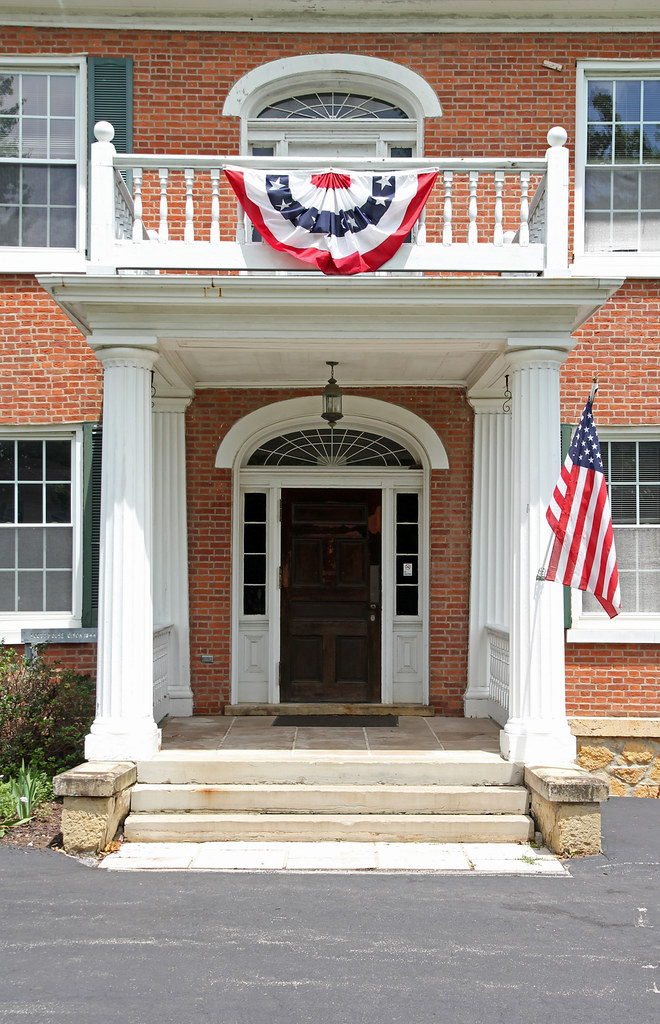
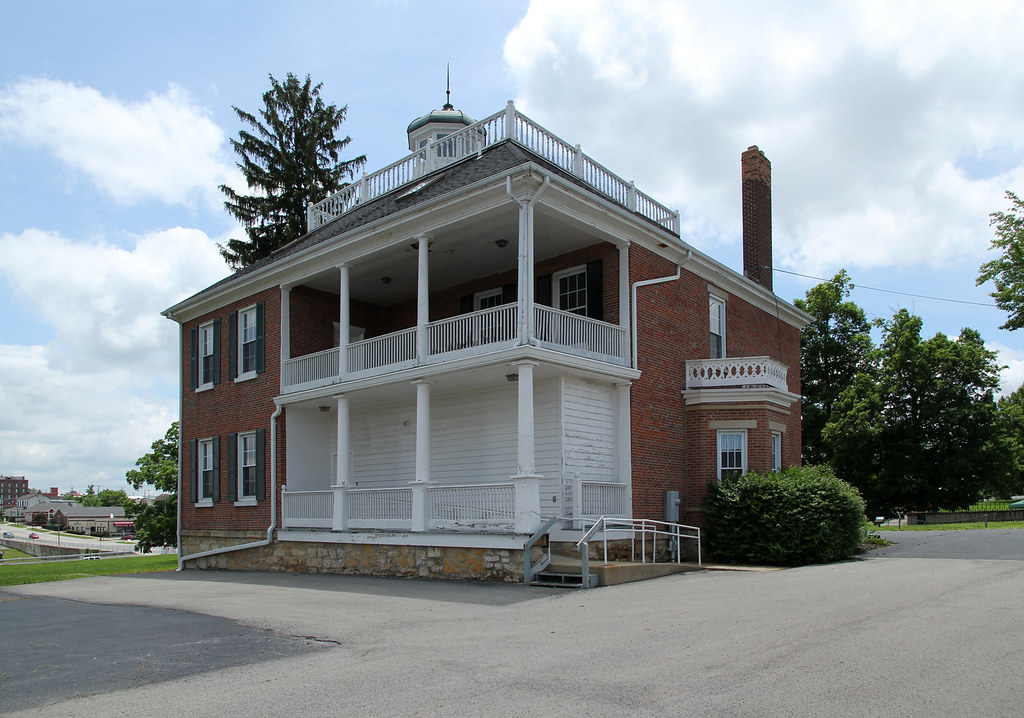
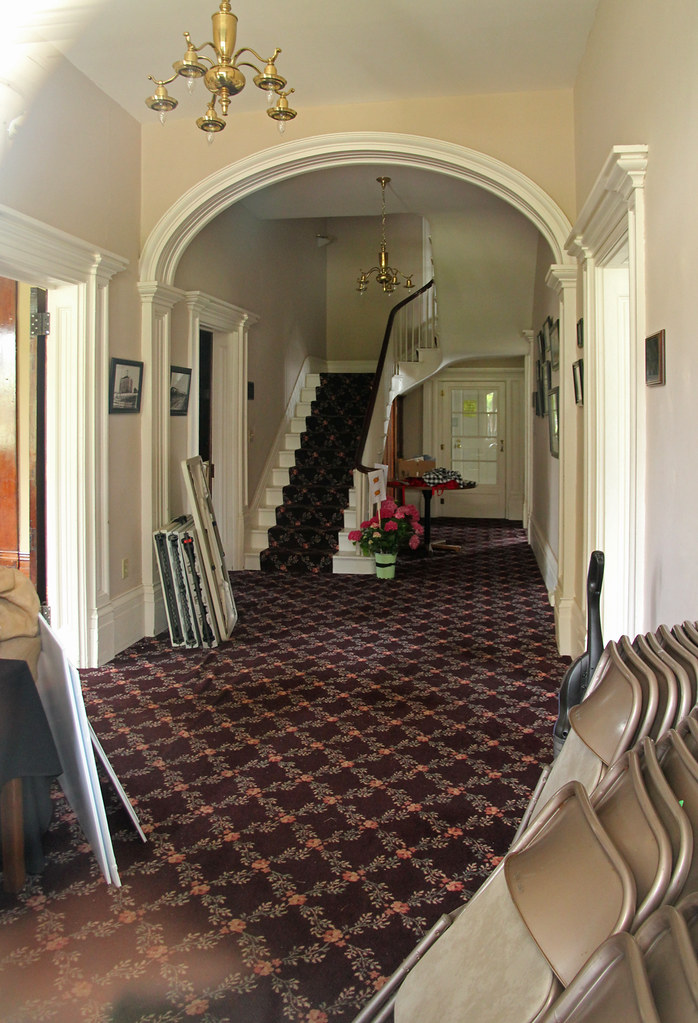
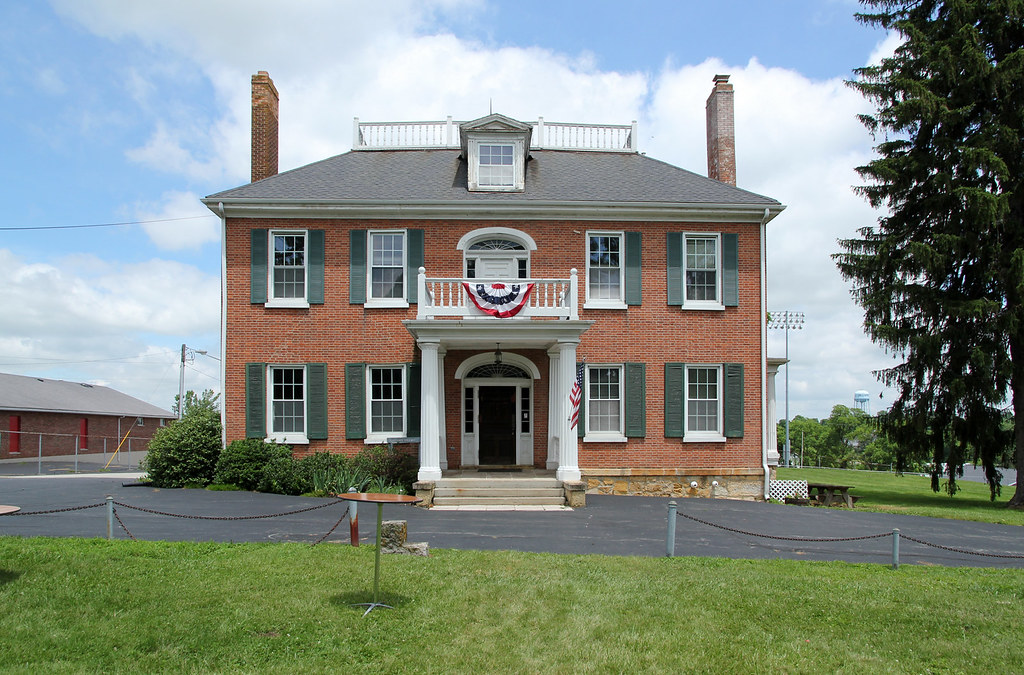
Certainly Hillsboro's finest classically inspired residence, completed about 1835. The Ohio Historic Places Dictionary, Volume II describes its architecture:
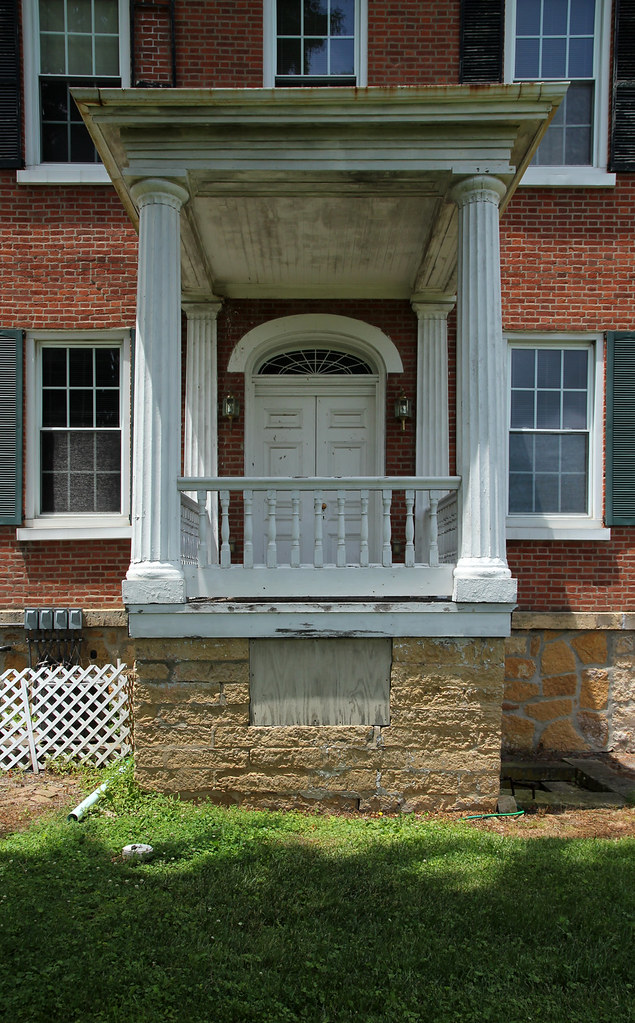
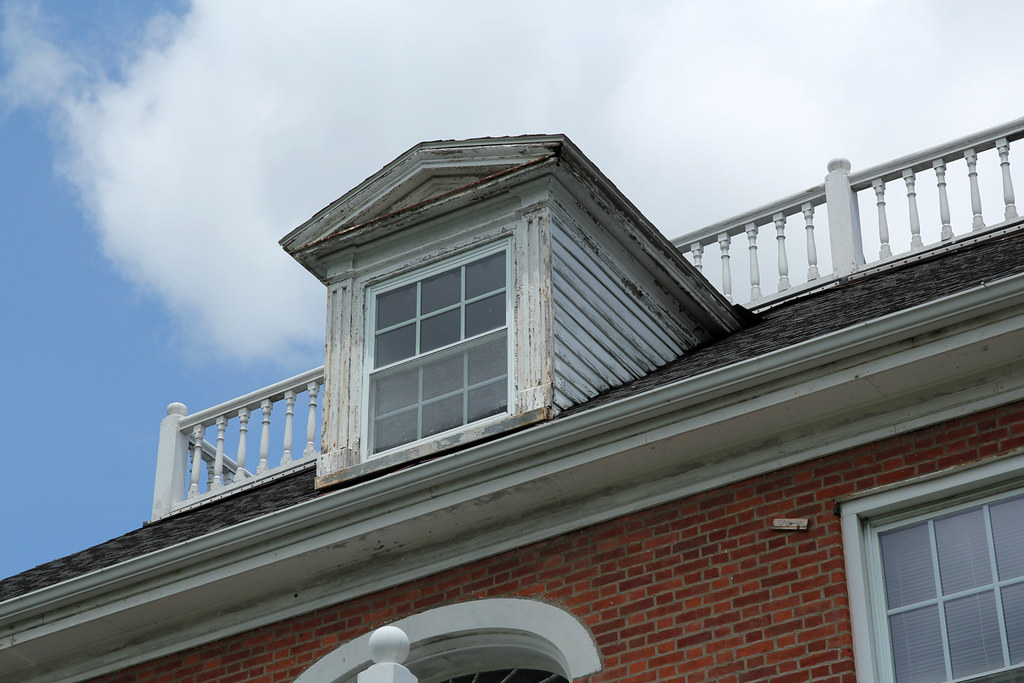
The building displays, through its overall massing and details, Georgian style architectural features. It exhibits classically influenced detailing which includes doorways with elliptical fanlights, six-over-six multi-paned windows, molded fascia board along the roofline, entrance porticoes with fluted Doric columns and pilasters. The unique cupola and projecting bay on the west elevation may have been later additions, since their detailing suggests the romantic influence of the Italianate style of the mid-19th century.
The author's labeling of the home as "Georgian" is perhaps labored; though it shares certain features — its cubic form and classical ornamentation, most prominently  with the style, the Scott House postdates the Georgian era.


The east porch. Note the differences between the home's doorways; this entrance features double doors, while the main entrance is trabeated, with sidelights.
The rear elevation.
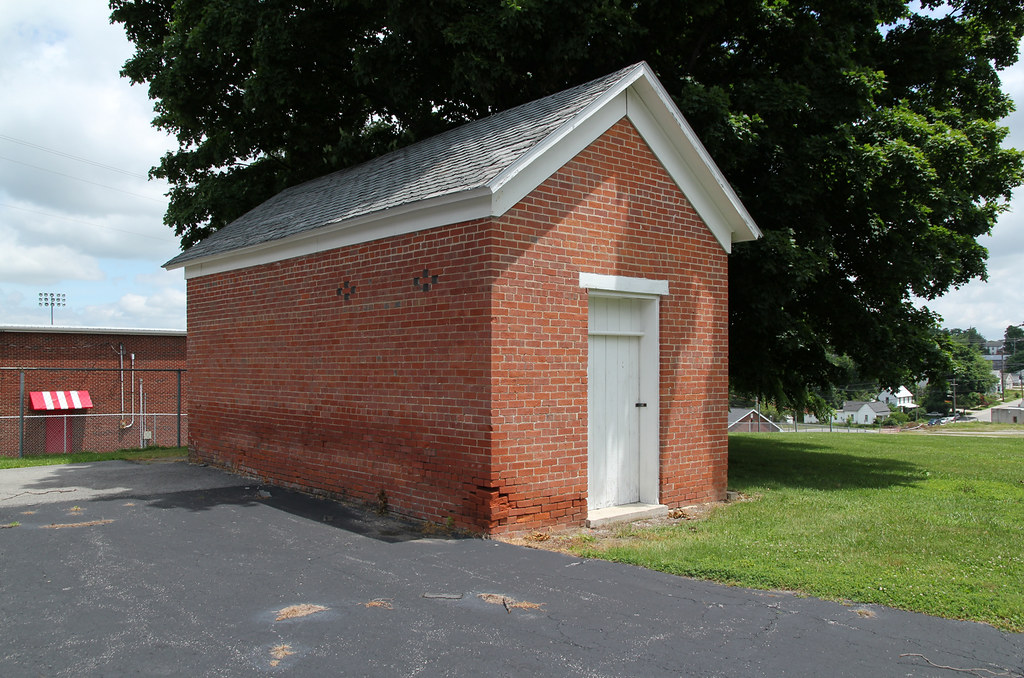
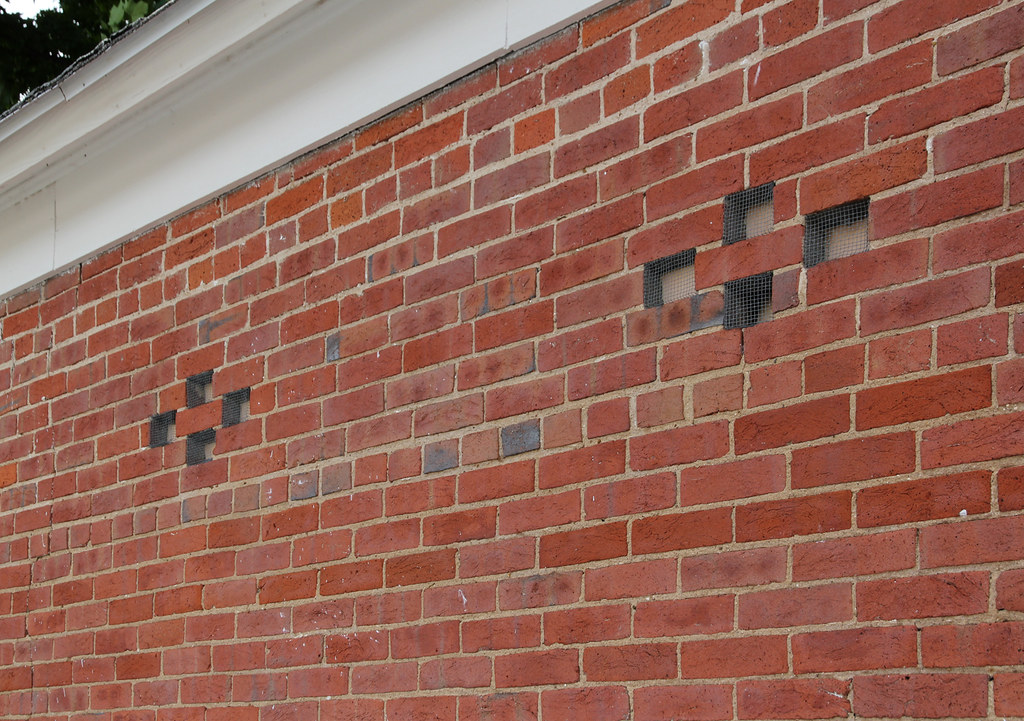
This structure, like the Blackstone and Renick smokehouses, features ventilation slits clustered in the shape of a diamond. Presumably, Scott was a Virginian.

Saturday, November 9, 2013

Omar Chapel

Reed Township, Seneca County, Ohio


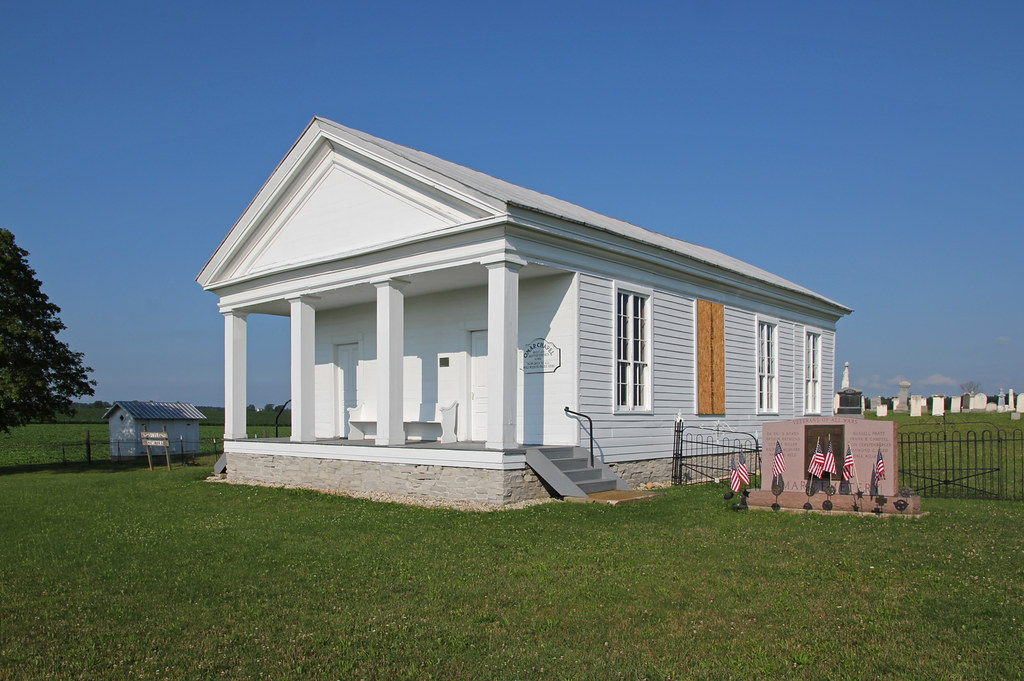
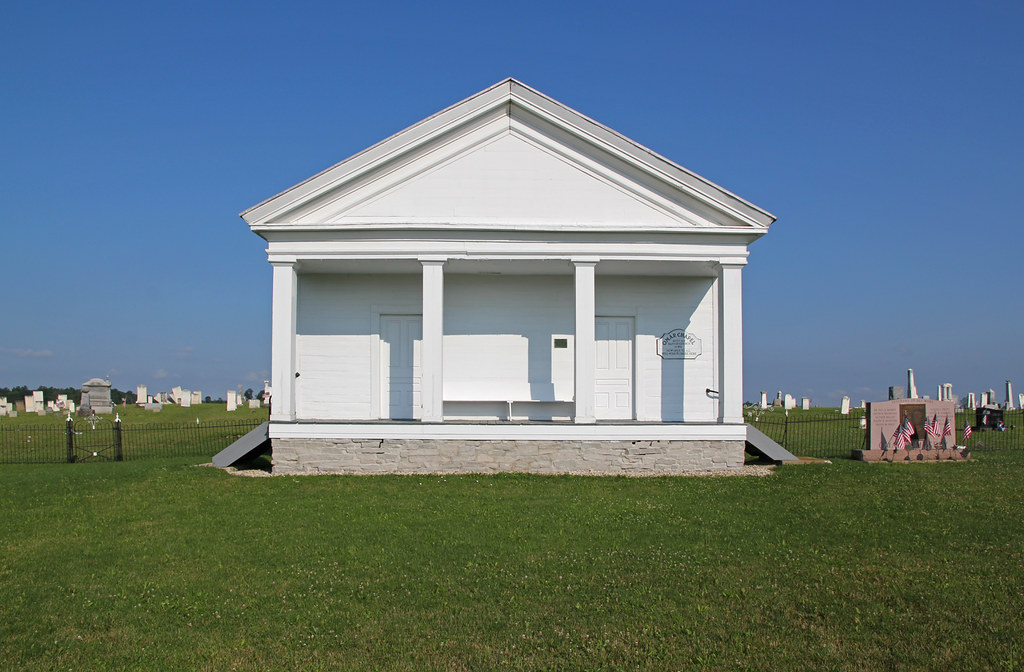
The Omar Chapel, constructed about 1842 as a Baptist church, stands in the midst of northeastern Seneca County's gently undulating farm fields. In a county endowed with Greek Revival buildings, it remains the region's greatest example of the style; an effect, perhaps, of its proximity to the Western Reserve.

I.T. Frary, author of Early Homes of Ohio, photographed the chapel in 1924:

Photo by I.T. Frary, 1924, courtesy of Christopher Busta-Peck.
From a different angle. The columns, I think, are not original.

Five-panel door with simple enframement. The flush siding is intended to emulate stone; such treatment is quintessentially Greek Revival.
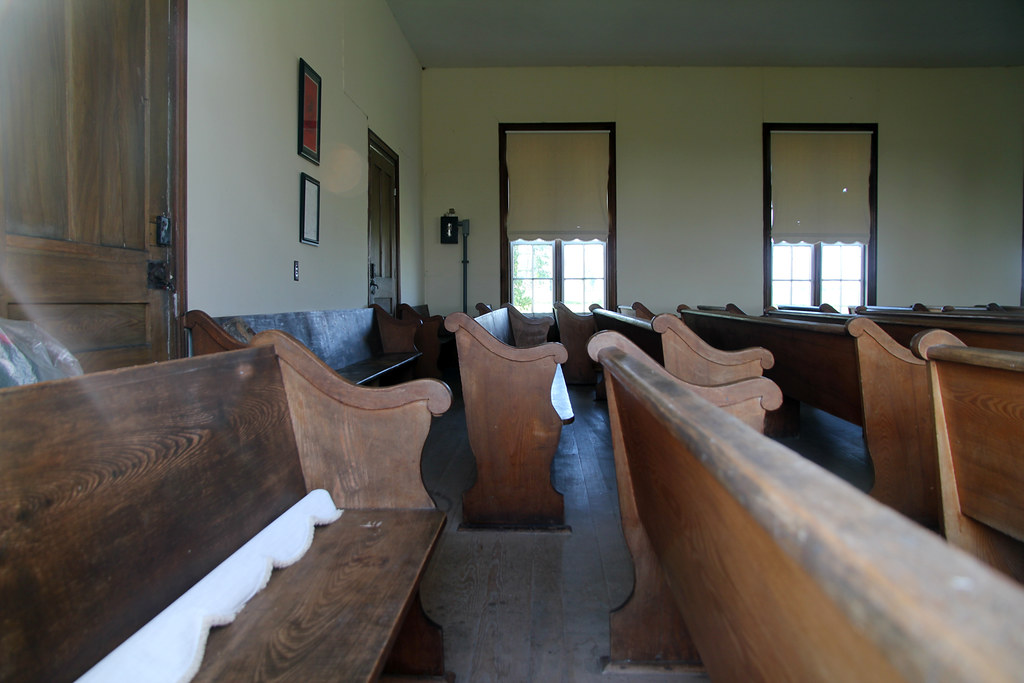
Quite intact. After viewing the exterior, I expected bolder woodwork.
Adjacent to the chapel.

Saturday, May 4, 2013

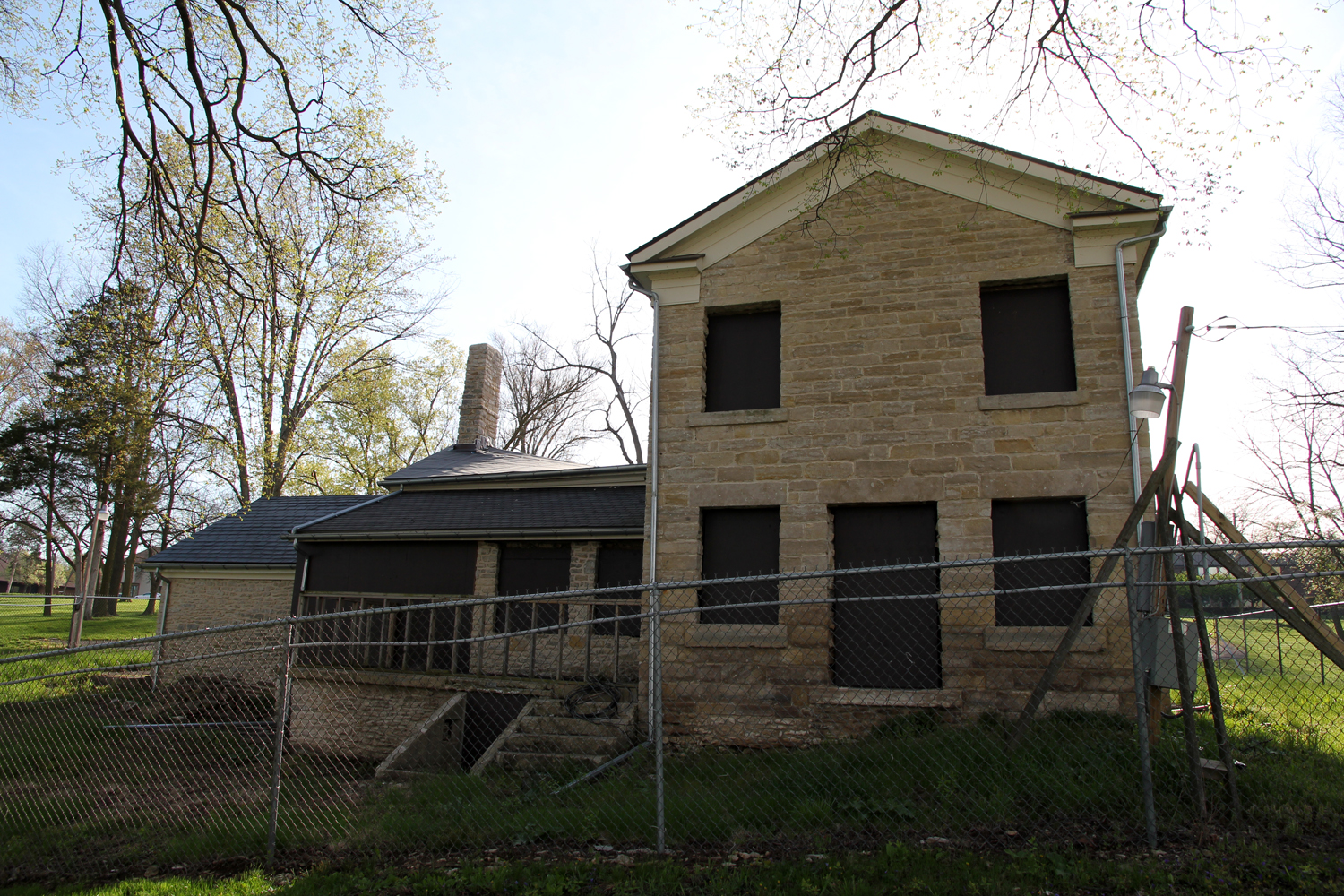
Richards House

Upper Arlington (formerly Perry Township), Franklin County, Ohio

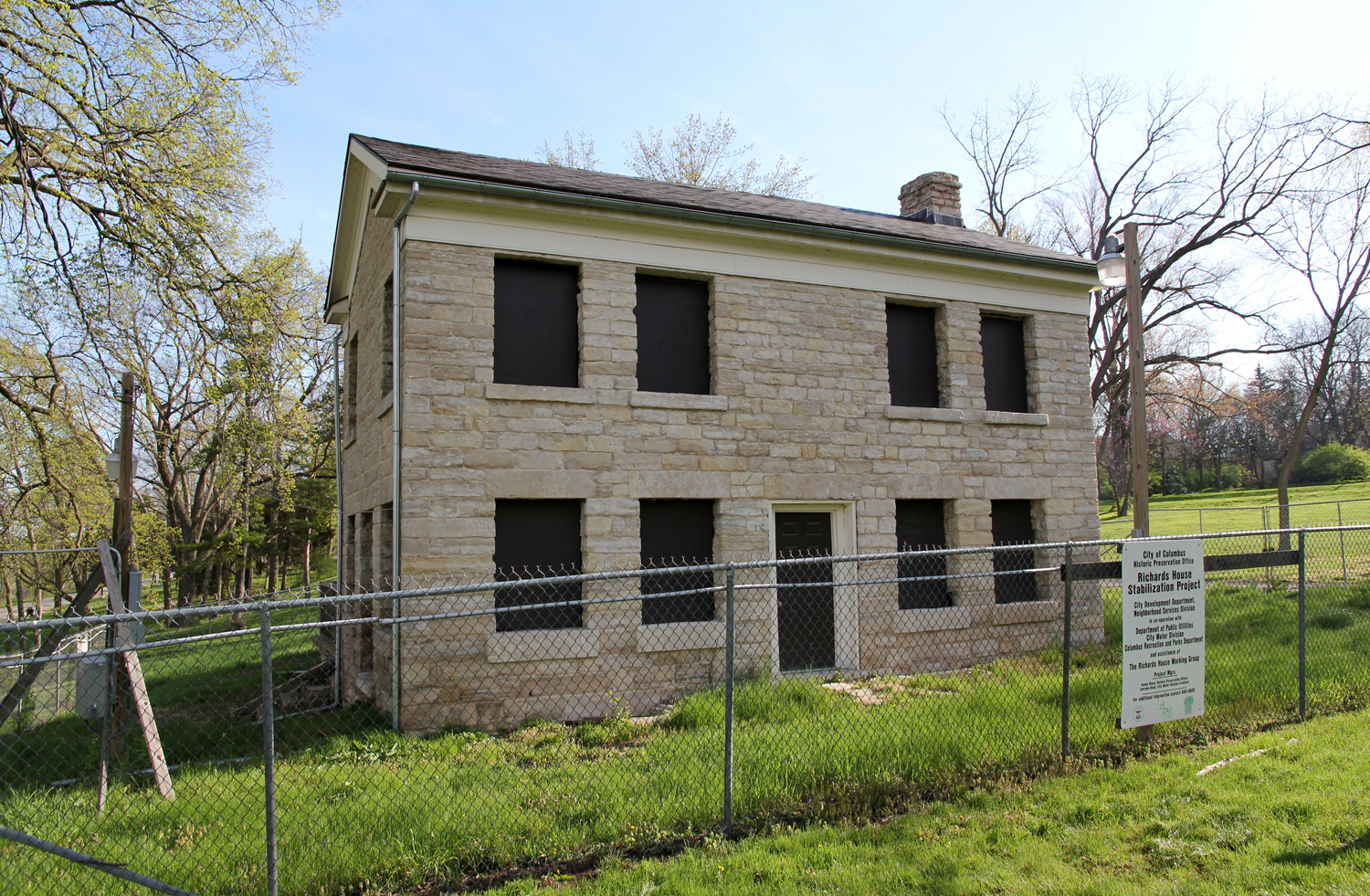
I don't know this home's exact age. One source claims a construction date of 1814, while others provide dates as late as the 1850s. Regardless, it remains a good example of the fine limestone residences that dotted the Scioto River valley.

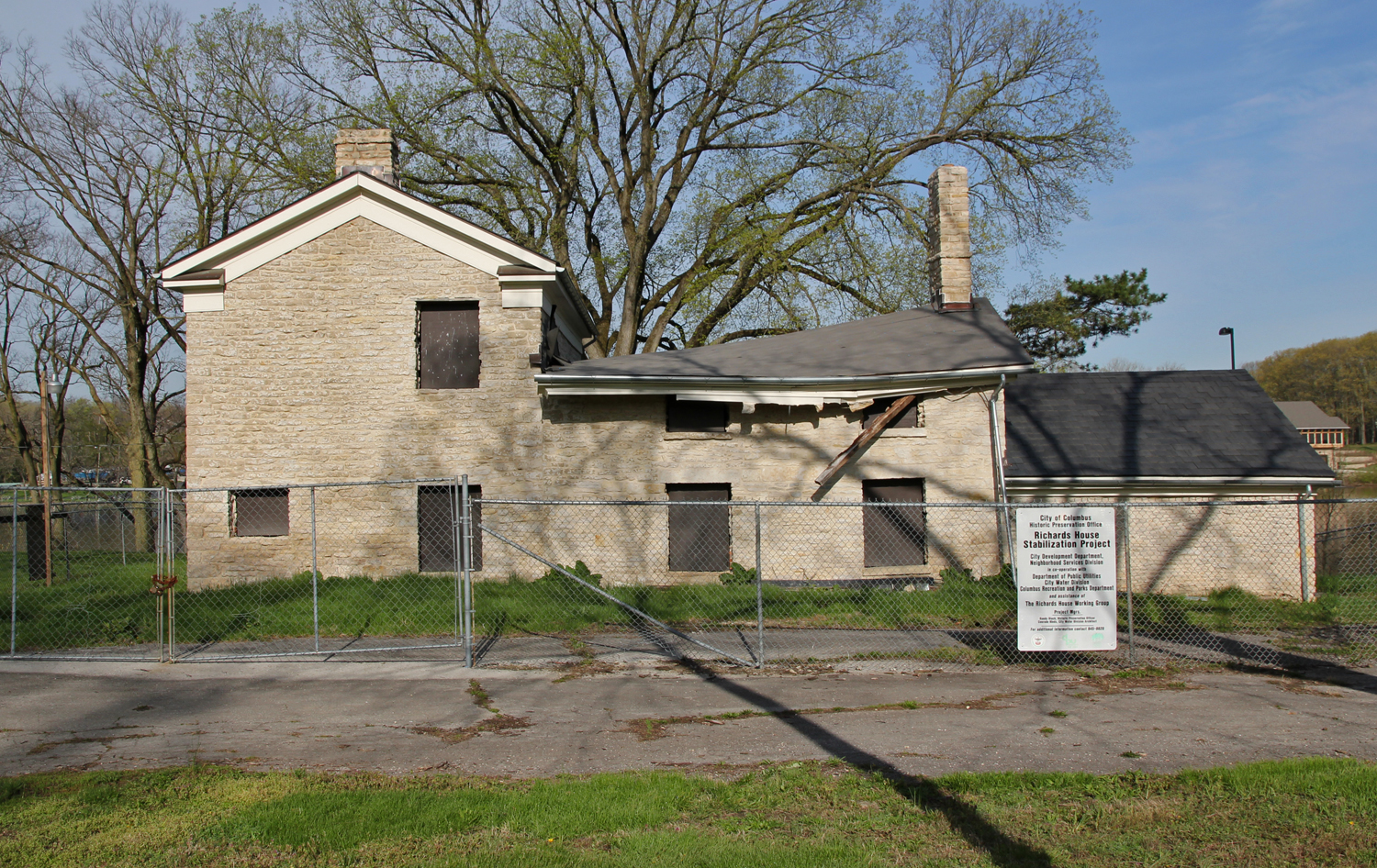
Built by a member of the Richards family, the structure was sold to the City of Columbus in 1904 for use as the Griggs Dam caretaker's house. By the late 1990s, the house stood in a state of disrepair; vandals and ill-conceived renovations had essentially destroyed the interior. A 2007 stabilization project improved the building's fortunes a bit, but its future is still quite bleak.


East elevation. The roof collapsed in a recent snowstorm.
West (river) elevation.
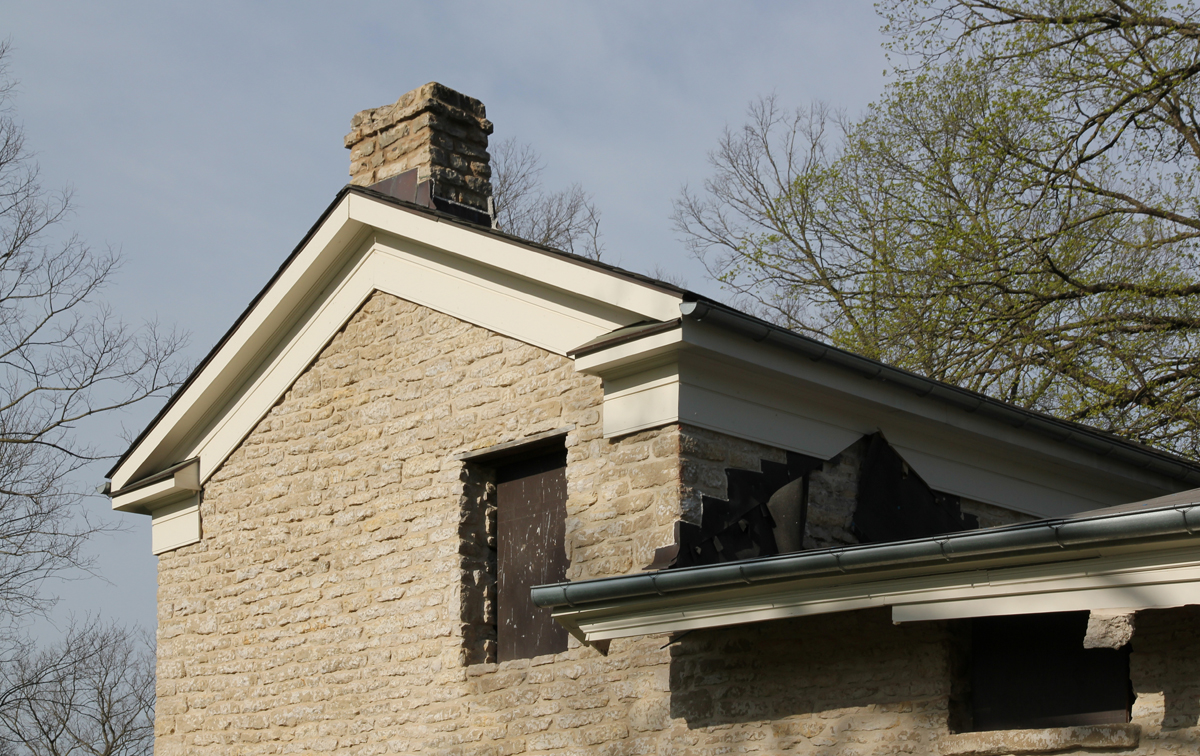
The pre-2007 cornice did not feature returns. I rather like the way they look, though.
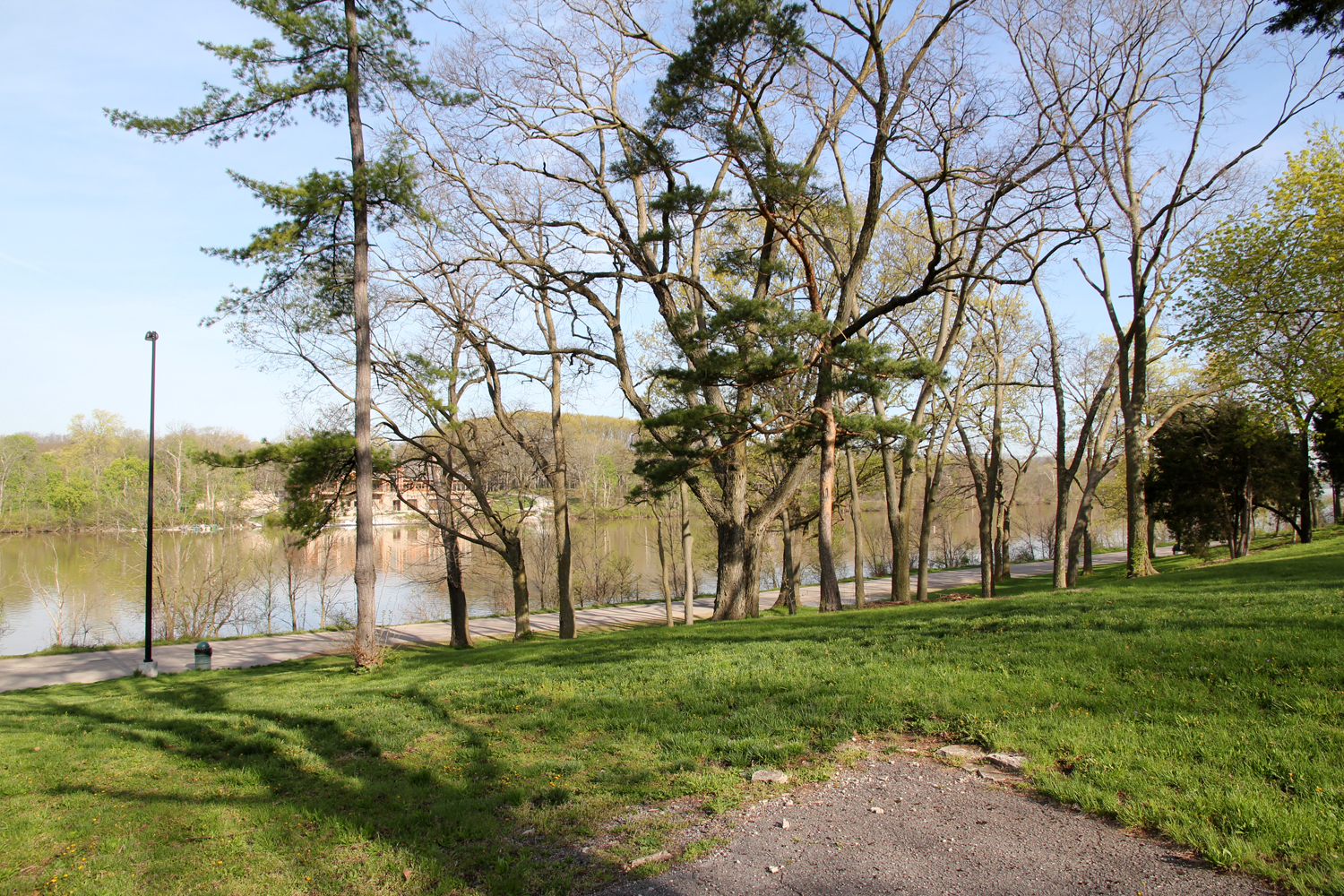
A view of the Scioto River, from the home's northwest corner. The river wouldn't have been quite so wide when the land served as a farm. Still, it's a very scenic locale.
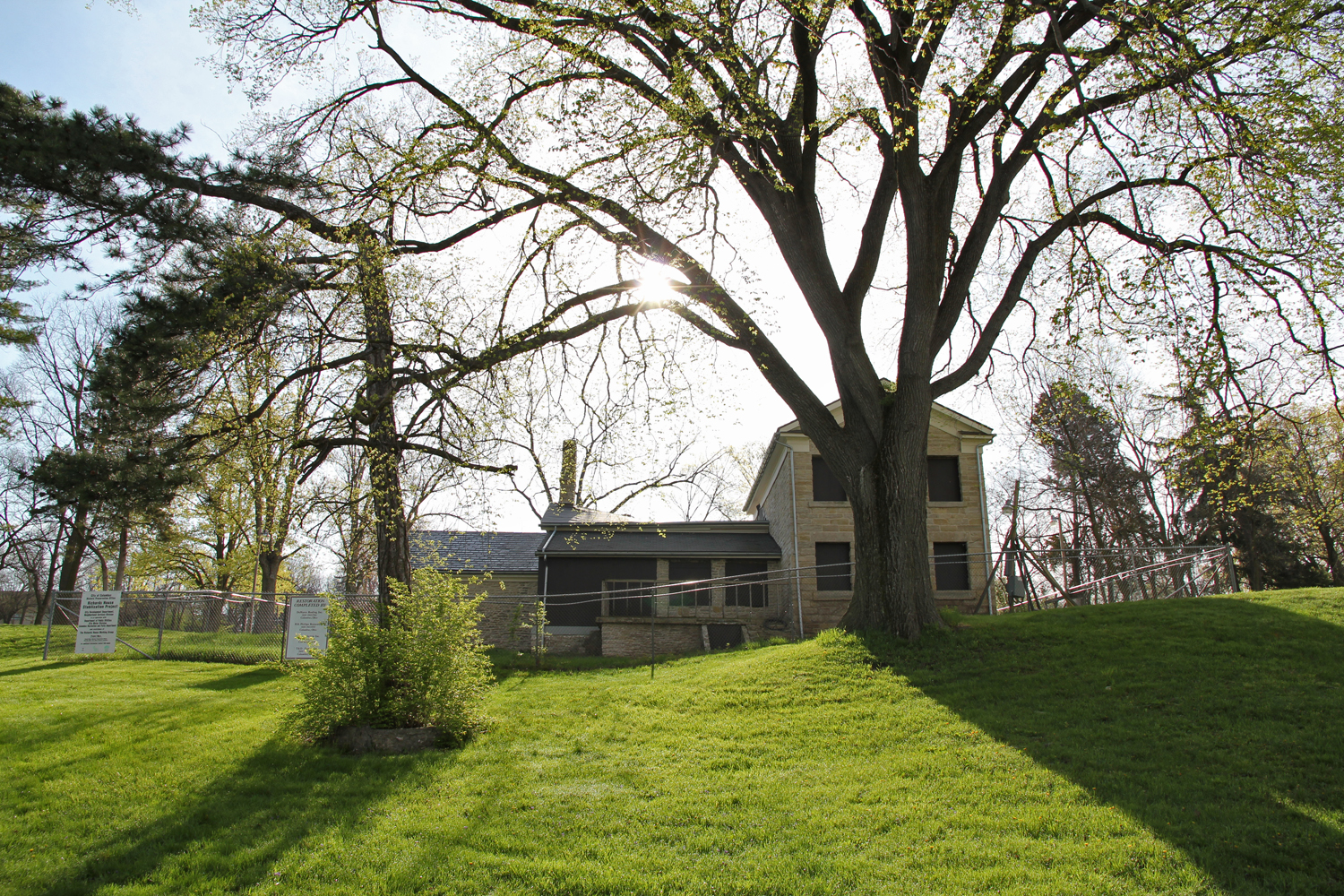
One last photo. In my opinion, topographic relief is always a good thing.

Friday, March 29, 2013

Turner House

Oxford Township, Erie County, Ohio

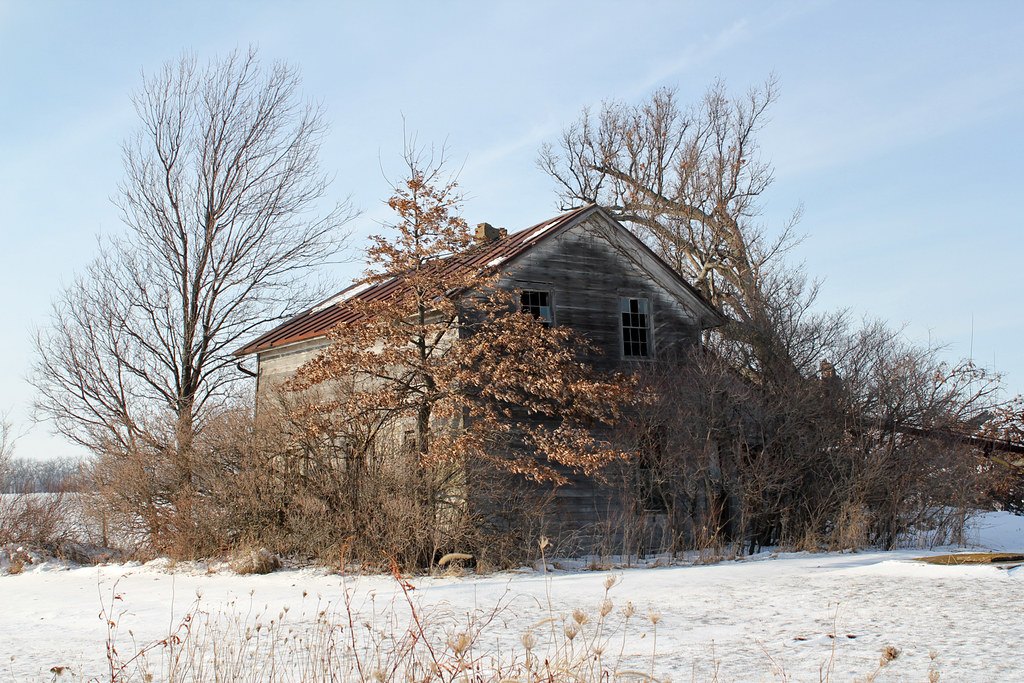
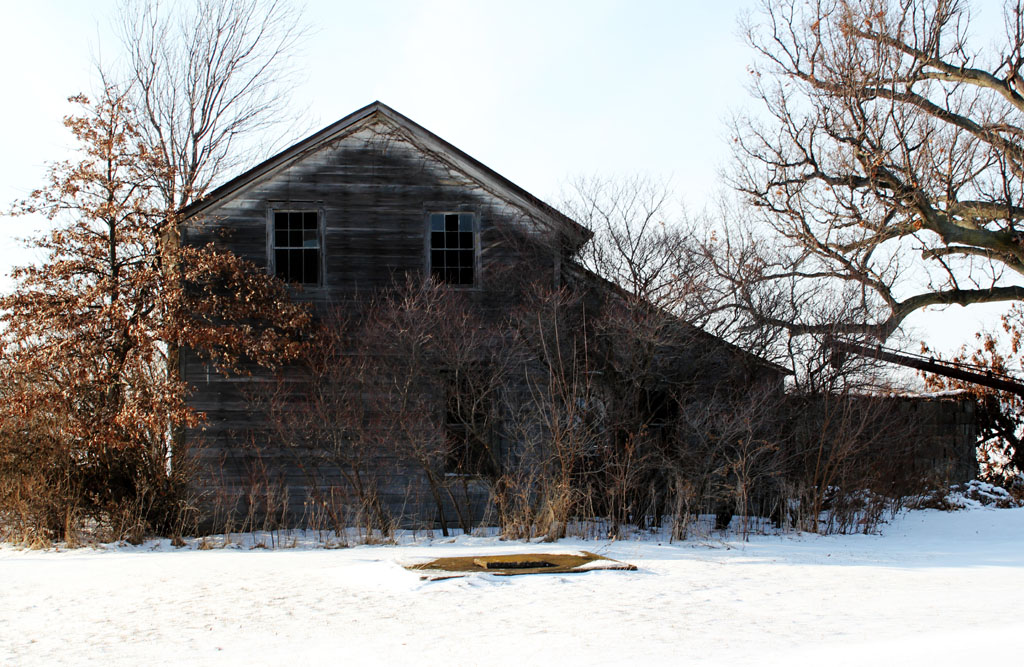
I don't know a lot about this house's history. It appears on the 1874 Erie County atlas, which lists R. Turner as the owner of the 70-acre farm. Typical of the frame buildings constructed in the area during the mid-19th century, the home has been unoccupied since at least 1972. Though it lacks much architectural detailing, the proportions, six-over-six windows, and interior finishes indicate a slight Greek Revival influence.


The front door is barely visible behind these obscenely large hedges.
East facade. Note the six-over-six windows and remnants of paint beneath the eaves.
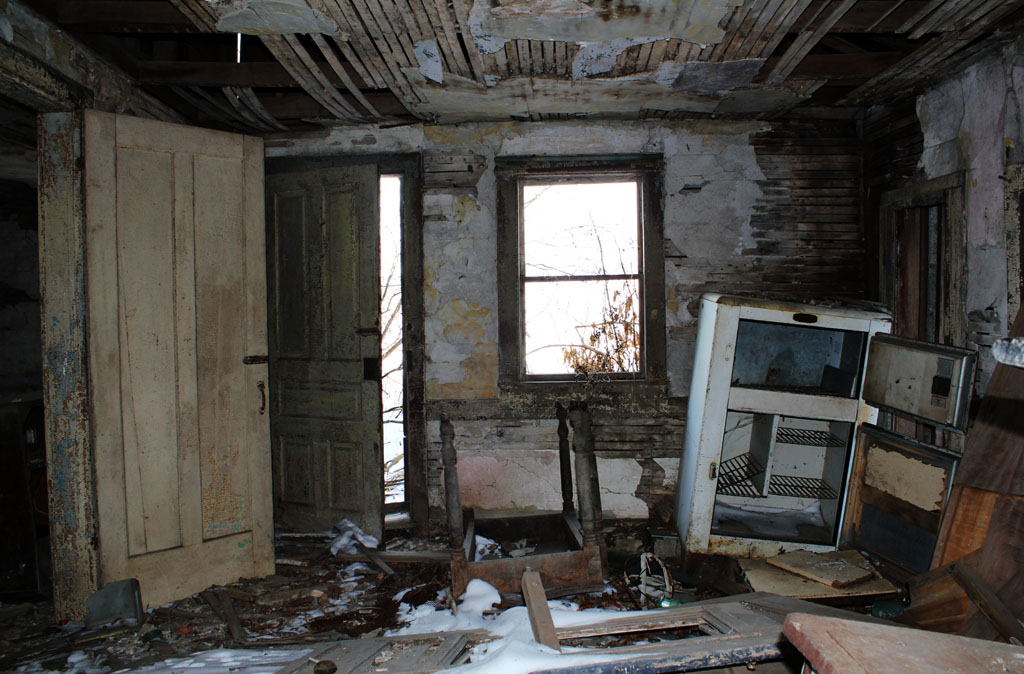
The interior retains its simple, original woodwork. Two-panel doors, like the one on the right, were popular during the Greek Revival period.
This barn stands just east of the house, and is still in use. The slate roof is very unusual for an outbuilding.