Showing posts with label revival. Show all posts

Sunday, April 26, 2015

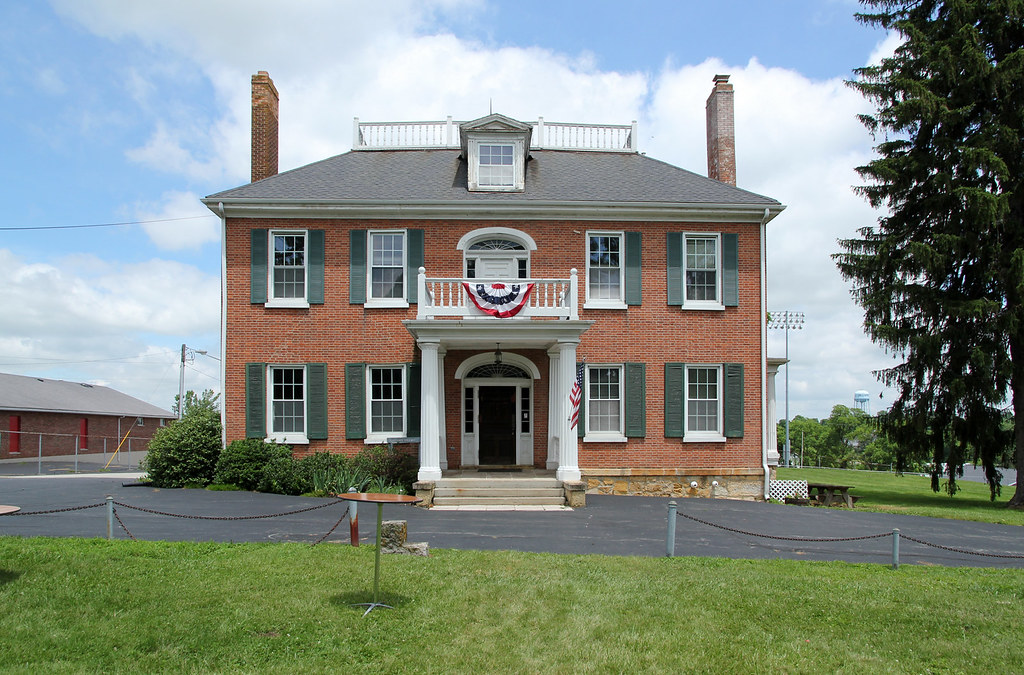
William Scott House

Hillsboro, Highland County, Ohio


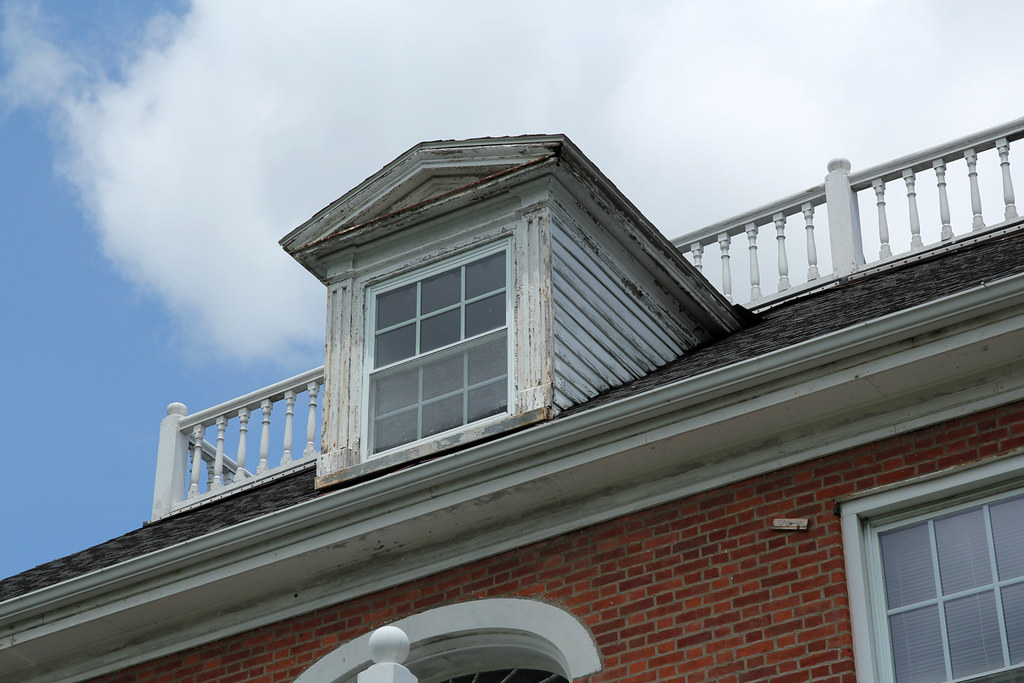
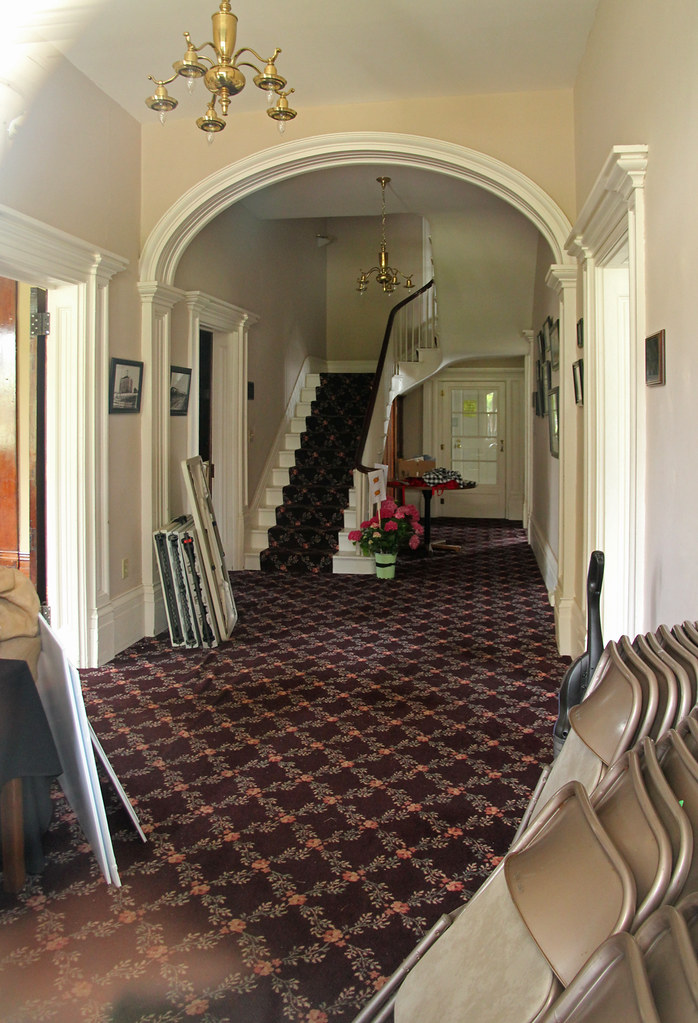
Certainly Hillsboro's finest classically inspired residence, completed about 1835. The Ohio Historic Places Dictionary, Volume II describes its architecture:
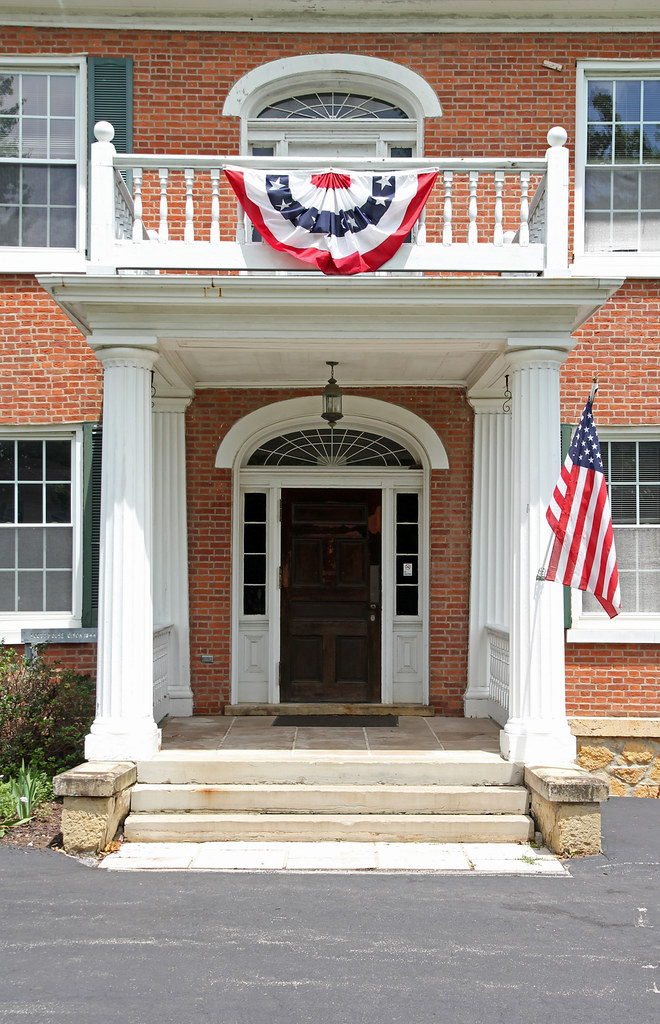
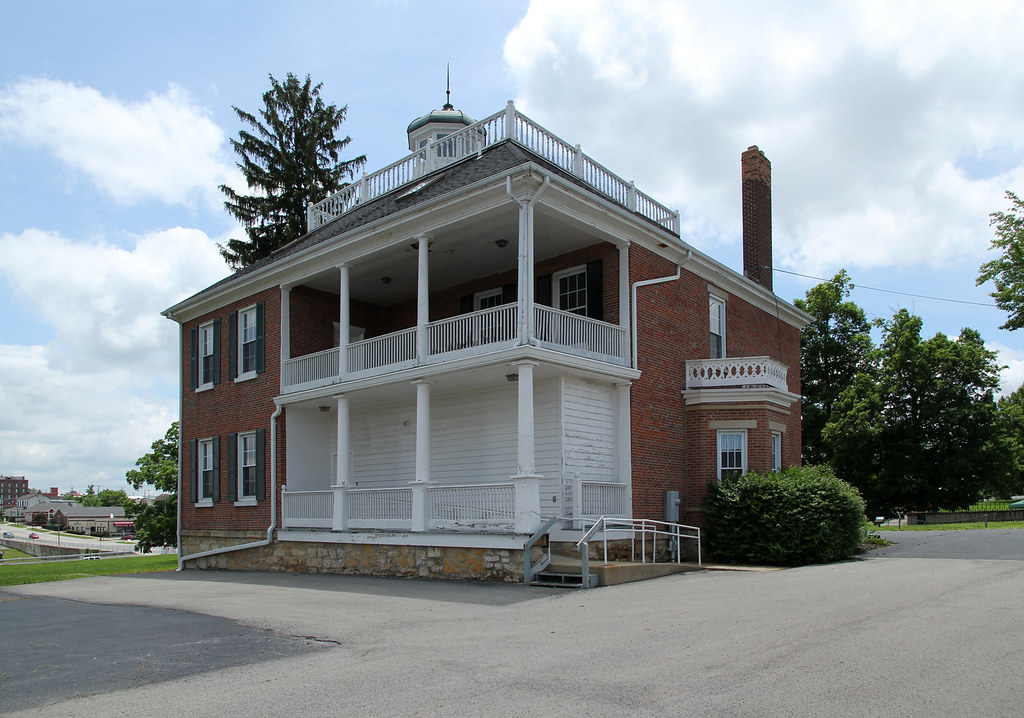
The building displays, through its overall massing and details, Georgian style architectural features. It exhibits classically influenced detailing which includes doorways with elliptical fanlights, six-over-six multi-paned windows, molded fascia board along the roofline, entrance porticoes with fluted Doric columns and pilasters. The unique cupola and projecting bay on the west elevation may have been later additions, since their detailing suggests the romantic influence of the Italianate style of the mid-19th century.
The author's labeling of the home as "Georgian" is perhaps labored; though it shares certain features — its cubic form and classical ornamentation, most prominently  with the style, the Scott House postdates the Georgian era.


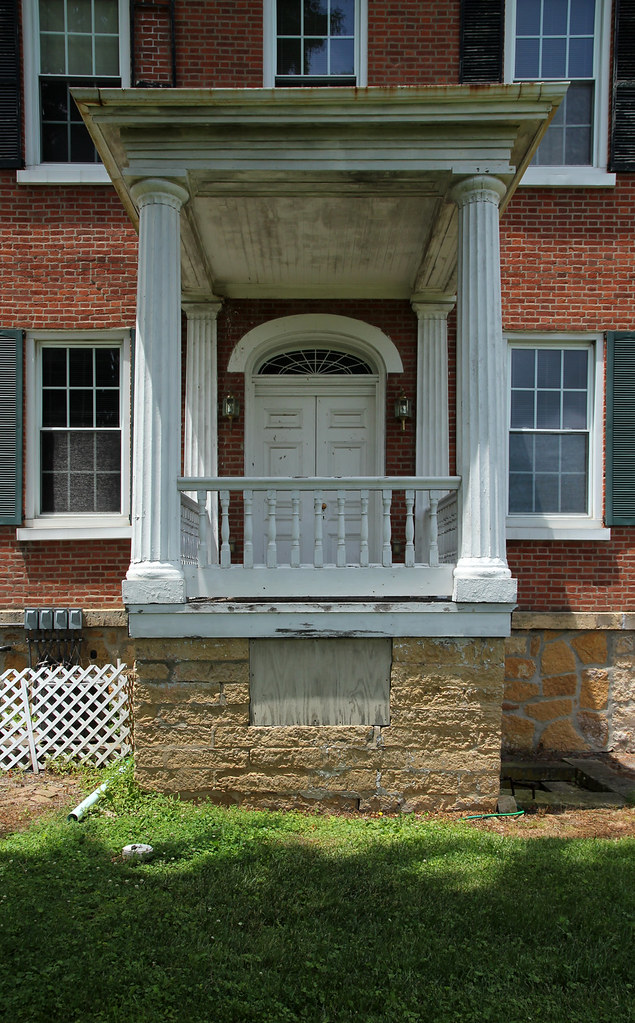
The east porch. Note the differences between the home's doorways; this entrance features double doors, while the main entrance is trabeated, with sidelights.
The rear elevation.
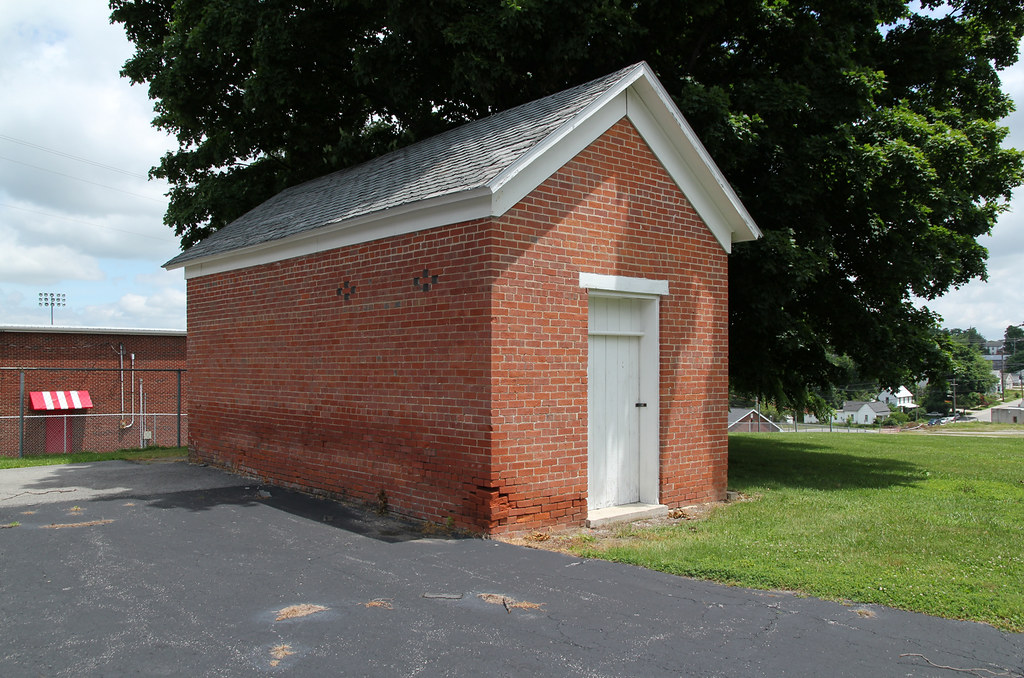
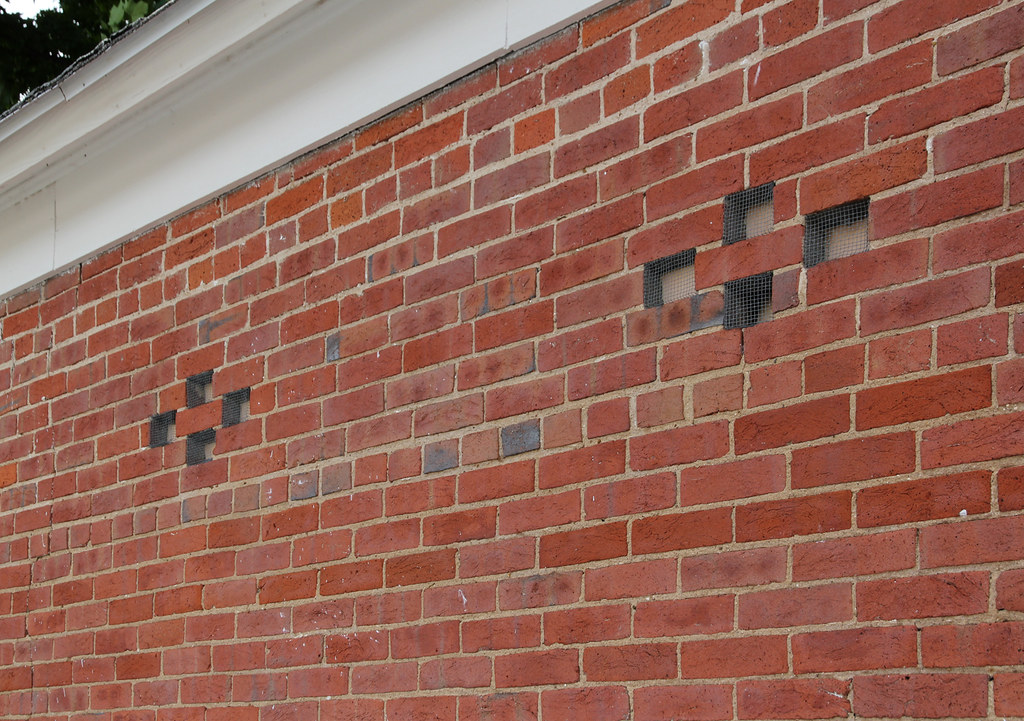
This structure, like the Blackstone and Renick smokehouses, features ventilation slits clustered in the shape of a diamond. Presumably, Scott was a Virginian.

Saturday, November 9, 2013

Omar Chapel

Reed Township, Seneca County, Ohio


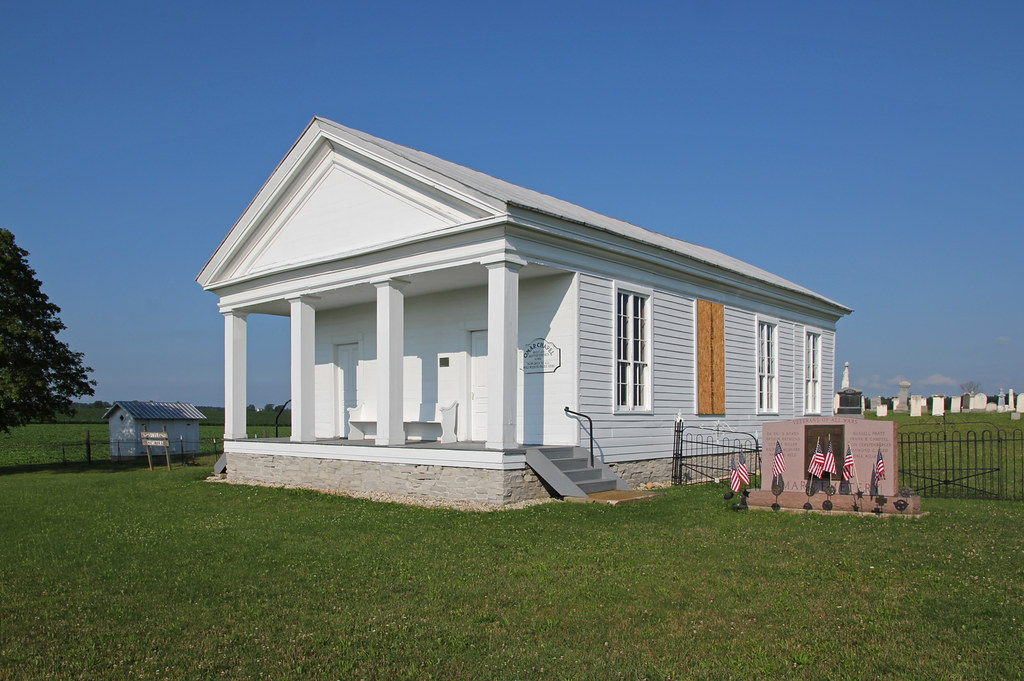
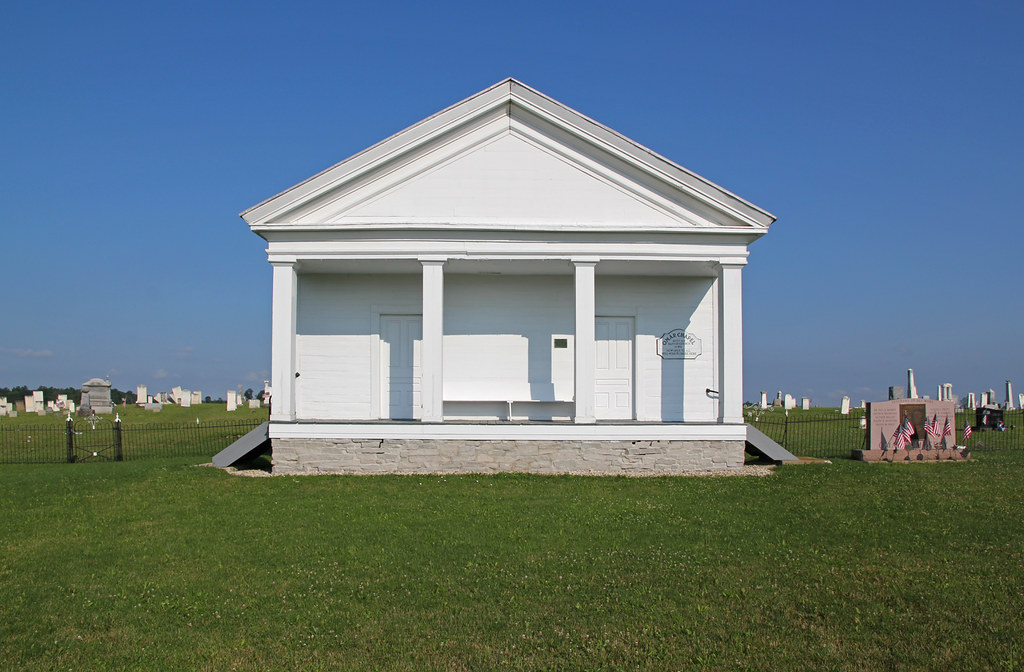
The Omar Chapel, constructed about 1842 as a Baptist church, stands in the midst of northeastern Seneca County's gently undulating farm fields. In a county endowed with Greek Revival buildings, it remains the region's greatest example of the style; an effect, perhaps, of its proximity to the Western Reserve.

I.T. Frary, author of Early Homes of Ohio, photographed the chapel in 1924:

Photo by I.T. Frary, 1924, courtesy of Christopher Busta-Peck.
From a different angle. The columns, I think, are not original.

Five-panel door with simple enframement. The flush siding is intended to emulate stone; such treatment is quintessentially Greek Revival.
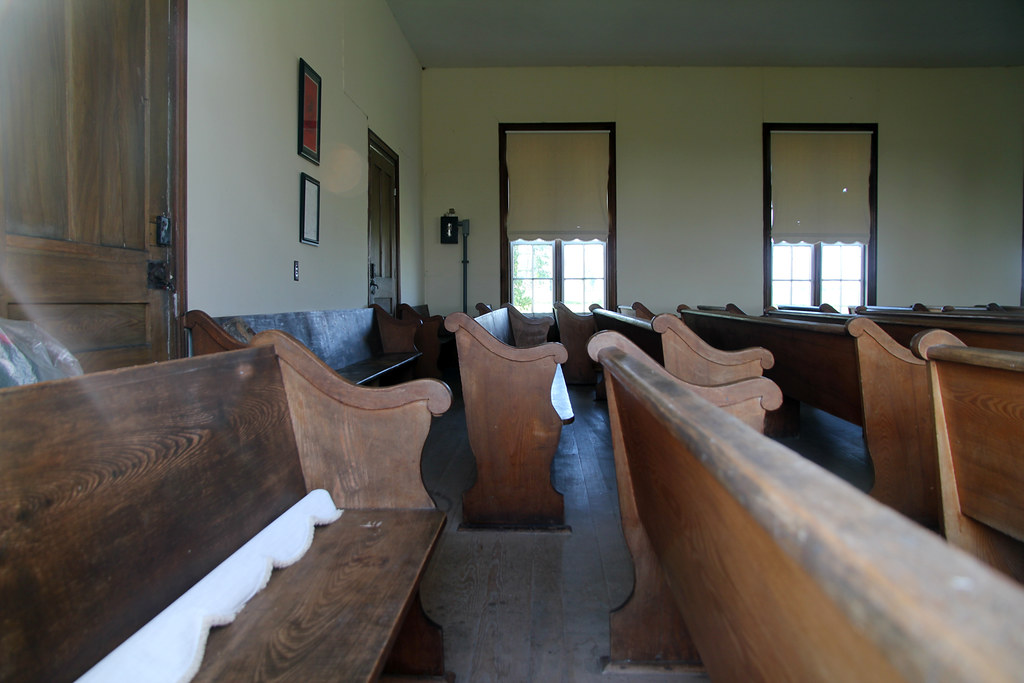
Quite intact. After viewing the exterior, I expected bolder woodwork.
Adjacent to the chapel.

Saturday, May 4, 2013

Richards House

Upper Arlington (formerly Perry Township), Franklin County, Ohio

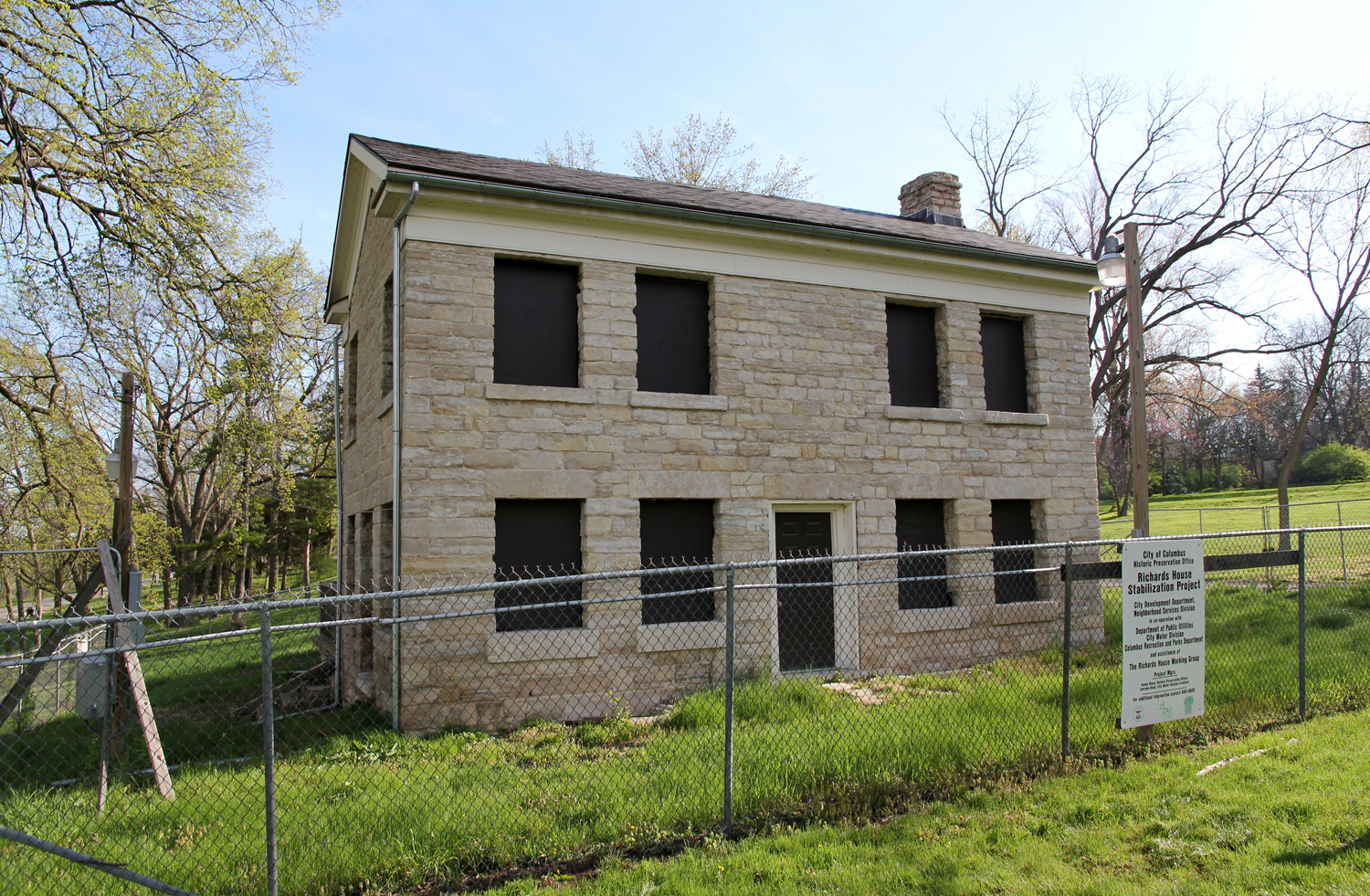
I don't know this home's exact age. One source claims a construction date of 1814, while others provide dates as late as the 1850s. Regardless, it remains a good example of the fine limestone residences that dotted the Scioto River valley.

Built by a member of the Richards family, the structure was sold to the City of Columbus in 1904 for use as the Griggs Dam caretaker's house. By the late 1990s, the house stood in a state of disrepair; vandals and ill-conceived renovations had essentially destroyed the interior. A 2007 stabilization project improved the building's fortunes a bit, but its future is still quite bleak.
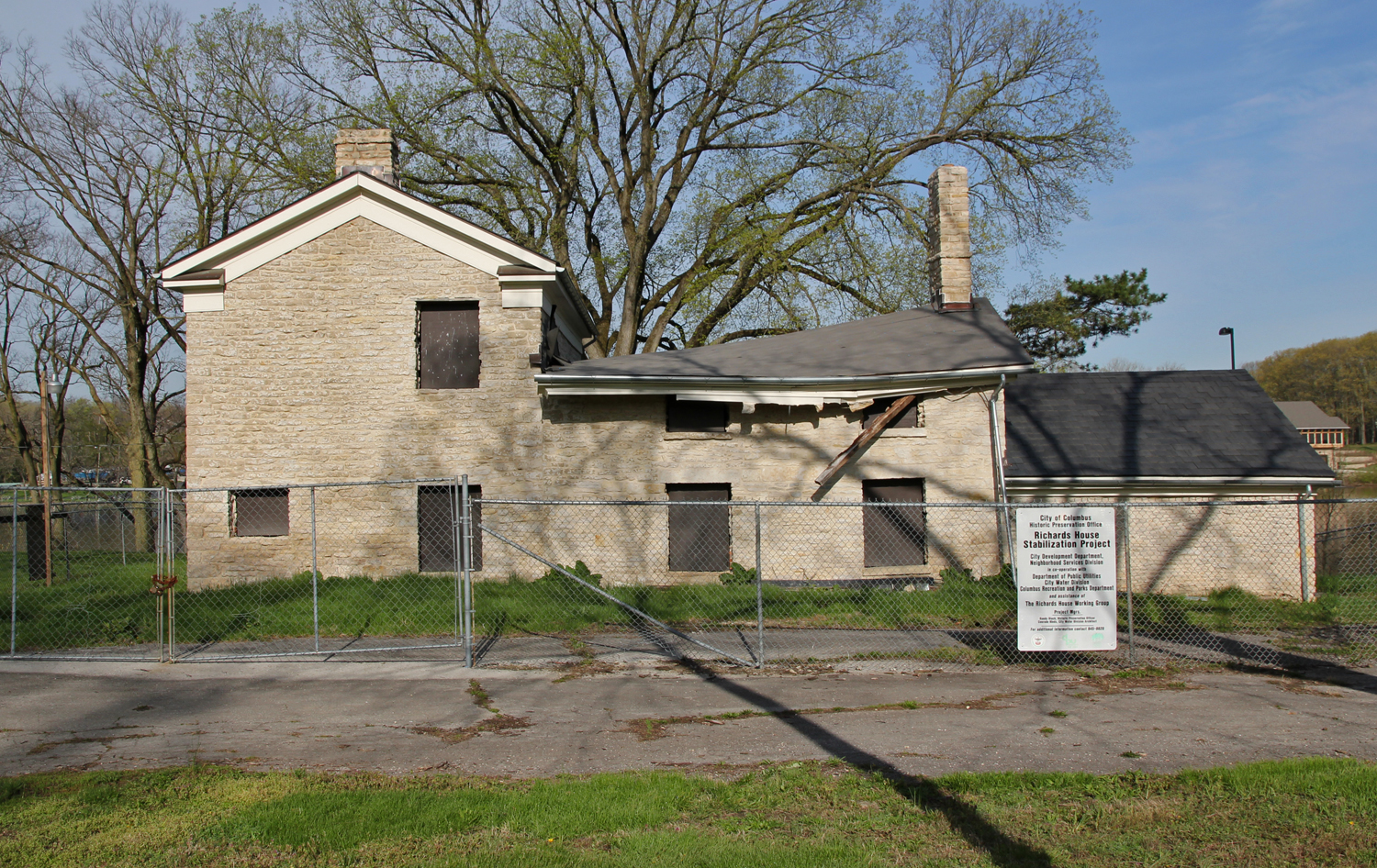

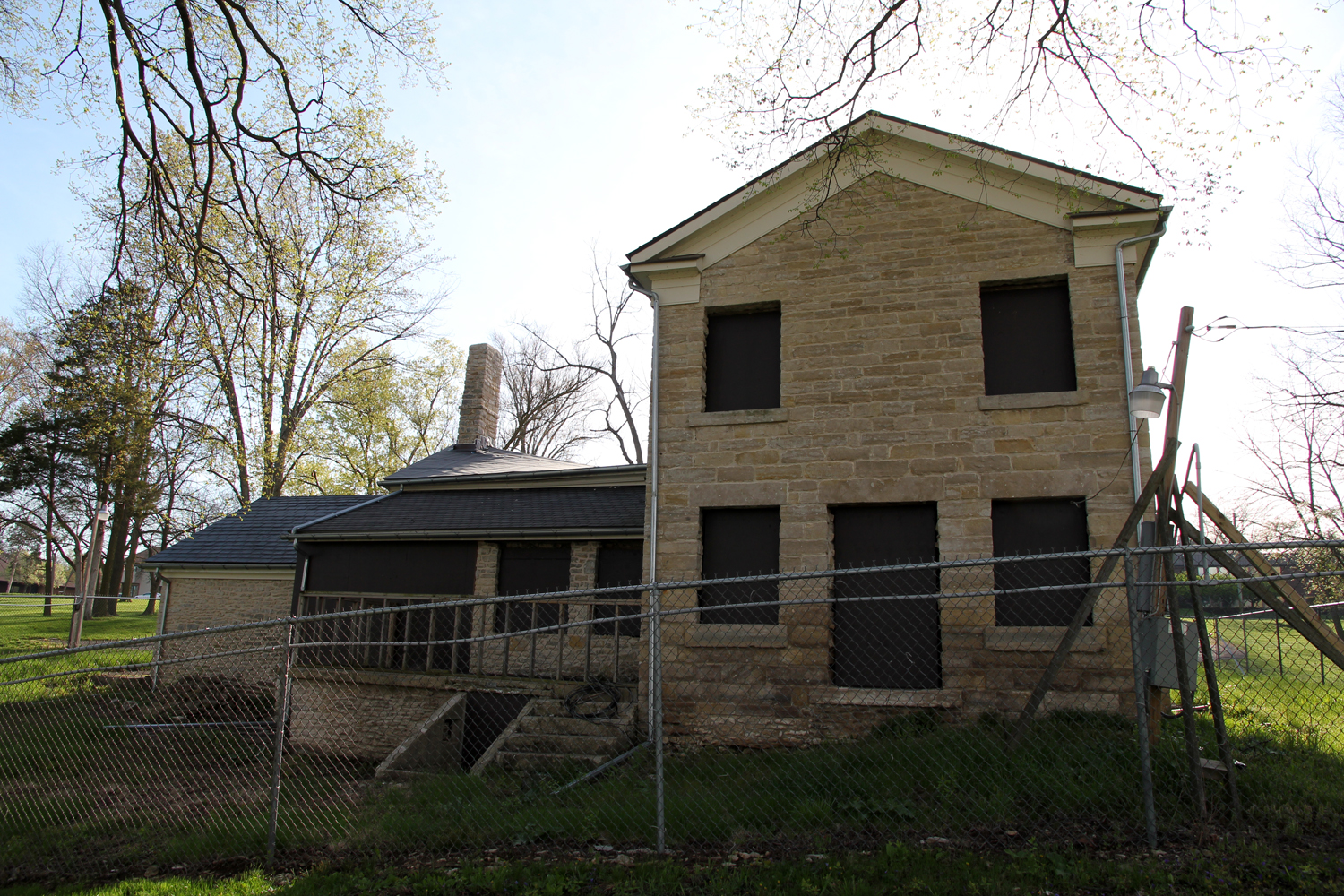
East elevation. The roof collapsed in a recent snowstorm.
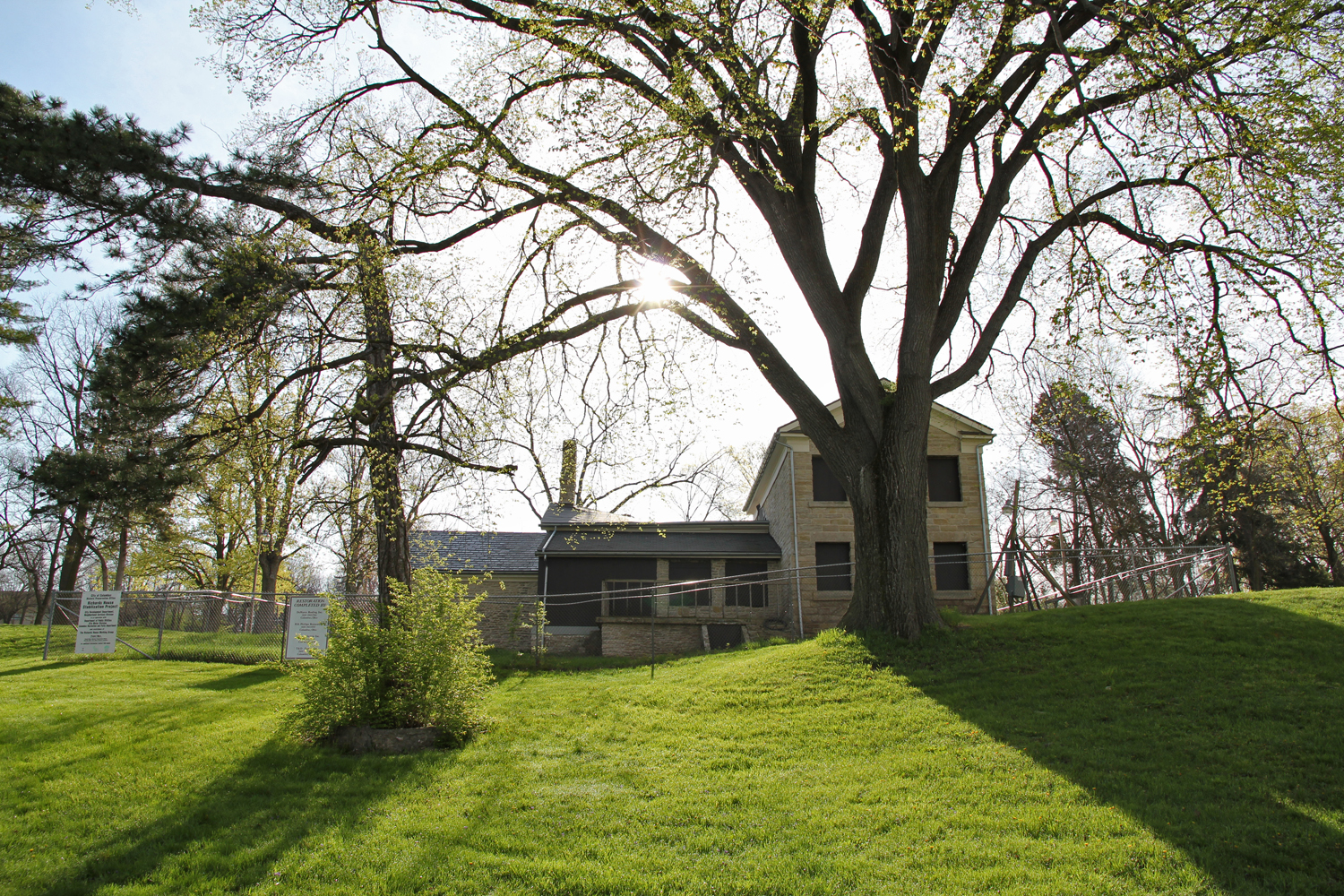
West (river) elevation.
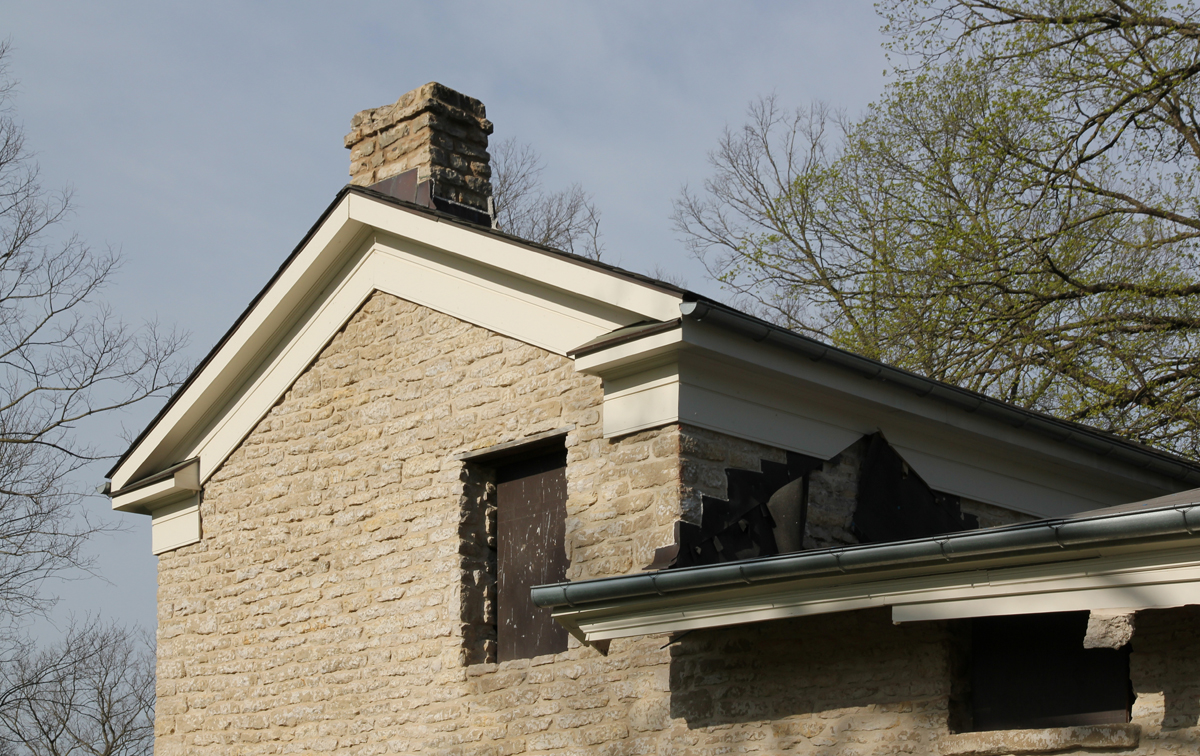
The pre-2007 cornice did not feature returns. I rather like the way they look, though.
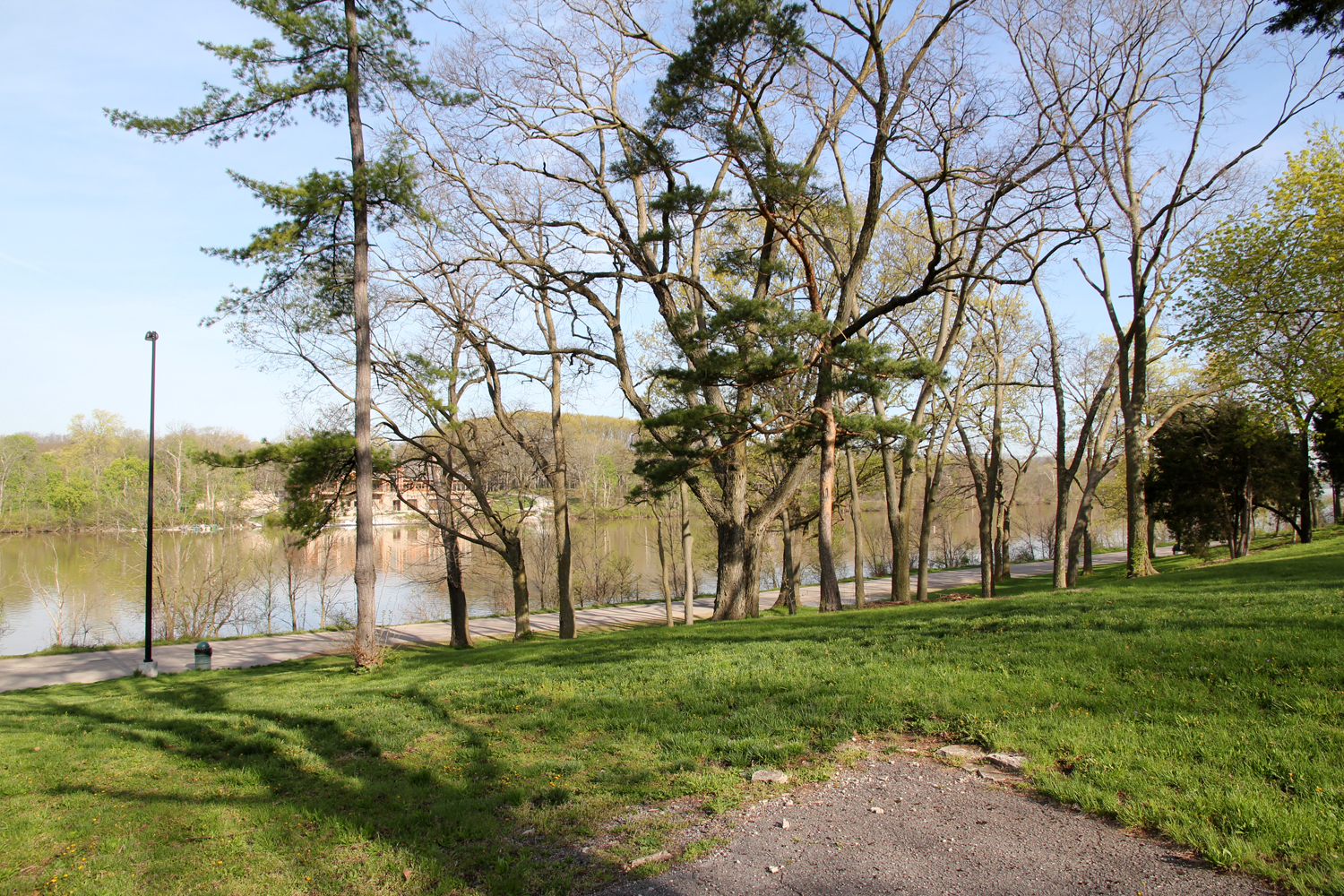
A view of the Scioto River, from the home's northwest corner. The river wouldn't have been quite so wide when the land served as a farm. Still, it's a very scenic locale.
One last photo. In my opinion, topographic relief is always a good thing.

Friday, March 29, 2013

Turner House

Oxford Township, Erie County, Ohio

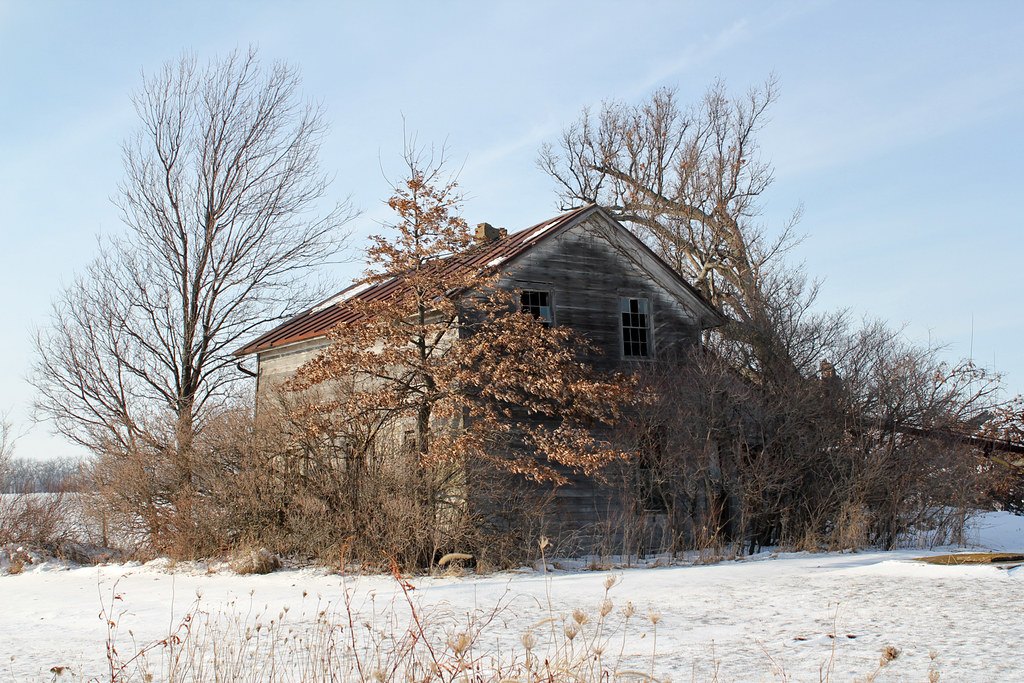
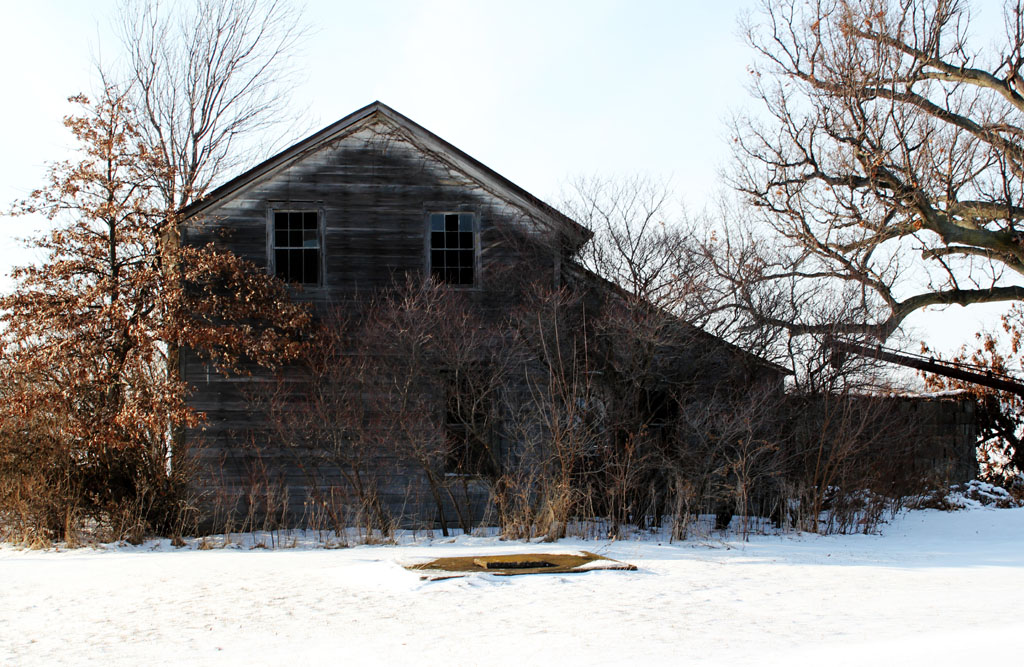
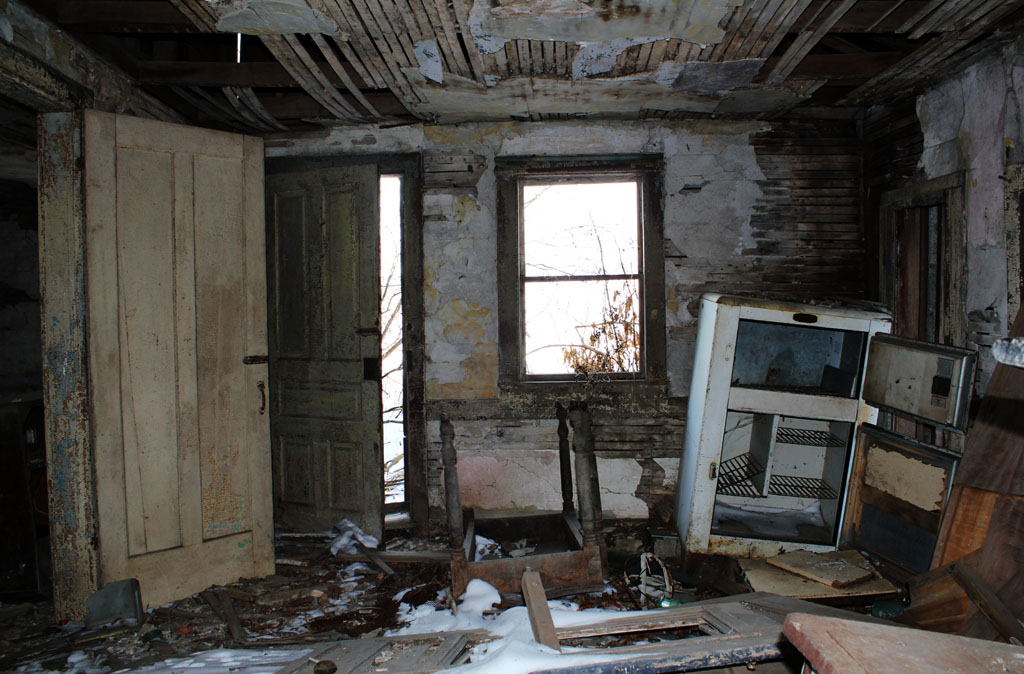
I don't know a lot about this house's history. It appears on the 1874 Erie County atlas, which lists R. Turner as the owner of the 70-acre farm. Typical of the frame buildings constructed in the area during the mid-19th century, the home has been unoccupied since at least 1972. Though it lacks much architectural detailing, the proportions, six-over-six windows, and interior finishes indicate a slight Greek Revival influence.


The front door is barely visible behind these obscenely large hedges.
East facade. Note the six-over-six windows and remnants of paint beneath the eaves.
The interior retains its simple, original woodwork. Two-panel doors, like the one on the right, were popular during the Greek Revival period.
This barn stands just east of the house, and is still in use. The slate roof is very unusual for an outbuilding.