Showing posts with label township. Show all posts

Sunday, September 21, 2014

Alexander Davis Log House

Washington Township, Franklin County, Ohio


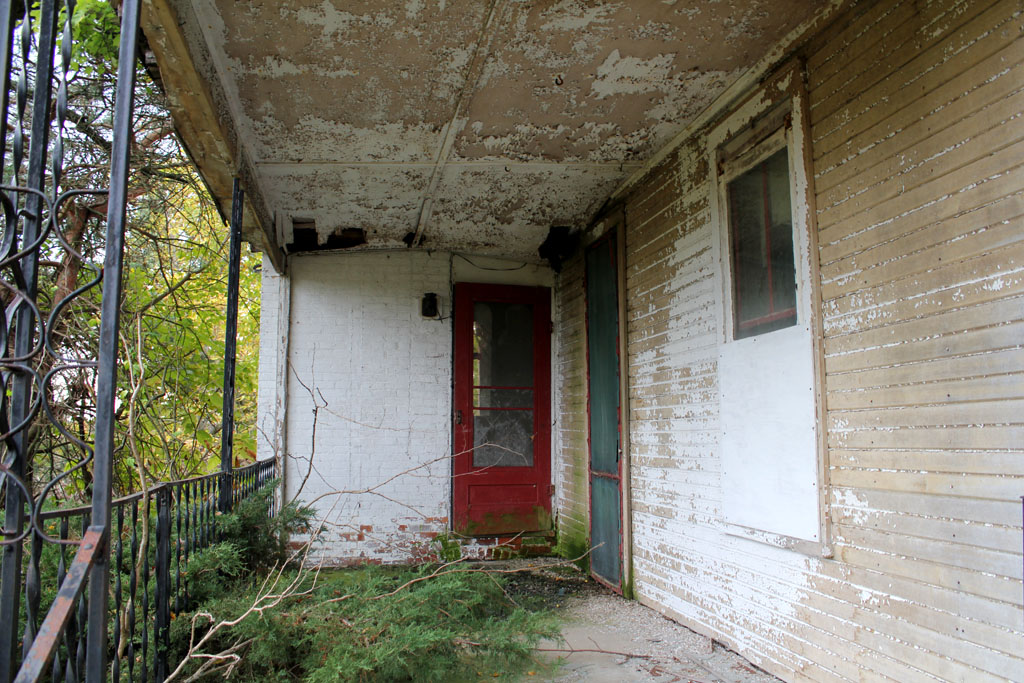
An utterly nondescript building; if forced to illustrate the "standard" Ohio log home, I'd use this structure as an example. Until 2007, 2008, or 2009, it stood behind a late Victorian farmhouse at 5436 Dublin Road, just south of Tuttle Road.

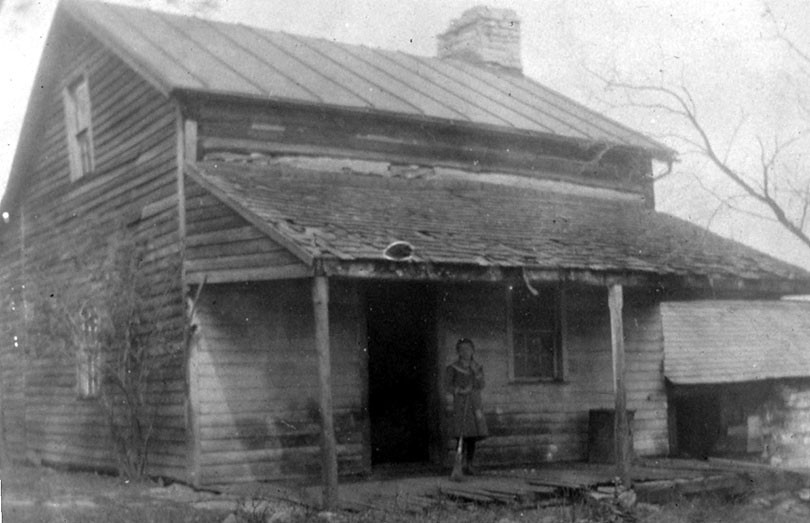
The house, as it appeared in the 1890s (?). Note the exposed logs above the porch roof, and the log springhouse, visible at right. Photo courtesy of Ohio Memory, from the Dublin Historical Society collection.
Alexander Davis, member of a venerable local family, likely erected the home in the 1830s (some sources provide a construction date of 1806; unlikely, given the notching technique). Two remodels, in the 1940s and 1990s (?), destroyed most of the remaining fabric.

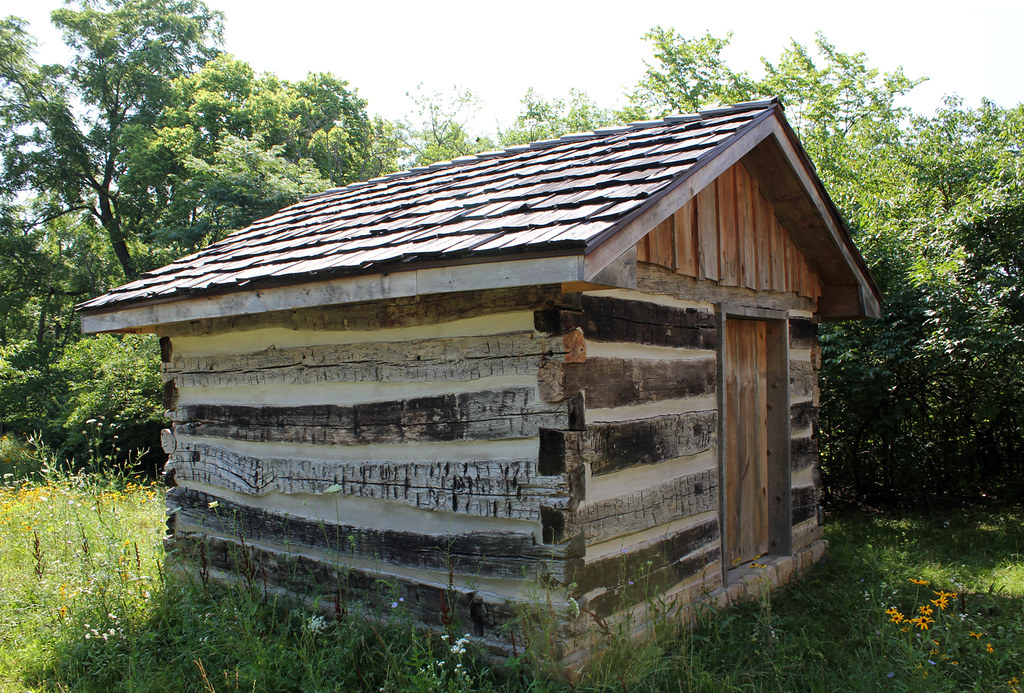
The house is notable, in part, because it has survived, and because it remains paired with its outbuilding. Extant settlement-era farm complexes are very rare in Ohio.

The springhouse.
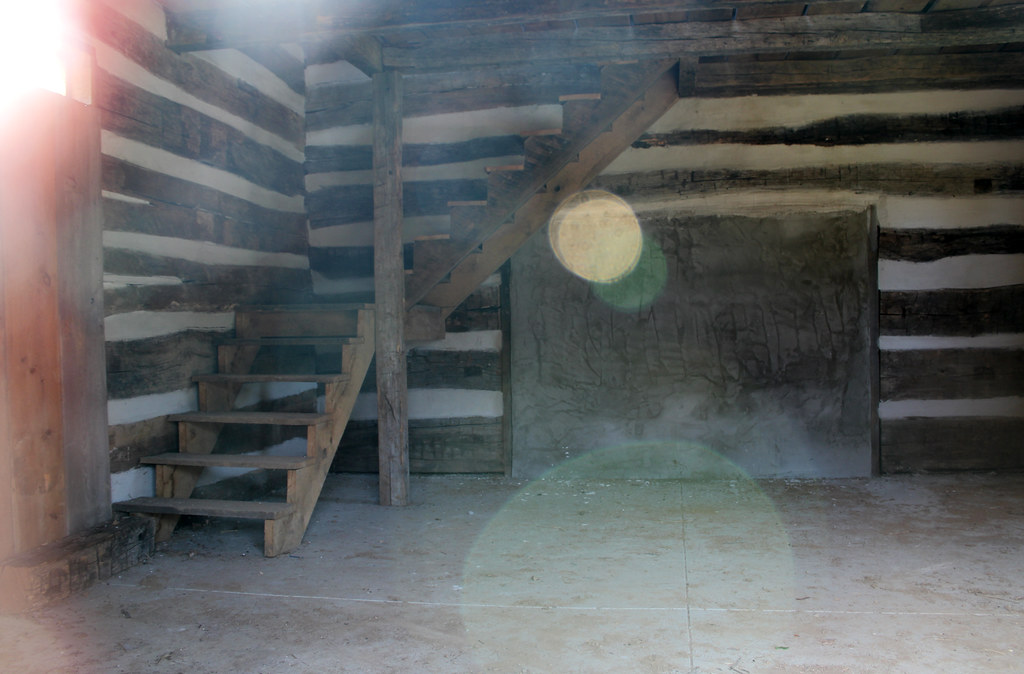
The building is a but a shell, its interior devoid of finish detailing. The open staircase, though likely placed in the correct location, is historically inaccurate and ill-proportioned. No doubt, a mantel framed the fireplace opening.
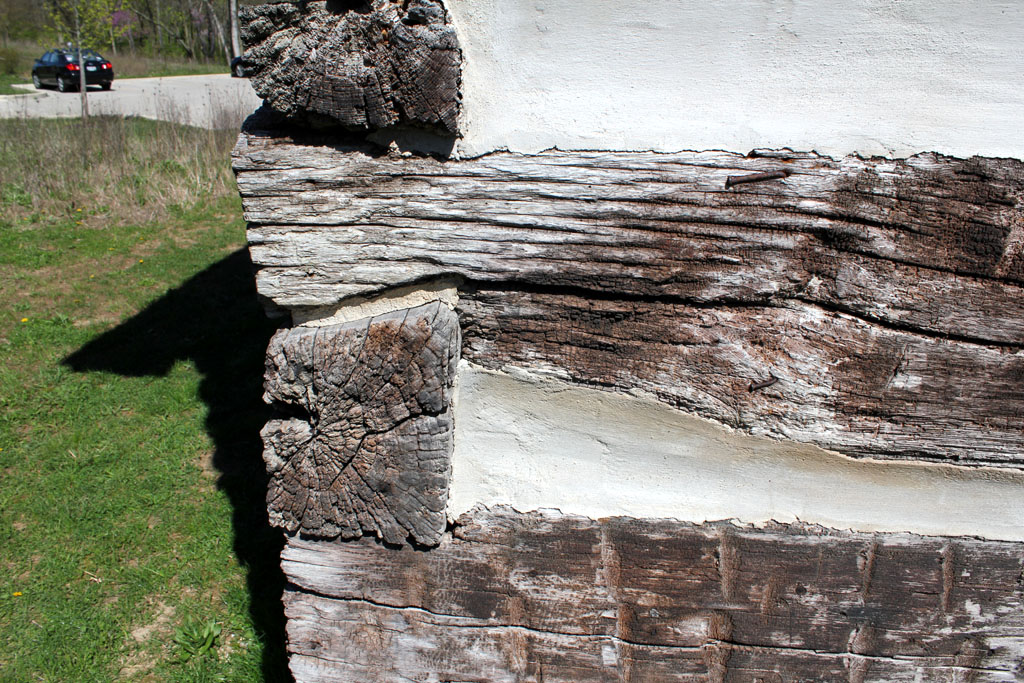
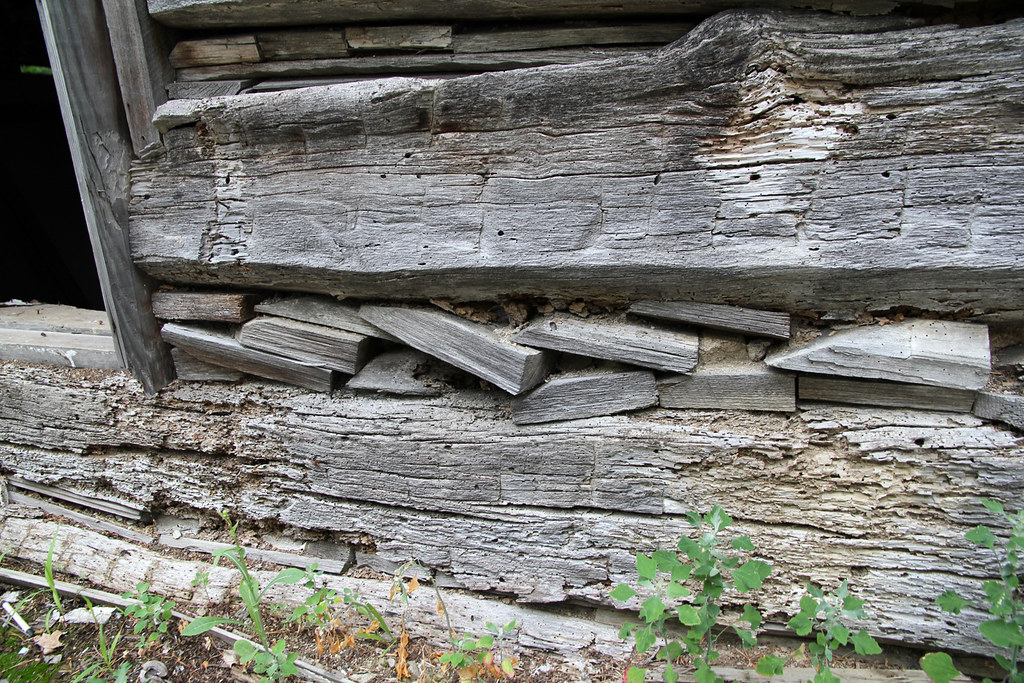
Half-dovetail notching.

Saturday, December 21, 2013

Trout-Cole Log House

Dover Township, Union County, Ohio


While fairly nondescript, this single pen house is east-central Union County’s only known log building. The two-bay facade, with the window abutting the door (designed so that, as Donald Hutslar explains it, "small sections of logs would not have to be supported"), is a common motif in log architecture; the log house in Arnold (also in Union County) is similarly configured.

Note the steeple-notched logs under the roofline; peculiar, given that steeple notching isn't as resistant to outward thrust as half or full-dovetail notching. Perhaps the roof was raised, or the structure repaired. It must have been an early repair, as the north gable’s fenestration is characteristically mid-19th century.

In 1877, the property was owned by “Trout and Cole.”

Note the sealed firebox opening.

Wednesday, November 27, 2013

Amaziah Hutchinson House

Upper Arlington (formerly Perry Township), Franklin County, Ohio


Built by Amaziah Hutchinson in 1815, 1821, or 1822 (sources provide varying dates). No matter its construction date, the building was incredibly significant, being both one of the oldest extant homes in the county and a fine example of vernacular stone architecture. In form, it very much resembled the stone cottages of the British Isles.

The 1975 book Architecture: Columbus describes the house thus:
This is an example of the earliest type of stone dwelling constructed in the Columbus area. It is a simple one story limestone rubble building, three bays across the front by two bays, front to rear. It has a gabled roof which is now covered with tin. There are two ample chimneys, one at each end, flush with the exterior wall. Two small windows high in the gable provide light and air to the attic space, which was undoubtedly used originally as a sleeping area. The building has a turn-of-the-century wood frame addition and a screened porch.
Unfortunately, the house was razed on November 20, 2013, a mere ten days after I photographed it. A developer purchased the property in October, and plans to construct luxury apartments on the site.

West (front) and north elevations. The massive chimneys, flush with the exterior walls, are a typical feature of Ohio's earliest masonry buildings.
North elevation. Note the absence of a roof overhang, and also the sealed attic windows.
South chimney.
The enormous limestone blocks, similar in function to quoins, reinforced the home's corners. Several other stone buildings in the Dublin area exhibit similar treatment.
Though typologically correct, this six-panel door is not original. Note the thickness of the walls.
The not-terribly-intact interior. Originally, this room probably featured plain, but substantial woodwork, wide-board floors, and a simplified Federal mantel.
The south fireplace has been removed. The shelving covers a former window opening.

Saturday, November 9, 2013

Omar Chapel

Reed Township, Seneca County, Ohio


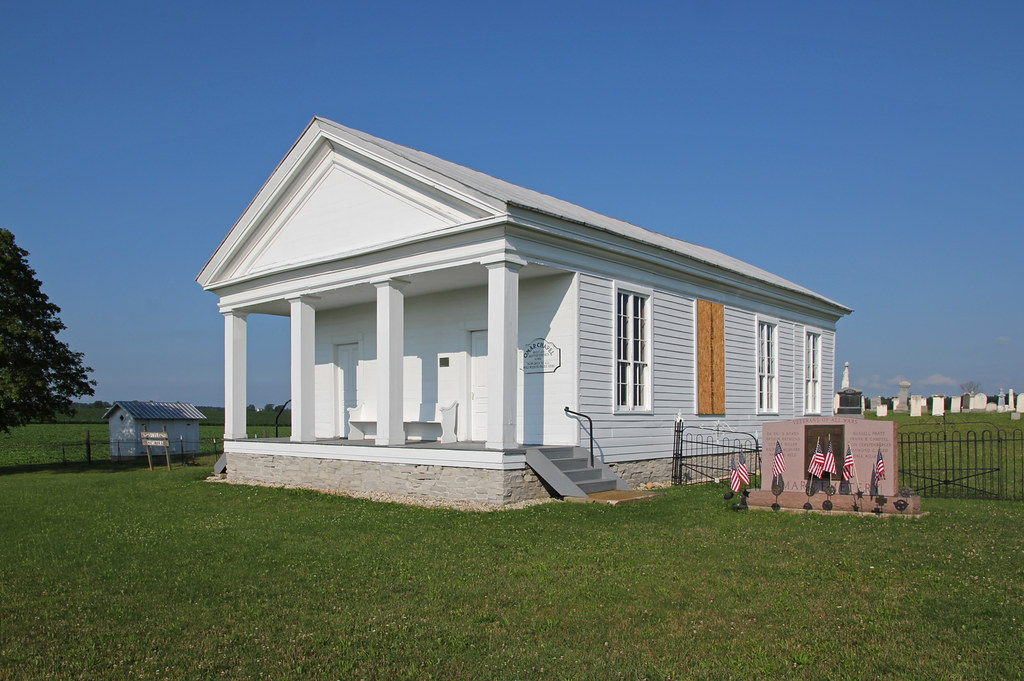
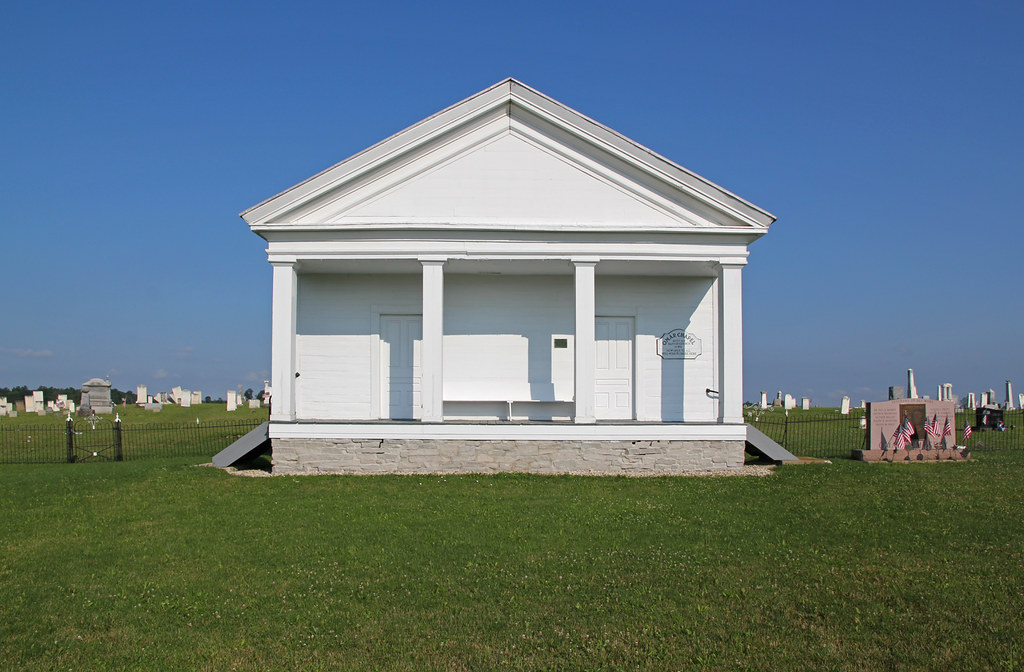
The Omar Chapel, constructed about 1842 as a Baptist church, stands in the midst of northeastern Seneca County's gently undulating farm fields. In a county endowed with Greek Revival buildings, it remains the region's greatest example of the style; an effect, perhaps, of its proximity to the Western Reserve.

I.T. Frary, author of Early Homes of Ohio, photographed the chapel in 1924:

Photo by I.T. Frary, 1924, courtesy of Christopher Busta-Peck.
From a different angle. The columns, I think, are not original.

Five-panel door with simple enframement. The flush siding is intended to emulate stone; such treatment is quintessentially Greek Revival.
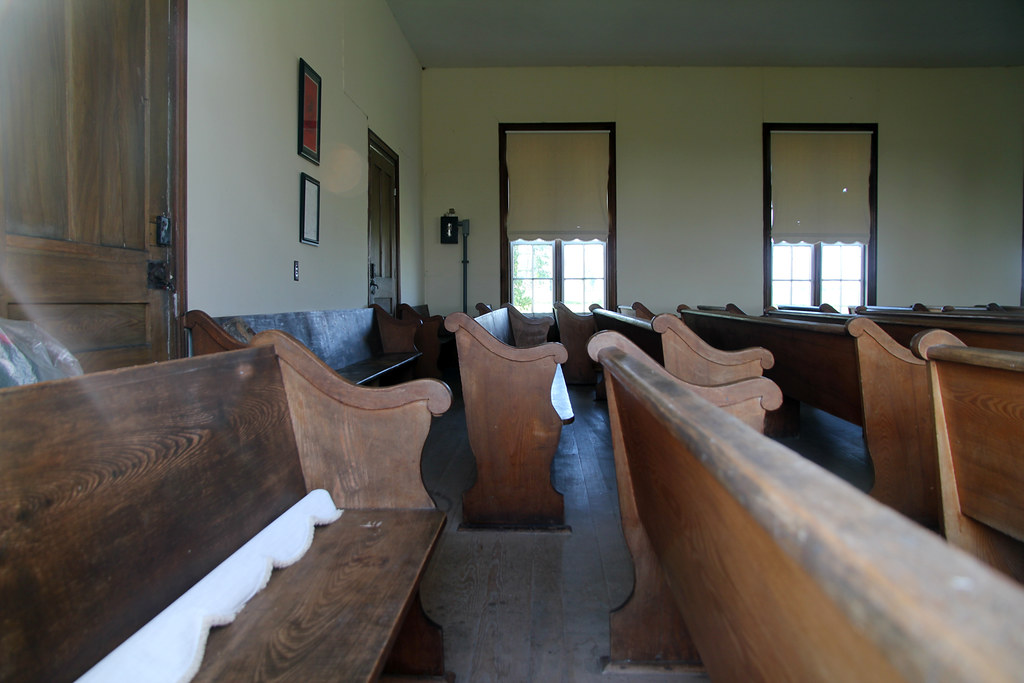
Quite intact. After viewing the exterior, I expected bolder woodwork.
Adjacent to the chapel.

Monday, September 2, 2013

Arnold Log House

Arnold, Jerome Township, Union County, Ohio


A delightful little house (21' by 17') in a most unlikely location. Arnold sprung up in 1893 as a railroad town; this home is likely an earlier building moved to the newly platted community at about that time. It's not a terribly old structure, as far as log houses go, but it's still of interest.

I talked briefly with the owner's father, who occupied the house in the 1950s and early 1960s. He quite graciously gave me permission to photograph it.

Here's an excerpt from the Ohio Historic Inventory form I wrote about the building:
One-and-a-half story log house of average size (21' x 17'), with two-bay front and rear facades. Doors are centered. Frame additions (housing a kitchen) formerly stood to the west and south, and were removed about five years ago. The standing seam roof is supported primarily by sawed lumber, but a few pole rafters are visible from the upper story. The ends of these rafters are exposed on the exterior. Until recently, the home was clad with drop siding. All window and door openings were enlarged; the original jamb boards are extant.
Logs are half-dovetailed, and measure about seven inches (depth) by ten inches (height). Like on many late log buildings, the notching is angled quite steeply. Most of the chinking remains intact, but much daubing is missing. The chinking consists primarily of small-ish chunks of wood, but several long boards and larger log pieces are used as well.
The interior consists of a single, gutted room; all flooring has been removed. A renovation (1890s-era?) left the interior plastered, but its logs were once exposed and whitewashed. A staircase, placed against the northern wall, ascends from west to east. This staircase is enclosed by cut lumber, not the usual vertical board partition. An opening for a wood-burning stove is cut into the west wall, adjacent to the rear door. This house likely always had an interior stove, for no fireplace opening is observable, and the whitewashed logs bear no marks that suggest the existence of such a fireplace. The upper half-story is supported by sawed joists. Pieces of wood plug the original joist mortises, which are above the floor level.
And now, some photos:

Front facade.
South and west elevations. The house was sided until about five years ago, with additions to the south and west.
All the house's openings were enlarged. Note the original jamb boards, visible at the sides of the door and window.
Corner notching.
Chinking.
Not terribly intact. All finish trim has been removed, as has the floor.
This home never had an enclosed corner staircase.
The original whitewash is quite visible.


At some point (probably following the move), this floor was lowered. The row of square-ish wood blocks marks the floor's original height.
And, of course, a floor plan:

Saturday, June 22, 2013

Twin Houses

Darby Township, Union County, Ohio

This farmhouse doesn't seem particularly noteworthy at first glance. I encountered the property owner (?), who seemed neither hostile nor thrilled about my trespass. Not wanting to overstay my welcome, I captured only a few photographs.


While the one-and-a-half-story front ell is quite featureless, the rear section is constructed of brick, with segmental arched windows at the basement level. I first assumed that the brick portion was built prior to the frame section; an incorrect assumption, as it turns out.
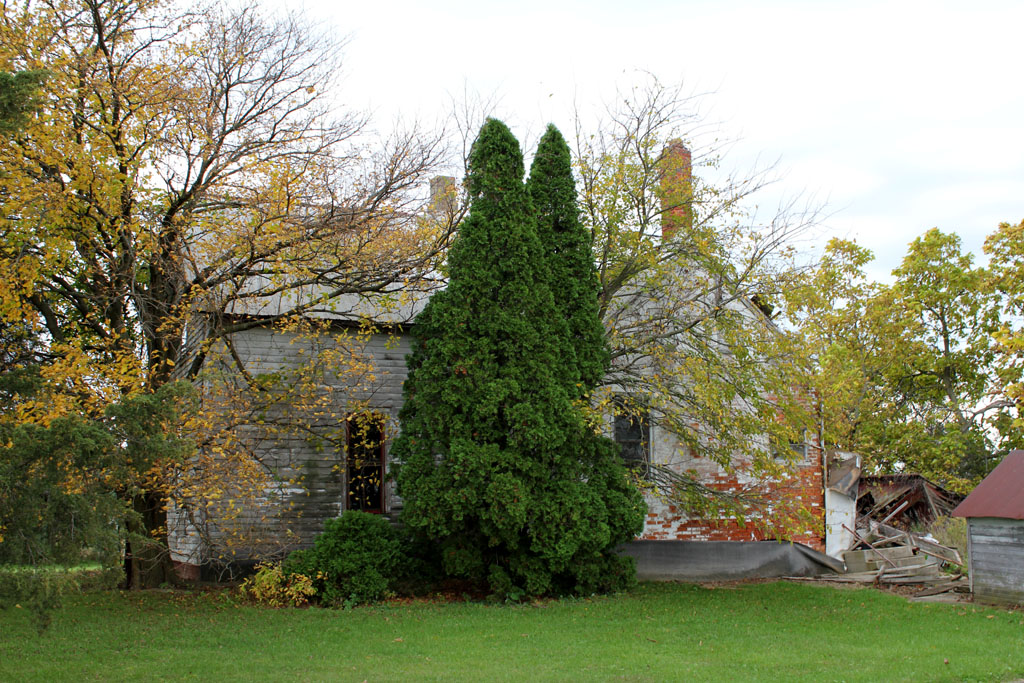
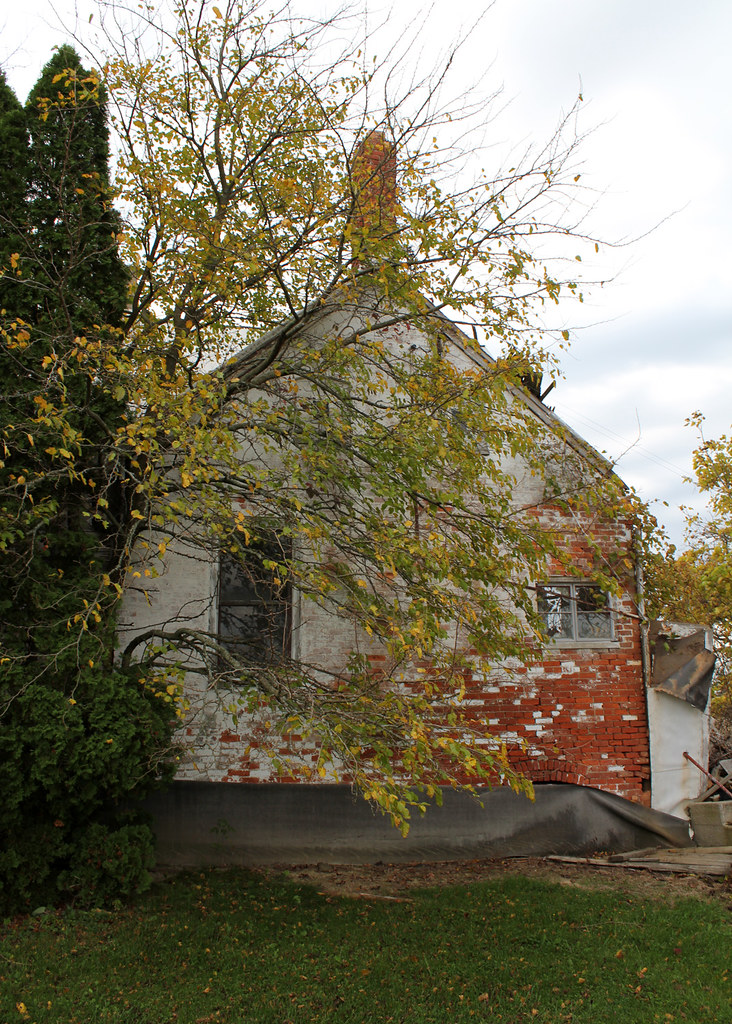
West facade. The tarp covers an arched basement-level window.
Porch area. Note the row of vertical bricks, barely visible between the porch floor and door.

 A few months ago, I discovered an identical house merely a half-mile away.

The twin house, thankfully inhabited.  Photo (circa 2001?) is from the Union County Auditor's website.
Both buildings feature the same odd brick section and, obviously, were designed by the same individual. The 1877 county atlas lists A.M. Vollrath as the owner of both parcels, though neither house existed at that time. Vollrath immigrated to Union County from Germany at an unknown date, and likely constructed both homes in the late 19th century.

The northern section of Darby Township contains a number of brick farmhouses, part of a German settlement area centered around nearby St. John's Lutheran Church.

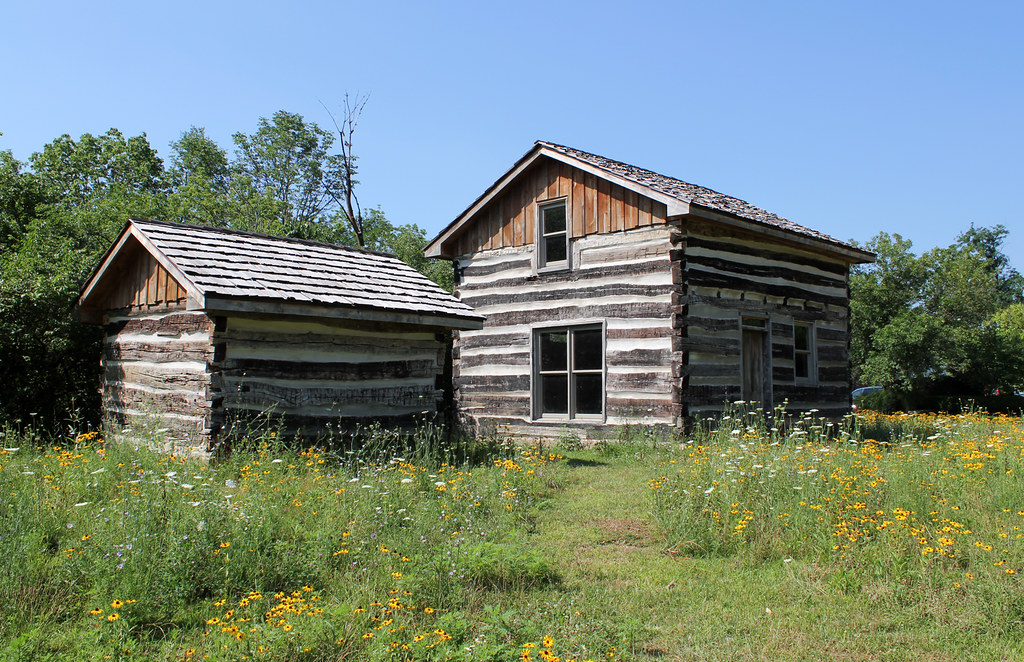
Friday, June 14, 2013

Gangloff House

Cranberry Township, Crawford County, Ohio

This house isn't notable for its age, but for its lack of age. Upon seeing a cruddy aerial photograph, I assumed it was a mid-19th century structure, possibly log, and probably one of the earliest homes in the township. I was surprised when I actually visited the site.

The yellow brick chimneys and balloon frame construction are indicative of late 19th century construction, though the home's overall appearance seems earlier. I can't quite explain why — the answer lies in its proportions, perhaps — but it just feels old.

The rather featureless front facade. It's difficult to discern, but the porch posts' upper portions curve in an interesting manner. I like the birds perched atop the chimney; they add eeriness to an otherwise boring picture.
The balloon frame construction is plainly visible. Note the original wood shingle roof, mostly covered by standing seam metal.
Not surprisingly, the 1850s and 1873 atlases show nothing at this location. P.J. Gangloff owned the 60-acre farm in the 1850s. By 1873, ownership had passed to Henry Gangloff. The house remained inhabited until at least 1970, as a county directory from that year lists John Kreim as its inhabitant.

Saturday, May 4, 2013

Richards House

Upper Arlington (formerly Perry Township), Franklin County, Ohio

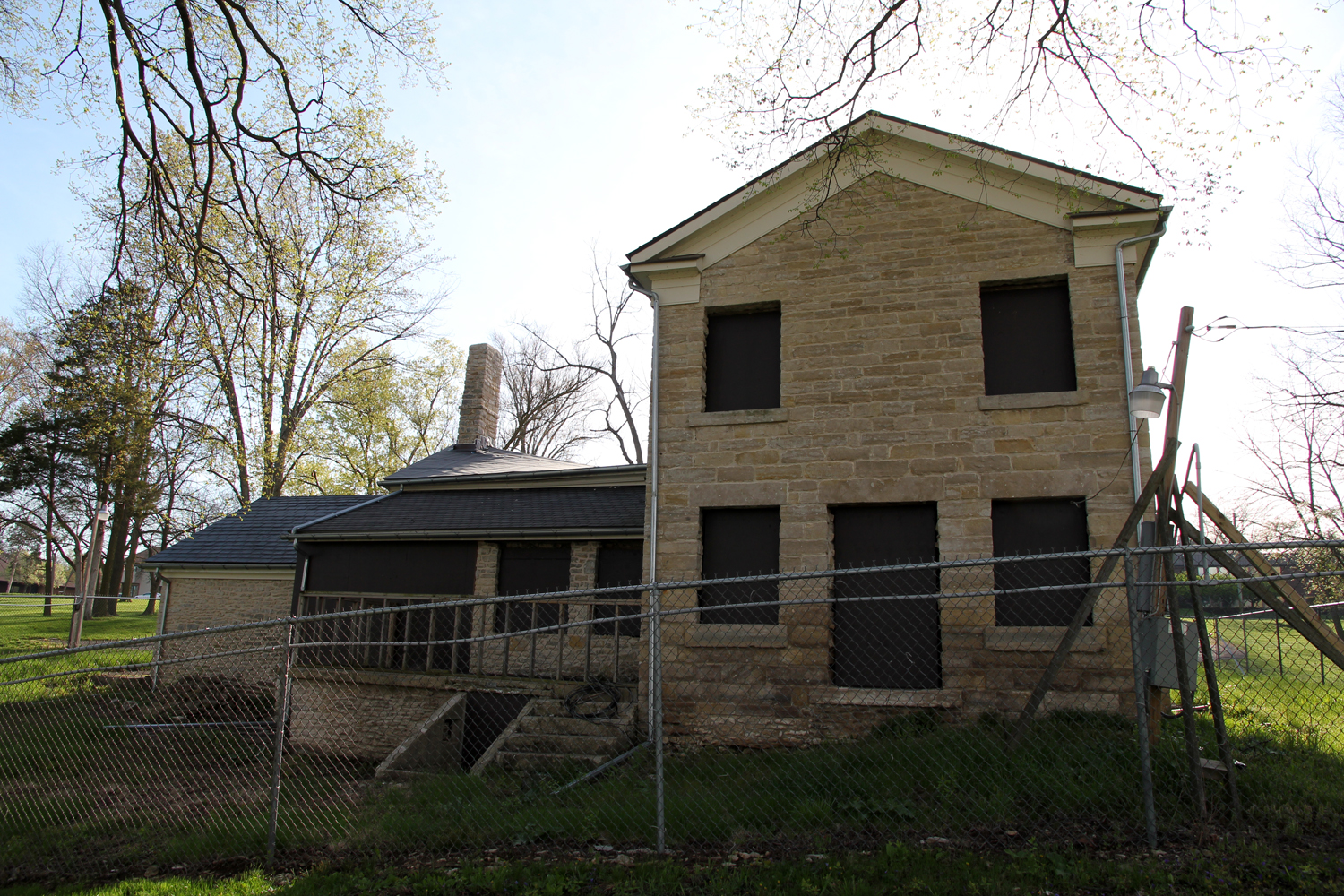
I don't know this home's exact age. One source claims a construction date of 1814, while others provide dates as late as the 1850s. Regardless, it remains a good example of the fine limestone residences that dotted the Scioto River valley.

Built by a member of the Richards family, the structure was sold to the City of Columbus in 1904 for use as the Griggs Dam caretaker's house. By the late 1990s, the house stood in a state of disrepair; vandals and ill-conceived renovations had essentially destroyed the interior. A 2007 stabilization project improved the building's fortunes a bit, but its future is still quite bleak.


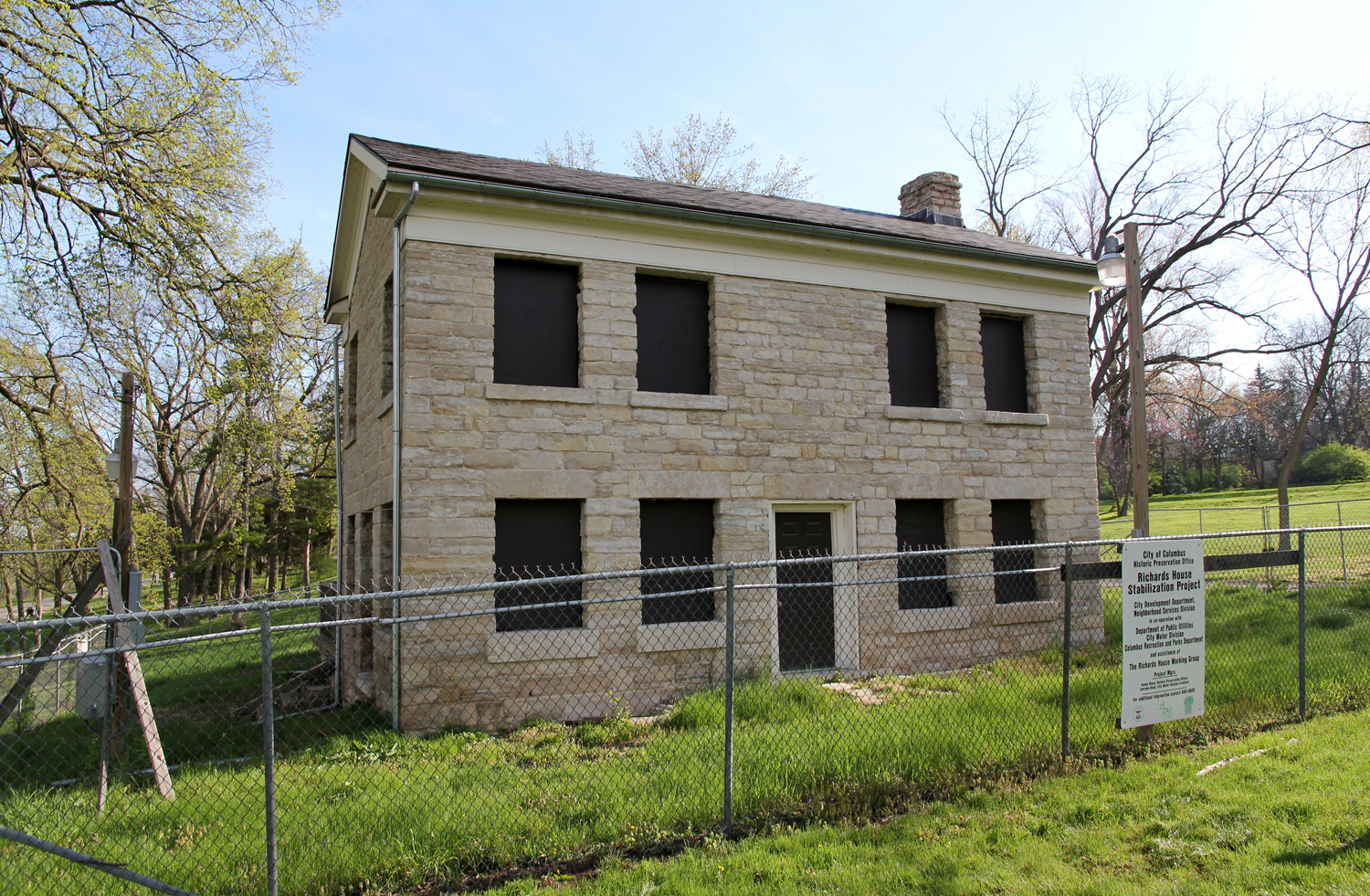
East elevation. The roof collapsed in a recent snowstorm.
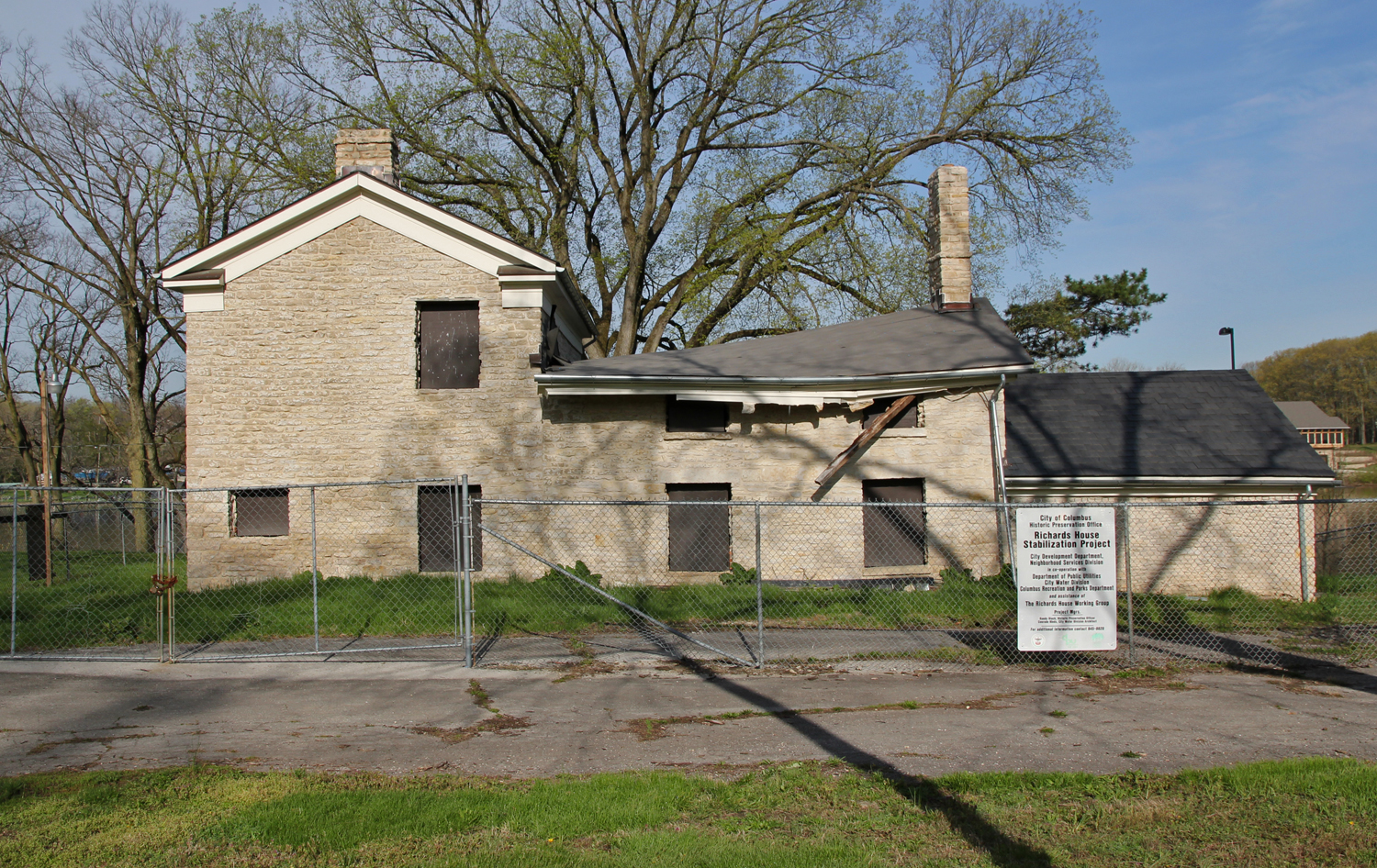
West (river) elevation.
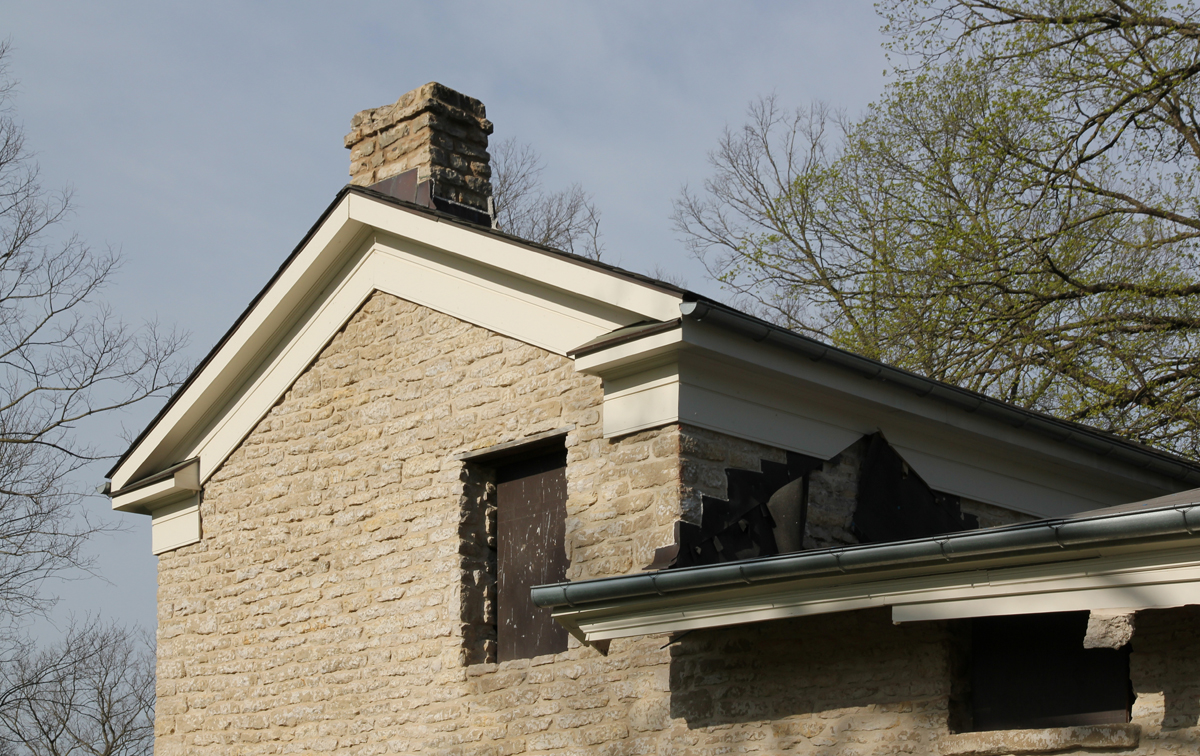
The pre-2007 cornice did not feature returns. I rather like the way they look, though.
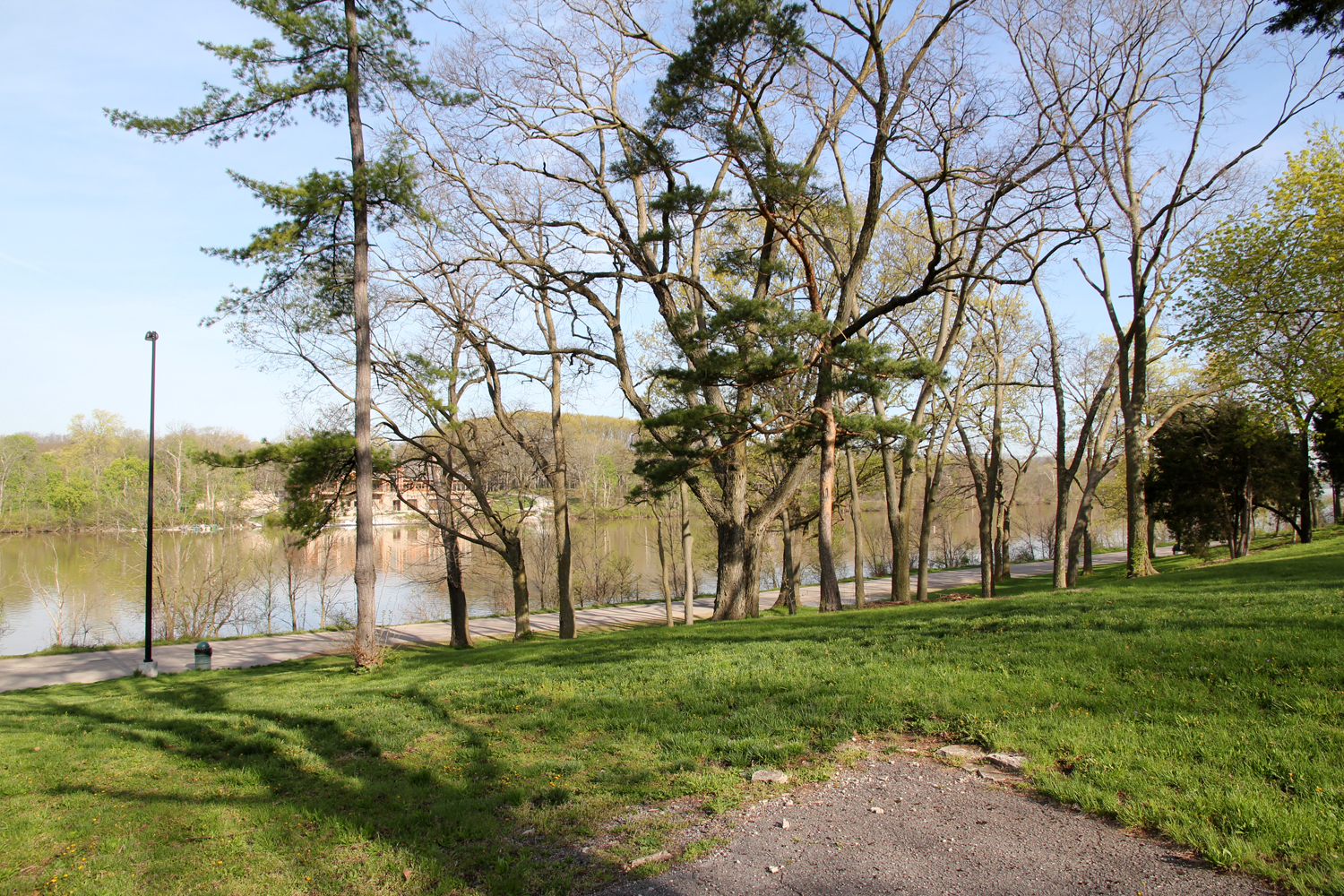
A view of the Scioto River, from the home's northwest corner. The river wouldn't have been quite so wide when the land served as a farm. Still, it's a very scenic locale.
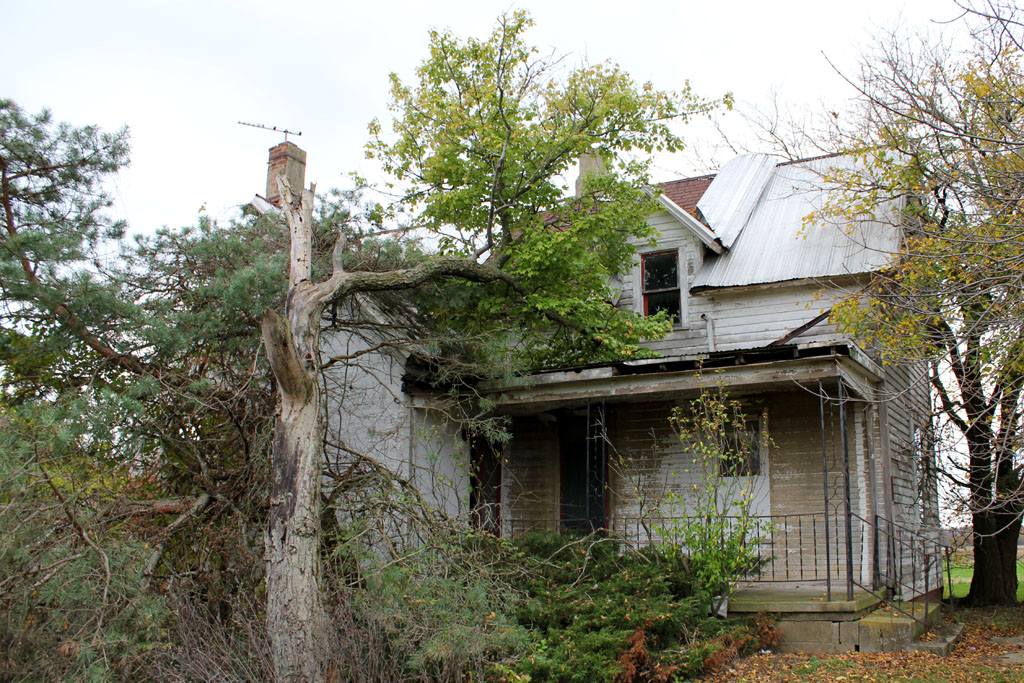
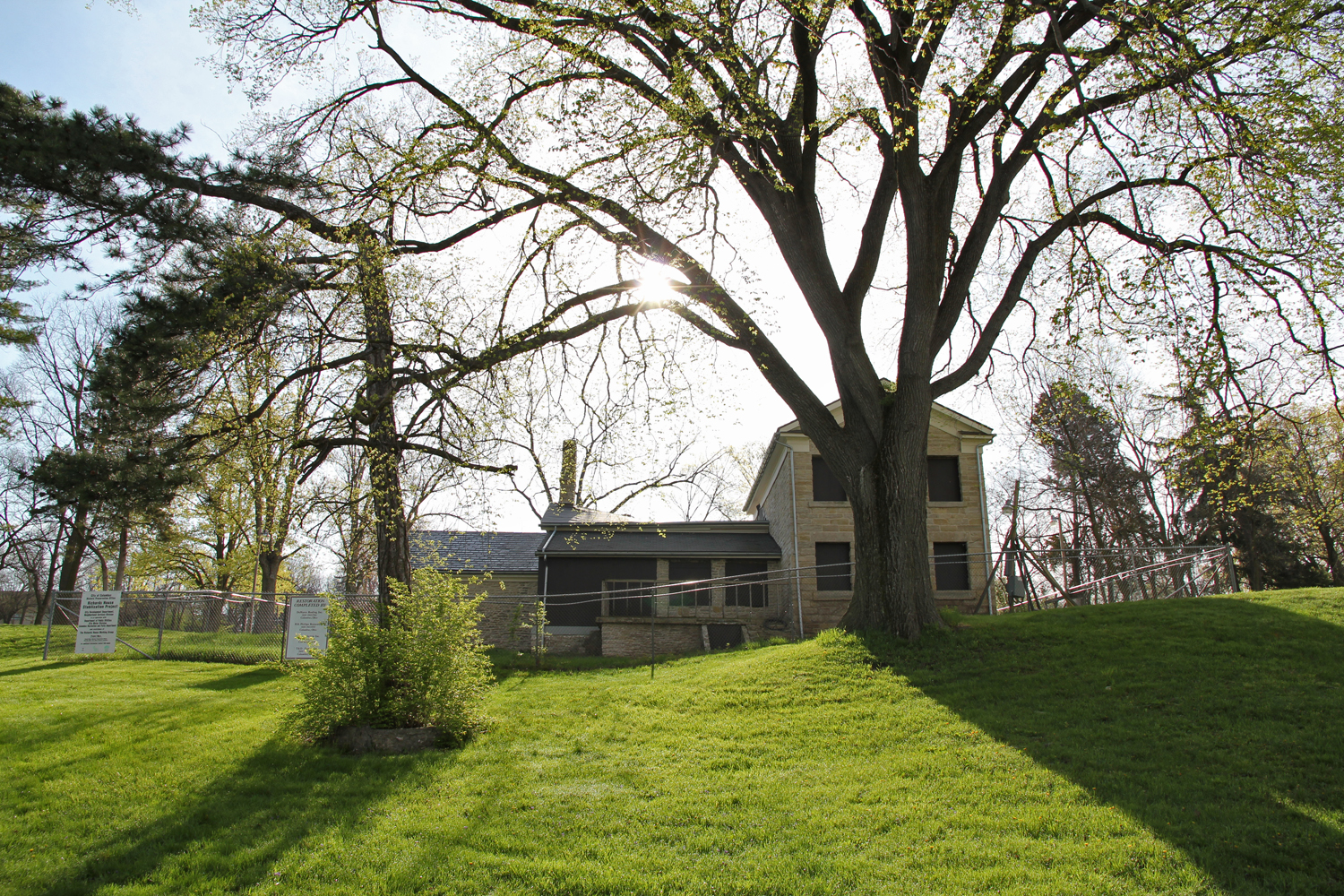
One last photo. In my opinion, topographic relief is always a good thing.