Sunday, June 2, 2013

Spitler Log House - Part 2

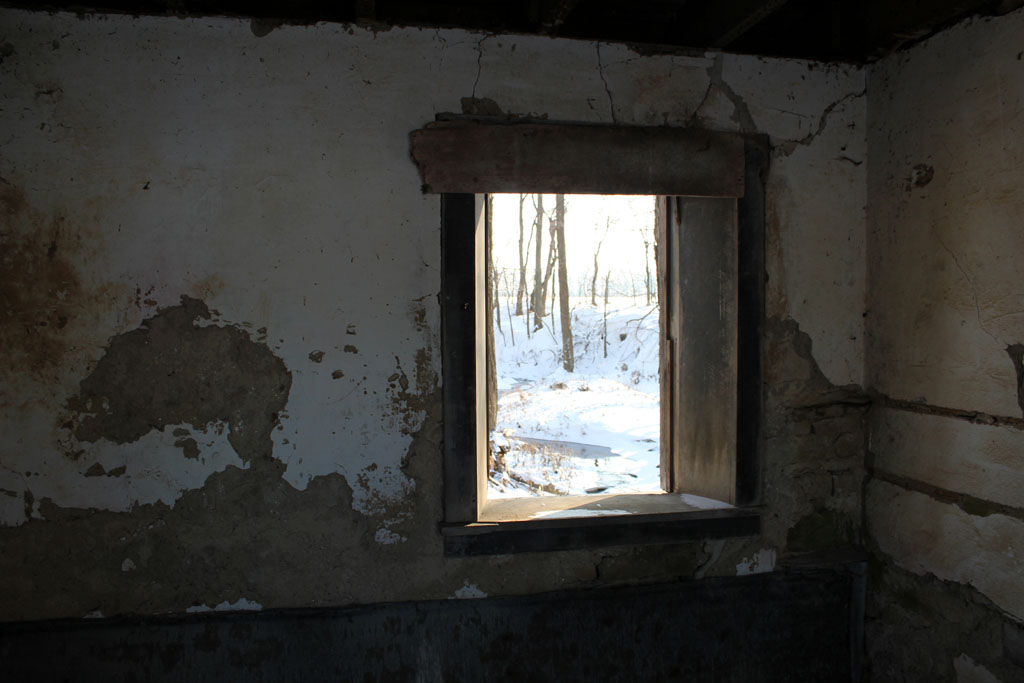
Despite fifty-plus years of abandonment, the house's interior remains quite intact. Much of the finish detail likely dates to the 1840s or 1850s, or about when the braced frame addition was constructed.

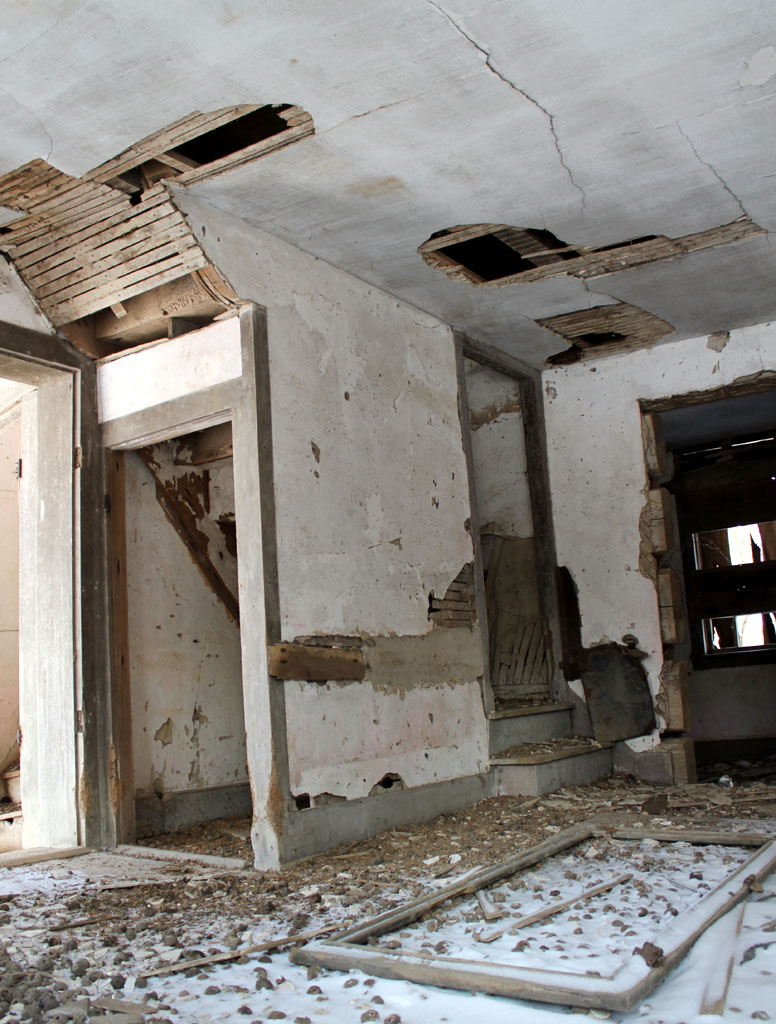
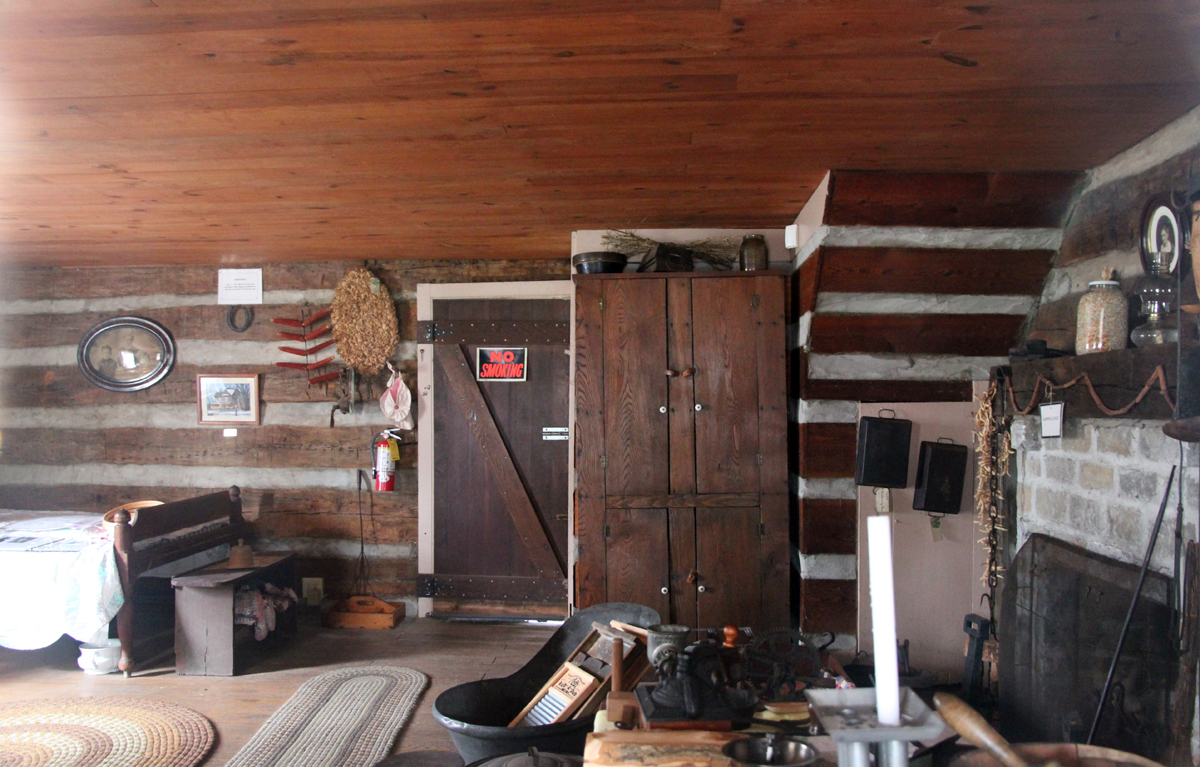
The log portion's interior. For some reason, all trim is missing from the back wall, but remains elsewhere.
Enclosed stairs with closet underneath; log portion. Earlier structures had less sophisticated, more steeply rising staircases. The last step lies outside of the stairwell itself, a typical arrangement.
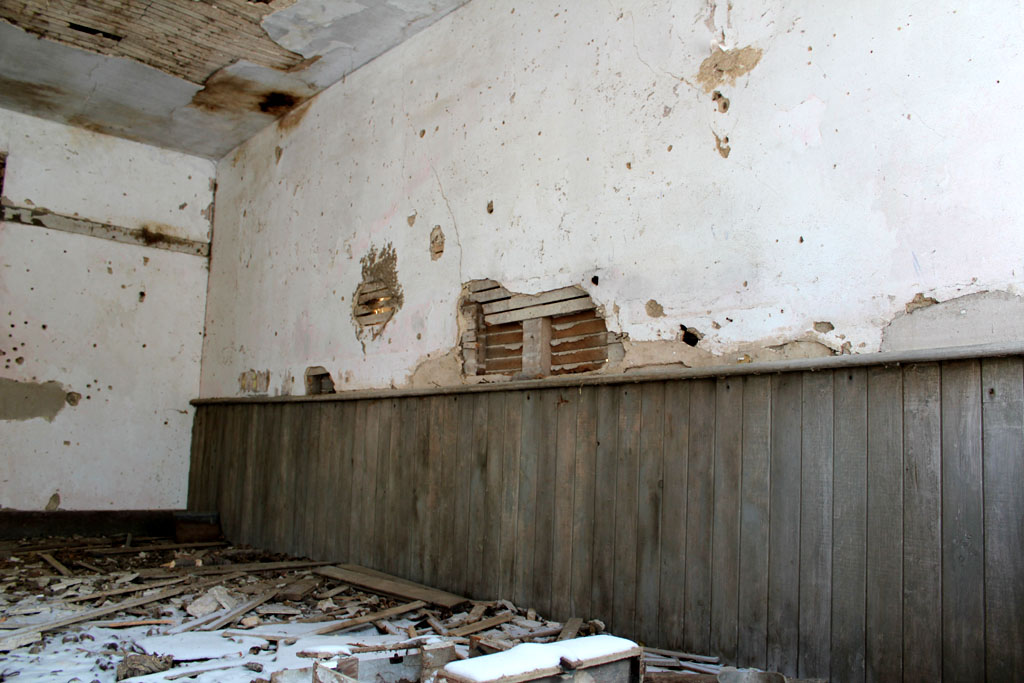
Wainscoted interior wall. This wall may have been moved, for it contains horizontal lath, rather than the diagonal lath seen elsewhere. The home's current room configuration is rather strange (see the floor plan at the end of this post).
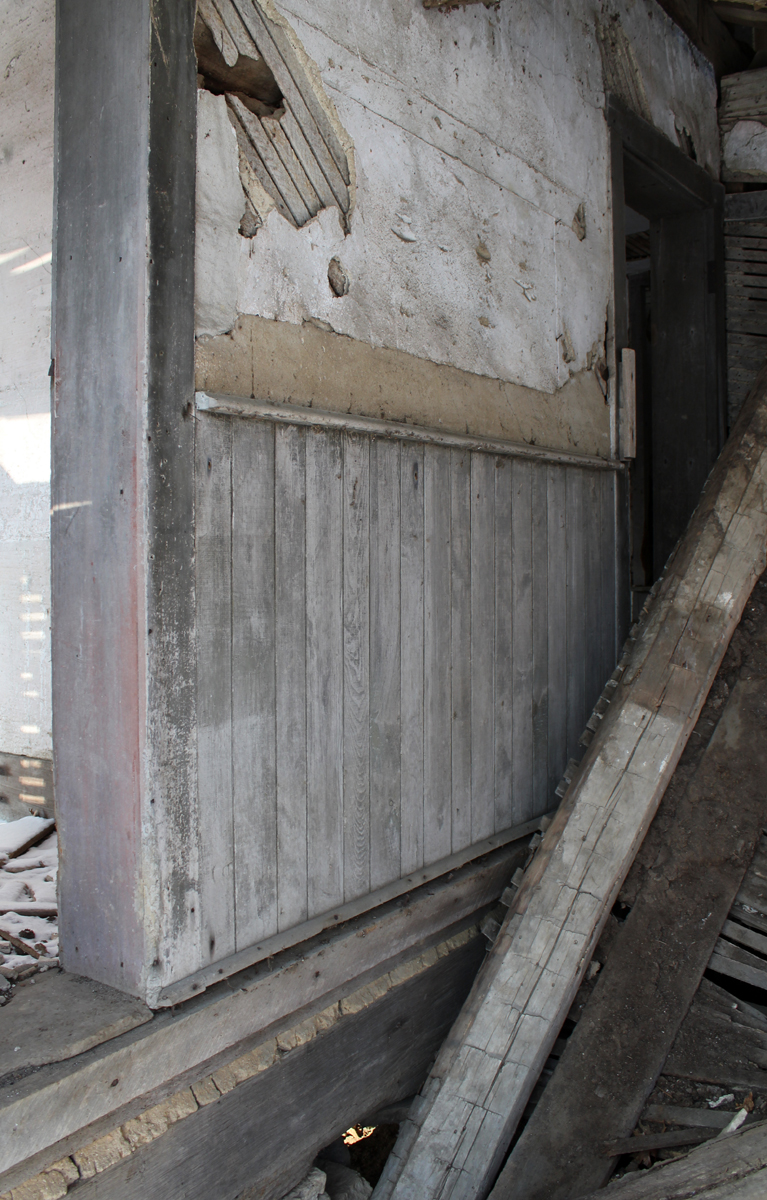
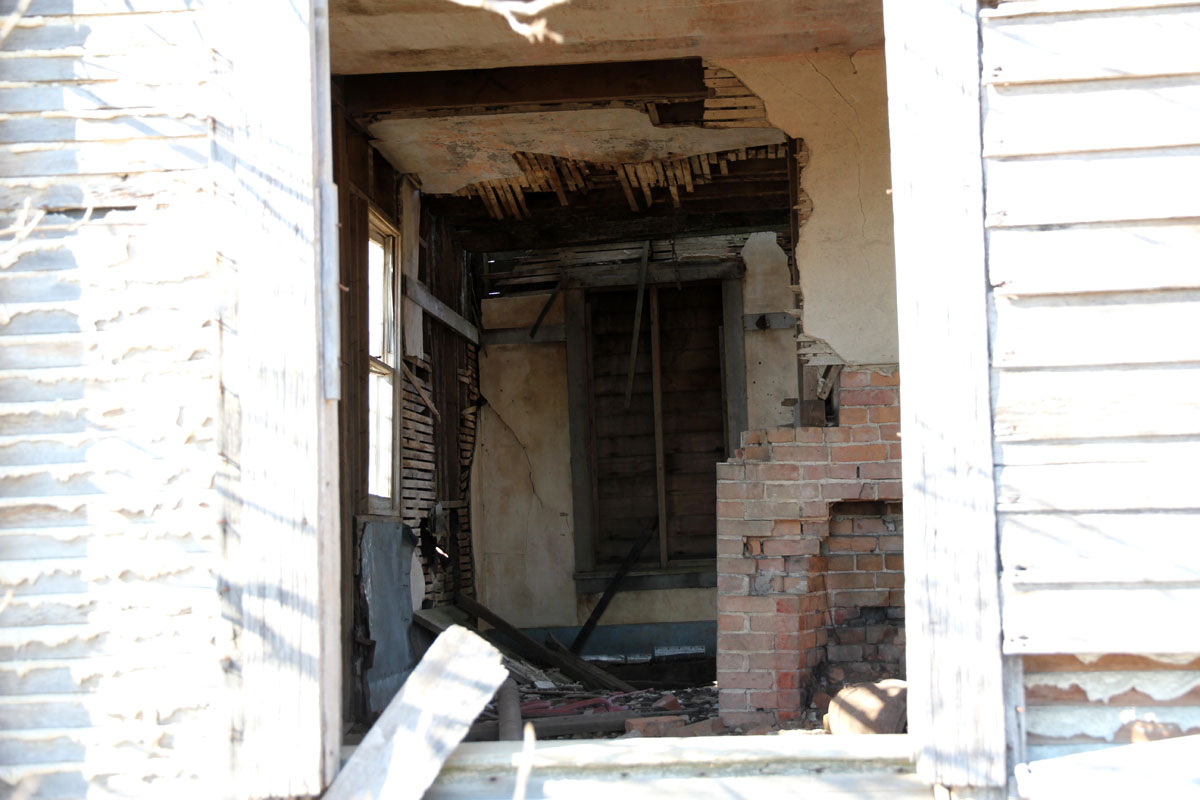
Seen in the kitchen (?) addition, this was once the house's rear wall. The left door leads into a small, narrow room, while the other door exits into the primary living space. Intact daubing is visible below the wall itself.
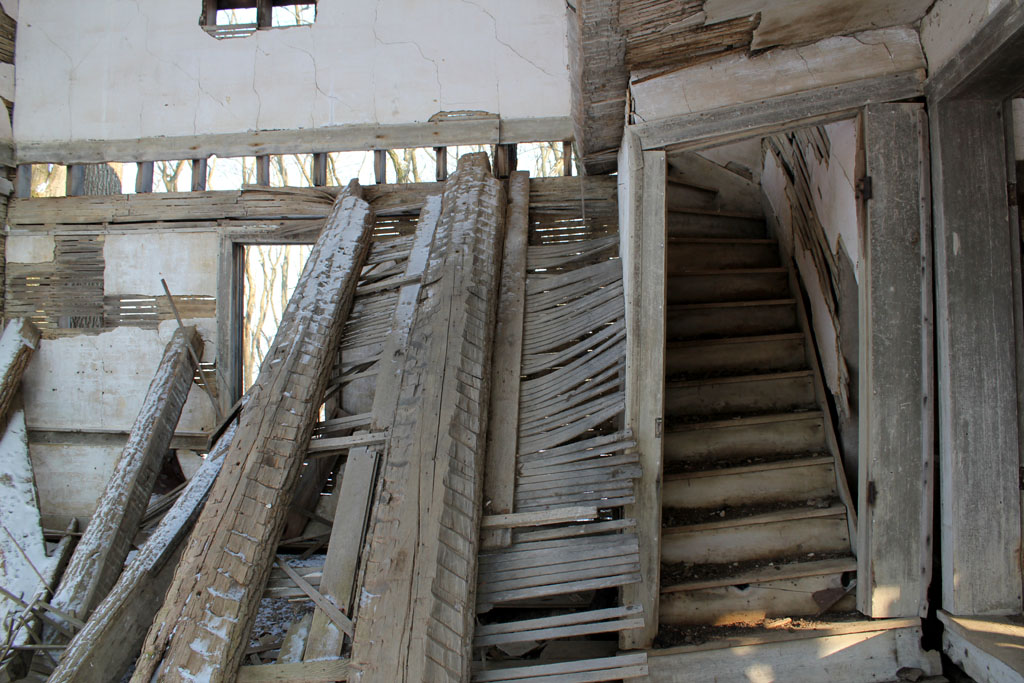
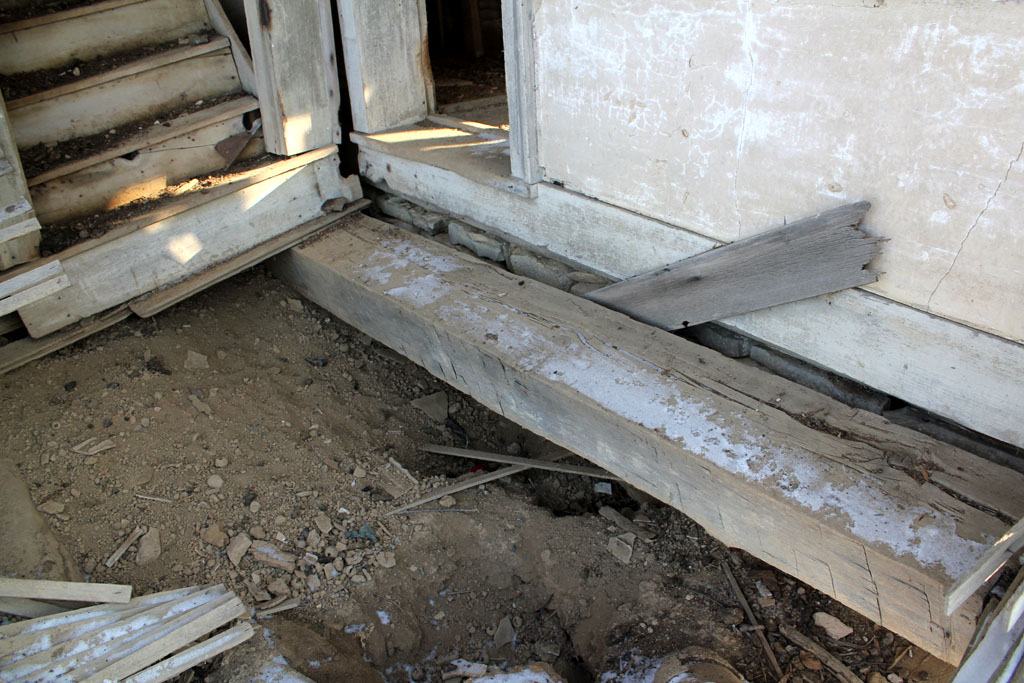
Braced frame addition, interior. This addition is free-standing, connected to the log portion only by a shared roof structure. The lack of connection between the house's second floor rooms necessitated a second staircase. The joists are gigantic; larger than the logs (!) that compose the original house.
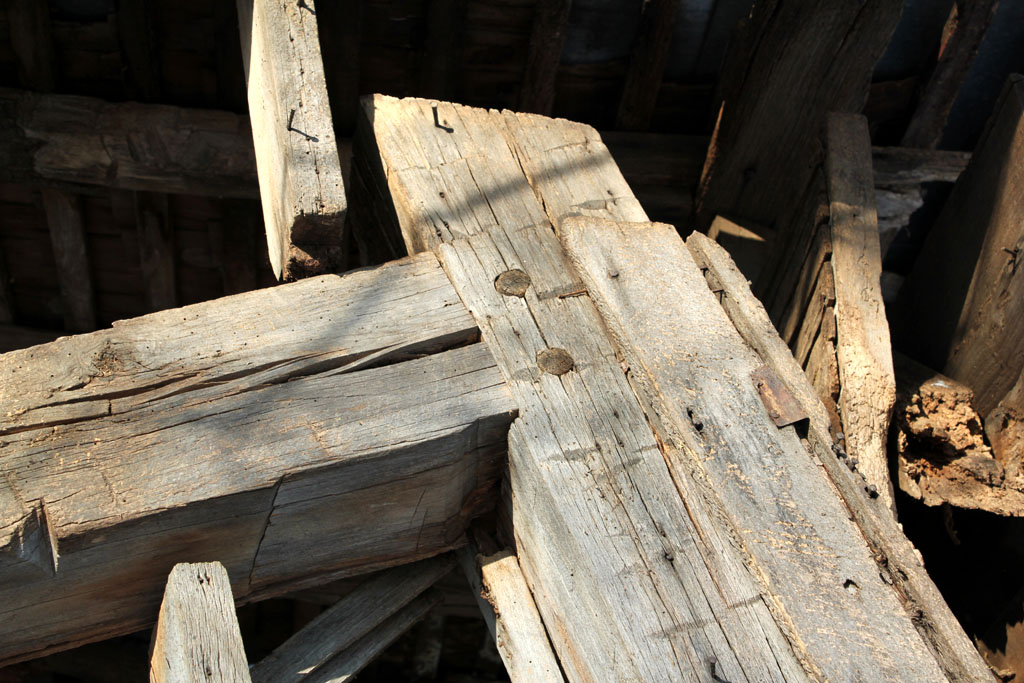
Mortise and tenon, rear addition. This joint was secured without nails.
I have no idea why these joists are so darn large.
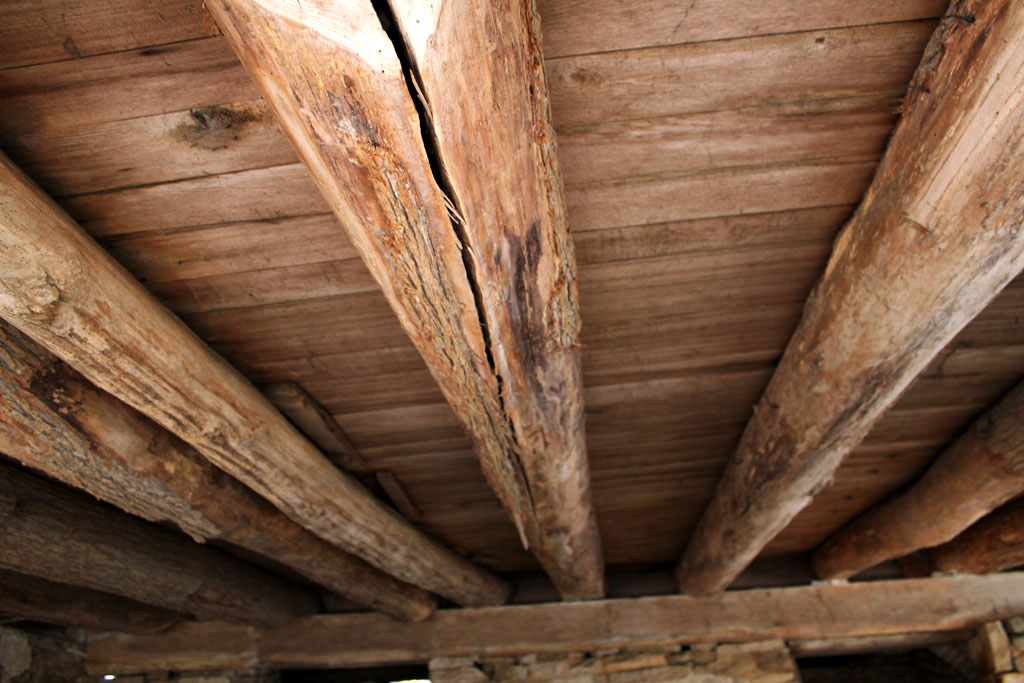
The log portion's joists, however, are more what I'd expect to see.
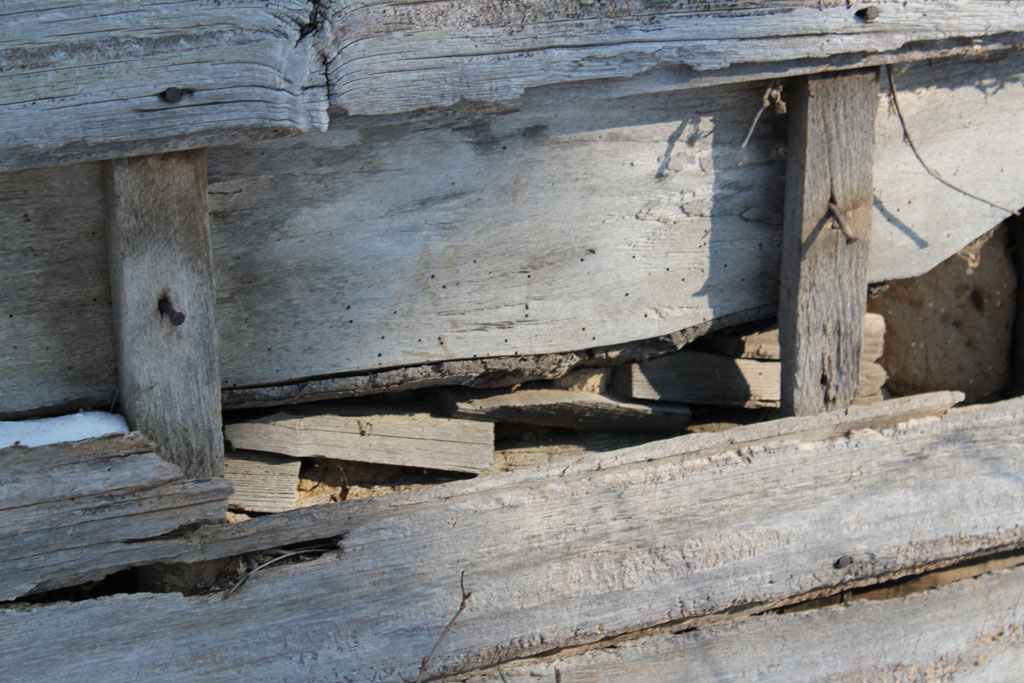
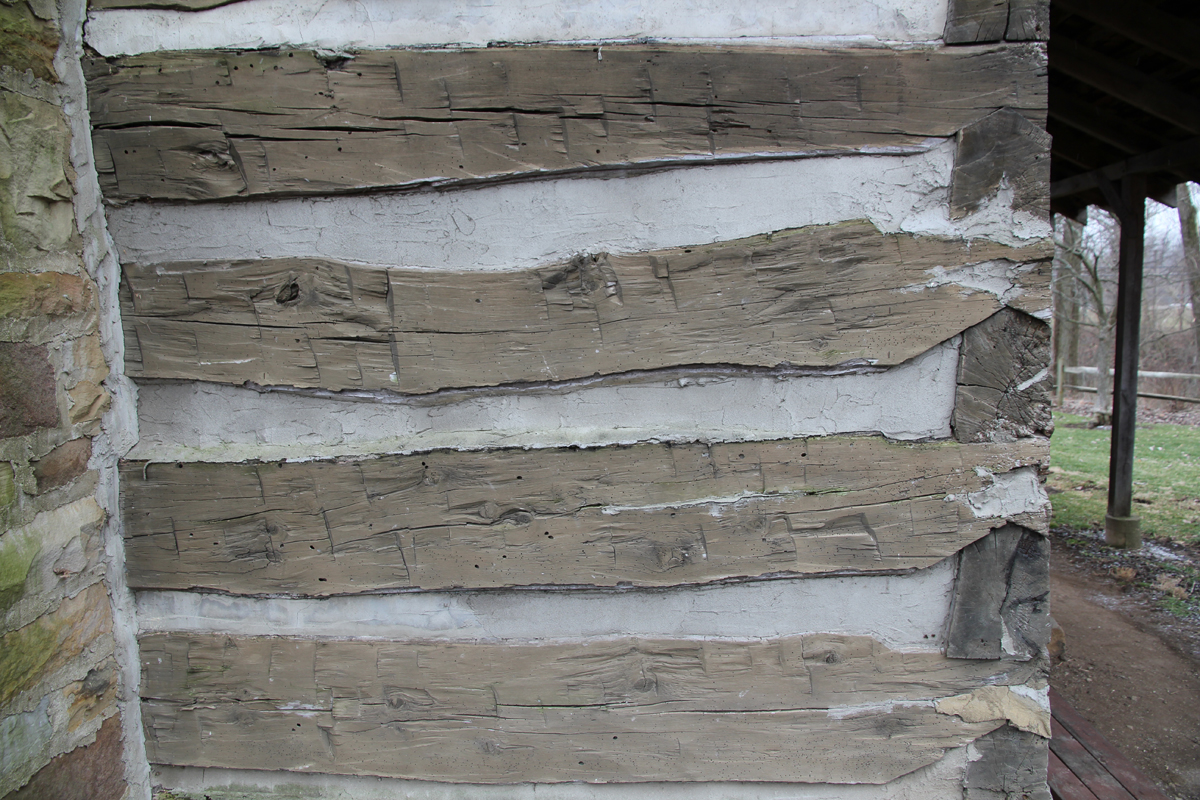
The word "chinking" refers to the objects (wood slabs, in this case) placed between the logs of a log building. The mortar that fills the gaps in the chinking is known as "daubing." In recent years, the two words have become synonymous.
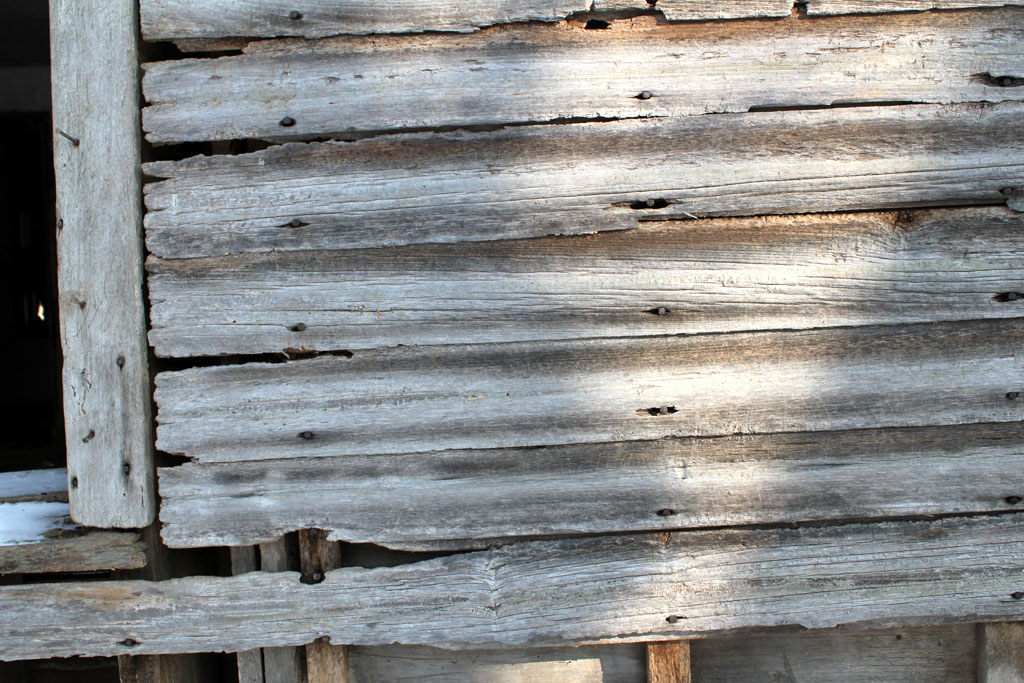
Though the house's trim is secured with square nails, this siding uses round nails. Dating buildings by nail type is difficult, but, at least, the varying nails seen here indicate that the trim and siding are not contemporaneous.
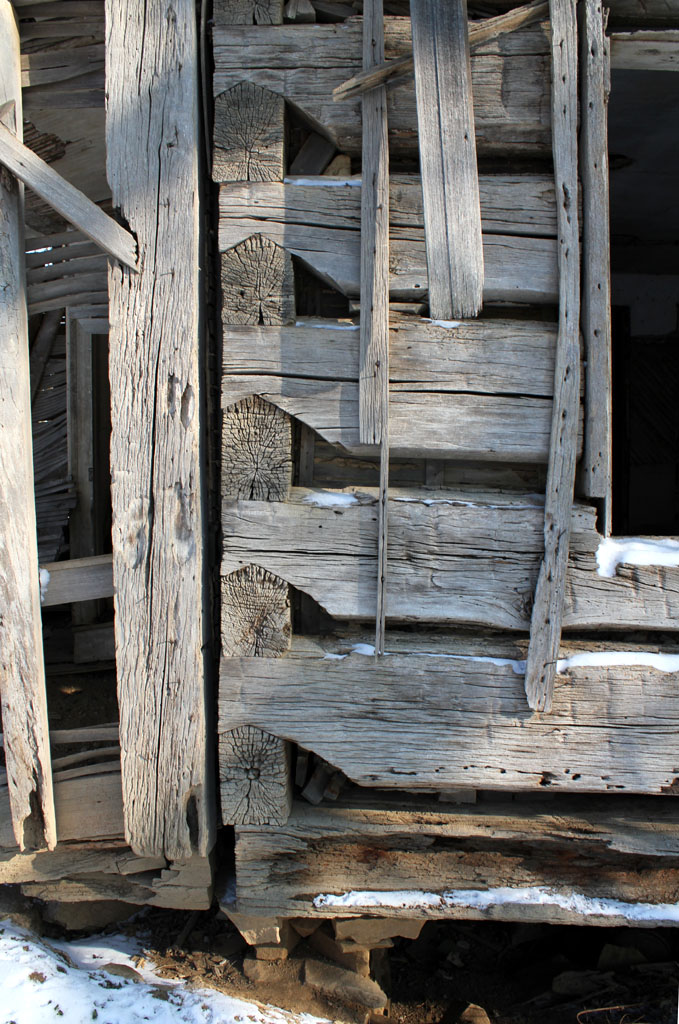
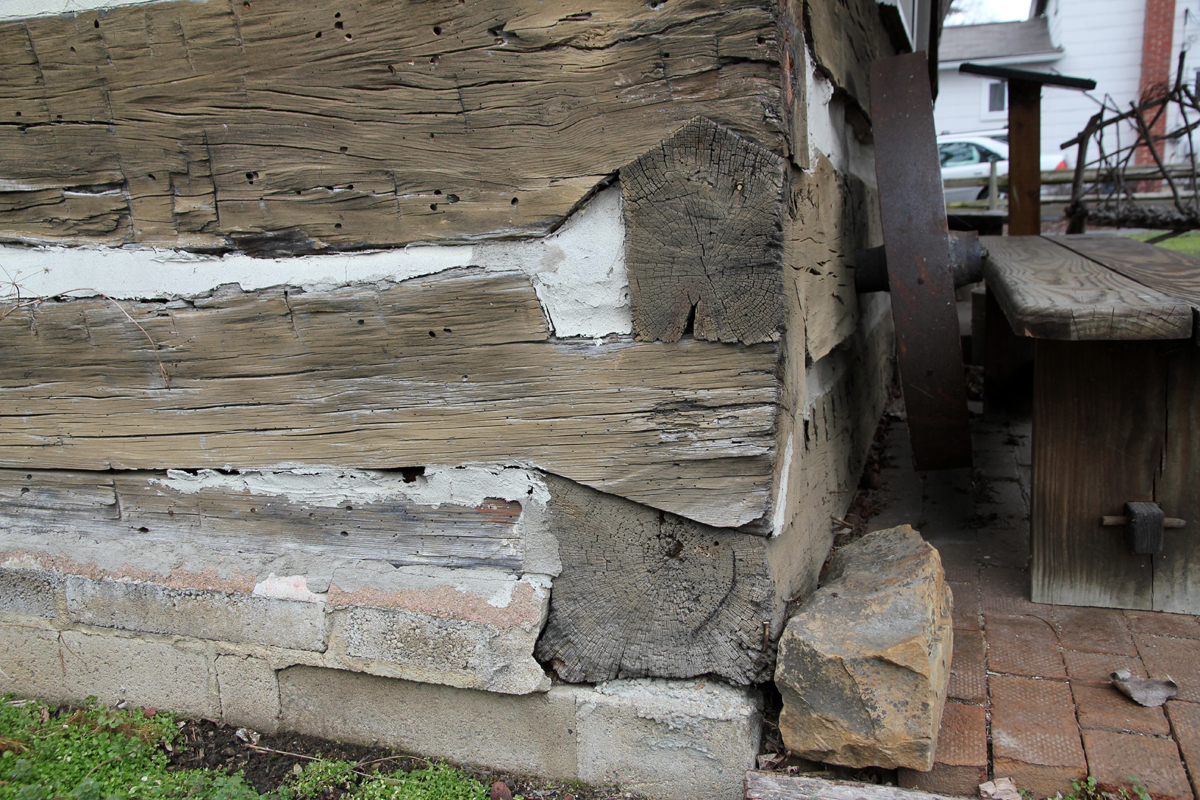
So-called steeple notching is seldom seen on a post-1820s building unless it was sided immediately following construction, as was probably the case here.
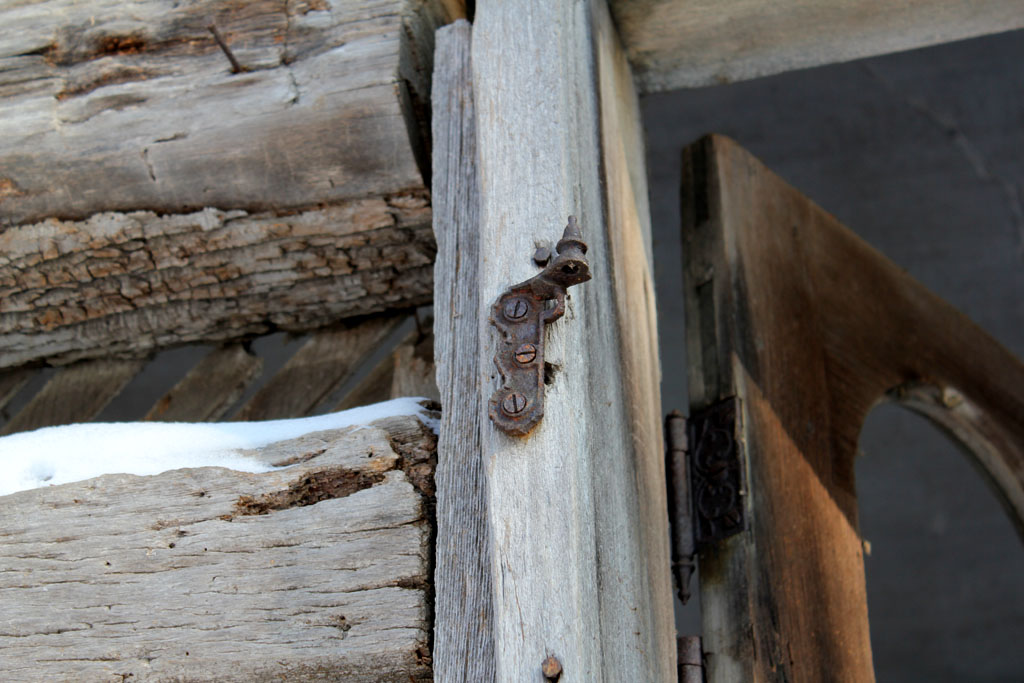
Screen door hinge, probably from the late 19th century. The bark-covered log might be a good candidate for dendrochronological dating.
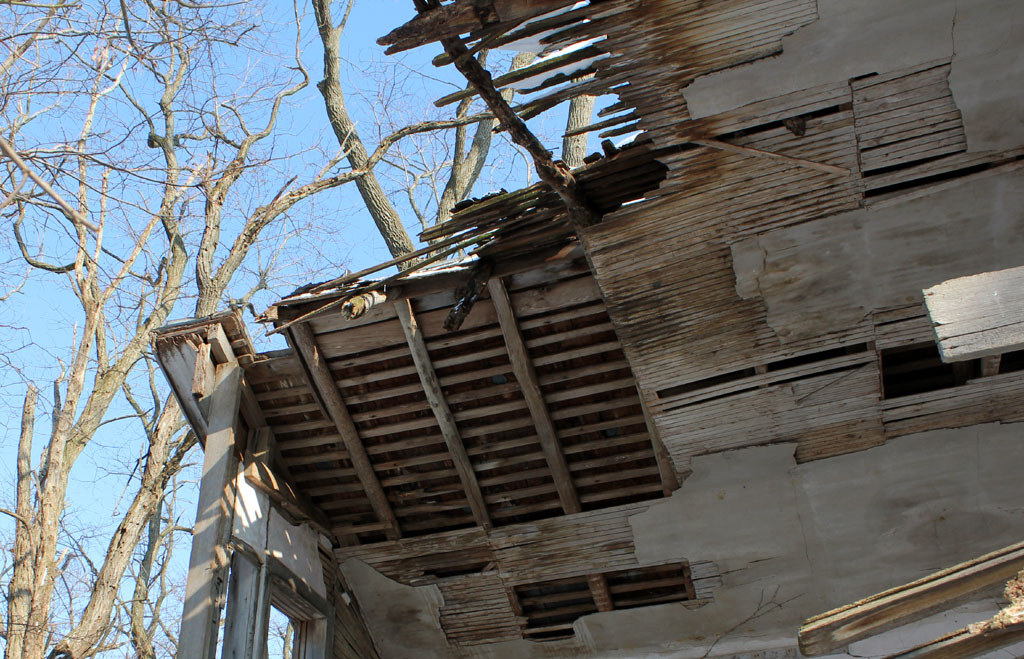
The ends of these pole rafters are attached to a board running parallel with the roof ridge, inspired by balloon frame construction. According to Donald Hutslar, framing such as this is not seen on buildings constructed before the 1830s or 1840s.
Lastly, a floor plan, not entirely to scale. I suspect that the log section was once divided into two rooms of roughly equal size, and featured two front entries.

Friday, May 17, 2013

Spitler Log House - Part 1

Bloom Township, Seneca County, Ohio

This is, without question, the most fascinating structure I've had the pleasure to examine. The log portion measures 24 feet by 18 feet, common dimensions for a structure of the time, while the logs themselves are about sixteen inches by seven inches.


I don't know exactly how old the house is. Settlement of the area began in the early 1820s and progressed quickly; quite a few fine 1840s-era homes remain there. Based on construction details, I imagine that the structure was built in the 1830s or early 1840s, and remodeled shortly after.

In 1874, J. Spitler owned the property. The Spitler family was prominent in the township, and a number of surrounding farms were also owned by family members. By 1896, ownership of the property had passed to J. Mesnard.

The house was vacant by 1959. Given its complete lack of electrical wiring, I'd estimate a 1930s (pre-rural electrification) abandonment date. I can't think of any other structures unused for such a long time, yet in such (relatively!) good condition.

Aerial photos of the property, from 1959 and 2012, respectively.
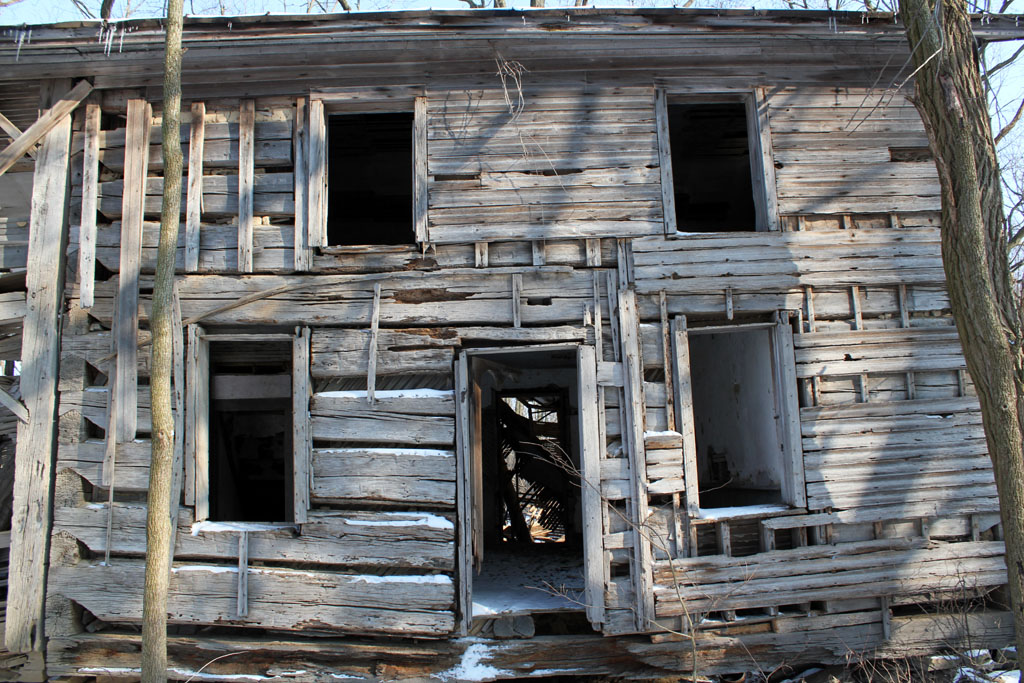
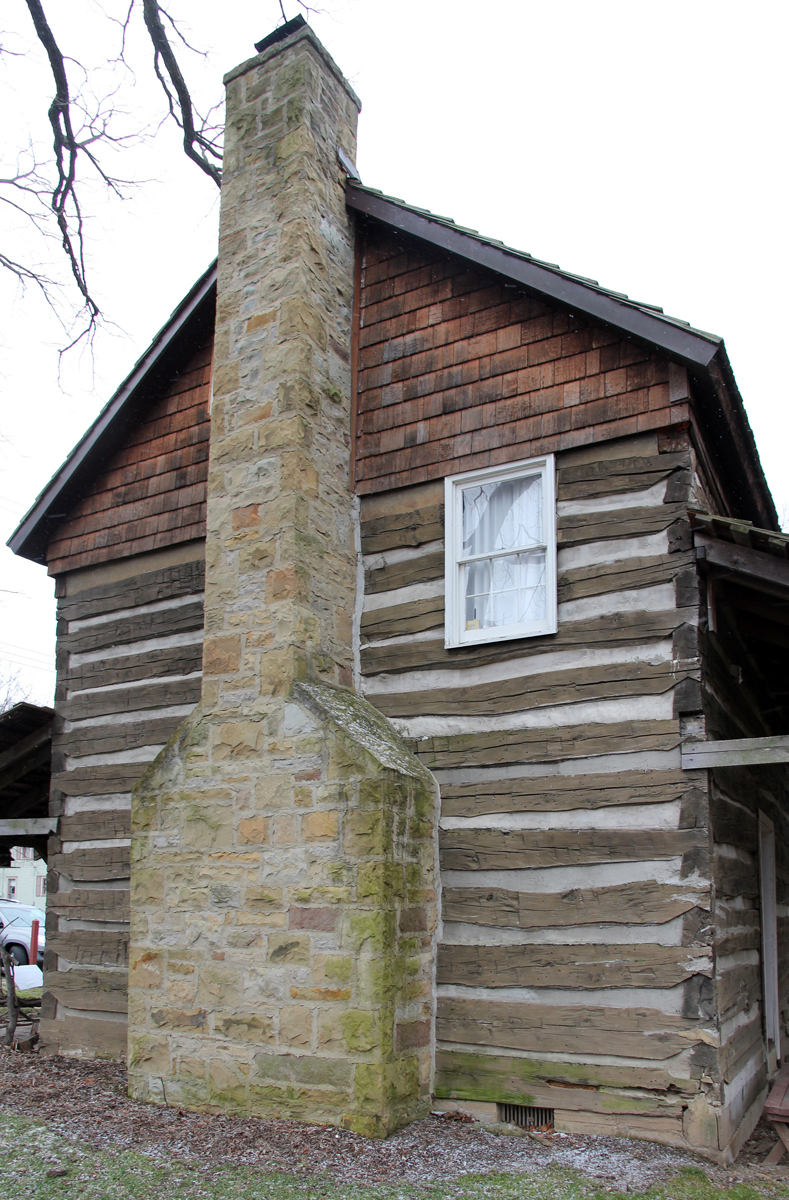
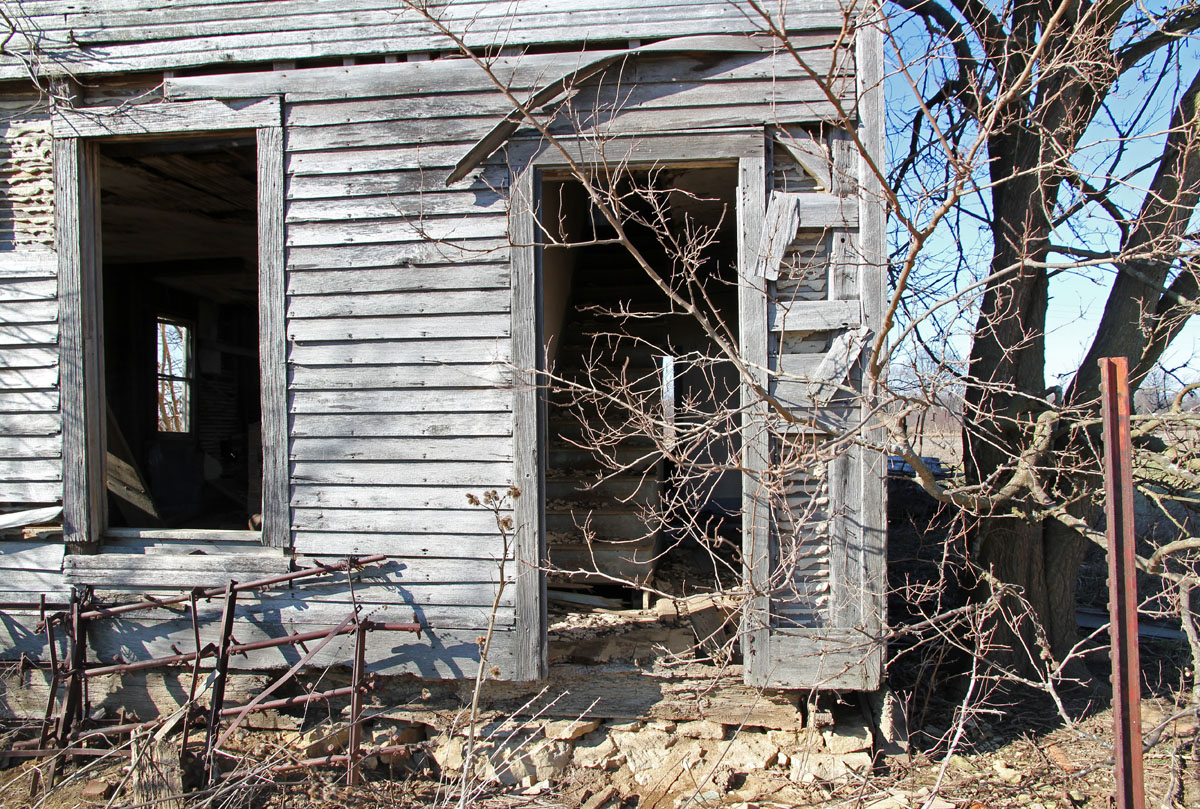
Front of the log portion. The rightmost window was once a door.
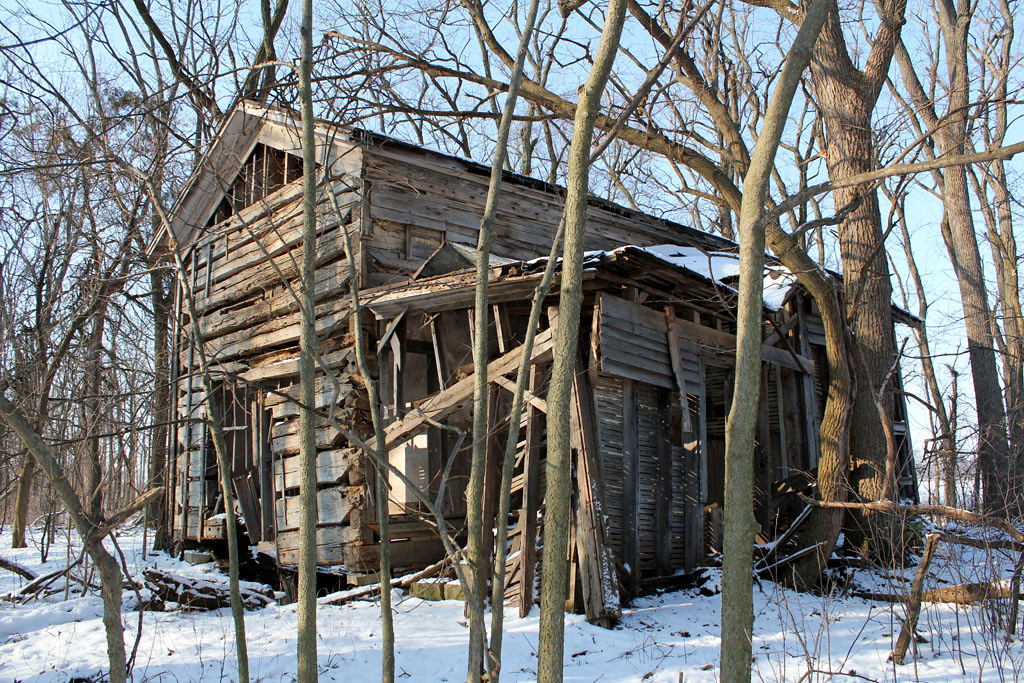
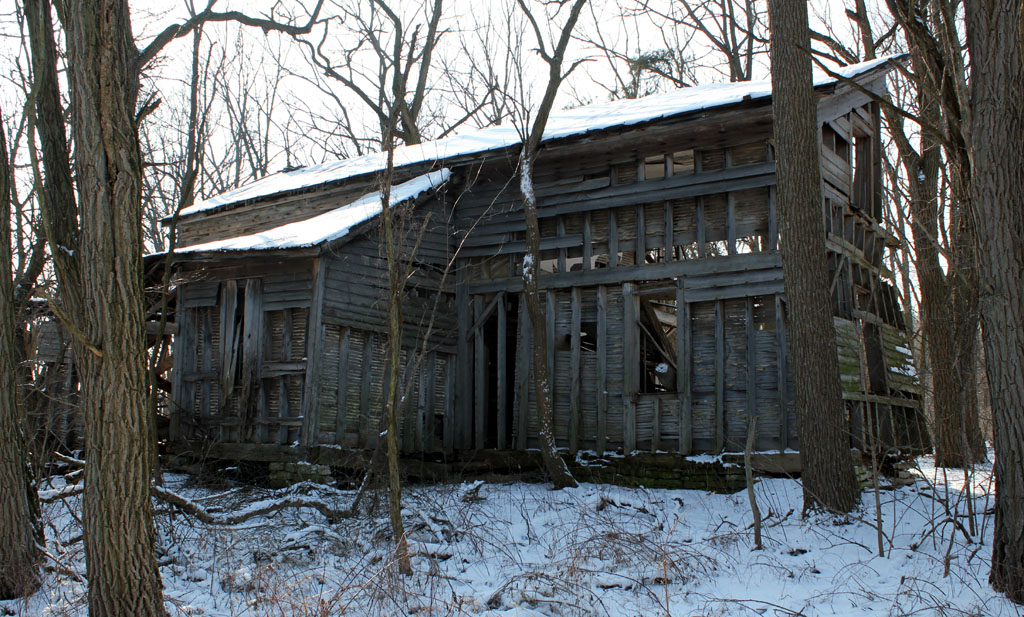
Rear, looking northwest. Both of the home's additions are of braced frame construction.
Typical mid-19th century construction.

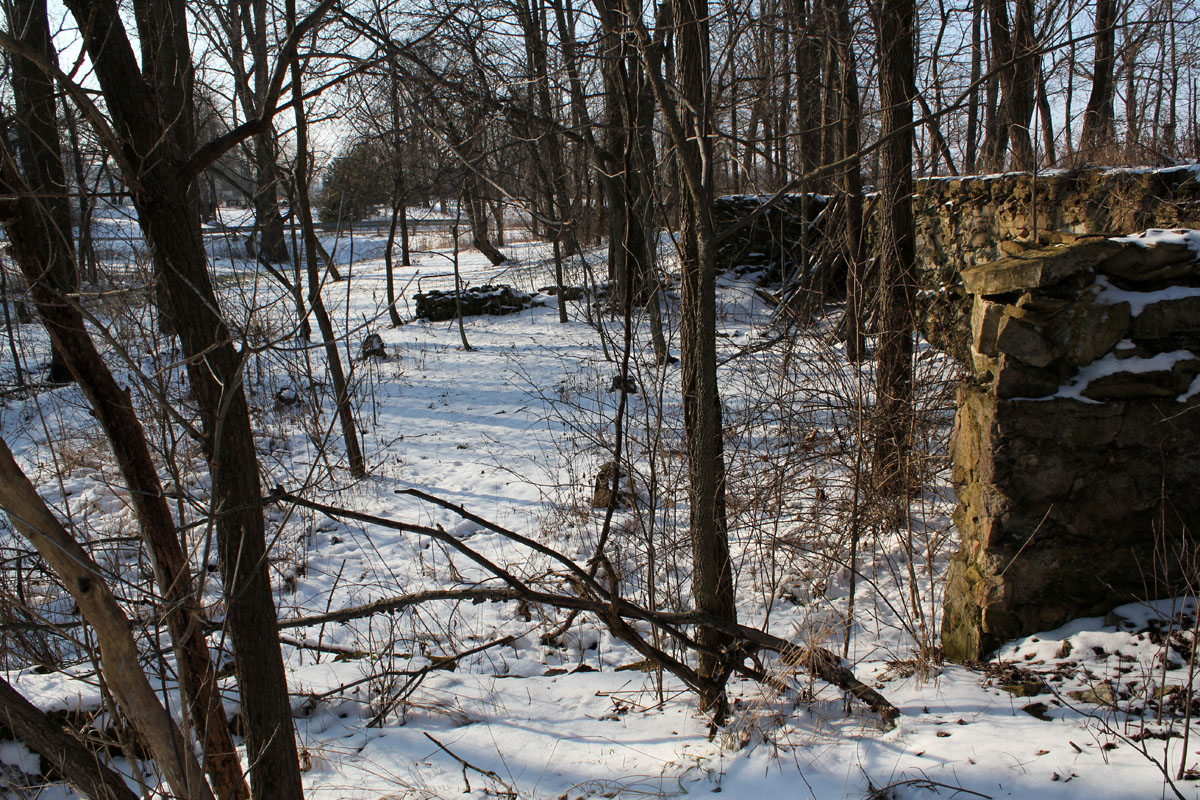
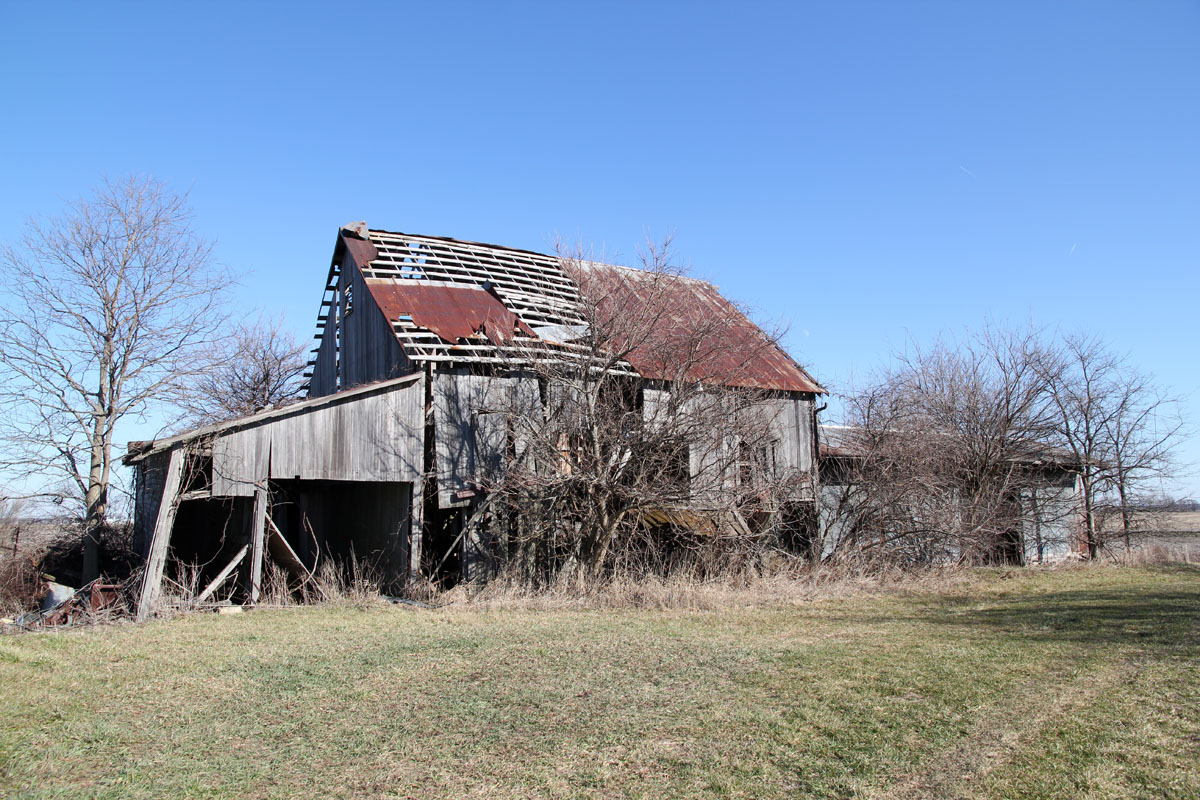
An adjacent barn foundation. According to local legend, the barn burned in a 1940s arson fire set by a disgruntled farm worker.

Saturday, May 4, 2013

Richards House

Upper Arlington (formerly Perry Township), Franklin County, Ohio

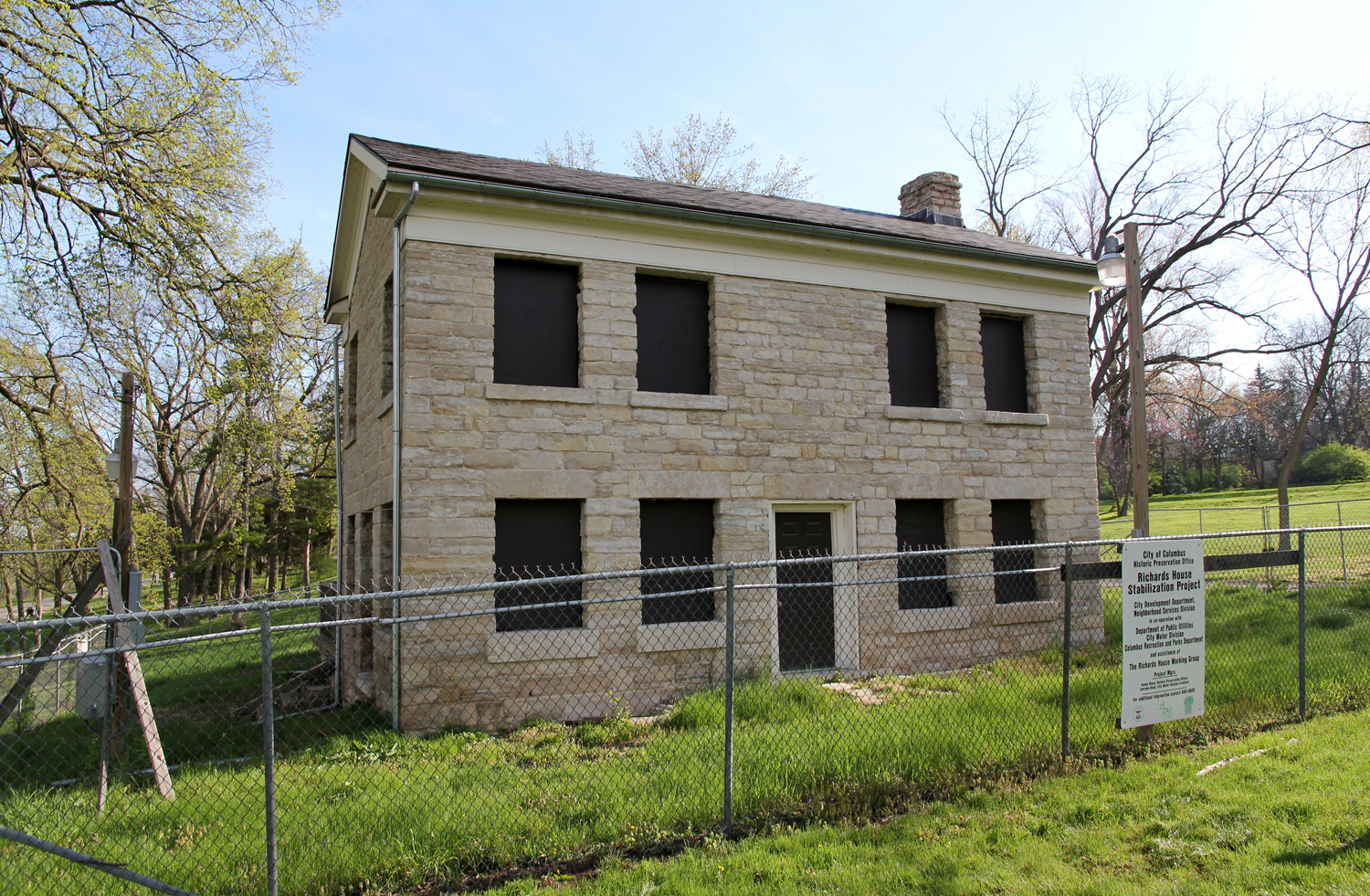
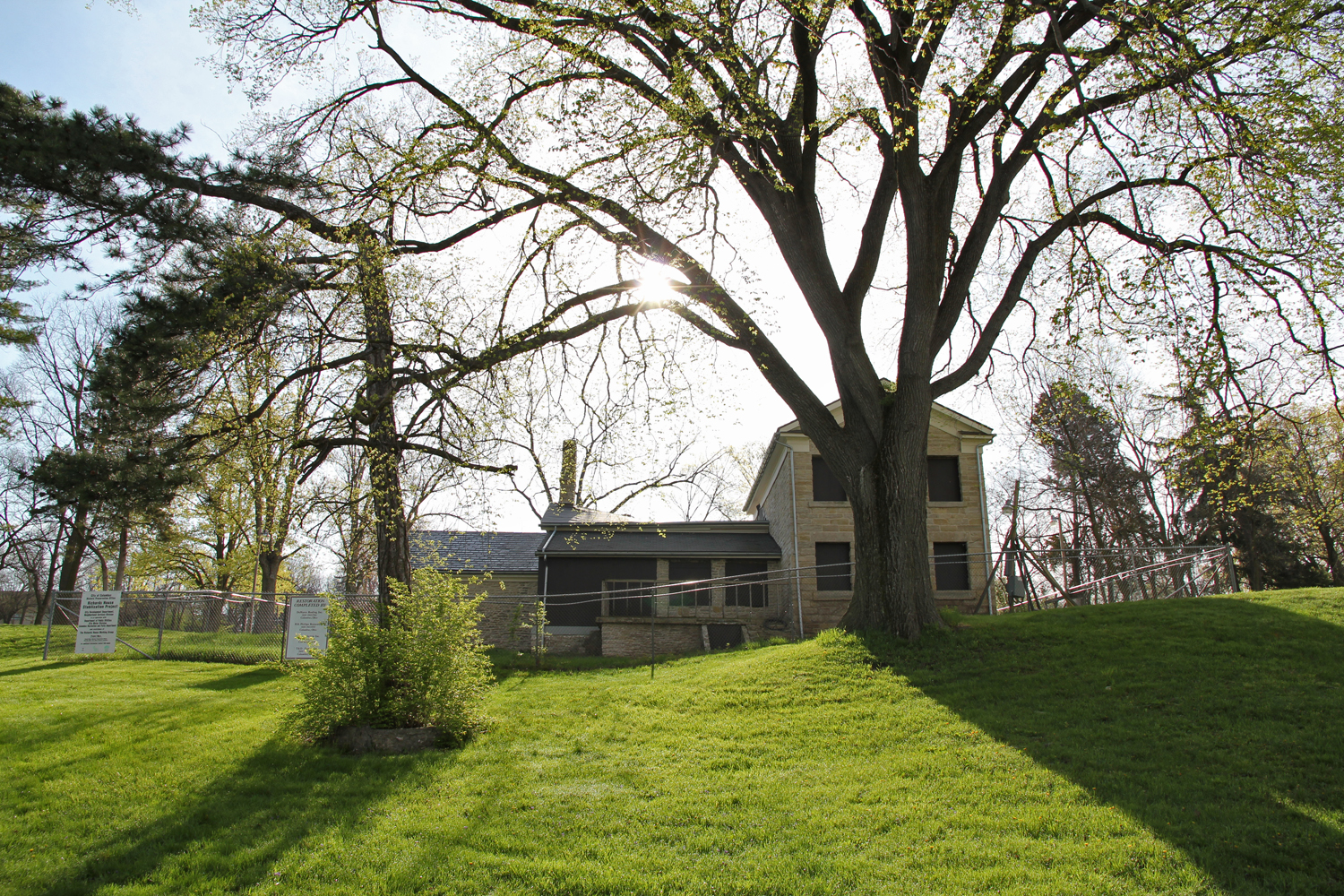
I don't know this home's exact age. One source claims a construction date of 1814, while others provide dates as late as the 1850s. Regardless, it remains a good example of the fine limestone residences that dotted the Scioto River valley.

Built by a member of the Richards family, the structure was sold to the City of Columbus in 1904 for use as the Griggs Dam caretaker's house. By the late 1990s, the house stood in a state of disrepair; vandals and ill-conceived renovations had essentially destroyed the interior. A 2007 stabilization project improved the building's fortunes a bit, but its future is still quite bleak.


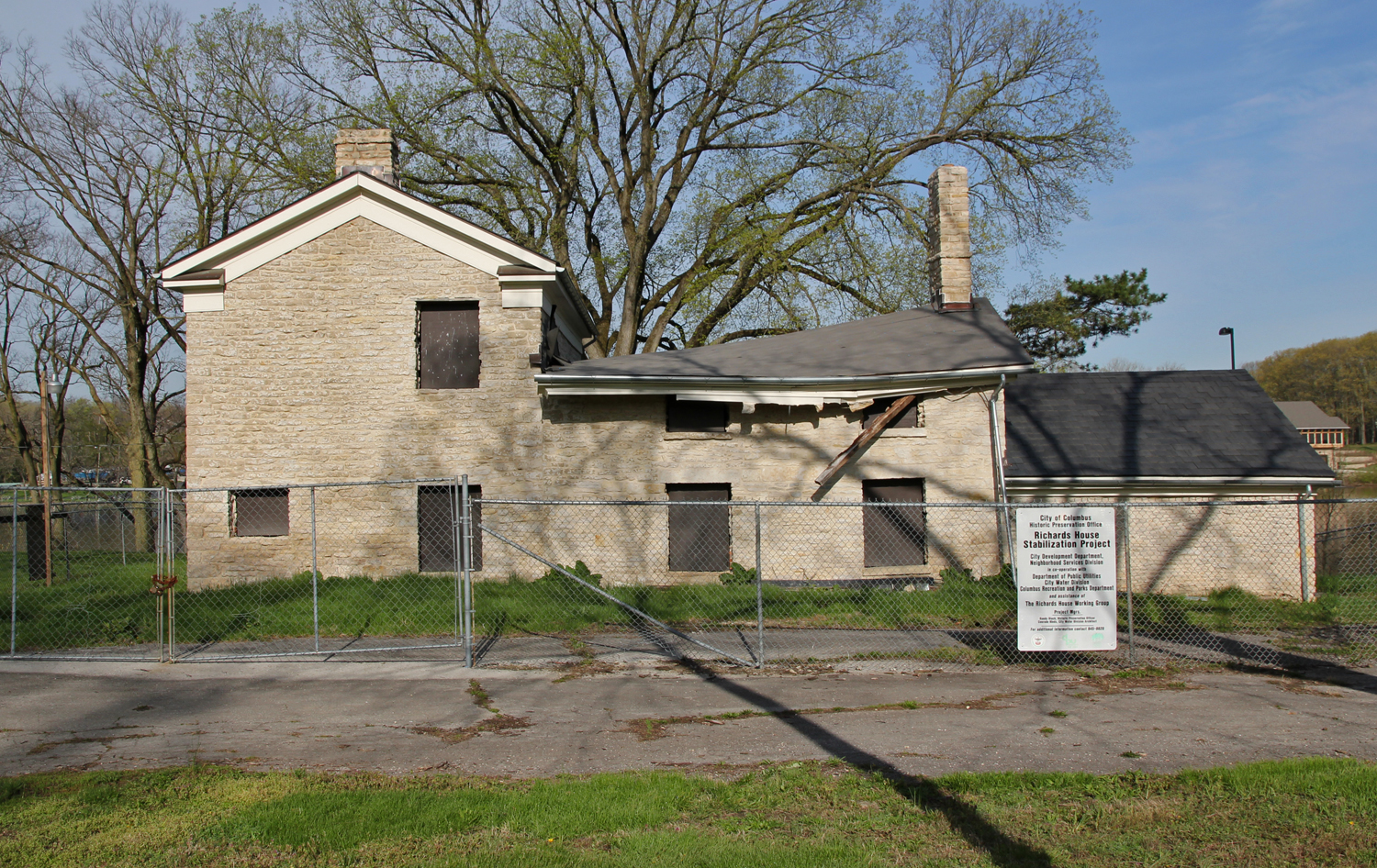
East elevation. The roof collapsed in a recent snowstorm.
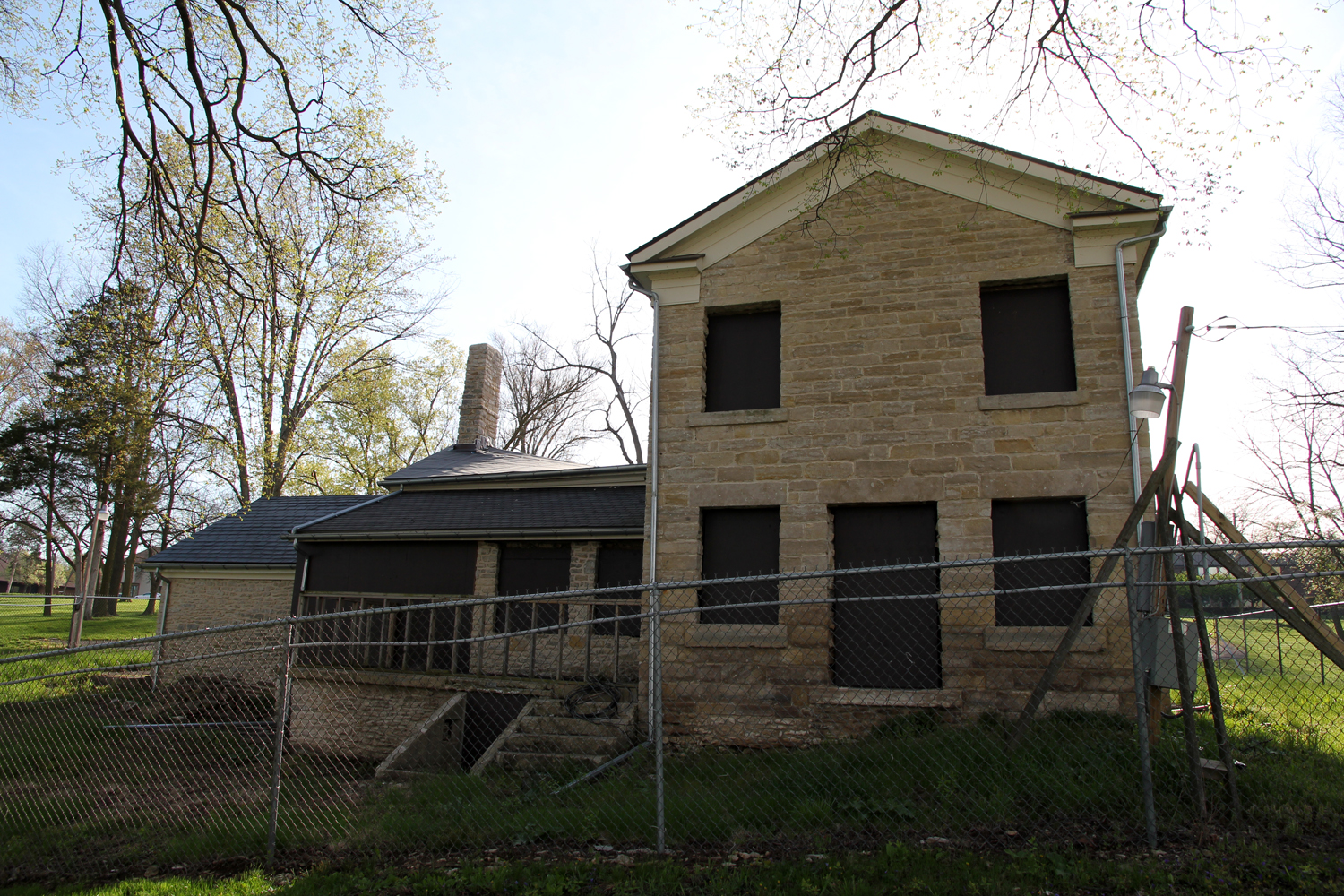
West (river) elevation.
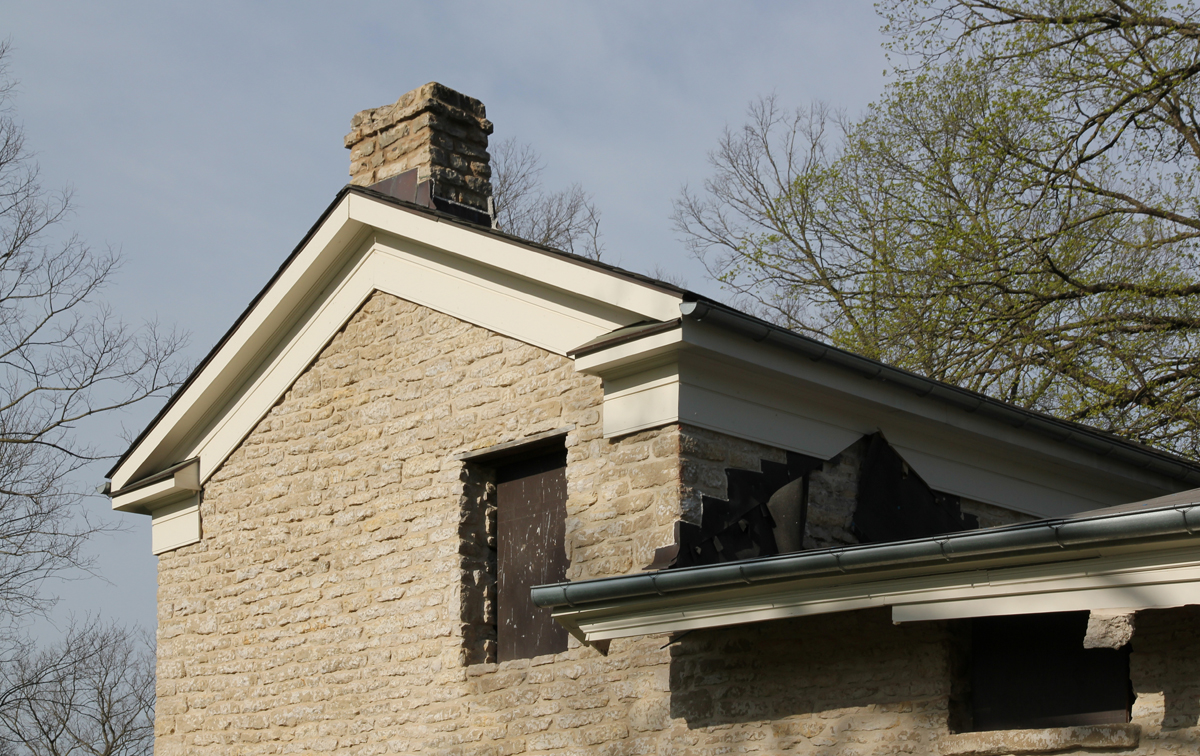
The pre-2007 cornice did not feature returns. I rather like the way they look, though.
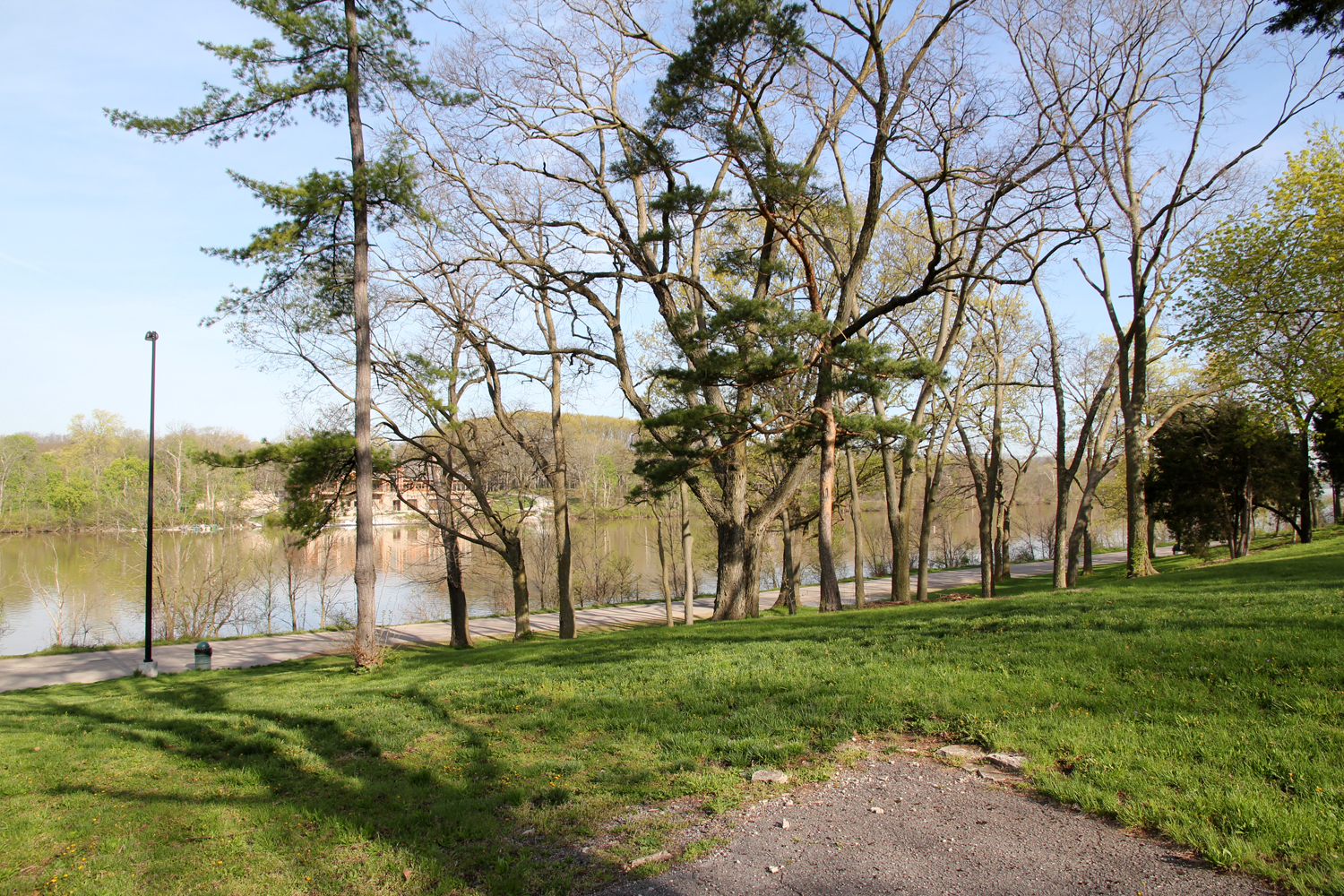
A view of the Scioto River, from the home's northwest corner. The river wouldn't have been quite so wide when the land served as a farm. Still, it's a very scenic locale.
One last photo. In my opinion, topographic relief is always a good thing.

Saturday, April 27, 2013

Jacob Kline House


Cranberry Township, Crawford County, Ohio

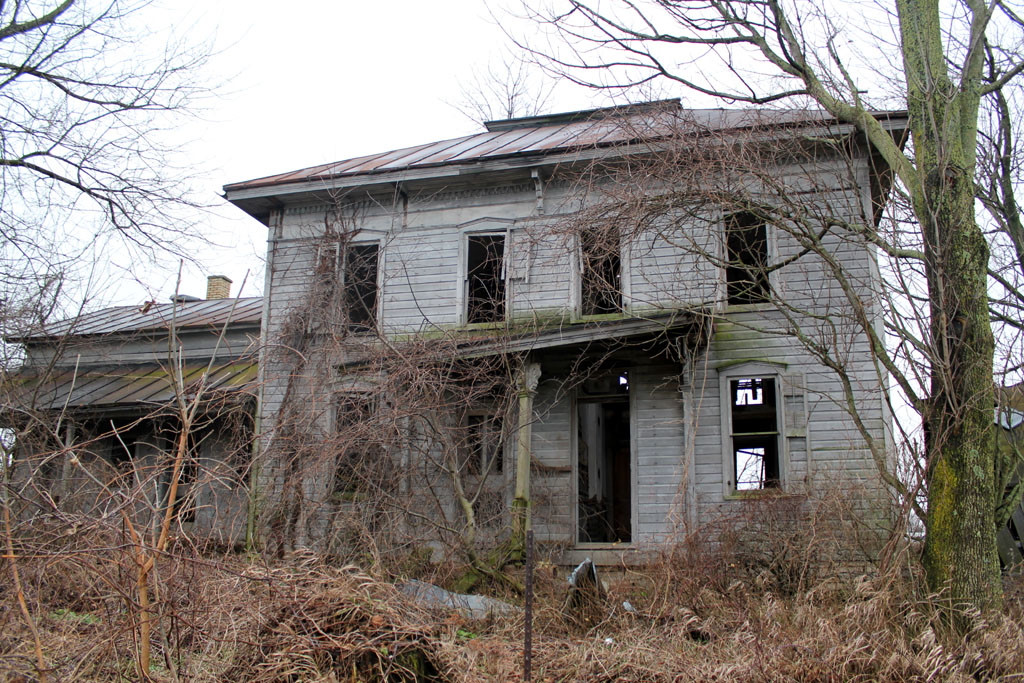
The State Route 4 corridor between Bucyrus and Sandusky contains many wonderful examples of the Italianate architectural style. This house, with its dentils and wide frieze, seems to be transitional between Greek Revival and Italianate and probably dates from the 1860s or 1870s.

In 1873, this property was owned by Jacob Kline. The presence of a house on that year's atlas supports a mid-19th century construction date.

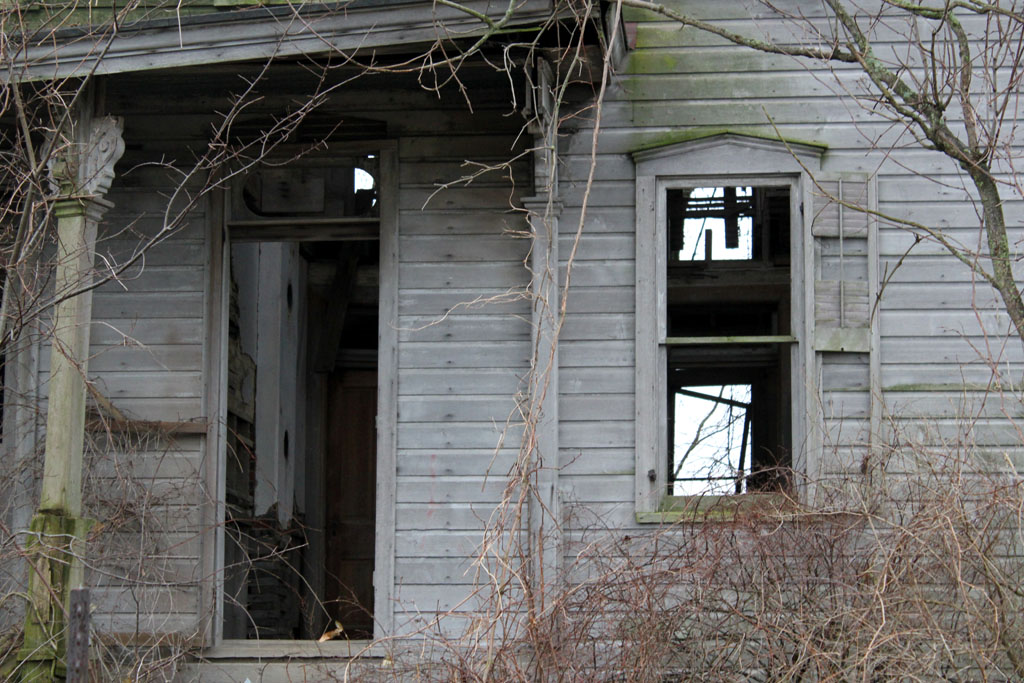
This is what every abandoned building enthusiast loves to see! Most Italianate homes in northern Crawford County have truncated roofs. A cupola may have sat atop the roof, but the likelihood of this is low.
Obviously, the house is well beyond any hope of restoration. The entire second floor surface has either collapsed or is missing entirely.
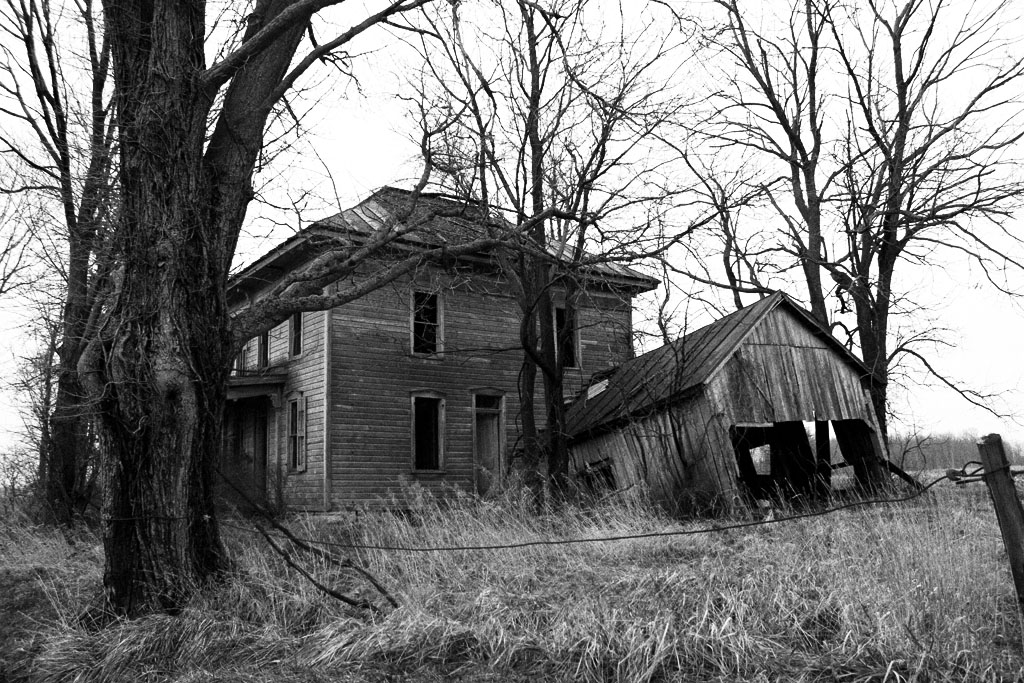
In black and white. This property is a great example of picturesque decay.
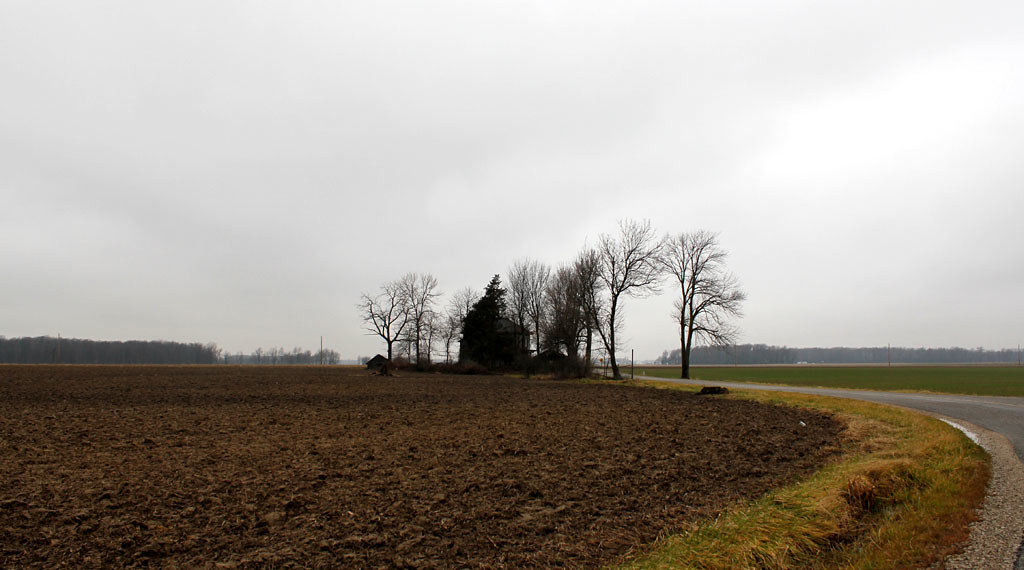
A rather lonely location. I imagine that barns and other outbuildings once surrounded the farmhouse, but have succumbed to the cruel hand of time.

Saturday, April 20, 2013

Shull Log House

Gahanna, Franklin County, Ohio

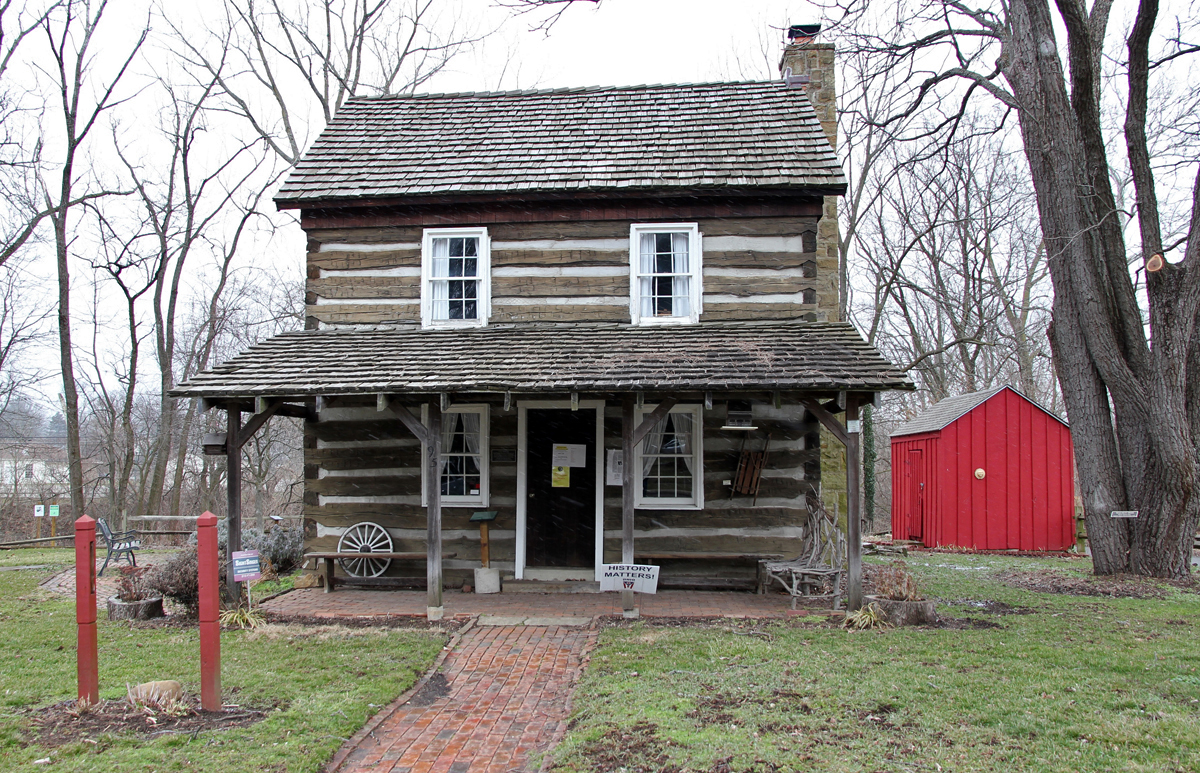
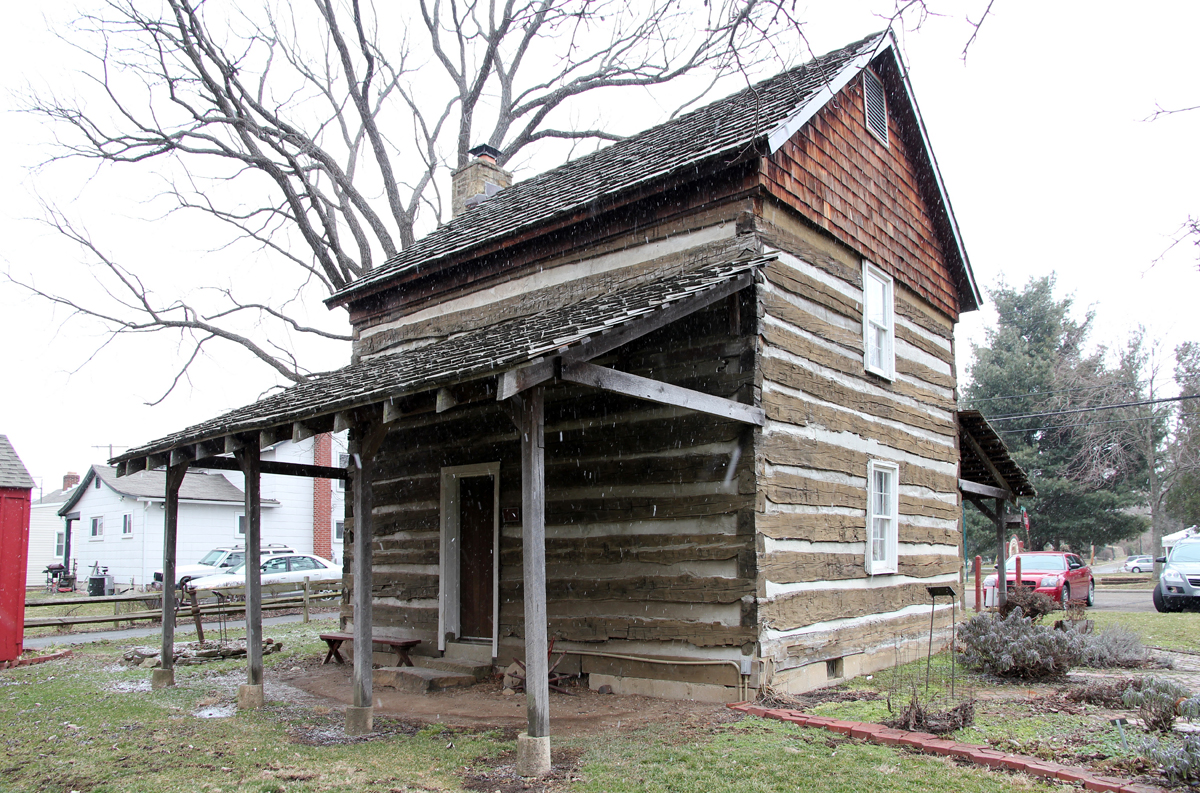
Constructed by David Shull about 1840, and relocated to its current site in 1968 or 1973. The structure originally stood on Cherry Bottom Road in Mifflin Township, near present-day Nob Hill Drive.

The nearly square (21' by 20') floor plan is not typical of log buildings in the state. Donald Hutslar described the structure as "a neatly constructed house . . . in good preservation" that was "probably sided soon after construction." Apparently, it was originally whitewashed.

Before the house's relocation, a two-story frame addition was attached to this facade. The front and rear porches were added in the 1990s.
The location of the enclosed staircase is typologically correct, but I don't think it is original to the house. As with most restorations, the interior is probably too rustic. Few homes had exposed, unpainted log walls; most were whitewashed, clad in boards, or plastered.

I don't know if this house originally featured an
exterior chimney, but based on the relatively
late construction date and other stylistic features,
I imagine it did not.

Monday, April 1, 2013

Hopkins House

Union Township, Union County, Ohio

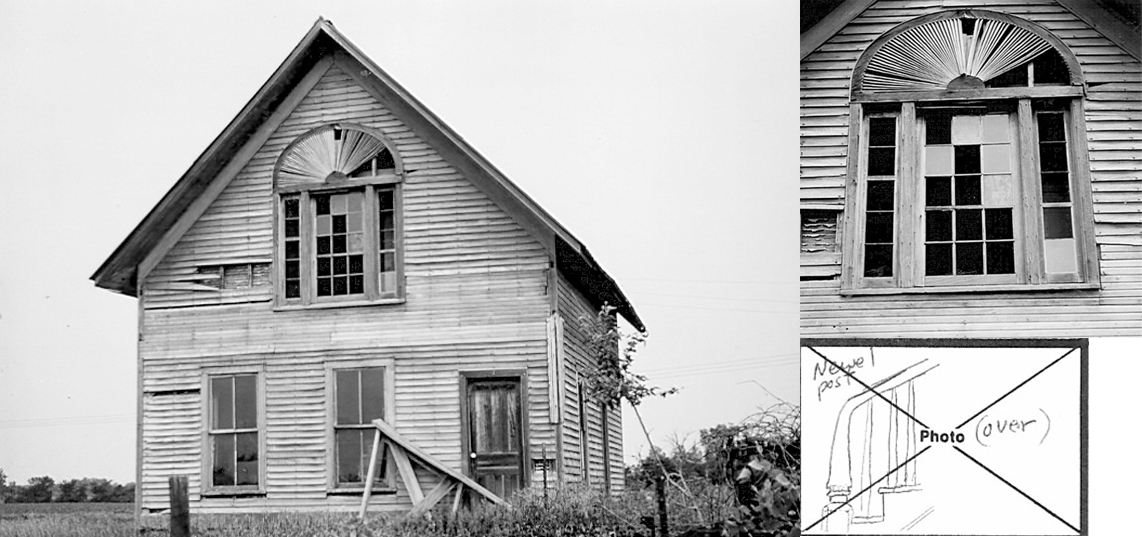
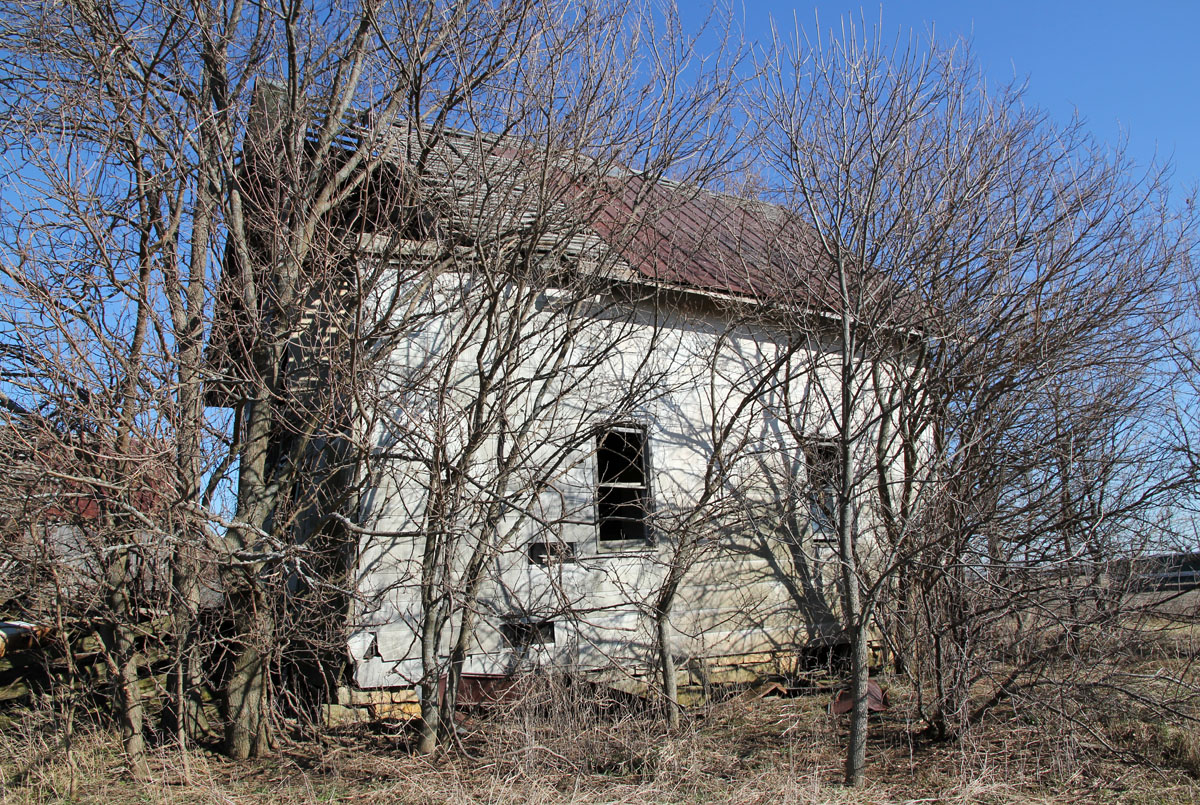
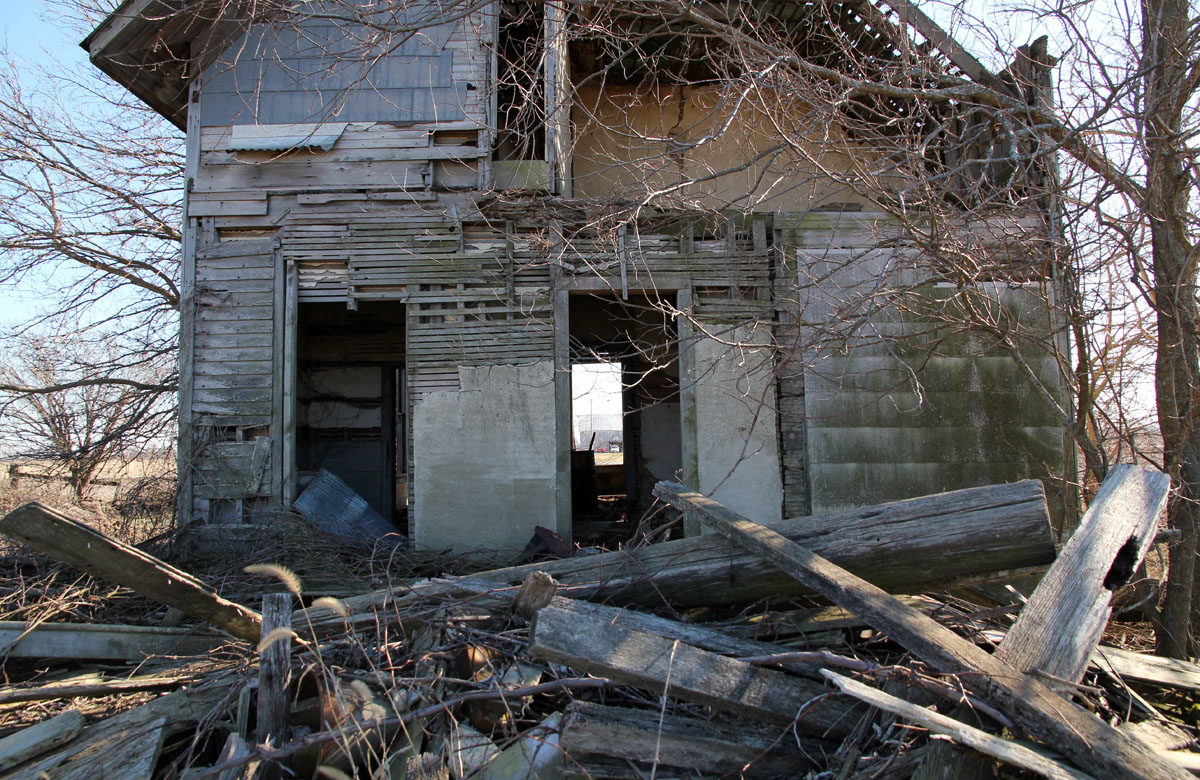
This building is unusual for the upper Virginia Military District, an area largely defined by simple brick "I" houses and late 19th century structures. The house has been abandoned since at least 1973  probably a bit earlier, even  and severe deterioration has exposed construction details not visible in occupied homes. Unfortunately, the many years of abandonment have resulted in a complete loss of its most notable features, as well.

The front (southeast) facade.
In 1986, David Simmons photographed the house for the Ohio Historic Inventory. At the time, it featured a strange, somewhat out-of-proportion window flanked by sidelights and topped by sunburst decoration. Simmons also noted a "simple mantel with built-in cupboards" and a "ca. 1850 newel post." None of these remain, of course.

Photos and drawing by David Simmons, 1986. Taken from the Ohio Historic Inventory form.


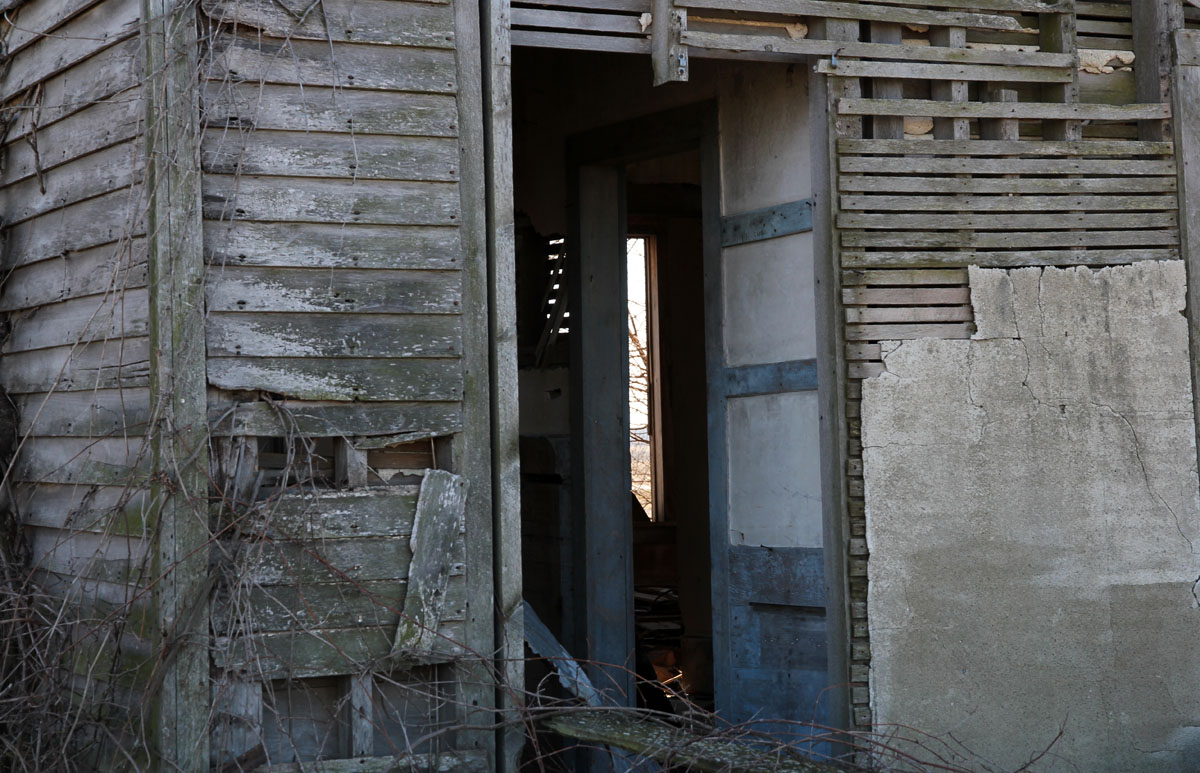
The remaining interior woodwork is typical of mid-19th century buildings. I've noticed that many structures of the era have blue-painted woodwork.


The staircase, sans newel post, is just visible through the doorway. Portions of the home's braced frame construction are revealed where siding is missing.
The closest I could get to an interior shot. The mantel and cupboards are long-gone.
The barn, also abandoned. Portions of its sheet metal roof were banging violently in the wind as I took this photo.
Finally, a rough floor plan:


Saturday, March 30, 2013

A Stone Springhouse

Bloom Township, Seneca County, Ohio

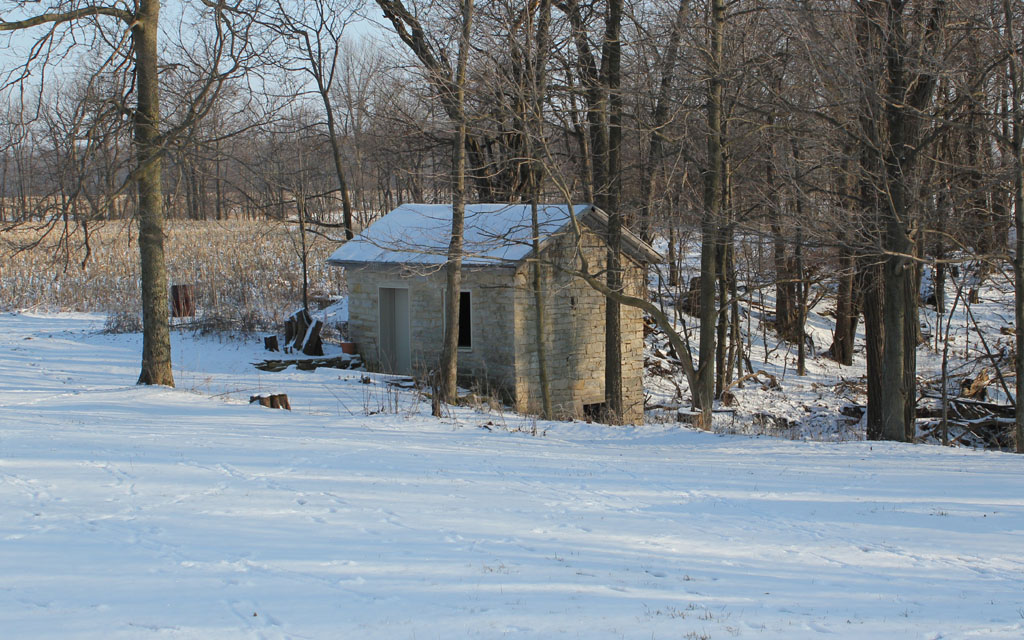
The springhouse was a common building type in rural 19th century Ohio. This structure, built over a water source, was used to store perishable goods before the refrigerator gained widespread use.


Note the tapering of the window trim, presumably to admit extra sunlight into the somewhat dark interior. Even auxiliary structures had at least some architectural detailing in the 19th century.
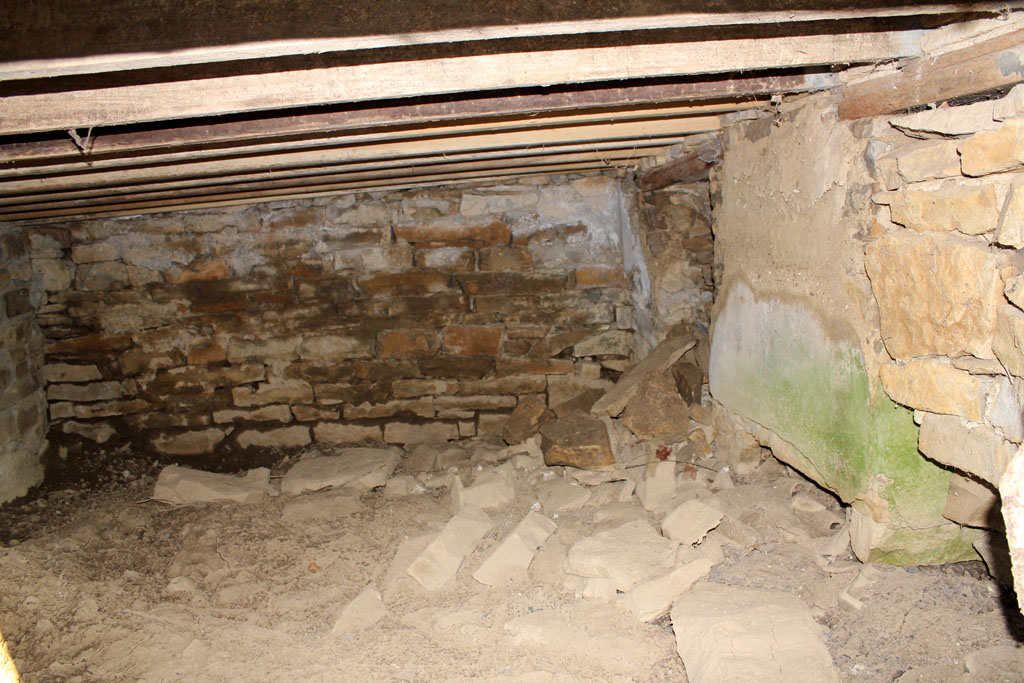
The creek, just visible in the top photo, was once diverted through the basement of the springhouse. Water flowed through an opening where the concrete is now.
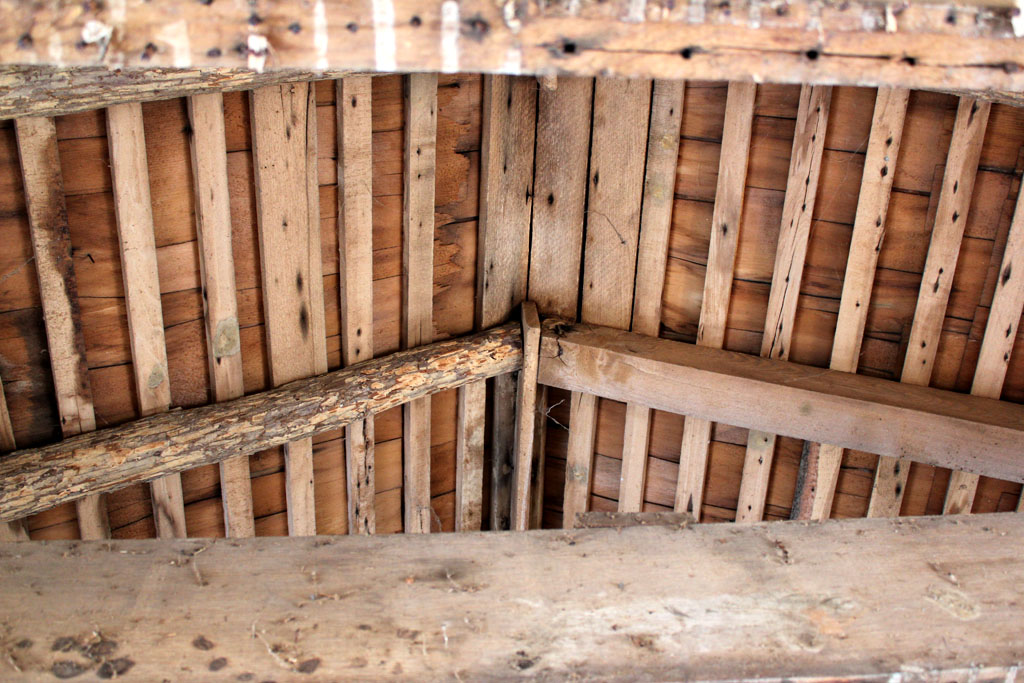
The springhouse's roof is supported primarily by tree trunks with intact bark. Like that of a nearby log house, the roof retains its wood shingles. These shingles are attached without sheathing.