Every locale — every nation, every region, and every community — has its own
je ne sais quoi, formed by the melding of its people, landscape, and buildings. These local characters vary in distinctness. Some scarcely distinguish one community from its neighbors; others impart state-level significance. In
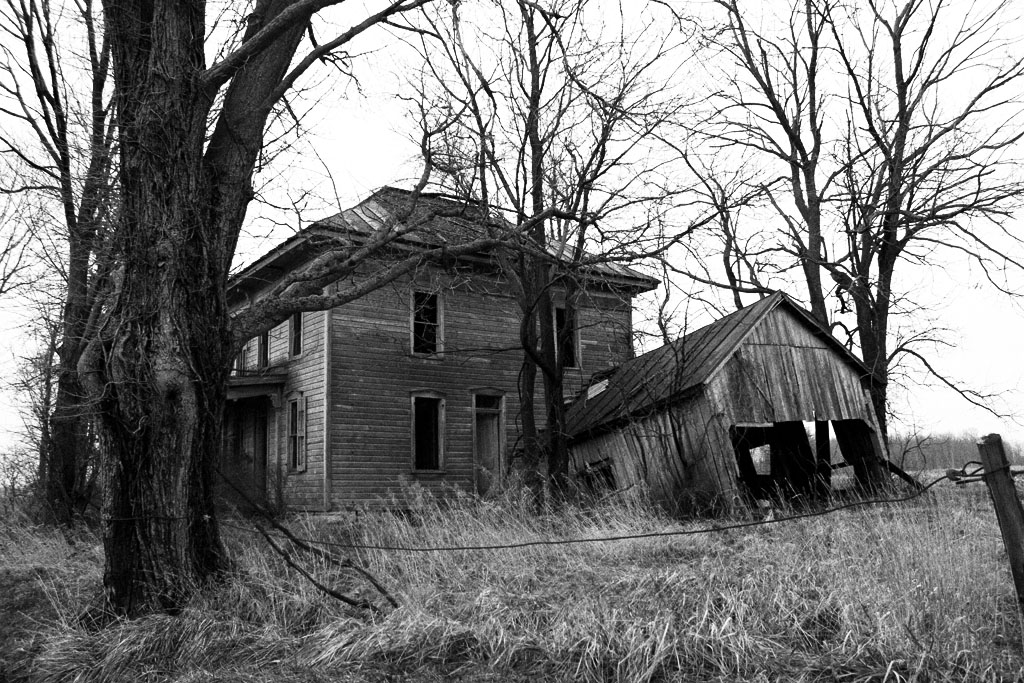
Eden Township, Wyandot County, Ohio, exists one such cluster of sublime individuality. In summer 1985, David Scott — perhaps one of the students who completed much of the Ohio Historical Society's pre-1990 survey work — combed Eden Township and discovered a grouping of board-and-batten-sided homes. Though associated with
Davis and
Downing's Gothic experimentation, board-and-batten siding enjoyed only middling popularity in Ohio, even within regions where Gothic Revival buildings abound. Of course, today's distribution differs, no doubt, from its nineteenth-century equivalent. If
Albert Ewing's photos are any indication, board-and-batten siding was common in Appalachia. But it's rare enough elsewhere. (The difficulty of attaching boards and battens to a vertically oriented frame might also explain the method's scarcity.)
Eden Township, home to 1,026 souls (about 275 of whom reside in the border-spanning village of
Nevada), straddles the eastern edge of Ohio's former
Wyandot reservation. Until 1843, when the U.S. government resettled the remaining tribesmen in Kansas, a sizable tract surrounding
Upper Sandusky remained under Wyandot ownership. By the time of their relocation, most of the reservation's inhabitants, it seems, had adopted certain Western customs, and many lived in log houses and managed subsistence farms. (1) After 1843, the region witnessed explosive population growth. In 1880, Eden Township could boast a population of 1,793, composed largely of native Ohioans, Pennsylvanians, and Germans. It's impossible to determine
precisely where Eden Township's settlers originated, but the area's surviving buildings suggest a diverse population. (Some Edenites may have been New Englanders, or else natives of the culturally English region encompassing New England, New York, and northern Pennsylvania.)
 |
| Wyandot County, with Eden Township highlighted. Map sourced from Wikimedia Commons; created by Frank12. |
The homes in question vary in form and age. The earliest, likely erected in the 1850s or 1860s, have the boxiness and rectangularity typical of antebellum American abodes. Other, later buildings make use of standard late-nineteenth-century vernacular forms — "
upright-and-wing," "
gabled ell," and the like.
 |
| Gregg House. Extant. Note the twin entries and window "dripstone" moldings — an undeniable nod to the Gothic Revival. Photo by David Scott, August 1985, from an Ohio Historic Inventory form (WYA-571-9). |
Why these houses exist, I can only speculate. Perhaps a local carpenter preferred the method and used it to mark his handiwork. Perhaps a building boom occurred at precisely the "right time" — that is, during a national surge in board-and-batten siding's popularity. Perhaps one Eden Township resident employed the technique, and his neighbors, smitten by the odd verticality it lends, followed suit.
 |
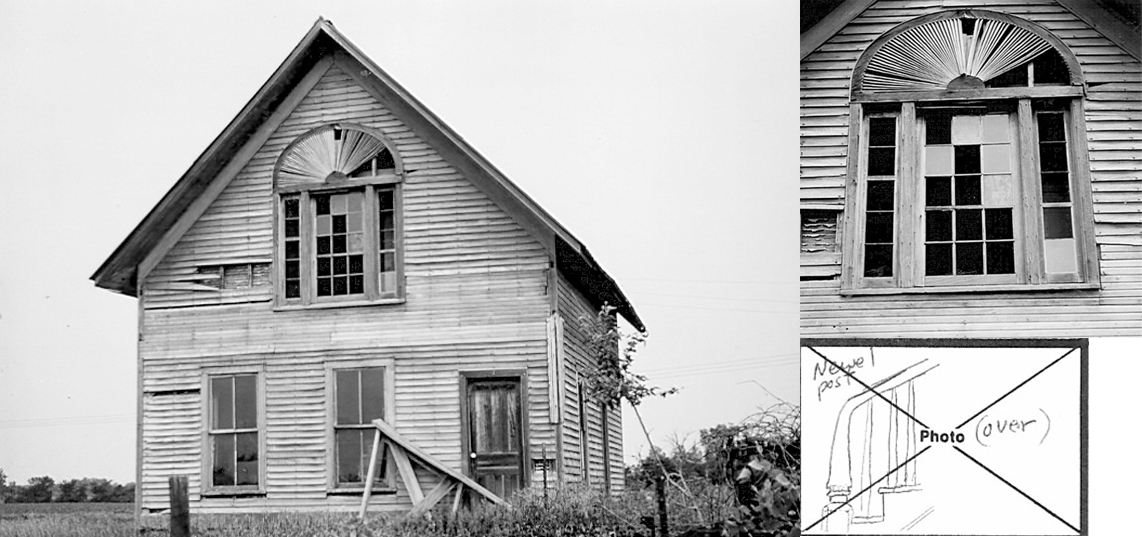
| Samuel Storm House. Demolished. Perhaps the earliest of Eden Township's board-and-batten-clad houses, this building may have been of log or braced-frame construction. Photo by David Scott, August 1985, from an Ohio Historic Inventory form (WYA-558-9). |
 |
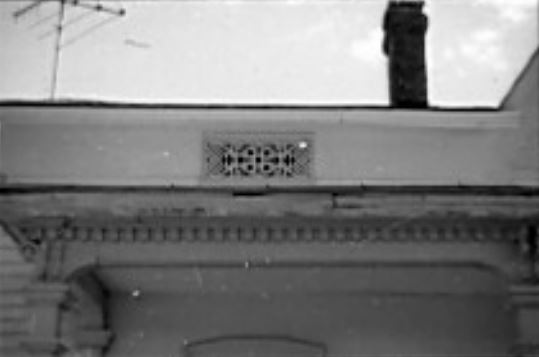
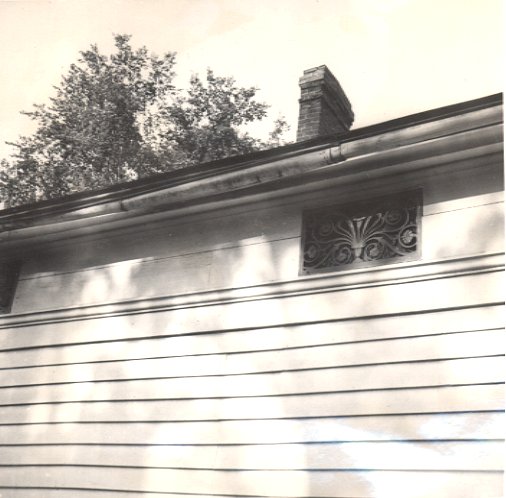
| William Case House. Extant. Set into the west elevation's frieze board (not visible) are three lacy frets (or grilles) of a type common to ostentatious Greek Revival-era buildings. The dwelling's rear is covered with conventional beveled siding. Image by David Scott, August 1985, from an Ohio Historic Inventory form (WYA-538-9). |
 |
| Conger House. Razed. Photo by David Scott, August 1985, from an Ohio Historic Inventory form (WYA-539-9). |
The
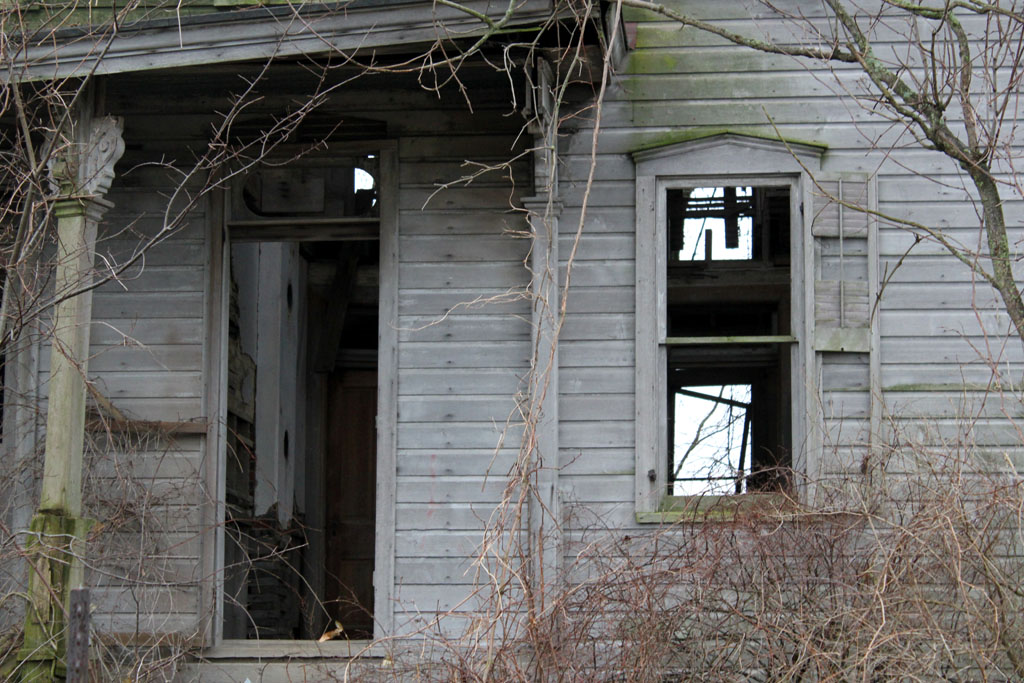
finest of the township's board-and-batten-sided houses belonged to John Walton, an Ohio native whose parents hailed from New Jersey and Pennsylvania. Walton's residence, a cube-shaped structure of side-passage plan, borrows liberally from Downing's and Davis's designs. The fully functional shutters (a few of which cover door-height windows) are a rare relic, as is the decorative frieze board, which sweeps down, at the corners, to meet narrow corner boards. (These boards evoke
pilasters.)
 |
| John Walton House. Image by David Scott, August 1985, from an Ohio Historic Inventory form (WYA-589-9). |
 |
| The John Walton House's distinctive frieze. |
In nearby
Sycamore Township, due south of
Sycamore village, stands another Gothic Revival-era house of exceptionally fine design. The siding isn't of the board-and-batten variety, but the house shares other features with buildings in the Eden Township cluster — most notably, intricate grilles similar to those adorning the William Case House (see above). J.A. Van Gundy, the dwelling's first owner, apparently bred
Merino sheep.
 |
| J.A. Van Gundy House. Extant. The exterior wainscoting is unusual (though not unheard-of). Photo courtesy of Google Maps. |
 |
| Grille, Van Gundy House. Image by David Scott, July 1985, from an Ohio Historic Inventory form (WYA-306-4). |
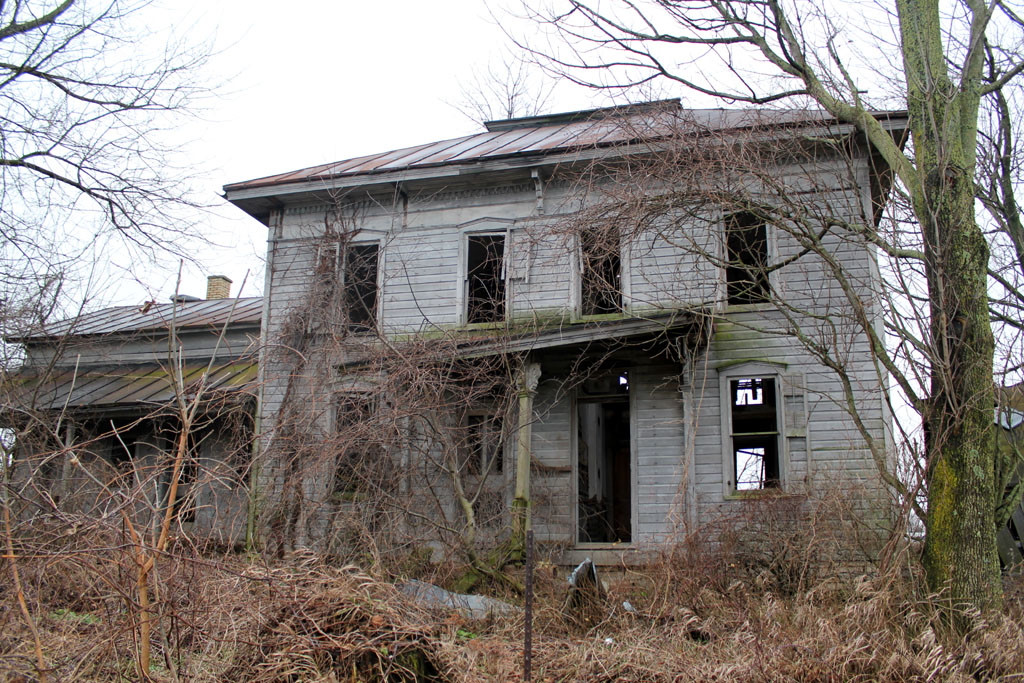
I know of two other Wyandot County homes garbed with board-and-batten siding, though they stand (or stood) outside the Eden Township grouping (and may be wholly unrelated to it).
 |
| Charles Passett House, Richland Township. Demolished. An early, comparatively crude "settlement" home. Note the pent roof and central chimney. Image by David Scott, June 1985, from an Ohio Historic Inventory form (WYA-368-5). |
 |
| Adam Keller House, Crane Township. Extant. The structure is similar, in some ways, to the John Walton House. Photo taken from Google Maps. |
Crawford County and Seneca County — which border Wyandot County to the west and north, respectively — are also well-endowed with architecturally romantic buildings, though neither shelters such a dense cluster of boarded-and-battened houses.
1) Donald Hutslar's The Architecture of Migration describes (and quotes) a few of the documents cataloging the Wyandots' possessions. In these, log buildings are often mentioned.