Cranberry Township, Crawford County, Ohio
This house isn't notable for its age, but for its
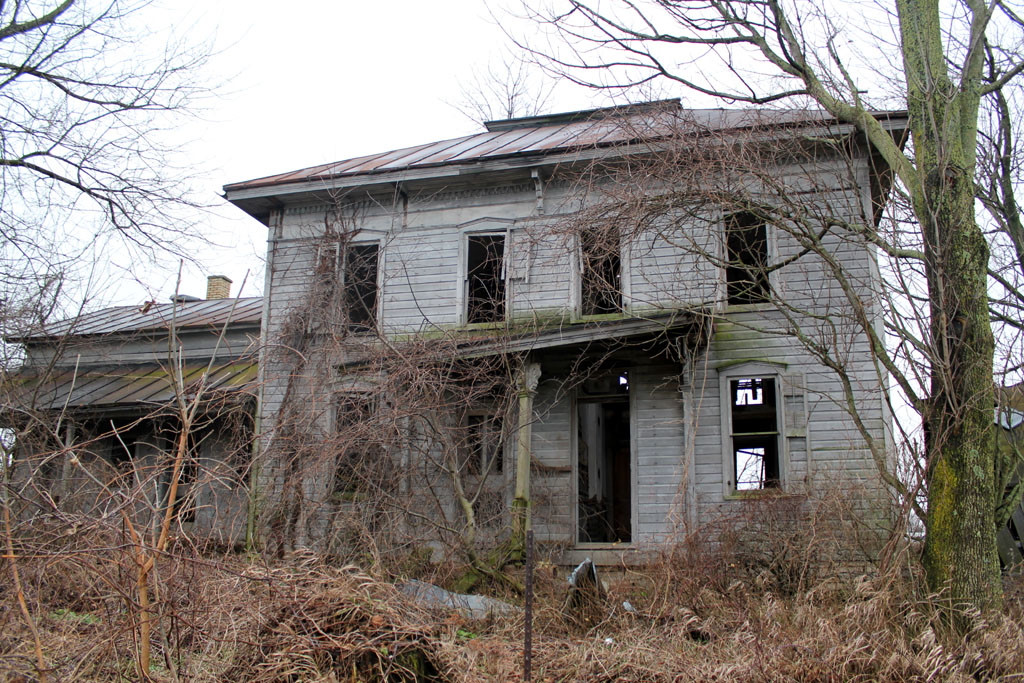
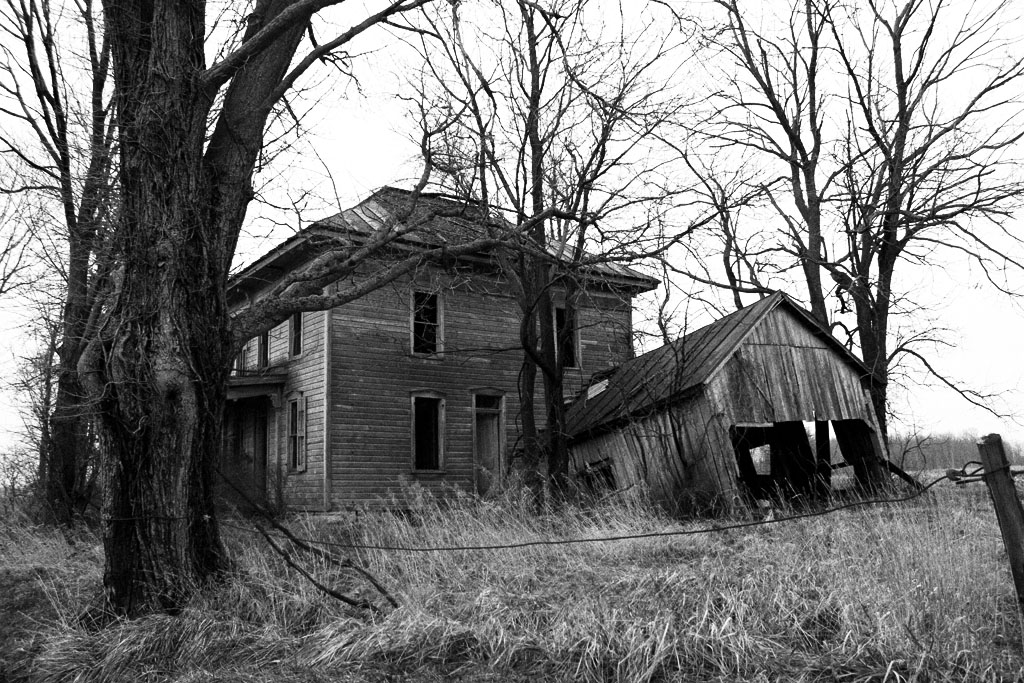
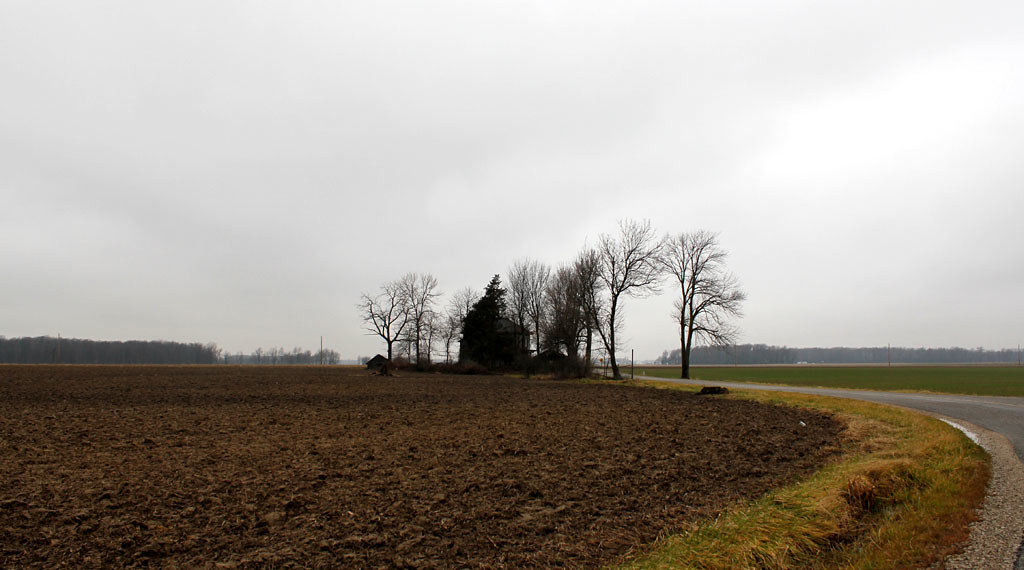
lack of age. Upon seeing a cruddy aerial photograph, I assumed it was a mid-19th century structure, possibly log, and probably one of the earliest homes in the township. I was surprised when I actually visited the site.
The yellow brick chimneys and balloon frame construction are indicative of late 19th century construction, though the home's overall appearance seems earlier. I can't quite explain why
— the answer lies in its proportions, perhaps
— but it just
feels old.
 |
| The rather featureless front facade. It's difficult to discern, but the porch posts' upper portions curve in an interesting manner. I like the birds perched atop the chimney; they add eeriness to an otherwise boring picture. |
 |
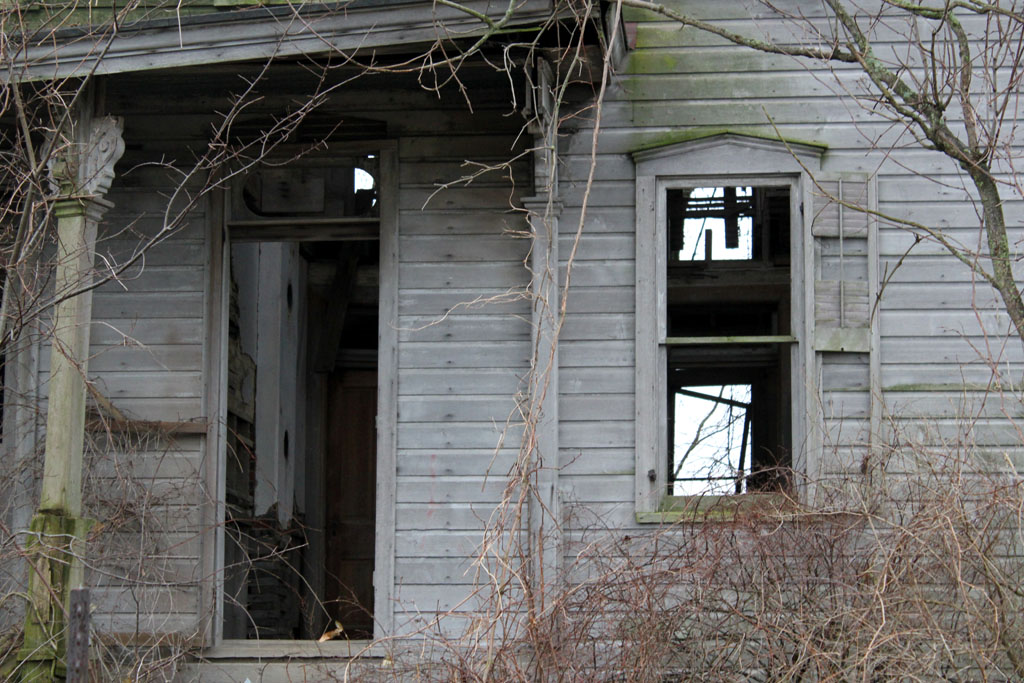
| The balloon frame construction is plainly visible. Note the original wood shingle roof, mostly covered by standing seam metal. |
Not surprisingly, the 1850s and 1873 atlases show nothing at this location. P.J. Gangloff owned the 60-acre farm in the 1850s. By 1873, ownership had passed to Henry Gangloff. The house remained inhabited until at least 1970, as a county directory from that year lists John Kreim as its inhabitant.